
HTV silicone rubber is widely used in high-voltage composite insulators due to its excellent hydrophobicity, superior tracking and erosion resistance, and long-term stability under harsh outdoor operating conditions. Compared with traditional insulation materials, HTV silicone rubber provides better resistance against pollution flashover, UV aging, moisture exposure, and environmental contamination, making it highly suitable for modern transmission and substation applications.
This case study highlights how a power equipment manufacturer in India improved the reliability of 220kV hollow composite insulators installed in coastal substations by upgrading to a high-performance HTV silicone rubber formulation specifically designed for severe outdoor environments. The substations operated under challenging conditions including salt fog contamination, high humidity, strong UV exposure, and seasonal monsoon rainfall, all of which accelerated surface aging and leakage current instability in the original insulation housing material.
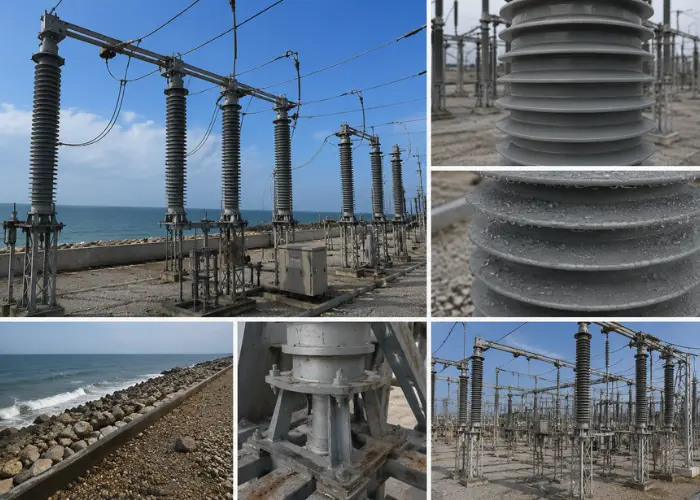
Improving Composite Insulator Reliability in High-Humidity Coastal Environments
| Item | Details |
|---|---|
| Country | India |
| Application | 220kV Hollow Composite Insulator |
| Environment | Coastal Salt Fog + High Humidity |
| Main Problem | Leakage current fluctuation |
| Material Solution | ATH-filled HTV Silicone Rubber |
| Key Result | Leakage current reduced by 42% |
| Additional Improvement | Hydrophobicity retention increased by 60% |
Customer Background
The customer is a high-voltage insulation equipment manufacturer supplying composite insulators for coastal transmission substations in western India.
The project involved 220kV hollow composite insulators installed near the Arabian Sea, where the operating environment includes:
- high humidity
- salt contamination
- seasonal monsoon rainfall
- strong UV exposure
- industrial airborne pollution
The utility operator experienced increasing maintenance frequency and insulation reliability concerns after several years of operation using conventional housing materials.
The customer required a more reliable silicone rubber solution capable of maintaining stable electrical performance under severe outdoor contamination conditions.
The Challenge: Leakage Current Increase and Surface Aging
After approximately 18 months of outdoor operation, several insulators showed early signs of surface degradation.
Field inspections identified:
- hydrophobicity loss
- contamination adhesion
- surface tracking marks
- unstable leakage current during humid weather
During monsoon seasons, the utility operator observed significant leakage current fluctuation on contaminated insulator surfaces.
The original insulation housing material struggled to maintain stable hydrophobicity under continuous wet-dry environmental cycling.
As contamination accumulated on the insulator surface, conductive moisture films formed more easily during high-humidity periods, increasing flashover risk.
Hydrophobicity loss
Reduced surface insulation performance
Leakage current increase
Higher flashover risk
UV aging
Surface degradation
Salt fog contamination
Accelerated pollution accumulation
Surface tracking
Long-term reliability concerns
Yakows Analysis
Yakows team performed laboratory analysis and outdoor aging evaluation on the existing housing material.
The investigation found that the previous material formulation had:
- insufficient hydrophobicity recovery capability
- limited resistance to coastal salt-fog aging
- unstable tracking resistance under continuous contamination exposure
Microscopic surface analysis also revealed:
- filler dispersion inconsistency
- early-stage UV oxidation
- localized erosion development
These factors contributed to unstable leakage current behavior during high-humidity operation.
Yakows HTV Silicone Solution
Upgrading to High-Performance HTV Silicone Rubber
To improve long-term insulation reliability, the customer upgraded to a customized HTV silicone rubber formulation developed for high-voltage outdoor insulation systems.
- hydrophobicity retention
- tracking resistance
- UV stability
- leakage current performance
A high-purity aluminum hydroxide (ATH) filler system was introduced to improve:
- tracking resistance
- erosion resistance
- thermal stability
- arc resistance
The optimized ATH loading also improved long-term surface stability under electrical stress.
The silicone elastomer molecular structure was optimized to improve:
- hydrophobicity transfer capability
- elasticity retention
- weather aging resistance
This helped maintain stable insulation performance during monsoon humidity exposure.
Advanced mixing and dispersion processes reduced filler agglomeration inside the silicone matrix.
- surface uniformity
- electrical consistency
- long-term aging stability
Additional UV stabilization technology helped reduce:
- surface chalking
- oxidation
- UV cracking
- outdoor aging degradation
This was especially important for long-term exposure to strong sunlight in coastal substations.
After Using Yakows HTV Silicone Rubber
After laboratory validation, the upgraded silicone rubber material was applied in 220kV hollow composite insulators installed in coastal substations.
Following 12 months of field operation, the customer reported significant performance improvements.
| Performance Improvement | Technical Outcome |
|---|---|
|
42%
Leakage Current Reduced
|
The upgraded silicone rubber reduced average leakage current under coastal humidity conditions by approximately 42%, significantly improving insulation stability during monsoon periods. |
|
60%
Hydrophobicity Retention Improved
|
Compared with the previous material, the HTV silicone rubber maintained hydrophobicity much longer after contamination exposure. |
|
35%
Maintenance Frequency Reduced
|
The utility operator reduced cleaning and inspection frequency due to improved surface contamination resistance. |
|
+8 Years
Expected Service Life
|
Based on accelerated aging evaluation, the expected outdoor service life was projected to improve by more than 8 years. |
Reliable HTV Silicone Rubber Solutions for High-Voltage Insulation
As transmission systems expand into increasingly severe operating environments, utilities require insulation materials with stronger weather resistance and more stable electrical performance.
This project demonstrated how optimized Yakows HTV silicone rubber significantly improved:
- leakage current stability
- hydrophobicity retention
- UV aging resistance
- long-term outdoor reliability
for hollow composite insulators operating in coastal substations.
The growing adoption of silicone rubber composite insulation systems highlights the importance of advanced HTV silicone rubber materials in modern high-voltage power infrastructure.
Frequently Asked Questions
Why did the previous insulator material fail in coastal environments?
The original housing material gradually lost hydrophobicity under continuous exposure to salt fog, humidity, UV radiation, and industrial contamination. Once the surface became less hydrophobic, conductive moisture films formed more easily during monsoon seasons, causing leakage current fluctuation and increasing the risk of surface tracking and flashover.
How did the Yakows HTV silicone rubber improve leakage current performance?
The upgraded HTV silicone rubber used an optimized silicone polymer structure combined with a high-purity ATH filler system. This improved hydrophobicity retention, reduced contamination adhesion, and enhanced tracking resistance. As a result, the insulator surface remained more stable under humid coastal conditions, reducing leakage current fluctuation by approximately 42%.
Why is HTV silicone rubber preferred for high-voltage composite insulators?
HTV silicone rubber offers a combination of excellent hydrophobicity, UV resistance, weather aging resistance, and long-term electrical stability. Compared with traditional porcelain or lower-performance polymer materials, it provides better reliability in harsh outdoor environments such as coastal substations, desert transmission lines, and tropical high-humidity regions.