
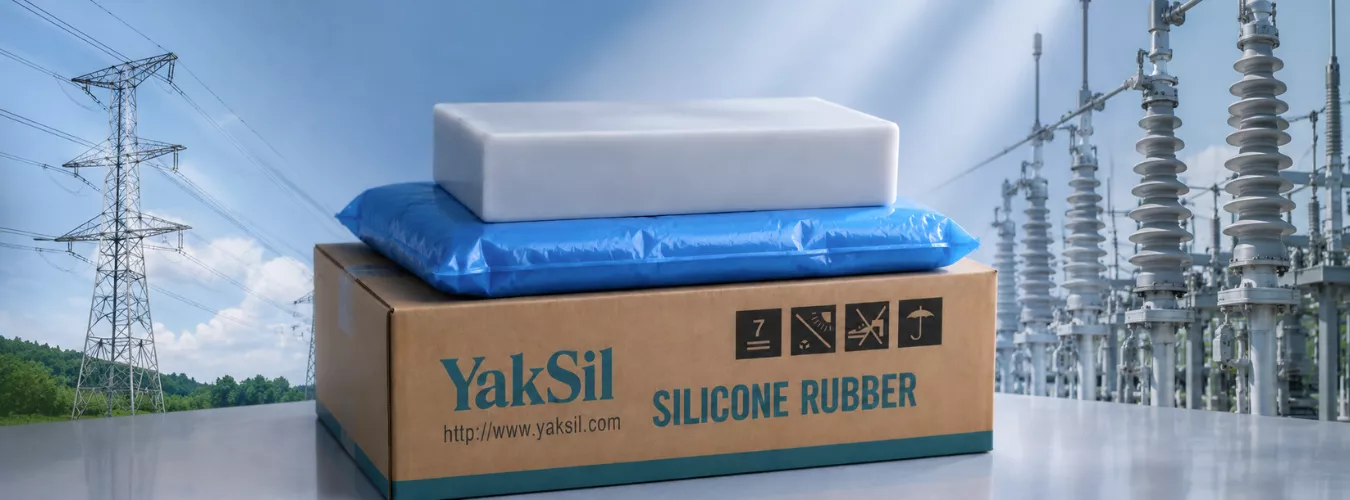
2026 Silicone Rubber Industrial Guide
Silicone rubber has become one of the most important materials in the modern electrical insulation industry. As power transmission systems continue to operate under higher voltages, harsher environmental conditions, and increasing reliability requirements, traditional insulating materials are no longer sufficient for many outdoor and high-voltage applications. Silicone rubber has emerged as a preferred solution because of its outstanding hydrophobicity, UV resistance, thermal stability, and long-term aging performance.
Today, silicone rubber is widely used in composite insulators, cable accessories, surge arresters, bushings, terminations, and substation insulation systems. Compared with porcelain and glass insulation materials, silicone rubber provides lighter weight, superior contamination resistance, improved mechanical flexibility, and lower maintenance requirements. These advantages have significantly accelerated the adoption of polymer-based insulation systems across transmission and distribution networks worldwide.
This guide explains the material properties, manufacturing technologies, electrical performance characteristics, industrial applications, and future trends of silicone rubber in the electrical insulation industry.
What Is Silicone Rubber in Electrical Insulation Applications?
Silicone rubber used for electrical insulation is a synthetic elastomer based on polysiloxane polymers with a silicon-oxygen molecular backbone. This chemical structure gives the material exceptional resistance to heat, ultraviolet radiation, ozone, moisture, and environmental aging. In high-voltage engineering, silicone rubber is primarily used as the external insulating housing material for composite insulators and electrical protection devices.
Unlike conventional organic rubbers, silicone rubber maintains stable insulation performance across extreme operating temperatures and polluted outdoor environments. One of its most important characteristics is hydrophobicity, which allows the surface to repel water and reduce leakage current formation during wet operating conditions. This property is particularly critical in coastal, desert, industrial pollution, and heavy humidity regions where contamination flashover risks are high.
In modern power transmission systems, silicone rubber insulation materials are commonly reinforced with fillers such as aluminum trihydrate (ATH) to improve tracking resistance, erosion resistance, flame retardancy, and long-term electrical aging performance.
Why Silicone Rubber Is Widely Used in Composite Insulators
The global power industry has increasingly shifted from porcelain insulators to composite polymer insulators over the past two decades. Silicone rubber plays a central role in this transition because it solves several long-standing operational problems associated with ceramic insulation systems.
Traditional porcelain insulators are heavy, brittle, and susceptible to contamination flashover under polluted conditions. Silicone rubber composite insulators, by contrast, offer lightweight construction, improved impact resistance, and superior hydrophobic performance. Even when surface contamination occurs, silicone rubber can transfer low molecular weight siloxanes to the surface and maintain water repellency, significantly reducing the formation of conductive water films.
This self-recovering hydrophobic behavior is one of the key reasons why silicone rubber insulators perform exceptionally well in coastal substations, mining environments, desert regions, and industrial pollution zones.
In addition, the reduced weight of silicone rubber composite insulators simplifies transportation, tower installation, and maintenance operations. Utilities and EPC contractors often prefer polymer insulators because they lower installation costs and improve grid reliability.
Key Material Properties of Silicone Rubber for Electrical Insulation
Hydrophobicity
Hydrophobicity is one of the most important performance characteristics of silicone rubber insulation materials. The surface naturally repels water, preventing continuous conductive moisture films from forming on the insulator surface. This greatly reduces leakage current activity and flashover risks during rain, fog, or condensation.
Unlike many polymer materials, silicone rubber can maintain hydrophobicity even after long-term environmental exposure. This behavior is particularly valuable in high-voltage outdoor applications.
UV and Weather Resistance
Outdoor transmission systems are continuously exposed to sunlight, ozone, humidity, acid rain, and atmospheric contamination. Silicone rubber demonstrates exceptional resistance to ultraviolet degradation and environmental aging. Long-term exposure causes significantly less cracking and surface deterioration compared with many conventional elastomers.
Because of this stability, silicone rubber insulators often maintain operational reliability for decades under severe outdoor service conditions.
Thermal Stability
Silicone rubber remains stable across a wide operating temperature range, typically from -60°C to 200°C. High-temperature grades can tolerate even more extreme conditions without significant loss of elasticity or insulation performance.
This thermal stability is essential for electrical systems operating in desert climates, cold regions, industrial heat zones, and high-current environments.
Electrical Insulation Performance
Silicone rubber provides excellent dielectric properties and high electrical resistivity. It is widely used in applications requiring reliable insulation under high-voltage stress conditions. Properly formulated silicone compounds also demonstrate strong resistance to corona discharge, tracking, and electrical erosion.
These characteristics make silicone rubber highly suitable for:
- High-voltage composite insulators
- Cable terminations
- Surge arresters
- Transformer bushings
- Substation insulation systems
Manufacturing Process of Silicone Rubber Composite Insulators
The manufacturing process of silicone rubber insulators combines polymer processing technology with electrical engineering requirements. Most high-voltage composite insulators consist of three primary components:
- Fiberglass reinforced plastic (FRP) core rod
- Silicone rubber housing and sheds
- Metal end fittings
The FRP rod provides mechanical strength, while the silicone housing delivers electrical insulation and environmental protection.
High-temperature vulcanized (HTV) silicone rubber is commonly used in composite insulator manufacturing because of its superior mechanical properties and long-term aging resistance. The silicone housing is typically produced through injection molding or compression molding processes, depending on design and production requirements.
Precise bonding between the silicone housing and FRP core is critical. Poor interface adhesion can lead to moisture ingress and insulation failure. Therefore, quality control during molding and vulcanization is extremely important in insulator manufacturing.
Silicone Rubber vs Porcelain Insulators
The transition from porcelain to silicone rubber composite insulators is one of the most important developments in modern transmission engineering.
| Property | Silicone Rubber Insulator | Porcelain Insulator |
|---|---|---|
| Weight | Lightweight | Heavy |
| Hydrophobicity | Excellent | Poor |
| Pollution Resistance | Excellent | Moderate |
| Mechanical Impact Resistance | High | Brittle |
| Maintenance Requirement | Low | Higher |
| Transportation Cost | Lower | Higher |
Although porcelain insulators still offer excellent compressive strength and long-term dimensional stability, silicone rubber composite insulators provide superior contamination performance and easier installation.
As utilities modernize aging grid infrastructure, polymer insulators continue gaining market share worldwide.
Failure Mechanisms of Silicone Rubber Insulators
Although silicone rubber offers excellent long-term performance, improper formulation, manufacturing defects, and severe operating conditions can still lead to insulation failure.
Common failure mechanisms include:
- Tracking and erosion
- Interface debonding
- Corona aging
- UV degradation
- Moisture ingress
- Mechanical fatigue
Electrical tracking occurs when contamination and moisture generate conductive surface discharges. Over time, these discharges can damage the silicone housing and reduce insulation performance.
Modern formulations use ATH fillers and optimized curing systems to improve resistance against tracking and erosion.
Regular inspection and condition monitoring are also important for maintaining long-term transmission reliability.
Global Demand for Silicone Rubber Insulators
The global market for silicone rubber electrical insulation materials continues expanding due to rapid investment in power infrastructure, renewable energy systems, and smart grid modernization.
Several factors are driving demand:
- Expansion of ultra-high-voltage transmission systems
- Renewable energy integration
- Coastal power infrastructure development
- Railway electrification
- Smart grid upgrades
- Replacement of aging porcelain insulators
Asia-Pacific currently represents the largest market for composite insulators, driven by large-scale transmission projects in China, India, and Southeast Asia.
At the same time, utilities in North America and Europe are increasingly replacing older ceramic insulation systems with silicone rubber alternatives to improve reliability and reduce maintenance costs.
Future Trends in Silicone Rubber Electrical Insulation
The electrical insulation industry is rapidly evolving toward higher voltages, more compact substations, and increasingly severe environmental operating conditions. These trends are creating growing demand for advanced silicone rubber materials with enhanced performance characteristics.
Future development areas include:
- Nano-filled silicone rubber compounds
- Improved tracking resistance
- High-temperature ultra-high-voltage insulation materials
- Self-cleaning insulator surfaces
- Environmentally sustainable silicone formulations
- Smart monitoring integration for composite insulators
Researchers are also developing advanced silicone materials with improved resistance to corona aging and long-term electrical degradation for next-generation transmission networks.
Conclusion
Silicone rubber has fundamentally transformed the modern electrical insulation industry. Its exceptional hydrophobicity, weather resistance, thermal stability, and electrical insulation performance make it one of the most reliable materials for high-voltage outdoor applications.
Compared with traditional porcelain insulation systems, silicone rubber composite insulators provide lower weight, superior contamination resistance, easier installation, and reduced maintenance requirements. These advantages continue driving global adoption across transmission, distribution, railway, renewable energy, and industrial power systems.
As power networks continue evolving toward higher efficiency and greater environmental reliability, silicone rubber will remain a critical material in the future development of electrical insulation technology.
Is silicone rubber heat resistant?
Yes. Standard silicone rubber typically withstands temperatures from -60°C to 200°C, while specialty grades may tolerate temperatures above 250°C.
What is the difference between silicone rubber and EPDM?
Silicone rubber offers better high-temperature resistance and low-temperature flexibility, while EPDM is generally more cost-effective for outdoor applications.
Is silicone rubber electrically insulating?
Yes. Silicone rubber provides excellent dielectric strength and is widely used in electrical insulation systems.