
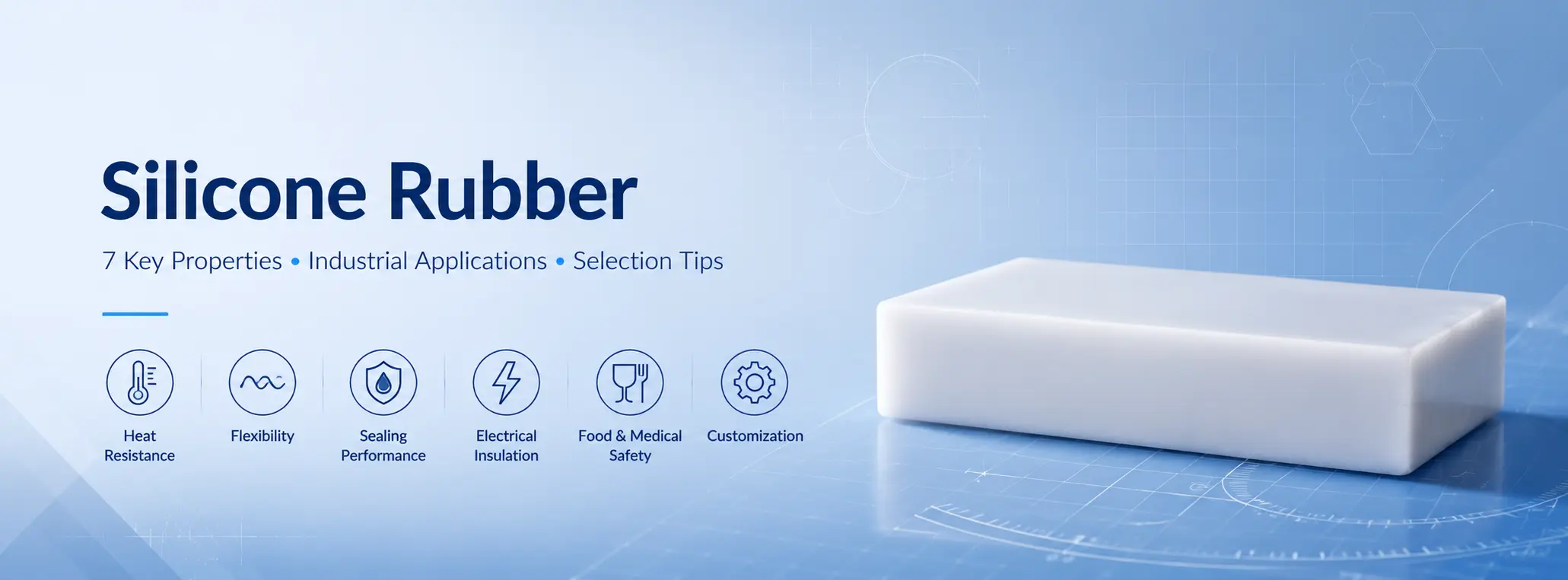
Silicone Rubber for Industrial Applications
Silicone rubber is one of the most widely used elastomer materials in modern manufacturing. Known for its flexibility, heat resistance, weather stability, and long service life, silicone rubber is used in industries ranging from automotive and electronics to medical devices, food processing, aerospace, and industrial sealing systems.
For engineers, product designers, and procurement teams, choosing the right silicone rubber material is not only about selecting a flexible rubber. It is about understanding how the material performs under real working conditions, including temperature changes, compression, chemical exposure, outdoor environments, electrical insulation requirements, and safety standards.
This guide explains the key properties of silicone rubber, its most common industrial applications, and practical selection tips to help you choose the right silicone rubber parts for your project.
What Is Silicone Rubber?
Silicone rubber is a synthetic elastomer made from silicone polymers, typically combined with fillers, curing agents, pigments, and performance additives. Unlike many organic rubber materials, silicone rubber has a backbone based on silicon and oxygen, which gives it excellent thermal stability, flexibility, and resistance to environmental aging.
Because of these properties, silicone rubber is often used to manufacture seals, gaskets, tubing, keypads, insulation parts, O-rings, medical components, food-grade products, and custom molded rubber parts.
Common forms of silicone rubber include:
- Solid silicone rubber
- Liquid silicone rubber, also known as LSR
- High temperature vulcanized silicone rubber
- Room temperature vulcanized silicone rubber
- Food grade silicone rubber
- Medical grade silicone rubber
- Conductive silicone rubber
- Flame retardant silicone rubber
Each type of silicone rubber has different processing methods and performance characteristics, so material selection should always be based on the final application.
Excellent Temperature Resistance
One of the most important silicone rubber properties is its ability to perform across a wide temperature range. Many silicone rubber materials can remain flexible at low temperatures while also maintaining stability under high heat.
This makes high temperature silicone rubber suitable for applications such as automotive engine components, industrial oven seals, electrical insulation, heating equipment, aerospace parts, and thermal protection components.
In industrial environments, temperature resistance is often a critical factor. A rubber part that becomes brittle in the cold or deforms under heat can lead to leakage, poor sealing, reduced safety, or equipment failure. Silicone rubber helps reduce these risks by maintaining its elasticity and structure in demanding thermal conditions.
Typical applications that benefit from temperature-resistant silicone rubber include:
- Automotive engine seals
- High temperature gaskets
- Electrical insulation sleeves
- Industrial oven door seals
- Heat-resistant tubing
- Aerospace sealing components
- Thermal pads and protective covers
When choosing silicone rubber for high temperature applications, it is important to confirm the operating temperature range, peak temperature exposure, and whether the part will face continuous or intermittent heat.
Strong Flexibility and Elastic Recovery
Silicone rubber is highly valued for its flexibility and elastic recovery. It can be compressed, stretched, bent, or deformed and still return to its original shape under normal working conditions.
This property is especially important for silicone rubber seals, silicone rubber gaskets, O-rings, vibration dampers, and flexible connectors. In sealing applications, the material must maintain contact pressure over time to prevent air, water, dust, oil, or other media from passing through.
Good elastic recovery also helps improve the service life of silicone rubber parts. A gasket that loses its shape too quickly may fail to seal properly. A flexible silicone rubber component, however, can maintain performance over repeated compression cycles.
Common applications requiring flexibility include:
- Silicone rubber gaskets
- Silicone rubber O-rings
- Custom silicone seals
- Flexible silicone tubing
- Bellows and connectors
- Protective rubber covers
- Vibration isolation parts
For better performance, engineers should consider hardness, compression set, elongation, and tensile strength when selecting silicone rubber material.
Weather, UV, and Ozone Resistance
Industrial silicone rubber performs well in outdoor environments because it has strong resistance to weathering, ultraviolet light, ozone, and moisture. This makes silicone rubber a reliable choice for applications exposed to sunlight, rain, wind, humidity, and changing temperatures.
Many traditional rubber materials degrade faster when exposed to outdoor conditions. They may crack, harden, discolor, or lose elasticity. Silicone rubber offers better long-term stability, which is why it is commonly used in outdoor sealing, lighting systems, solar energy equipment, construction components, and transportation applications.
Typical outdoor applications include:
- Outdoor lighting seals
- Solar panel sealing parts
- Construction gaskets
- Weatherproof electrical enclosures
- Automotive exterior components
- Marine sealing parts
- HVAC system seals
For outdoor projects, silicone rubber can help extend product life and reduce maintenance costs. However, the exact formulation should still be selected according to the environmental exposure, sealing requirements, and mechanical stress level.
Reliable Electrical Insulation
Silicone rubber is widely used in the electronics and electrical industries because of its excellent insulation properties. It can help protect electrical components from heat, moisture, dust, and mechanical damage.
Electrical-grade silicone rubber is commonly used in wire insulation, cable accessories, connectors, keypads, protective sleeves, high-voltage insulation parts, and electronic device seals. In addition to insulation, silicone rubber can also be formulated as conductive silicone rubber for applications that require electrical conductivity or electromagnetic shielding.
Common electrical and electronic applications include:
- Wire and cable insulation
- Silicone rubber keypads
- Connector seals
- Electronic enclosure gaskets
- High-voltage insulation parts
- Thermal interface pads
- Conductive silicone components
- Protective covers for sensors and devices
When selecting silicone rubber for electrical applications, key factors include dielectric strength, volume resistivity, flame resistance, thermal conductivity, and compliance with relevant industry standards.
Good Sealing Performance
Silicone rubber is frequently used for sealing because it combines softness, compression recovery, temperature resistance, and environmental stability. Silicone rubber seals and gaskets are used to prevent the leakage of air, water, dust, oil, steam, or other media.
In industrial applications, a sealing failure can cause equipment downtime, contamination, product defects, or safety issues. This is why choosing the correct silicone rubber gasket or seal is essential.
Silicone rubber sealing parts are commonly used in:
- Automotive systems
- Pumps and valves
- Food processing equipment
- Medical devices
- Electrical enclosures
- Industrial machinery
- Water filtration systems
- HVAC equipment
- Lighting products
A good silicone rubber seal should match the working environment. Engineers should evaluate temperature, pressure, media compatibility, compression rate, hardness, part geometry, and installation conditions before production.
For custom silicone rubber parts, mold design and dimensional tolerance are also important. Even a high-quality silicone material may not perform well if the seal design does not match the application.
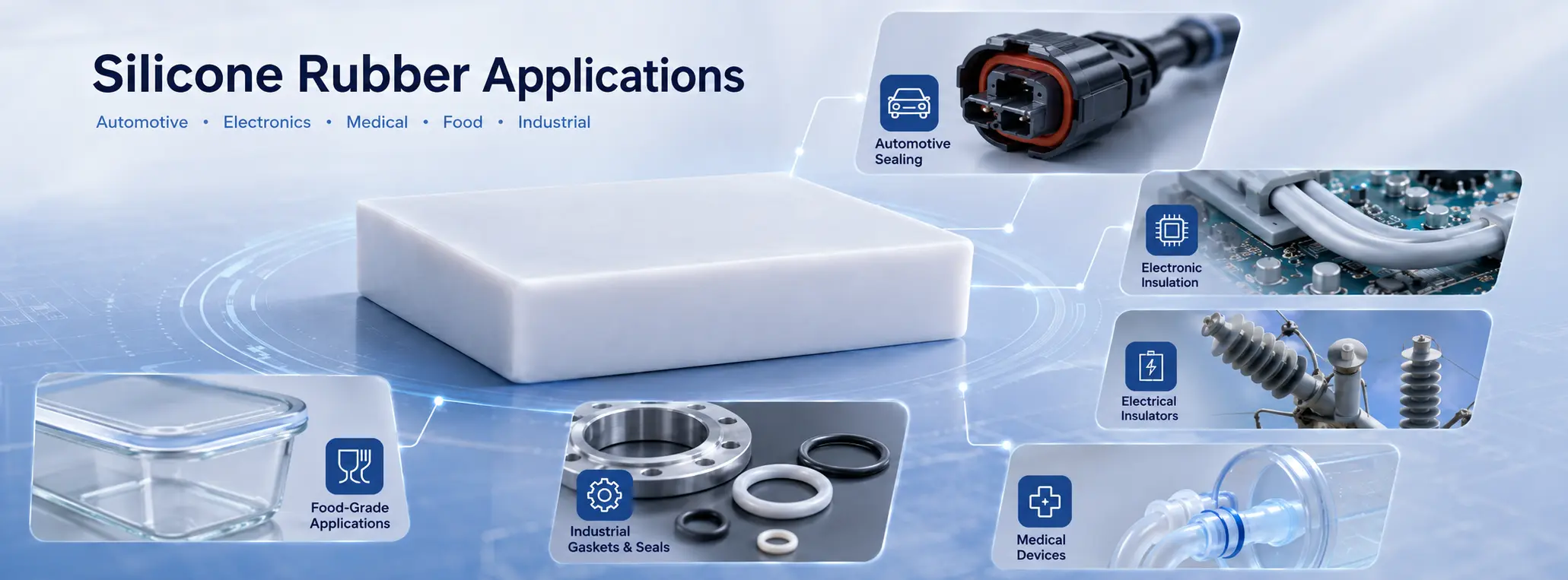
Safety Options for Food and Medical Applications
Silicone rubber is often selected for food-grade and medical-grade applications because certain formulations can meet strict safety, cleanliness, and biocompatibility requirements.
Food grade silicone rubber is commonly used in products that contact food, beverages, drinking water, or kitchen equipment. Medical grade silicone rubber is used in healthcare products, medical tubing, seals, wearable devices, and components that require high purity and stable performance.
Common food and medical applications include:
- Food processing seals
- Beverage tubing
- Kitchenware components
- Baby product parts
- Medical device seals
- Respiratory masks
- Medical tubing
- Wearable healthcare components
- Laboratory equipment parts
For these applications, it is important to choose silicone rubber material that complies with the required standards, such as food contact regulations, medical safety requirements, or customer-specific certification needs. For food-contact rubber products, manufacturers and buyers can refer to the U.S. FDA regulation 21 CFR 177.2600, which covers rubber articles intended for repeated use in contact with food.
How to Choose the Right Silicone Rubber Material
Choosing the right silicone rubber material requires more than checking a product name. The best material depends on the working environment, performance requirements, safety standards, and production process. The table below summarizes the key factors engineers, buyers, and manufacturers should consider before selecting silicone rubber for industrial applications.
| Selection Factor | What to Consider | Why It Matters | Common Applications |
|---|---|---|---|
| Operating Temperature | Check the continuous working temperature and short-term peak temperature. | Silicone rubber must remain flexible and stable under actual heat or cold exposure. | Engine seals, oven gaskets, heating equipment, aerospace parts, thermal insulation components |
| Hardness | Choose the proper Shore A hardness based on sealing pressure, flexibility, and structural needs. | Softer silicone rubber improves sealing on uneven surfaces, while harder silicone rubber provides better support and shape stability. | Silicone rubber seals, gaskets, plugs, protective covers, molded parts |
| Compression Set | Evaluate how well the material returns to its original shape after long-term compression. | Low compression set helps silicone rubber seals and gaskets maintain reliable sealing performance over time. | O-rings, gaskets, valve seals, enclosure seals, industrial sealing systems |
| Chemical and Media Contact | Identify whether the part will contact water, air, oil, steam, cleaning agents, food, chemicals, or medical fluids. | Material compatibility helps prevent swelling, degradation, contamination, or sealing failure. | Food processing seals, medical tubing, pump seals, water filtration parts, industrial equipment |
| Environmental Exposure | Consider UV light, ozone, rain, humidity, salt spray, dust, and temperature cycling. | Weather-resistant silicone rubber improves durability in outdoor and harsh environments. | Outdoor lighting seals, solar panel parts, HVAC seals, marine components, electrical enclosures |
| Regulatory Requirements | Confirm whether the material needs food grade, medical grade, flame retardant, electrical, or other certifications. | Compliance is essential for safety, quality control, and market approval. | Food-grade silicone rubber parts, medical-grade silicone components, electrical insulation parts |
| Manufacturing Process | Choose a suitable process such as compression molding, injection molding, liquid silicone rubber molding, extrusion, die cutting, or overmolding. | The process affects cost, precision, surface quality, production speed, and part design flexibility. | Custom silicone rubber parts, silicone tubing, extruded profiles, keypads, precision molded components |
Silicone Rubber vs. Other Rubber Materials
Silicone rubber is often compared with natural rubber, EPDM, nitrile rubber, neoprene, and other elastomers. Each material has its own strengths, but silicone rubber is often selected when temperature resistance, flexibility, weather stability, and safety requirements are important.
Compared with many traditional rubber materials, silicone rubber usually performs better in high and low temperature environments. It also offers strong resistance to ozone, UV exposure, and aging. This makes it especially useful for applications that require long-term durability.
However, the right choice always depends on the working conditions. For example, some applications may prioritize oil resistance, abrasion resistance, or cost efficiency. In those cases, engineers should compare material properties carefully before making a final decision.
Why Silicone Rubber Is Important in Modern Manufacturing
Silicone rubber plays an important role in modern manufacturing because it helps products become safer, more durable, and more reliable. From a small silicone rubber gasket inside an electronic enclosure to a custom silicone seal in a medical device, the material often performs a critical function.
Manufacturers choose silicone rubber because it can support product performance in challenging conditions. It can seal, protect, insulate, cushion, connect, and withstand temperature changes. This versatility makes silicone rubber one of the most practical elastomer materials for industrial design and production.
For companies developing custom silicone rubber parts, working with an experienced silicone rubber manufacturer can also improve material selection, mold design, part performance, and production efficiency.
Conclusion
Silicone rubber is a high-performance elastomer material used across many industrial applications. Its key properties include temperature resistance, flexibility, weather stability, electrical insulation, sealing performance, safety options, and strong customization potential.
For engineers, buyers, and manufacturers, selecting the right silicone rubber material requires a clear understanding of working temperature, hardness, compression set, chemical exposure, environmental conditions, certification requirements, and manufacturing process.
Whether you need silicone rubber seals, silicone rubber gaskets, silicone tubing, O-rings, keypads, or custom molded silicone rubber parts, choosing the right material and supplier can improve product reliability, reduce maintenance risks, and support long-term performance in demanding applications.