
Food grade rubber sheets are specially formulated elastomer sheets designed for use in food processing, beverage production, packaging, commercial kitchens, and other environments where rubber may come into direct or indirect contact with food. Unlike general-purpose rubber, a food grade rubber sheet must be made from approved base polymers and carefully selected additives that support safety, cleanliness, durability, and resistance to oils, water, steam, heat, or cleaning chemicals.
In simple terms, food grade rubber sheets are made of food-safe rubber compounds such as silicone, EPDM, nitrile, natural rubber, or neoprene, combined with controlled amounts of fillers, curing agents, pigments, and processing aids. The exact formulation depends on the application. A silicone food grade rubber sheet may be used for high-temperature baking or sealing, while a nitrile food grade rubber sheet is often preferred where animal fats, vegetable oils, and greasy foods are present.
Understanding what food grade rubber sheets are made of helps buyers choose the right material, avoid contamination risks, and improve the service life of gaskets, seals, pads, liners, and work surfaces.
What Makes a Rubber Sheet “Food Grade”?
A rubber sheet is considered food grade when its ingredients, manufacturing process, and finished performance are suitable for food contact applications. The material should not release harmful substances into food, change the taste or odor of food, or break down under normal processing conditions.
Food grade does not mean that every rubber sheet is suitable for every food application. Contact time, temperature, food type, cleaning method, and mechanical stress all matter. For example, dry food contact, oily food contact, acidic food contact, and hot steam exposure may require different rubber compounds.
A reliable food grade rubber sheet is usually supported by compliance documentation, such as FDA, EU, BfR, LFGB, or other relevant food-contact declarations. Buyers should always confirm the certificate, test report, and intended use before purchasing.
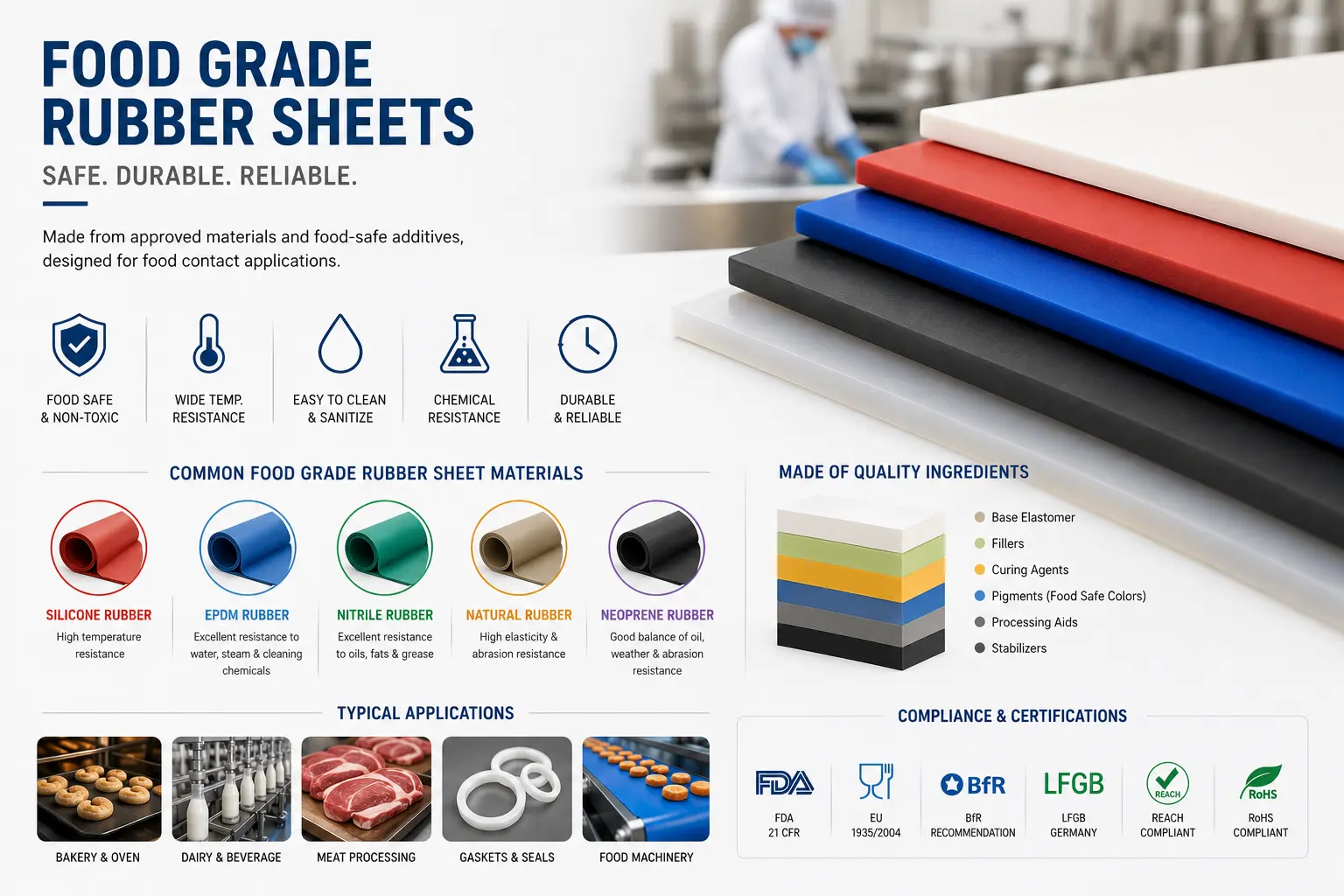
Main Materials Used in Food Grade Rubber Sheets
Food grade rubber sheets are usually made from one of several elastomer bases. Each material has different strengths and limitations.
| Material | Main Composition | Key Advantages | Common Food Industry Uses | Limitations |
|---|---|---|---|---|
| Silicone Rubber | Silicone elastomer with food-safe additives | Excellent temperature resistance, flexible, odorless, non-toxic appearance | Bakery sheets, oven seals, dairy equipment, food-grade gaskets | Lower tear resistance than some synthetic rubbers |
| EPDM Rubber | Ethylene propylene diene monomer | Good resistance to water, steam, weathering, and cleaning chemicals | Washdown areas, beverage processing, door seals, tank gaskets | Not ideal for oils and fats |
| Nitrile Rubber | Acrylonitrile-butadiene rubber | Strong resistance to oils, fats, and grease | Meat processing, edible oil equipment, food machinery seals | Limited ozone and weather resistance |
| Natural Rubber | Polyisoprene from natural latex | High elasticity, abrasion resistance, flexible performance | Dry food handling, pads, general food-contact applications | Poor resistance to oils, aging, and high heat |
| Neoprene Rubber | Chloroprene rubber | Balanced resistance to weathering, moderate oils, and abrasion | Food equipment pads, sealing strips, general industrial food areas | Not as oil-resistant as nitrile or heat-resistant as silicone |
Silicone Food Grade Rubber Sheets
Silicone is one of the most popular materials for food grade rubber sheets. It is valued for its clean appearance, wide temperature range, flexibility, and low odor. Silicone rubber is often used in bakeries, confectionery plants, dairy production, beverage filling lines, and high-temperature food processing equipment.
A silicone food grade rubber sheet is typically made from silicone polymer, reinforcing silica filler, food-safe curing agents, and approved pigments. Platinum-cured silicone is often preferred for demanding food and medical applications because it can offer cleaner curing chemistry and lower extractables compared with some peroxide-cured materials.
Silicone rubber sheets are suitable for applications where hygiene and temperature stability are important. They remain flexible at low temperatures and can withstand hot air, steam exposure, and repeated cleaning cycles better than many other elastomers. However, silicone may not be the best choice for applications involving sharp abrasion, heavy mechanical wear, or continuous contact with certain oils.
EPDM Food Grade Rubber Sheets
EPDM food grade rubber sheets are made from ethylene propylene diene monomer rubber and selected food-contact additives. EPDM is especially useful in wet processing environments because it resists water, steam, ozone, weathering, and many cleaning chemicals.
Food grade EPDM rubber sheets are commonly used for gaskets, seals, washers, and protective pads in beverage plants, dairies, breweries, and food factories where frequent washdown is required. EPDM performs well in hot water and steam applications, making it a strong option for sanitation zones.
The main limitation of EPDM is oil resistance. If the rubber sheet will contact animal fats, vegetable oils, or greasy food products, nitrile rubber is usually a better choice.
Nitrile Food Grade Rubber Sheets
Nitrile rubber, also known as NBR, is made from acrylonitrile and butadiene. In food grade rubber sheet applications, nitrile is selected when resistance to oils, fats, and grease is required.
A nitrile food grade rubber sheet is commonly used in meat processing, edible oil production, food machinery, packaging equipment, and sealing applications where oily ingredients may be present. Compared with natural rubber and EPDM, nitrile offers much better oil resistance and stronger mechanical performance in oily environments.
The performance of nitrile depends partly on its acrylonitrile content. Higher acrylonitrile levels generally improve oil resistance but may reduce low-temperature flexibility. For outdoor or ozone-heavy environments, nitrile may not last as long as EPDM.
Natural Rubber Food Grade Sheets
Natural rubber sheets are made from natural polyisoprene derived from latex. Food grade natural rubber sheets offer excellent elasticity, good abrasion resistance, and strong resilience. They are often used for flexible pads, dry food contact surfaces, and some handling applications.
Natural rubber is a good option where flexibility and wear resistance are more important than oil or heat resistance. However, it is not recommended for continuous contact with fats, oils, high heat, ozone, or harsh chemicals. Some buyers also avoid natural rubber when latex sensitivity is a concern.
Neoprene Food Grade Rubber Sheets
Neoprene, or chloroprene rubber, is a balanced synthetic rubber with moderate resistance to oils, weathering, and abrasion. Food grade neoprene rubber sheets can be used for general sealing, padding, and protective applications in food equipment.
Although neoprene is versatile, it is usually not the first choice when the application requires extreme temperature resistance, high oil resistance, or long-term steam exposure. In those cases, silicone, nitrile, or EPDM may be better.
What Additives Are Used in Food Grade Rubber Sheets?
Food grade rubber sheets are not made from raw polymer alone. A rubber compound usually includes several ingredients:
- Base elastomer: The main rubber material, such as silicone, EPDM, NBR, natural rubber, or neoprene.
- Fillers: Materials such as silica or mineral fillers that improve strength, hardness, and processing.
- Curing agents: Ingredients that crosslink the rubber and create elastic performance.
- Pigments: Food-safe colorants, often white, red, blue, or translucent for easy identification.
- Processing aids: Small amounts of approved materials that help mixing, calendaring, molding, or extrusion.
- Stabilizers: Additives that improve aging, heat resistance, or oxidation resistance.
The key difference between food grade and industrial rubber is control. Food grade compounds must use suitable ingredients and be manufactured under controlled conditions to reduce the risk of contamination, odor transfer, and unsafe migration.
How to Choose the Right Food Grade Rubber Sheet
The best food grade rubber sheet depends on the food type and processing conditions. For high-temperature baking or oven sealing, choose silicone. For steam, water, and washdown environments, EPDM is often the better option. For oil, meat, and grease contact, nitrile is usually recommended. For flexible dry food handling, natural rubber may be suitable. For general sealing where balanced resistance is needed, neoprene may work well.
Buyers should consider the following factors before ordering:
- Food type: dry, wet, oily, acidic, dairy, meat, or beverage
- Contact type: direct contact, indirect contact, short-term contact, or repeated contact
- Temperature range: freezing, room temperature, hot water, steam, or oven heat
- Cleaning method: detergents, sanitizers, CIP systems, or high-pressure washdown
- Mechanical requirements: hardness, thickness, tensile strength, tear resistance, and abrasion resistance
- Compliance documents: FDA, EU, BfR, LFGB, or customer-specific test reports
Common Applications of Food Grade Rubber Sheets
Food grade rubber sheets are widely used across the food and beverage industry. Typical applications include:
- Food processing gaskets and seals
- Conveyor belt skirting and scraper strips
- Bakery and oven sealing components
- Dairy and beverage equipment seals
- Meat and poultry processing pads
- Food packaging machine parts
- Cutting table pads and protective liners
- Tank, pump, valve, and pipe flange gaskets
- Anti-slip mats in hygienic production areas
Because these materials may contact food or food-processing surfaces, choosing the correct rubber sheet can help improve hygiene, reduce downtime, and extend equipment life.
White, Red, Blue, or Translucent: Does Color Matter?
Food grade rubber sheets are available in several colors. White and translucent sheets are commonly used because they look clean and make contamination easier to detect. Blue food grade rubber is popular in food factories because blue is visually detectable and contrasts with most food products. Red silicone rubber sheets are often used for high-temperature applications.
Color itself does not make a rubber sheet food grade. The pigment must be suitable for food-contact use, and the finished material must meet the required safety and migration standards.
Food Grade Rubber Sheet vs. General Rubber Sheet
A general rubber sheet may be strong, flexible, and affordable, but it is not automatically safe for food contact. Industrial rubber can contain additives, plasticizers, pigments, or processing residues that are not suitable for food production. It may also produce odor, stain food surfaces, or fail under cleaning conditions.
A food grade rubber sheet is designed with food-contact safety in mind. It should be manufactured from suitable compounds, tested according to relevant standards, and supplied with documentation. For food plants, using the wrong rubber can create compliance problems, contamination risks, and unnecessary maintenance costs.
Final Answer: What Are Food Grade Rubber Sheets Made Of?
Food grade rubber sheets are made of approved natural or synthetic rubber polymers combined with controlled food-safe additives. The most common materials are silicone, EPDM, nitrile, natural rubber, and neoprene. Each material is selected for specific food-processing conditions, such as heat, steam, oils, abrasion, or cleaning chemicals.
For high-temperature and hygienic applications, silicone food grade rubber sheets are often the best choice. For steam and washdown areas, EPDM performs well. For oily and greasy foods, nitrile is usually recommended. For dry food handling and elastic padding, natural rubber may be suitable. For general-purpose sealing, neoprene offers balanced performance.
The most important point is that “food grade” depends not only on the rubber type but also on the complete compound, manufacturing control, testing, and compliance documentation. When selecting food grade rubber sheets, always match the material to the real working conditions and request the proper food-contact certification from the supplier.
FAQ
Are food grade rubber sheets safe for direct food contact?
Yes, they can be safe for direct food contact when the rubber compound is suitable for the application and supported by relevant food-contact compliance documents.
Which food grade rubber sheet is best for high temperature?
Silicone food grade rubber sheet is usually the best choice for high-temperature applications such as baking, oven sealing, and hot food processing.
Which food grade rubber sheet is best for oils and fats?
Nitrile food grade rubber sheet is commonly used for oily foods, meat processing, edible oils, and greasy food equipment.
Is EPDM rubber food grade?
EPDM can be food grade when it is made with approved ingredients and tested for food-contact applications. It is especially useful for water, steam, and washdown environments.
Is all silicone rubber food grade?
No. Silicone rubber must be formulated, manufactured, and tested for food-contact use before it can be considered food grade.