
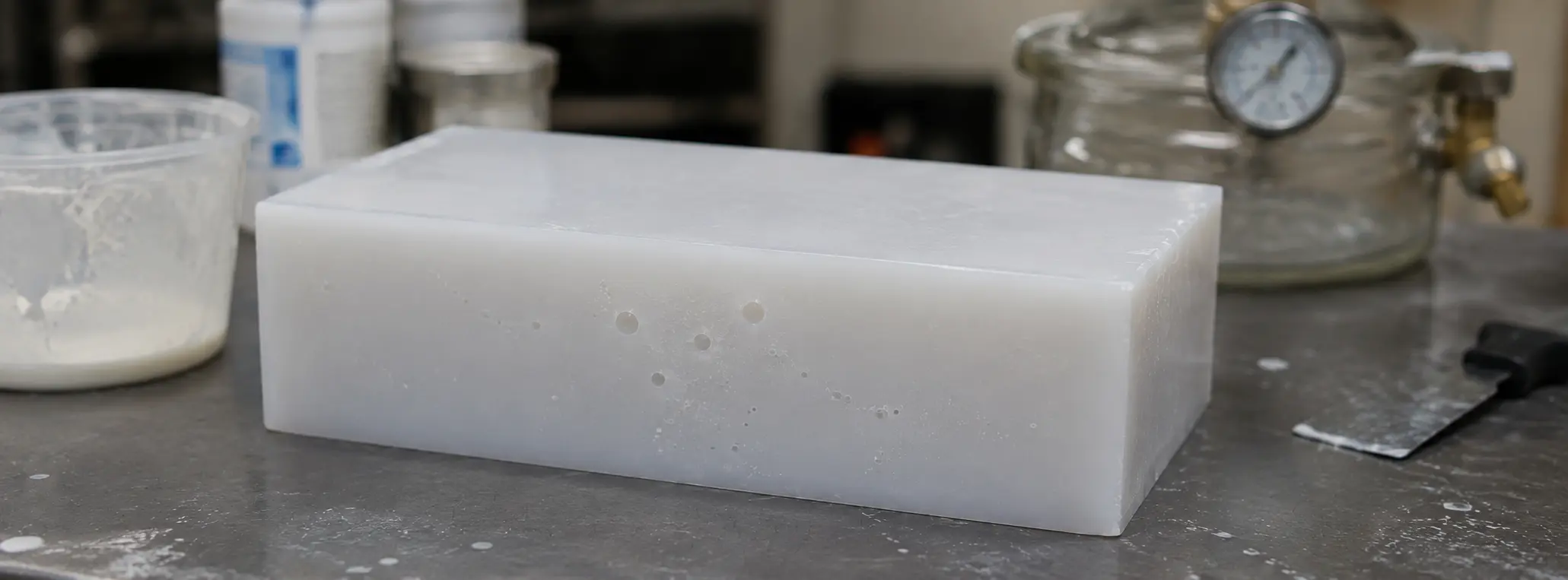
A Professional Guide to Reduce Bubbles in Silicone Rubber
Bubbles in silicone rubber are usually caused by trapped air during mixing, pouring, degassing, curing, or mold design. To reduce bubbles effectively, use slow mixing, proper vacuum degassing, thin-stream pouring, surface brushing, venting, and correct curing conditions.
Quick Answer: How Do You Reduce Bubbles in Silicone Rubber?
The best way to reduce bubbles in silicone rubber is to control the entire process from material selection to curing. In professional silicone mold making and casting, the most reliable method is to mix slowly, vacuum degas the silicone, pour it in a thin stream from one corner, and allow trapped air to escape before curing.
- Mix slowly instead of whipping air into the silicone.
- Use a mixing container at least four times larger than the silicone volume.
- Vacuum degas at around 28–30 inHg when possible.
- Brush a thin first layer over detailed surfaces before the main pour.
- Pour from the lowest point in a thin continuous stream.
- Add vents for deep, narrow, or enclosed mold areas.
- Control temperature, moisture, and curing time.
Why Bubbles Form in Silicone Rubber
Silicone rubber, especially two-part RTV silicone, traps air easily during mixing. When Part A and Part B are combined, every stir, fold, scrape, and pour can introduce small air pockets. If the silicone is thick or cures quickly, those bubbles may not have enough time to rise to the surface before the rubber sets.
Bubbles may appear inside the cured silicone, on the surface of a mold, around fine details, or at the top of a casting. Each type of bubble has a different cause. Internal bubbles usually come from mixing and poor degassing. Surface bubbles often happen when air is trapped against a detailed master pattern. Large voids are usually caused by poor pouring direction, lack of vents, or complicated mold geometry.
Common Causes of Bubbles in Silicone Rubber
| Cause | What Happens | Best Solution |
|---|---|---|
| Fast mixing | Air is whipped into the silicone. | Mix slowly with a flat spatula. |
| High viscosity | Bubbles rise slowly and stay trapped. | Use vacuum degassing or lower-viscosity silicone. |
| Short pot life | The silicone cures before bubbles escape. | Choose a longer working time. |
| Poor pouring method | Air becomes trapped in corners and details. | Pour slowly from one low point. |
| No vacuum degassing | Mixed air remains inside the rubber. | Degas at about 28–30 inHg when possible. |
| No mold vents | Air cannot escape from enclosed areas. | Add vent channels or change mold orientation. |
| Moisture or contamination | Gas, foam, cure inhibition, or surface defects may occur. | Dry the mold and clean the master pattern. |
Key Data for Bubble Reduction
| Process Factor | Recommended Value | Reason |
|---|---|---|
| Vacuum level | 28–30 inHg | Common range for effective air removal from RTV silicone. |
| Container size | At least 4× liquid volume | Silicone expands strongly under vacuum. |
| High-viscosity threshold | Above about 15,000 cP | Vacuum degassing becomes much more important. |
| Resting time | 5–30 minutes, depending on pot life | Allows some bubbles to rise naturally. |
| Pouring stream | Thin, continuous stream | Helps stretch and break bubbles during pouring. |
Bubble Risk by Silicone Condition
1. Choose the Right Silicone Rubber
Choosing the correct silicone rubber is the first step in reducing bubbles. A low-viscosity silicone flows more easily and allows air to rise faster. A high-viscosity silicone can capture air and hold bubbles inside the liquid until curing is complete.
For detailed molds, transparent parts, encapsulation, or cosmetic-grade castings, choose a silicone with enough pot life for mixing, degassing, and pouring. A very fast-curing silicone may save time, but it increases the risk of trapped bubbles. A longer pot life gives bubbles more time to escape and gives the operator more control.
2. Mix Silicone Slowly and Thoroughly
Mixing technique has a major impact on bubble formation. Do not stir aggressively or use a whipping motion. Instead, fold the silicone slowly from the bottom to the top. Scrape the sides and bottom of the container to make sure Part A and Part B are fully combined.
Use a flat mixing stick rather than a round rod. A flat tool helps scrape the container and mix more evenly. Keep the tool under the surface as much as possible because repeatedly lifting it out of the liquid pulls air into the silicone.
3. Use Vacuum Degassing
Vacuum degassing is the most effective professional method for removing bubbles from silicone rubber. After mixing, place the silicone inside a vacuum chamber and apply vacuum. The silicone will rise as the trapped air expands, then collapse as bubbles break.
A common working vacuum range is about 28–30 inHg. The exact time depends on silicone viscosity, volume, pot life, and chamber performance. Do not degas only by the clock. Watch the behavior of the material. When large bubbling slows and the silicone has collapsed, it is usually ready to pour.
Vacuum Degassing Steps
- Mix Part A and Part B according to the manufacturer’s ratio.
- Transfer the silicone into an oversized container.
- Place the container inside the vacuum chamber.
- Pull vacuum gradually if the silicone rises too quickly.
- Allow the silicone to foam upward and collapse.
- Continue until major bubbling slows.
- Release vacuum slowly to prevent splashing.
- Pour immediately within the remaining pot life.
4. Use Pressure Casting When Vacuum Is Not Enough
Vacuum removes bubbles from liquid silicone before pouring. Pressure casting works differently. It compresses bubbles so small that they become difficult to see. This is especially useful when casting resins into silicone molds, but it can also help in some silicone casting applications where tiny bubbles remain after pouring.
Many workshops use pressure pots at around 40–60 psi for bubble-sensitive resin casting. For silicone rubber itself, check the material manufacturer’s recommendations before using pressure because cure behavior, mold strength, and part geometry may vary.
5. Pour Silicone Correctly
Pouring technique is just as important as degassing. Even perfectly degassed silicone can trap air if it is dumped quickly over a detailed pattern. The best method is to pour in a thin, steady stream into one corner or the lowest point of the mold box. Let the silicone flow naturally across the surface and rise around the object.
A thin stream helps stretch the silicone and break small bubbles. Pouring from one location prevents air from being trapped between multiple flow fronts. Avoid pouring directly onto detailed surfaces unless you first brush on a detail coat.
6. Brush a Thin Detail Coat First
If the master pattern has fine texture, lettering, deep grooves, undercuts, or sharp corners, brush a thin layer of silicone onto the surface before pouring the main volume. This pushes silicone into small details and displaces air that would otherwise remain trapped against the surface.
After brushing the detail coat, pour the remaining silicone slowly into the mold box. This method is especially useful for figurines, architectural models, jewelry molds, prototype parts, textured surfaces, and complex industrial components.
7. Improve Mold Design and Add Vents
Some bubble problems are not caused by mixing or degassing. They are caused by mold geometry. Deep pockets, blind holes, narrow channels, and high points can trap air. When silicone flows into these areas, air needs a path to escape.
Add small vent channels at high points where air naturally collects. Change the mold orientation so air rises toward an opening instead of becoming trapped. For complex molds, adding a feed channel and several vent channels can greatly reduce voids.
8. Control Temperature and Pot Life
Temperature affects viscosity, working time, and curing speed. Warmer silicone usually flows more easily, but it also cures faster. Cooler silicone gives longer working time, but it may become thicker and harder to degas. The best temperature is normally the manufacturer’s recommended room-temperature range.
If your workshop is too hot, the silicone may start curing before bubbles escape. If it is too cold, the silicone may hold bubbles because viscosity increases. Store materials at the recommended temperature and allow them to reach room temperature before use.
9. Avoid Moisture and Contamination
Moisture, dust, oils, uncured resin, sulfur clay, latex, amines, and incompatible release agents can cause defects in silicone rubber. Some defects look like bubbles but are actually cure inhibition, gas formation, or surface contamination.
Clean the master pattern before molding. Dry porous materials such as plaster, wood, concrete, or 3D prints. Seal porous surfaces when necessary. If using platinum-cure silicone, test compatibility with the master pattern, release agent, and any coating before making a full mold.
10. Troubleshooting: Bubble Location and Fixes
| Bubble Location | Likely Cause | Fix |
|---|---|---|
| Throughout the silicone | Air introduced during mixing | Mix slower and vacuum degas longer. |
| On detailed surfaces | Air trapped against the master | Brush on a thin detail coat first. |
| In corners or high points | Poor mold venting | Add vents or change mold angle. |
| Large voids | Pouring too fast or from several points | Pour slowly from one low point. |
| Tiny foam-like bubbles | Moisture, contamination, or excessive agitation | Dry materials, clean surfaces, and mix gently. |
| Sticky areas with bubbles | Cure inhibition or wrong mix ratio | Check material compatibility and measure accurately. |
Best Professional Workflow for Bubble-Free Silicone
- Prepare a clean, dry mold box and master pattern.
- Seal porous surfaces if needed.
- Measure silicone accurately by weight or volume.
- Mix slowly and scrape the sides and bottom.
- Transfer to an oversized container.
- Vacuum degas until the silicone rises, collapses, and bubbling slows.
- Brush a thin coat onto detailed areas.
- Pour the remaining silicone in a thin stream from one low point.
- Use vents for enclosed or high areas.
- Allow the silicone to cure fully under stable conditions.
Frequently Asked Questions
Can silicone bubbles disappear by themselves?
Some bubbles can rise and disappear naturally, especially in low-viscosity silicone with a long pot life. However, high-viscosity or fast-curing silicone usually needs vacuum degassing for reliable bubble removal.
Can I remove bubbles without a vacuum chamber?
Yes, but results may not be as consistent. You can reduce bubbles by mixing slowly, using low-viscosity silicone, pouring in a thin stream, brushing a detail coat, vibrating gently, and allowing extra resting time before curing.
Why does silicone expand in the vacuum chamber?
Trapped air expands under reduced pressure. This is why silicone rises or foams during vacuum degassing. After the bubbles break, the silicone collapses back down.
Should I vibrate silicone to remove bubbles?
Gentle vibration can help bubbles rise, but strong vibration may move the master pattern, create surface waves, or introduce new defects. Vibration is best used as a secondary method, not a replacement for proper degassing.
Why do bubbles appear only on the surface?
Surface bubbles usually happen when air is trapped between the silicone and the master pattern. Brushing on a thin first layer is the best way to push silicone into fine details and remove surface air.
Conclusion
Reducing bubbles in silicone rubber requires a complete, controlled process. Start with the right silicone, mix slowly, vacuum degas when possible, pour in a thin stream, brush detailed surfaces, and design the mold so trapped air can escape.
For professional results, focus on prevention rather than repair. Once silicone cures with bubbles inside, the defect is difficult or impossible to remove. A careful workflow before curing is the most reliable way to achieve smooth, strong, bubble-free silicone rubber parts and molds.