
Silicone Rubber Material Guide
What Is Silicone Elastomer?
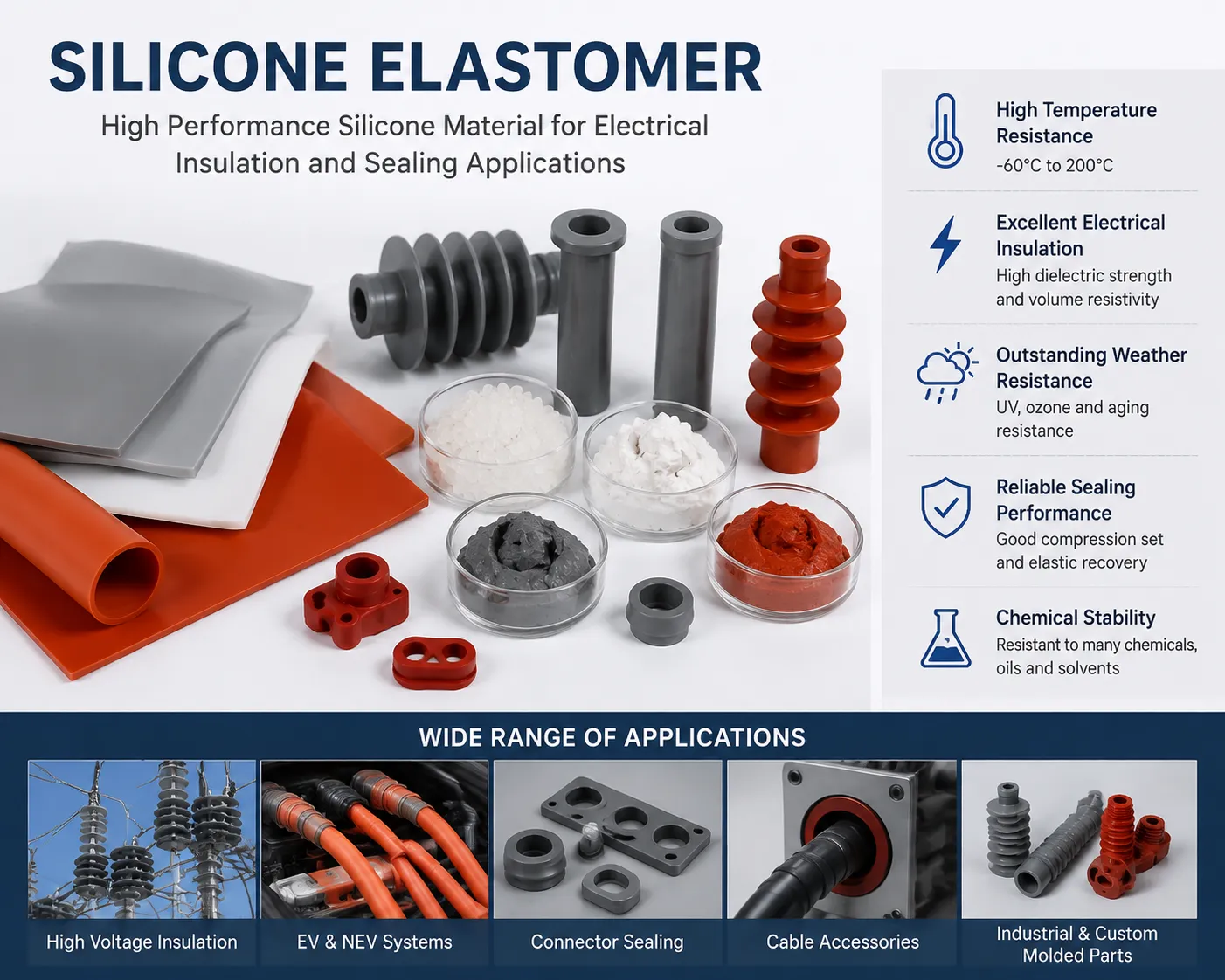
Silicone elastomer is a high-performance silicone-based rubber material known for its excellent elasticity, temperature resistance, electrical insulation and long-term stability. Unlike conventional organic rubber materials, silicone elastomer uses a silicon-oxygen backbone structure that provides outstanding resistance to heat, ozone, UV radiation and environmental aging.
Because of these properties, silicone elastomer is widely used in electrical insulation, automotive components, EV and NEV systems, medical products, sealing applications and high-voltage composite insulators.
What Is Silicone Elastomer?
Silicone elastomer is an advanced silicone rubber material created by crosslinking silicone polymer chains into a three-dimensional elastic network. This structure provides excellent flexibility, recovery performance and durability under demanding conditions.
Compared with conventional rubber materials, silicone elastomer offers superior temperature resistance, weather stability and electrical insulation performance. These characteristics make it suitable for applications requiring long service life and reliable performance.
Silicone elastomer is an engineered silicone rubber material designed for high-performance applications requiring flexibility, heat resistance, electrical reliability and environmental durability.
What Is Silicone Elastomer Made Of?
The main component of silicone elastomer is polysiloxane polymer. Unlike many organic rubber materials based on carbon-carbon structures, silicone elastomer contains a silicon-oxygen molecular backbone.
This unique molecular structure gives silicone elastomer excellent thermal stability, weather resistance and electrical performance.
| Component | Function |
|---|---|
| Polyme silicone | Provides elasticity and basic material structure |
| Reinforcing Filler | Improves tensile strength and tear resistance |
| Crosslinking Agent | Creates the rubber network during vulcanization |
| Additives | Adjust electrical, mechanical and environmental properties |
Silicone Elastomer vs Silicone Rubber
The terms silicone elastomer and silicone rubber are often used interchangeably in industrial applications.
Silicone rubber usually refers to finished products such as seals, tubes and molded parts, while silicone elastomer focuses more on material properties and engineering performance.
| Thuật ngữ | Main Focus |
|---|---|
| Elastomer silicone | Material performance, elasticity and engineering characteristics |
| Cao su silicone | Finished silicone products and components |
Types of Silicone Elastomer
Silicone elastomers are available in different forms depending on processing method and application requirements.
HTV / HCR Silicone Elastomer
HTV silicone elastomer, also known as HCR (High Consistency Rubber), is one of the most widely used industrial silicone materials.
Before curing, HCR silicone exists as a high-viscosity compound. It is processed through compression molding, transfer molding or extrusion, followed by heat vulcanization.
HTV silicone elastomer is commonly used for electrical insulation components, composite insulators, cable accessories, seals and high-temperature rubber parts.
LSR Silicone Elastomer
Liquid Silicone Rubber (LSR) is a two-component silicone system mainly processed through injection molding. It provides excellent dimensional accuracy and production efficiency.
RTV Silicone Elastomer
RTV silicone elastomer cures at room temperature and is widely used for adhesives, coatings, sealants and repair applications.
Key Properties of Silicone Elastomer
The performance advantages of silicone elastomer come from its balance of mechanical, thermal and electrical properties.
| Tài sản | Advantage |
|---|---|
| Khả năng chịu nhiệt | Maintains flexibility under high and low temperature environments |
| Cách điện | Suitable for cable, connector and high-voltage applications |
| Khả năng chống chịu thời tiết | Excellent resistance to UV radiation, ozone and outdoor aging |
| Elastic Recovery | Maintains sealing performance after compression or deformation |
| Tính ổn định hóa học | Reliable performance under various environmental conditions |
Electrical Properties of Silicone Elastomer
Electrical-grade silicone elastomer is widely used because it combines excellent insulation performance with flexibility and long-term stability.
Important electrical characteristics include volume resistivity, dielectric strength, tracking resistance and leakage resistance.
| Tính chất điện | Mô tả |
|---|---|
| Điện trở suất thể tích | Resistance against electrical current flowing through the material |
| Độ bền điện môi | Ability to withstand electrical breakdown |
| Theo dõi mức kháng cự | Resistance against surface electrical degradation |
| Leakage Resistance | Ability to reduce unwanted current paths |
Silicone Elastomer for High Voltage Applications
Silicone elastomer is widely used in high-voltage electrical systems because of its excellent insulation performance, weather resistance and long-term reliability.
Composite insulators, cable accessories and electrical protection components require materials that can withstand continuous electrical stress, UV exposure, pollution and temperature changes.
Compared with traditional insulating materials, silicone elastomer provides advantages including lightweight design, excellent hydrophobicity and strong resistance to outdoor aging.
Silicone Elastomer in EV and NEV Applications
The rapid development of electric vehicles and new energy vehicles has increased demand for advanced silicone materials.
EV systems contain high-voltage batteries, power electronics and electrical connections that require reliable insulation, sealing and thermal stability.
Silicone elastomer is commonly used in battery sealing systems, high-voltage cable protection, connector seals and electronic components because of its excellent durability.
| Ứng dụng | Function of Silicone Elastomer |
|---|---|
| Hệ thống pin | Provides sealing protection and electrical insulation |
| High Voltage Cable | Provides insulation and mechanical protection |
| Connector Sealing | Prevents moisture and contamination |
| Điện tử công suất | Provides thermal and electrical protection |
Silicone Elastomer Product Grades
High Performance Electrical Silicone Elastomer
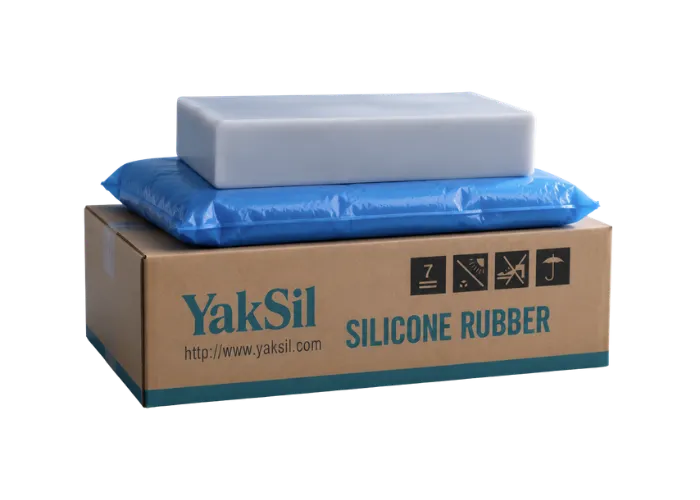
Our silicone elastomer materials are designed for demanding applications requiring excellent electrical insulation, high temperature resistance and mechanical reliability.
These HTV silicone elastomer grades are suitable for molded silicone components, composite insulators, electrical insulation parts, sealing products and customized rubber applications.
Typical Properties Data
| Tài sản | Đơn vị | YK-3160D | YK-3160Z | YK-3160G |
|---|---|---|---|---|
| Độ cứng | Bờ A | 65 ± 3 | 65 ± 3 | 60 ± 3 |
| Độ bền kéo | kN/m | ≥10 | ≥10 | ≥12 |
| Độ bền kéo | MPa | ≥4.0 | ≥4,5 | ≥5,0 |
| Elongation | % | ≥220 | ≥220 | ≥240 |
| Permanent Deformation of Fixed Extension | % | ≤4 | ≤4 | ≤4 |
| Mật độ | g/cm³ | 1.48 ±0.03 | 1.46 ±0.03 | 1.46 ±0.03 |
| Breakdown Field Strength | kV/mm | ≥20 | ≥21 | ≥22 |
| Resistance to Leakage and Tracking | mm | ≤2.5 | ≤2.5 | ≤2.5 |
| Hằng số điện môi | - | ≤5 | ≤5 | ≤5 |
| Điện trở suất thể tích | Ω·cm | 1×10¹⁴ | 2×10¹⁴ | 2×10¹⁴ |
How Is Silicone Elastomer Manufactured?
Industrial silicone elastomer products are manufactured through mixing, molding and vulcanization processes.
For HTV silicone elastomer, silicone polymer is combined with reinforcing fillers, curing agents and functional additives before molding.
During vulcanization, silicone molecules form a crosslinked network structure, creating the final elastic rubber material.
Silicone Compound → Mixing → Molding → Heat Vulcanization → Inspection → Finished Product
Manufacturing control is important because curing conditions directly affect hardness, strength, elasticity and electrical properties.
How to Select the Right Silicone Elastomer?
The correct silicone elastomer should be selected according to the working environment, mechanical requirements and electrical performance requirements.
| Application Requirement | Important Properties |
|---|---|
| High Voltage Insulation | Dielectric strength, volume resistivity and tracking resistance |
| Mechanical Reliability | Tensile strength, tear strength and hardness |
| High Temperature Applications | Heat aging resistance and thermal stability |
| Outdoor Applications | UV resistance, ozone resistance and weather durability |
| EV Applications | Electrical insulation, sealing performance and long-term reliability |
Frequently Asked Questions About Silicone Elastomer
What is silicone elastomer?
Silicone elastomer is a silicone-based rubber material with excellent elasticity, temperature resistance, electrical insulation and environmental stability.
Is silicone elastomer the same as silicone rubber?
In most industrial applications, silicone elastomer and silicone rubber describe the same family of silicone-based elastic materials.
Is silicone elastomer electrically insulating?
Many silicone elastomer grades provide excellent electrical insulation and are widely used in electrical and high-voltage applications.
What is HTV silicone elastomer?
HTV silicone elastomer is a high consistency silicone rubber cured through heat vulcanization and commonly used for molded and extruded silicone products.
Can silicone elastomer be used outdoors?
Yes. Silicone elastomer provides excellent resistance to UV radiation, ozone and weather aging, making it suitable for outdoor applications.
Is silicone elastomer used in EV systems?
Yes. Silicone elastomer is widely used in EV batteries, high-voltage cables, connectors and power electronic components.