
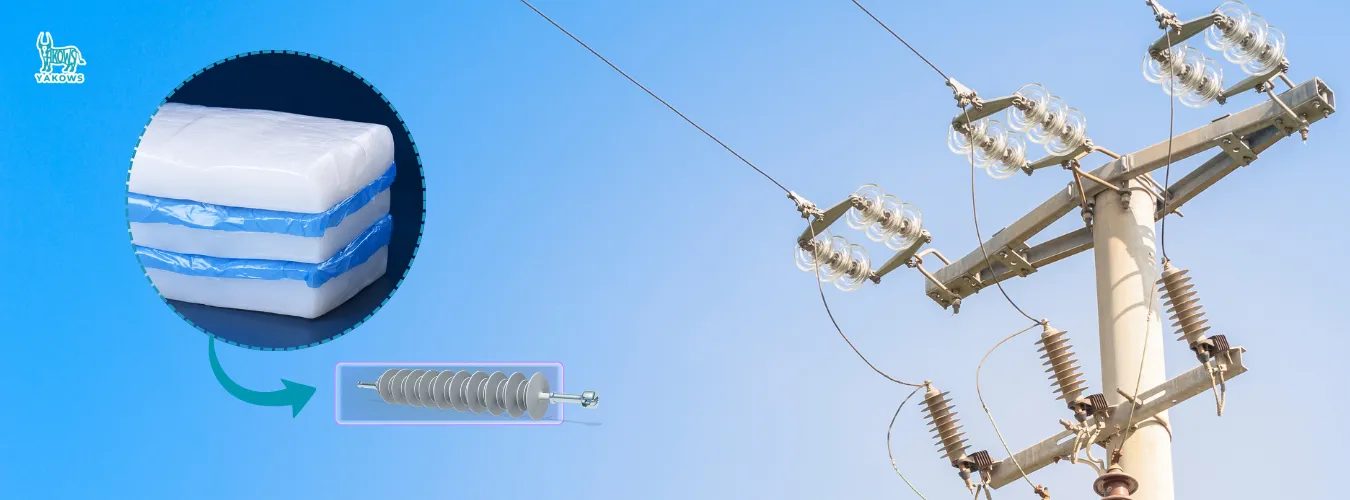
Introduction Of Silicone Rubber
The development of silicone rubber began in the early 20th century, following the discovery of silicon-based polymers. Initially, its applications were limited due to production complexities and costs. However, advances in polymer chemistry and large-scale manufacturing have made silicone rubber widely accessible. Modern silicone formulations can now be precisely engineered to exhibit specific hardness, transparency, elasticity, and thermal properties. This adaptability has enabled silicone rubber to meet the stringent demands of industries such as aerospace, electronics, and healthcare. The evolution of silicone rubber illustrates how scientific innovation can transform a specialized material into a ubiquitous industrial component.
Composition and Types of Silicone Rubber
Silicone rubber is primarily composed of a polymer backbone of alternating silicon and oxygen atoms, with organic groups attached to silicon. Its unique molecular structure grants both flexibility and thermal stability, distinguishing it from conventional elastomers. There are several main types of silicone rubber, each designed for specific applications:
- Room Temperature Vulcanized (RTV) Silicone Rubber: Cures at room temperature and is commonly used for mold-making, sealing, and adhesives.
- High-Temperature Vulcanized (HTV Silicone Rubber): Requires heat for curing and is suitable for automotive parts, electrical insulation, and gaskets.
- Liquid Silicone Rubber (LSR): Highly fluid before curing, ideal for injection molding applications with complex shapes and high precision.
- Fluorosilicone Rubber: Offers enhanced chemical resistance, particularly against fuels and oils, making it widely used in aerospace and automotive industries.
Understanding the different types of silicone rubber is essential for selecting the right material for a given application.
Manufacturing Process of Silicone Rubber
The production of silicone rubber involves a carefully controlled process to ensure consistent quality and performance. The process begins with polymerization, where siloxane monomers are chemically linked to form long polymer chains. Catalysts such as platinum or tin are typically used to control the reaction and achieve the desired molecular weight.
Next comes compounding, in which the base polymer is blended with fillers, pigments, and curing agents to tailor its properties. Common fillers include silica, which improves tensile strength and thermal stability, and titanium dioxide, which enhances opacity and UV resistance. Additional additives, such as flame retardants or plasticizers, may also be included depending on the application.
The third step is curing, which transforms the uncured material into a solid, elastic state. Different curing methods are used depending on the silicone type: heat curing for HTV, room-temperature curing for RTV, and platinum-catalyzed curing for LSR, which provides rapid solidification and superior mechanical properties.
Finally, shaping and finishing allow the cured silicone rubber to be molded, extruded, or calendered into sheets, tubes, seals, or custom shapes. Advanced techniques such as injection molding enable the creation of high-precision components with complex geometries, meeting the exacting standards of modern industrial applications.
Properties and Advantages
Silicone rubber exhibits a unique combination of properties that make it highly sought after across multiple industries. Its thermal resistance enables it to remain flexible across a wide temperature range, from -60°C to 230°C. Chemical inertness allows it to resist water, oils, solvents, and UV radiation without degradation. The material’s biocompatibility makes it safe for medical and food-related applications, while its flexibility ensures resilience under mechanical stress. Additionally, silicone rubber is durable, resisting aging, oxidation, and environmental degradation. These characteristics collectively explain why silicone rubber is preferred in applications where reliability, safety, and longevity are critical.
YAKOWS Silicone Rubber Product
| Item | Unit | LW-3160D | LW-3160Z | LW-3160G |
|---|---|---|---|---|
| Hardness | Shore A | 65±3 | 65±3 | 60±3 |
| Tear Strength | kN/m | ≥10 | ≥10 | ≥12 |
| Tensile Strength | MPa | ≥4.0 | ≥4.5 | ≥5.0 |
| Elongation | % | ≥220 | ≥220 | ≥240 |
| Permanent deformation of fixed extension | % | ≤4 | ≤4 | ≤4 |
| Density | g/cm³ | 1.48±0.03 | 1.46±0.03 | 1.46±0.03 |
| Breakdown field strength | kV/mm | 20 | 21 | 22 |
| Resistance to leakage and marking (1A AC4.5 class) | mm | ≤2.5 | ≤2.5 | ≤2.5 |
| Dielectric constant | / | ≤5 | ≤5 | ≤5 |
| Volume resistivity | Ω·cm | 1×10¹⁴ | 2×10¹⁴ | 2×10¹⁴ |
Applications of Silicone Rubber
Silicone rubber’s versatility has led to widespread use across numerous industries. In the automotive sector, it is commonly used for gaskets, seals, hoses, and vibration-damping components due to its thermal and chemical resistance. In electronics and electrical engineering, silicone rubber serves as insulation for wires, cables, and connectors, as well as protective coatings for components exposed to high voltages or heat.
The medical and healthcare industry relies on silicone rubber for implants, catheters, tubing, and medical seals. Its biocompatibility, combined with precision manufacturing using LSR, allows for the production of sterile and reliable medical devices.
Consumer products also benefit from silicone rubber, which is found in kitchenware, baby products, wearable electronics, and sports equipment. In these contexts, safety, flexibility, and durability are essential. Additionally, industrial applications utilize silicone rubber in molds, seals, gaskets, and protective coatings for chemical processing, aerospace, and food processing environments.
Environmental Considerations
While silicone rubber is durable and long-lasting, it is not biodegradable. However, its inert nature means it does not leach harmful chemicals into the environment, unlike some traditional plastics. To mitigate environmental impact, recycling initiatives and advanced manufacturing practices are increasingly being explored. These approaches aim to maximize material lifespan while minimizing waste, demonstrating that silicone rubber can be both practical and responsible from an environmental standpoint.
Future Trends in Silicone Rubber
The silicone rubber industry is evolving rapidly, driven by innovation in materials science and manufacturing technology. Advanced formulations are being developed, including flame-retardant and electrically conductive silicone compounds. Sustainable solutions, such as recyclable silicone and bio-based feedstocks, are gaining traction. Additionally, 3D printing technologies now allow for the creation of customized, high-precision silicone components. In the medical field, silicone rubber continues to expand into minimally invasive devices, prosthetics, and drug delivery systems. These trends indicate that silicone rubber will remain a cornerstone material across diverse applications in the foreseeable future.
Conclusion
Silicone rubber is a uniquely versatile and high-performance material that has transformed numerous industries due to its flexibility, thermal stability, chemical resistance, and biocompatibility. From automotive gaskets to medical devices, its applications are vast and ever-expanding. Advances in polymer chemistry, manufacturing processes, and sustainability initiatives promise to further enhance its functionality and environmental footprint. Understanding silicone rubber—from its composition and manufacturing to its wide range of applications—is essential for engineers, designers, and professionals seeking reliable, durable, and innovative materials.