
HTV Silicone for Rubber Gasket
A rubber gasket must do more than simply fit between two surfaces. It needs to maintain sealing pressure, recover after compression, tolerate temperature changes and resist the operating environment throughout its service life.
HTV silicone rubber is widely used for gasket applications where heat resistance, flexibility, electrical insulation or long-term environmental stability are more important than the lowest material cost.
Compared with many conventional elastomers, silicone rubber can remain flexible across a broad temperature range and can be formulated in different Shore A hardness levels for molded, die-cut and custom sealing components.
This guide explains when HTV silicone is suitable for rubber gaskets, which properties matter most, how hardness and compression set affect sealing, and how manufacturers can select the right silicone compound for industrial production.
What Is an HTV Silicone Rubber Gasket?
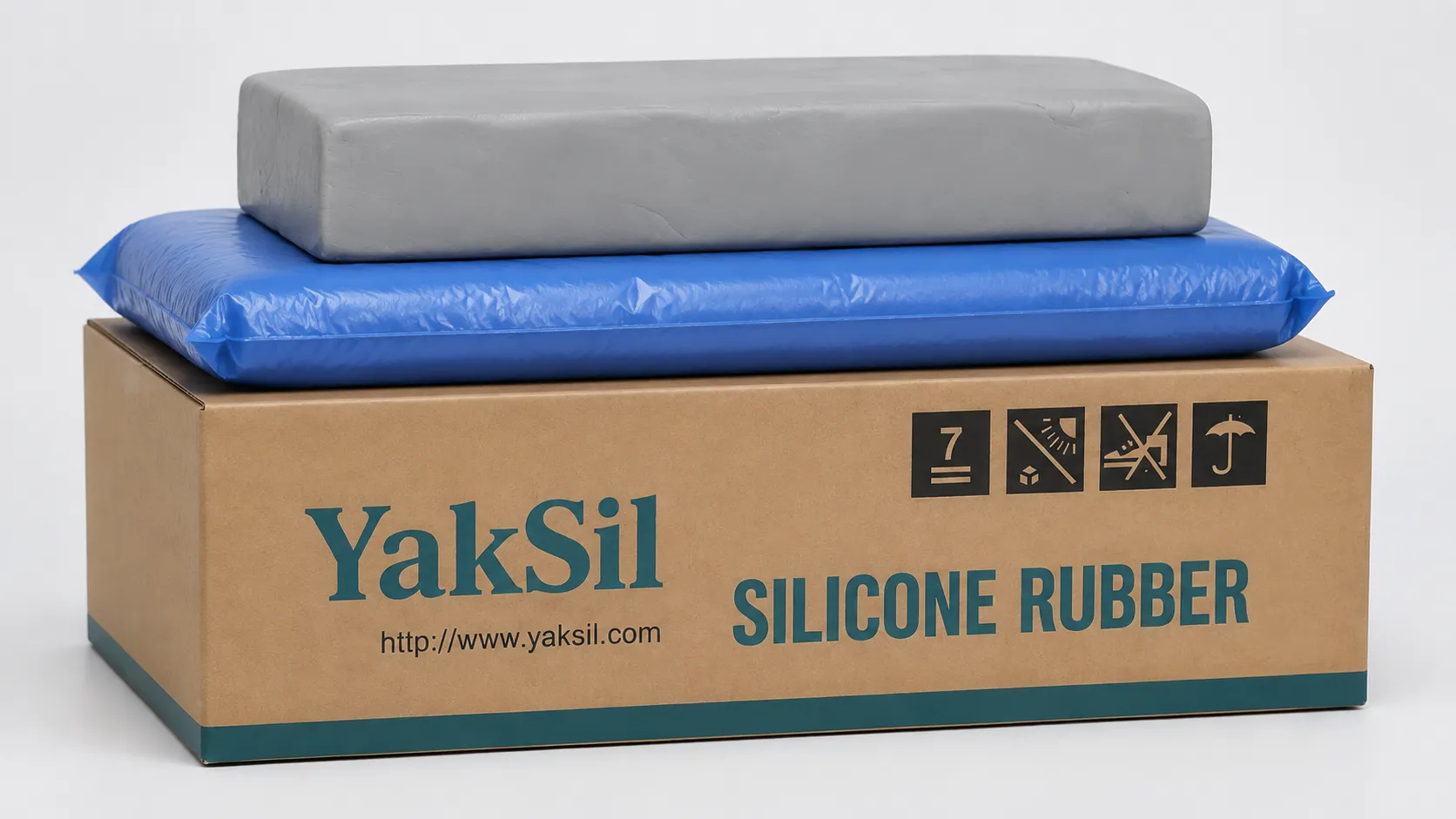
HTV stands for high-temperature vulcanizing silicone rubber. It is commonly supplied as a high-consistency, gum-like compound that is cured using heat.
Once vulcanized, the material becomes an elastic silicone elastomer that can be compressed between mating surfaces to create a seal.
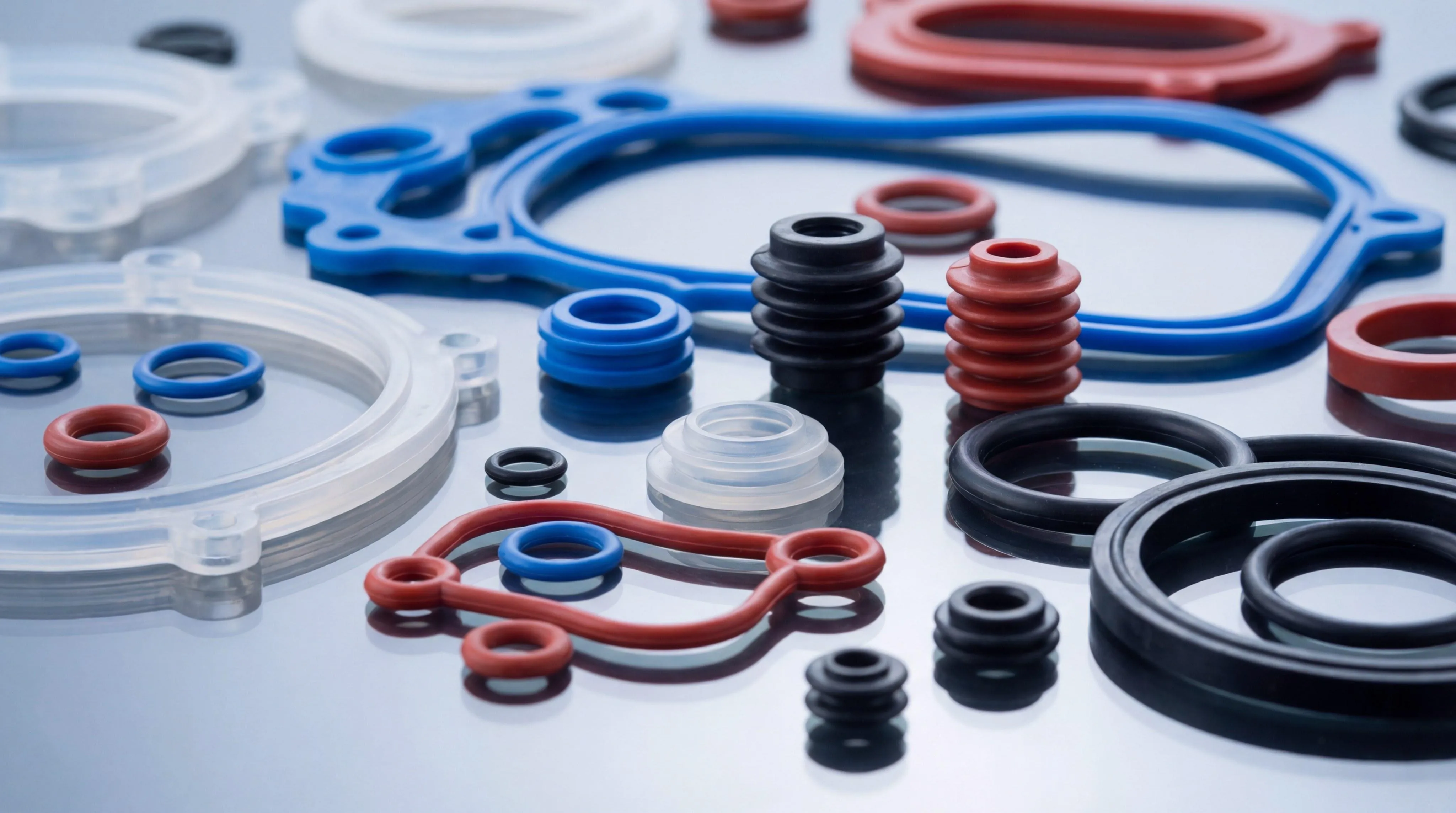
HTV silicone gaskets can be manufactured through compression molding, transfer molding, extrusion followed by cutting or joining, and other rubber-processing methods depending on the gasket geometry.
HTV silicone is a gasket material, not one fixed specification.Different HTV compounds can have very different hardness, compression set, tear strength, temperature resistance and regulatory properties.
Why Is Silicone Rubber Used for Gaskets?
Silicone rubber is selected for gaskets when the sealing environment requires properties that many conventional elastomers cannot easily provide together.
Heat ResistanceSuitable silicone compounds can retain useful sealing properties at elevated temperatures.
Low-Temperature FlexibilitySilicone can remain flexible in cold environments where many rubber materials become significantly harder.
Elastic RecoveryAllows the gasket to recover after compression when the compound and design are appropriate.
Weather ResistanceGood resistance to UV, ozone and outdoor environmental exposure.
Electrical InsulationSpecialized silicone compounds can provide strong dielectric properties.
Custom HardnessAvailable across different Shore A levels for different sealing pressures and geometries.
HTV Silicone Rubber Gasket vs Regular Rubber Gasket
The term rubber gasket covers many elastomer families, including EPDM, NBR, natural rubber, FKM and silicone.
Each material has different strengths. Silicone should not be treated as universally better, but it becomes especially valuable in high- and low-temperature environments or where weatherability and electrical insulation are important.
| Eigenschaft | HTV Silicone Gasket | General Rubber Gasket |
|---|---|---|
| Temperature Range | Very broad for suitable grades | Depends strongly on elastomer type |
| Low-Temperature Flexibility | Excellent for many formulations | Can become harder depending on material |
| UV / Ozone Resistance | Hervorragend | Material dependent |
| Elektrische Isolierung | Excellent in specialized grades | Material dependent |
| Oil Resistance | Limited for many standard silicone grades | NBR or FKM may perform better |
| Cost | Typically higher | Some conventional rubbers are more economical |
What Temperature Can a Silicone Rubber Gasket Withstand?
Temperature resistance is one of the main reasons manufacturers choose silicone rubber gaskets.
Many industrial silicone rubber compounds can operate across approximately -50°C to 200°C, while suitable formulations can retain flexibility around -60°C. Specialized high-temperature silicone compounds may extend toward approximately 250°C under appropriate conditions.
However, a gasket should never be selected only by the highest temperature shown on a datasheet.
-50°C to -60°CSuitable grades can retain useful flexibility in cold conditions.
Up to about 180°C–200°CCommon operating region for many industrial silicone compounds.
Approx. 200°C–250°CRequires suitable formulation and heat-aging validation.
For sealing applications, compression set and retained elasticity after thermal aging are usually more important than short-term maximum temperature.
Compression Set Is Critical for Rubber Gaskets
Compression set is one of the most important properties when selecting a rubber gasket material.
A gasket works by being compressed between two surfaces. This creates contact pressure that blocks leakage.
If the material does not recover sufficiently after long-term compression, the gasket can gradually lose sealing force.
Low Compression SetThe material retains more elastic recovery after prolonged compression, supporting long-term sealing.
High Compression SetThe gasket remains permanently deformed and can lose contact pressure over time.
Compression set becomes even more important when the gasket is continuously exposed to elevated temperatures.
Why Heat Makes Compression Set More Important
Temperature accelerates material aging. A gasket that performs well at room temperature may behave differently after hundreds or thousands of hours under compression at elevated temperature.
High temperature can affect the silicone crosslink network and gradually change elastic recovery.
For hot equipment, ovens, electrical enclosures or industrial machinery, gasket evaluation should consider both operating temperature and compression set measured under relevant conditions.
A heat-resistant rubber is not automatically a good gasket.The material must retain sufficient sealing force after heat, compression and aging occur together.
What Shore A Hardness Is Best for a Silicone Rubber Gasket?
There is no universal Shore A hardness for silicone gaskets. The correct value depends on sealing force, flange design, gasket thickness, pressure and the amount of compression available.
| Shore A | General Character | Possible Gasket Direction |
|---|---|---|
| 30A | Very soft | Low-force sealing and highly conformable components |
| 40A | Soft | Flexible seals and irregular mating surfaces |
| 50A | Balanced | General industrial silicone gaskets |
| 60A | Medium firm | Industrial seals requiring more dimensional support |
| 70A | Firm | Applications requiring greater resistance to deformation |
Softer is not always better. A very soft gasket may conform easily but can deform excessively under pressure or be pushed out of the sealing area.
How Hardness Affects Sealing Performance
Hardness changes how much force is required to compress the gasket and how strongly it resists deformation.
Softer SiliconeCompresses more easily and can conform to irregular surfaces with lower clamping force.
Medium-Hardness SiliconeProvides a balance between conformability and dimensional stability.
Harder SiliconeProvides greater resistance to deformation but requires more force to compress.
The ideal gasket design matches material hardness with the available clamping force and actual mating-surface geometry.
Tensile Strength and Elongation
Tensile strength measures how much pulling stress silicone rubber can withstand before failure under a defined test.
Elongation indicates how far the material can stretch before breaking.
For many static gaskets, tensile strength is not the primary sealing property, but it still matters during production, installation and maintenance.
Thin or flexible gaskets may stretch significantly during assembly and require enough elongation to avoid cracking or breaking.
Tear Strength of Silicone Rubber Gaskets
Tear strength is especially important when a gasket has thin sealing lips, bolt holes, narrow sections or sharp internal corners.
A small cut near a bolt hole can spread during installation if the material has insufficient tear resistance.
High-tear HTV silicone compounds can be useful for gasket designs exposed to repeated stretching or difficult installation.
| Gasket Feature | Possible Tear Risk |
|---|---|
| Bolt Holes | Stress concentration during tightening and installation |
| Thin Lips | Localized deformation and edge damage |
| Narrow Sections | Reduced cross-sectional strength |
| Sharp Corners | Stress concentration can initiate tears |
| Repeated Removal | Stretching and handling can gradually create damage |
HTV Silicone for High-Temperature Rubber Gaskets
High-temperature machinery and process equipment are common applications for HTV silicone gaskets.
Examples include heated enclosures, industrial ovens, electrical equipment, lighting systems and other components operating near heat sources.
For these applications, gasket selection should consider:
Continuous TemperatureNormal long-term service temperature.
Peak TemperatureShort-term maximum exposure.
Compression SetAbility to maintain sealing pressure after thermal aging.
Hardness ChangeWhether the material becomes significantly firmer during aging.
Elongation RetentionIndicates retained flexibility after heat exposure.
Service LifeRequired operating hours or expected years of use.
HTV Silicone Gaskets for Electrical Equipment
Silicone rubber is widely used in electrical equipment where a gasket must provide both sealing and electrical insulation.
Possible applications include electrical cabinets, high-voltage equipment, transformers, cable systems, battery systems and protective enclosures.
Electrical-grade silicone compounds can be designed to provide high volume resistivity and dielectric strength while retaining flexibility across changing temperatures.
For outdoor electrical equipment, resistance to UV, ozone and weathering can also be important.
HTV Silicone Gaskets for EV and Battery Systems
Electric vehicles and battery systems contain numerous interfaces requiring environmental sealing, electrical insulation and temperature resistance.
Silicone rubber gaskets may be used around battery enclosures, high-voltage electrical interfaces, charging equipment and other components.
The material may need to withstand thermal cycling, vibration, compression and outdoor environmental exposure.
Battery EnclosuresEnvironmental sealing around battery housings and access covers.
Electrical CabinetsSealing around high-voltage electronic equipment.
Connector AreasFlexible sealing around selected electrical interfaces.
Thermal EnvironmentsUseful where temperatures exceed the comfortable range of some conventional elastomers.
Food Grade Silicone Rubber Gaskets
HTV silicone can also be formulated for food-contact gasket applications.
Food-processing machinery may require flexible seals that tolerate repeated cleaning, temperature changes and direct or indirect food contact.
Applications can include processing equipment, dispensing systems, ovens, food machinery and selected fluid-handling systems.
However, the term food grade should not be used based only on material chemistry.
The exact compound should be evaluated against applicable food-contact requirements for the intended market and operating conditions.
Food contact and temperature resistance are separate requirements.A heat-resistant silicone gasket does not automatically satisfy FDA, LFGB, BfR or other applicable food-contact requirements.
Can Silicone Rubber Gaskets Be Used Outdoors?
Yes. Weather resistance is one of the advantages of silicone rubber.
Suitable HTV silicone compounds provide strong resistance to UV radiation, ozone, rain and temperature cycling, making them useful for outdoor electrical enclosures, lighting, transportation equipment and industrial systems.
Outdoor gasket design should still consider compression, joint movement, contamination and the expected service life of the entire assembly.
Where Silicone Rubber Is Not the Best Gasket Material
Silicone performs extremely well in many thermal and environmental conditions, but it is not the best material for every fluid or mechanical environment.
Standard silicone compounds generally have more limited resistance to some oils, fuels and aggressive hydrocarbons than specialized elastomers such as FKM or certain NBR formulations.
Silicone also does not normally provide the same abrasion resistance as polyurethane.
| Application Requirement | Material Consideration |
|---|---|
| High Temperature | Silicone is often a strong candidate |
| Extreme Cold | Silicone can provide excellent flexibility |
| Outdoor UV / Ozone | Silicone performs very well |
| Petroleum Oil | Check compatibility carefully; another elastomer may be preferable |
| Fuel Exposure | Specialized materials may provide better resistance |
| Severe Abrasion | Silicone may not be the preferred elastomer |
Silicone Gasket vs EPDM Gasket
EPDM and silicone are both commonly used where weather and ozone resistance are important.
EPDM can be a cost-effective choice for water, steam and many outdoor sealing applications, while silicone typically provides a wider useful temperature range and better high-temperature capability.
| Eigenschaft | Silicone | EPDM |
|---|---|---|
| High Temperature | Hervorragend | Gut |
| Low Temperature | Excellent for suitable grades | Gut |
| UV / Ozone | Hervorragend | Hervorragend |
| Elektrische Isolierung | Strong in suitable grades | Useful in selected applications |
| Cost | Higher | Generally lower |
Silicone Gasket vs NBR Gasket
NBR is widely used where resistance to petroleum oils and lubricants is important.
Silicone generally provides a broader high- and low-temperature range, but NBR can provide better oil resistance in many applications.
If the gasket is used around machinery lubricants, hydraulic fluids or petroleum-based oils, fluid compatibility should be evaluated before selecting silicone.
Silicone Gasket vs FKM Gasket
FKM is commonly selected for high temperatures and aggressive chemical or fuel environments.
Silicone often provides better low-temperature flexibility and can be highly attractive for electrical, food-contact and general high-temperature sealing.
FKM may be preferable where fuel and chemical resistance dominate the material requirements.
The correct choice depends on the full environment rather than temperature alone.
How Are HTV Silicone Rubber Gaskets Manufactured?
HTV silicone can be processed using several manufacturing methods depending on gasket geometry and production volume.
Formpressen
Preformed silicone compound is placed into a heated mold and compressed until it fills the cavity and cures.
This process is widely used for custom molded gaskets with three-dimensional features.
Transfer or Injection Molding
Silicone can be forced into a closed mold, helping produce complex geometries and improving process automation for suitable production volumes.
Extrusion
Continuous silicone profiles can be extruded and vulcanized, then cut or joined to form door seals, enclosure gaskets and other large sealing profiles.
Sheet and Die Cutting
Silicone sheet can be cut into flat gasket shapes where the application does not require complex molded geometry.
Why Processing Behavior Matters
A gasket material can have excellent final physical properties but still create production problems if its uncured processing behavior does not match the manufacturing process.
For compression molding, mold flow and cure behavior influence filling and flash.
For extrusion, plasticity, feed stability, die swell and surface quality become important.
For injection molding, compound rheology influences required pressure and cavity filling.
Shore A hardness cannot predict processing behavior.Two silicone compounds with the same cured hardness can behave very differently during extrusion or molding.
Common Silicone Rubber Gasket Failure Problems
| Failure | Mögliche Ursache | What to Check |
|---|---|---|
| Leakage After Long Service | Compression set or insufficient clamping | Material recovery, gasket thickness and joint design |
| Gasket Extrusion | Material too soft or excessive pressure | Hardness, groove design and pressure |
| Tearing | Sharp edges, low tear strength or overstretching | Material, installation and gasket geometry |
| Hardening After Heat | Thermal aging beyond material capability | Operating temperature and heat-aging performance |
| Permanent Flattening | High compression set | Compound selection and compression conditions |
| Chemical Swelling | Fluid incompatibility | Actual medium and elastomer compatibility |
Why Silicone Rubber Gaskets Leak
Leakage does not always mean the material itself is defective.
A gasket can fail because of insufficient compression, excessive compression, poor flange alignment, uneven bolt loading, incorrect hardness or chemical incompatibility.
Surface finish also matters. If the mating surface is too rough or damaged, the gasket may not fill all leakage paths.
Successful sealing requires the gasket material and mechanical joint design to work together.
How Much Should a Silicone Gasket Be Compressed?
The correct compression percentage depends on gasket geometry, hardness, thickness and application.
Too little compression may not generate enough sealing pressure. Too much compression can create excessive deformation, high stress or extrusion from the sealing area.
Manufacturers should determine the correct compression range based on the gasket design and material specification rather than using one universal value.
How to Choose HTV Silicone for a Rubber Gasket
The best gasket compound should be selected by combining sealing requirements with production conditions.
Operating TemperatureDefine minimum, continuous and peak temperatures.
Sealing MediumAir, water, steam, food products, chemicals, oils or other fluids.
Shore A HardnessMatch hardness with sealing force and geometry.
Compression SetCritical for long-term sealing under compression.
Tear StrengthImportant for thin sections and difficult installation.
Processing MethodCompression molding, extrusion, injection or die cutting.
Environmental ExposureUV, ozone, moisture, chemicals and outdoor aging.
Special RequirementsElectrical insulation, food contact or flame resistance.
Service LifeExpected operating time and maintenance interval.
What Should Be Included in a Rubber Gasket Material RFQ?
Instead of requesting only “silicone for gasket,” provide the material supplier with enough information to understand the application.
Gasket ApplicationEquipment, enclosure, pipe, electrical system or machinery.
Operating MediumAir, water, steam, oil, food, chemicals or another fluid.
Temperature RangeMinimum, continuous and maximum operating temperatures.
PressureInternal or external pressure affecting the seal.
HardnessRequired Shore A and tolerance.
Compression SetRequired test conditions where applicable.
Mechanical PropertiesTensile, elongation and tear requirements.
Processing MethodMolding, extrusion or sheet cutting.
ComplianceFood-contact, electrical, flame or customer-specific requirements.
HTV Silicone for Rubber Gaskets from Yakows
Yakows supplies HTV/HCR silicone rubber compounds for seals, gaskets and other industrial molded or extruded components.
Silicone gasket compounds can be selected according to Shore A hardness, tensile strength, elongation, tear strength, compression behavior, temperature resistance and processing requirements.
Applications can include high-temperature industrial gaskets, electrical equipment seals, EV components, food-processing seals and general industrial sealing parts.
For customers replacing an existing rubber compound, information about the current material, operating temperature, compression conditions, failure mode and production method can help identify a more suitable silicone formulation.
Häufig gestellte Fragen
Is silicone rubber good for gaskets?
Yes. Silicone rubber is especially useful for gaskets requiring broad temperature performance, flexibility, weather resistance or electrical insulation.
What is an HTV silicone gasket?
An HTV silicone gasket is a gasket manufactured from heat-vulcanized silicone rubber, commonly using high-consistency silicone compounds.
What temperature can a silicone rubber gasket withstand?
Many industrial silicone grades operate approximately from -50°C to around 200°C, while specialized grades can extend beyond this range depending on formulation and service conditions.
What Shore A hardness is best for rubber gaskets?
There is no universal hardness. Selection depends on gasket thickness, clamping force, pressure, sealing surface and required deformation.
Is softer silicone better for sealing?
Not always. Softer silicone conforms more easily but may deform excessively under pressure. The correct hardness depends on joint design.
What is compression set in a rubber gasket?
Compression set measures permanent deformation after the gasket has been compressed for a specified time and then released.
Why does a silicone gasket leak after long-term use?
Possible causes include compression set, insufficient clamping, thermal aging, chemical incompatibility or poor joint design.
Can silicone rubber gaskets be used outdoors?
Yes. Suitable silicone compounds offer excellent resistance to UV, ozone and weathering.
Can silicone gaskets be used with oil?
Compatibility depends on the specific oil and silicone formulation. Standard silicone is not always the best choice for petroleum oil or fuel exposure.
Can HTV silicone be used for food grade gaskets?
Yes, suitable HTV compounds can be formulated for food-contact applications, but the exact grade must meet the applicable food-contact requirements.