
FOOD CONTACT MATERIALS · SILICONE RUBBER ENGINEERING
Food-Grade Silicone Rubber: Grades, Safety Requirements and Applications
Silicone rubber is widely used in food processing equipment, kitchenware, food-contact seals, gaskets, tubing and other products that require flexibility, thermal stability and reliable material performance. However, not every silicone rubber compound is suitable for direct or repeated food contact.
Food-contact applications require careful control of raw materials, additives, curing systems, extractable substances and manufacturing conditions. The finished silicone product must also meet the requirements associated with its intended food type, contact temperature and duration of use.
For manufacturers and industrial buyers, selecting the right food-grade silicone rubber involves more than choosing a material labeled FDA or LFGB compliant. It is necessary to understand the differences between HTV/HCR and LSR silicone, identify applicable regulatory requirements and verify the documentation for the specific material grade.
This guide explains food-contact silicone rubber grades, relevant regulations, testing requirements and industrial applications to help manufacturers make informed material purchasing decisions.
YAKOWS · FOOD CONTACT SILICONE MATERIALS
Food-Grade Silicone Rubber for Industrial Manufacturing
Yakows develops and supplies silicone rubber compounds for industrial molding and extrusion applications. For food-contact projects, material selection should be based on the intended application, formulation and grade-specific compliance documentation.
SOLID SILICONE · HTV / HCR
Food-Contact HTV Silicone Rubber
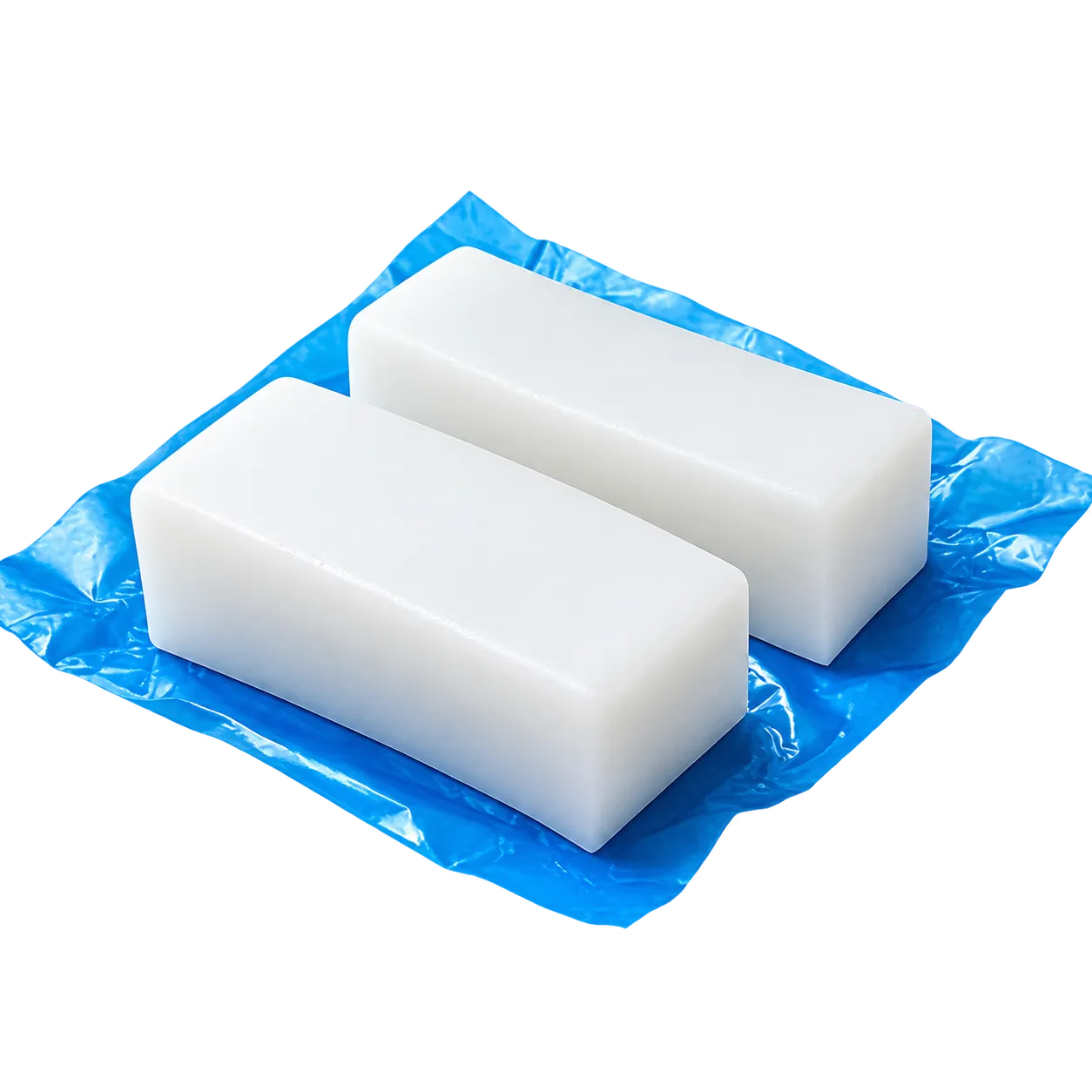
Solid high-consistency silicone compounds for compression molding, transfer molding and extrusion of food-contact components, seals, gaskets and customized silicone products.
LIQUID SILICONE · LSR
Food-Contact Liquid Silicone Rubber
Liquid silicone rubber is an option for precision injection-molded components, thin-wall products and high-volume manufacturing. Food-contact suitability must be verified for the exact formulation.
CUSTOM MATERIAL DEVELOPMENT
Customized Food-Grade Silicone Compounds
Material requirements can be evaluated according to hardness, tensile strength, tear resistance, color, processing method and intended food-contact conditions.
Looking for silicone rubber for food processing, kitchenware or OEM production?
1. What Is Food-Grade Silicone Rubber?
Food-grade silicone rubber is a silicone elastomer formulated and manufactured for applications involving contact with food. It is designed to meet the relevant chemical safety and performance requirements under specified conditions of use.
Silicone rubber is based on a silicon-oxygen polymer backbone, which contributes to its flexibility, thermal stability and resistance to many environmental conditions. Depending on the formulation, it can be manufactured into solid molded components, extruded tubing, sheets, seals and other food-contact products.
However, food-contact suitability is not determined by the base polymer alone. Fillers, pigments, curing agents, catalysts, processing aids and residual substances can all influence the final product's compliance.
Food-Grade Silicone vs. General-Purpose Silicone
| Vergleich | General-Purpose Silicone | Food-Contact Silicone |
|---|---|---|
| Formulation | Designed for general industrial performance. | Uses ingredients and processing systems suitable for the intended food-contact application. |
| Extractables | May not be evaluated for food-contact extraction requirements. | Requires applicable extractables or migration evaluation. |
| Odor and Taste | Not necessarily optimized for food-contact use. | Sensory properties may need to be assessed for the intended application. |
| Dokumentation | General technical datasheet. | Applicable regulatory statements, test reports and traceability records. |
| Anwendung | Industrial seals, insulation and general molded components. | Food-processing equipment, kitchenware and food-contact components. |
A general-purpose silicone compound should not be assumed to be food-safe simply because silicone is commonly used in kitchen products. The exact compound and finished product must be evaluated for the intended use.
2. Key Properties of Food-Contact Silicone Rubber
Food-contact silicone rubber must combine suitable chemical safety characteristics with the mechanical and thermal performance required by the finished product.
Thermal Stability
Silicone rubber is widely selected for applications involving repeated heating, hot food processing and temperature fluctuations. Its thermal stability helps maintain flexibility and mechanical performance across a broad range of operating conditions.
The actual continuous operating temperature depends on the formulation, curing system, exposure duration and finished-product design. Buyers should use the specific grade's technical datasheet rather than assuming one temperature range applies to every food-grade compound.
Low Extractables and Controlled Migration
Extractables are substances that can be released from a material under defined laboratory extraction conditions. Migration refers to the transfer of substances from a food-contact material into food or a food simulant under specified conditions.
Controlling extractable and migratable substances is important because excessive transfer may affect food safety, composition, taste or odor.
Mechanical Strength and Flexibility
Food-contact seals, gaskets and tubing need sufficient mechanical strength to withstand installation, repeated compression, bending and handling.
Important properties include:
- Shore A hardness for material firmness.
- Tensile strength for resistance to pulling forces.
- Elongation at break for flexibility.
- Tear strength for resistance to crack propagation.
- Compression set for sealing performance after prolonged compression.
Odor and Taste Neutrality
Food-contact silicone should not transfer unacceptable odors or flavors to food under the intended conditions of use.
Material selection, curing conditions, post-curing where specified and cleaning procedures can influence the final product's odor profile. Sensory assessment may be necessary for products used with beverages, dairy products and other foods where taste or odor changes are particularly noticeable.
Resistance to Cleaning and Repeated Use
Food-processing equipment is frequently exposed to washing, hot water, detergents and sanitizing procedures. The silicone compound must maintain its required properties under the actual cleaning conditions.
Repeated exposure to steam, alkaline cleaning agents or other chemicals should be evaluated rather than assuming that general heat resistance guarantees compatibility with every cleaning process.
Important Technical Parameters
| Parameter | Unit | Warum das wichtig ist |
|---|---|---|
| Härte | Shore A | Determines material firmness and deformation behavior. |
| Zugfestigkeit | MPa | Evaluates resistance to tensile loading. |
| Bruchdehnung | % | Indicates the material's ability to stretch before failure. |
| Reißfestigkeit | kN/m | Measures resistance to tear propagation. |
| Dauerverformung | % | Evaluates the ability to recover after prolonged compression. |
| Extractables / Migration | Method-dependent | Evaluates substances released under defined test conditions. |
| Volatile Content | % | Helps evaluate residual volatile substances where relevant. |
| Color Stability | ΔE or visual assessment | Evaluates color consistency after processing and aging. |
There is no single universal hardness, tensile strength or temperature specification for all food-grade silicone products. Requirements should be defined according to the final product design and intended use.
3. Different Food-Grade Silicone Rubber Grades
Food-contact silicone rubber is available in different formulations to meet the requirements of molding, extrusion, sealing and other manufacturing processes.
General Food-Contact Silicone
General food-contact grades are used in products requiring suitable food-contact compliance together with balanced mechanical properties and thermal performance.
Typical applications include food containers, kitchenware, silicone accessories and selected food-processing components.
High-Temperature Food-Contact Silicone
These grades are developed for applications involving elevated operating temperatures or repeated heating cycles.
Material selection should consider thermal aging, hardness changes, mechanical retention and the applicable food-contact conditions after heat exposure.
High Tear Strength Food-Contact Silicone
High tear strength compounds are useful for molded products with thin edges, complex geometries or demanding demolding conditions.
They can help improve component durability during manufacturing and repeated use. The formulation must still be evaluated for the required food-contact compliance.
High Hardness Food-Contact Silicone
Higher-hardness grades are used when a product needs greater firmness, dimensional control or resistance to indentation.
They may be suitable for selected rigid-feeling molded parts, structural silicone components and specialized seals. The hardness should be balanced with flexibility and sealing requirements.
Transparent and Colored Food-Contact Silicone
Transparent, translucent, white and colored silicone products are used in kitchenware, food containers and customized consumer products.
Pigments and colorants must be suitable for the intended food-contact application. Color consistency, heat stability and the applicable migration requirements should be checked for the finished product.
| Grade Direction | Primary Requirement | Typical Products |
|---|---|---|
| General Food-Contact | Balanced mechanical and food-contact performance. | Kitchenware, food containers and accessories. |
| High Temperature | Performance retention under repeated heating. | Baking accessories and heated equipment components. |
| High Tear Strength | Resistance to tearing and demolding damage. | Complex molded components and thin-wall parts. |
| High Hardness | Greater firmness and shape stability. | Specialized molded parts and firm sealing components. |
| Transparent / Colored | Appearance and color consistency. | Food containers, kitchen accessories and customized products. |
These are performance directions rather than universal regulatory classifications. A high-temperature or high-tear grade is not automatically food-contact compliant. Each formulation requires its own supporting documentation.
4. HTV/HCR vs. LSR Silicone: Which Is Better for Food Contact?
Two major processing categories used for solid silicone products are High Consistency Rubber (HCR/HTV) and Liquid Silicone Rubber (LSR). Both can be developed for food-contact applications, provided the specific formulation and finished article meet the relevant requirements.
HTV-/HCR-Silikonkautschuk
HTV silicone is a solid, high-consistency compound generally supplied in a gum-like form. It is processed through methods such as compression molding, transfer molding and extrusion.
It is suitable for manufacturers producing seals, gaskets, tubing, sheets, molded accessories and customized silicone components.
For food-contact production, buyers should verify the compound's formulation, curing recommendations, extractables data and the compliance of the finished article.
Flüssigsilikonkautschuk (LSR)
LSR is a two-component liquid silicone material that is generally processed using specialized injection molding equipment.
It is often selected for precision parts, complex geometries, thin-wall components and automated high-volume manufacturing.
Food-contact suitability depends on the exact LSR formulation, its curing system, processing conditions and finished-product testing.
| Vergleich | HTV-/HCR-Silikon | LSR Silicone |
|---|---|---|
| Materialform | Solid, high-consistency compound. | Two-component liquid material. |
| Processing | Compression, transfer molding and extrusion. | Liquid injection molding. |
| Typical Production | Molded parts, profiles, tubing and sheets. | Precision parts and automated high-volume molding. |
| Material Handling | Preforming and compound preparation. | Metering and mixing of two components. |
| Food Contact | Requires grade-specific compliance verification. | Requires grade-specific compliance verification. |
| Selection | Useful for solid compound molding and extrusion. | Useful for precision injection-molded products. |
Neither HTV nor LSR is automatically safer simply because of its processing category. The formulation, raw material controls, curing system and finished-product test results are more important than the material form alone.
5. FDA, LFGB and BfR Requirements for Food-Contact Silicone
Food-contact silicone rubber may need to comply with different regulatory frameworks depending on the destination market, food type, temperature, contact duration and whether the product is intended for repeated use.
FDA 21 CFR 177.2600
In the United States, 21 CFR 177.2600 covers rubber articles intended for repeated use in contact with food.
The regulation identifies permitted substance categories and restrictions for the preparation of rubber articles. It also specifies extraction limits for finished rubber articles intended for repeated use in contact with aqueous and fatty foods.
For aqueous-food contact, the finished food-contact surface is evaluated using distilled water under reflux conditions. For fatty-food contact, the regulation specifies extraction using n-hexane under reflux conditions.
For example, the specified total extractives limits for aqueous-food contact are 20 mg/in² during the first seven hours and 1 mg/in² during the succeeding two hours. For fatty-food contact, the corresponding limits are 175 mg/in² and 4 mg/in².
These are specific regulatory extraction requirements, not general migration limits that can be applied to every food-contact material.
EU Regulation EC 1935/2004
Regulation EC 1935/2004 establishes the general European Union framework for materials and articles intended to come into contact with food.
Materials must not transfer constituents into food in quantities that could endanger human health, cause unacceptable changes in food composition or adversely affect taste and odor.
For silicone elastomers, the applicable national provisions and supporting assessments must also be considered because the EU does not have one fully harmonized, specific silicone-rubber measure equivalent to the plastics regulation.
EU Regulation EC 2023/2006: Good Manufacturing Practice
Regulation EC 2023/2006 establishes good manufacturing practice requirements for food-contact materials and articles.
It addresses quality assurance, quality control and manufacturing systems designed to ensure that finished food-contact materials consistently meet applicable requirements.
For silicone rubber manufacturers, production controls, raw material traceability, contamination prevention and documented process management are important considerations.
BfR Recommendation XV: Silicones
The German Federal Institute for Risk Assessment (BfR) publishes Recommendation XV for silicones, including silicone elastomers.
The recommendation addresses permitted starting materials, manufacturing aids and relevant conditions for silicone products intended for food-contact use.
It also includes requirements relating to volatile organic components, extractable components and peroxide testing for silicone elastomers within its scope.
BfR Recommendation XV is an important technical reference for evaluating silicone rubber for the German market, but it should not be described as a standalone universal FDA or EU certification.
LFGB and Food-Contact Testing in Germany
LFGB refers to Germany's Food and Feed Code (Lebensmittel- und Futtermittelgesetzbuch). In commercial discussions, the term LFGB test is often used to describe laboratory testing of products intended for food contact.
Buyers should examine the actual laboratory report, including the tested product, material composition, test methods, food simulants and test conditions. An LFGB test report should not be treated as a generic approval for every silicone compound or every food-contact application.
| Regulation / Reference | Market / Scope | What to Verify |
|---|---|---|
| FDA 21 CFR 177.2600 | United States; repeated-use rubber articles. | Permitted ingredients, restrictions and applicable extraction requirements. |
| EC 1935/2004 | European Union; general food-contact framework. | Safety, migration and protection of food composition, taste and odor. |
| EC 2023/2006 | European Union; good manufacturing practice. | Quality assurance, process control and manufacturing records. |
| BfR Recommendation XV | Germany; silicone materials and elastomers. | Permitted substances and relevant silicone-elastomer requirements. |
| LFGB Testing | German food-contact product evaluation. | Actual laboratory reports and applicable test conditions. |
Regulatory compliance must always be assessed against the actual market and intended conditions of use. A report for one grade, product or test condition cannot automatically be transferred to another.
6. Food Contact Testing and Quality Control
Food-contact testing helps manufacturers verify whether silicone rubber products meet the applicable requirements under defined conditions.
Extractables Testing
Extractables testing measures substances released from a finished material under specified laboratory extraction conditions.
For rubber articles covered by FDA 21 CFR 177.2600, the extraction requirements depend on the intended food-contact category. The finished food-contact surface and the prescribed extraction conditions are important parts of the evaluation.
Migration Testing
Migration testing evaluates the transfer of substances from a material into a food or food simulant under defined conditions.
The choice of food simulant and exposure conditions should reflect the actual intended use. Contact with water-based, acidic, alcoholic and fatty foods may require different evaluation approaches.
Volatile Organic Compounds
Volatile components may be relevant to silicone material quality, odor and certain food-contact assessments.
For BfR Recommendation XV applications, the applicable requirements for volatile organic and extractable components should be checked against the relevant edition and test method.
Peroxide Residues and Curing System
HTV silicone rubber may use different curing systems. Peroxide-cured and addition-cured materials have different reaction mechanisms and residual-substance considerations.
Platinum-cured silicone is frequently considered where low residual by-products are important, but platinum curing alone does not prove food-contact compliance.
Likewise, peroxide-cured silicone should not automatically be rejected. The finished material must be evaluated against the applicable formulation and testing requirements.
Mechanical and Thermal Testing
Food-contact compliance is only one part of product qualification. The silicone component must also withstand its intended operating conditions.
- Hardness testing using an appropriate Shore method.
- Tensile strength and elongation testing.
- Tear strength testing.
- Compression set testing for seals and gaskets.
- Heat aging and property retention.
- Dimensional stability after repeated use and cleaning.
- Color, odor and appearance evaluation where relevant.
Relevant Testing Standards
| Standard / Method | Testing Area | Purpose |
|---|---|---|
| FDA 21 CFR 177.2600 | Rubber articles for repeated food contact. | Ingredient restrictions and specified extraction limits. |
| ASTM D412 | Tensile properties. | Tensile strength and elongation. |
| ASTM D624 | Tear strength. | Resistance to tear propagation. |
| ASTM D2240 | Durometer hardness. | Hardness evaluation. |
| ASTM D395 | Compression set. | Permanent deformation after compression. |
| BfR Recommendation XV | Silicone elastomer food-contact requirements. | Material composition and relevant finished-product criteria. |
Mechanical testing standards do not replace food-contact compliance testing. A silicone rubber compound can have excellent tensile strength and hardness while still requiring additional chemical safety and extractables evaluation.
7. Food-Grade Silicone Rubber Applications
Food-contact silicone rubber is used in different products and equipment throughout the food production and processing industry.
Food Processing Equipment
Silicone rubber seals, gaskets and tubing can be used in selected food-processing equipment where flexibility, temperature resistance and repeated cleaning are required.
Typical components include sealing elements, flexible connections, protective parts and customized molded accessories.
Kitchenware and Baking Products
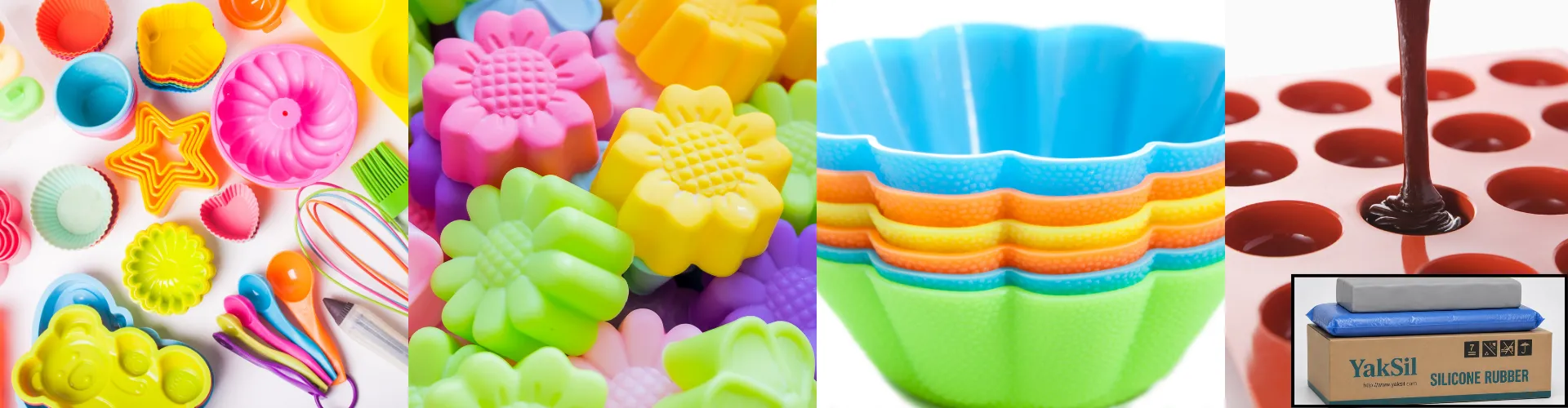
Silicone rubber is widely used in kitchen products such as baking molds, spatulas, cooking accessories, flexible containers and food storage components.
These applications may involve repeated heating, cooling, washing and contact with different food types. Material compliance, odor control and thermal aging performance are important selection factors.
Food and Beverage Seals
Seals and gaskets help prevent leakage and protect food-processing systems from unwanted contamination.
The selected compound should provide suitable hardness, compression recovery, dimensional accuracy and chemical compatibility with the relevant food or cleaning media.
Dairy and Beverage Processing
Food-contact silicone components can be used in selected dairy and beverage equipment, including flexible tubing, gaskets and sealing parts.
For repeated-use applications, manufacturers should evaluate the effects of hot water, cleaning agents, sanitizers and the relevant product-contact conditions.
Food Packaging and Customized Components
Silicone rubber can also be used in selected food packaging accessories, protective components and customized molded products.
Each product requires an assessment of direct or indirect food contact, intended use, cleaning requirements and applicable regulatory documentation.
8. How to Choose the Right Food-Grade Silicone Rubber
Choosing a suitable food-contact silicone compound starts with the finished product and its intended use. Buyers should define regulatory, mechanical and processing requirements before requesting material samples.
Step 1: Identify the Food Contact Conditions
Specify whether the product will contact dry, aqueous, acidic, alcoholic or fatty foods. Also identify whether the contact is direct or indirect and whether the product will be used repeatedly.
Step 2: Define Temperature and Contact Duration
Record the normal operating temperature, maximum temperature, exposure duration and cleaning conditions.
For example, a silicone gasket used in a food-processing machine may experience different conditions from a baking mold exposed to repeated oven heating.
Step 3: Select the Appropriate Silicone Form
Determine whether the product requires solid HTV/HCR silicone for molding or extrusion, or LSR for precision injection molding.
Processing method, product geometry and production volume should all be considered.
Step 4: Confirm the Required Performance Parameters
Define the target hardness, tensile strength, tear strength, elongation, compression set, color and thermal requirements.
For seals and gaskets, compression set and dimensional stability may be particularly important. For thin-wall molded components, tear strength and demolding performance may deserve greater attention.
Step 5: Confirm Applicable Regulatory Requirements
Identify the destination market and request documentation that matches the intended application. This may include FDA 21 CFR 177.2600-related evidence, relevant LFGB test reports or BfR Recommendation XV assessments.
Step 6: Conduct Sample and Finished-Product Testing
Test the selected compound using the intended manufacturing process. Evaluate the finished component rather than relying exclusively on raw compound documentation.
| Selection Factor | Information to Provide |
|---|---|
| Food Type | Dry, aqueous, acidic, alcoholic or fatty food. |
| Contact Conditions | Direct or indirect contact; single or repeated use. |
| Temperature | Normal temperature, maximum temperature and heating cycles. |
| Processing | Compression molding, transfer molding, injection molding or extrusion. |
| Mechanische Eigenschaften | Hardness, tensile strength, tear strength and compression set. |
| Aussehen | Transparent, white, colored or custom color requirements. |
| Compliance | Destination market, applicable regulations and required reports. |
| Production Volume | Sample quantity, monthly demand and annual consumption. |
9. What to Check When Buying Silicone Rubber from a Supplier
Choosing a reliable silicone rubber supplier is important for maintaining product quality and regulatory consistency, especially for OEM manufacturers and food-processing equipment producers.
Food-Contact Documentation
Request the relevant technical datasheet, declaration or compliance statement, laboratory reports and information about the tested material grade.
Check whether the documentation identifies the exact formulation, test specimen, finished article or intended application. A generic statement that a material is FDA approved is not sufficient evidence for every food-contact use.
Material Consistency and Traceability
Ask about batch identification, raw material control, production records and quality inspection procedures. Consistent material properties are important for repeat orders and long-term OEM production.
Manufacturing and Technical Support
A capable manufacturer should be able to discuss hardness, curing behavior, molding or extrusion requirements, mechanical performance and material customization.
Information to Include in an RFQ
- Product name and intended food-contact application.
- Target hardness and mechanical requirements.
- HTV/HCR or LSR processing preference.
- Food type and contact duration.
- Operating and cleaning temperatures.
- Destination market and required compliance framework.
- Color and appearance requirements.
- Estimated monthly or annual consumption.
- Required sample quantity and technical documents.
YAKOWS · SILICONE RUBBER MANUFACTURING
Looking for a Food-Contact Silicone Rubber Supplier?
Yakows supplies HTV/HCR and other silicone rubber materials for industrial molding and extrusion applications.
For food-contact projects, we can discuss material selection according to your required hardness, mechanical performance, processing method, food-contact conditions and applicable compliance documentation.
Share your product specifications and destination market to help us evaluate the appropriate silicone rubber grade for your project.
Request a Quote & Technical Support →
E-Mail: info@yakows.com
Frequently Asked Questions About Food-Grade Silicone Rubber
What is food-grade silicone rubber?
Food-grade silicone rubber is a silicone elastomer formulated and manufactured for intended food-contact applications. Its suitability depends on the formulation, manufacturing controls, finished-product testing and applicable regulatory requirements.
Is all silicone rubber food safe?
No. General-purpose silicone rubber is not automatically suitable for food contact. Fillers, pigments, curing agents, processing aids and residual substances must be evaluated for the intended use.
What is FDA 21 CFR 177.2600 for silicone rubber?
FDA 21 CFR 177.2600 covers rubber articles intended for repeated use in contact with food. It specifies permitted substances and restrictions, as well as extraction requirements for certain food-contact conditions. The finished article must meet the applicable provisions.
What is the difference between FDA and LFGB silicone?
FDA 21 CFR 177.2600 is a US federal regulation for specified repeated-use rubber articles. LFGB refers to Germany's Food and Feed Code and is commonly associated with food-contact product testing. Their requirements and testing approaches are not interchangeable.
What is BfR Recommendation XV?
BfR Recommendation XV is a German technical recommendation covering silicones, including silicone elastomers used in food-contact products. It addresses permitted materials and relevant conditions for their use. It is not a universal international certification.
Is HTV silicone suitable for food contact?
Yes, specially formulated HTV/HCR silicone compounds can be used in food-contact applications when the exact formulation and finished product meet the relevant requirements. The material's compliance should be verified through applicable documentation and testing.
Is platinum-cured silicone better for food contact?
Platinum-cured silicone is often selected where low residual by-products are important. However, the curing system alone does not establish food-contact compliance. The complete formulation and finished product must meet the applicable requirements.
Can food-grade silicone rubber withstand high temperatures?
Many silicone rubber grades offer good thermal stability, but the allowable operating temperature depends on the exact formulation and application. Repeated heating, food-contact conditions and cleaning procedures should be considered together.
What tests are required for food-contact silicone?
Depending on the destination market and intended use, testing may include extractables, migration, volatile components, sensory evaluation and relevant mechanical or thermal testing. The applicable test program should be established for the specific finished product.
Can colored silicone rubber be used in food-contact products?
Yes, provided the pigments and other formulation ingredients are suitable for the intended application and the finished product meets applicable requirements. Color consistency and migration or extractables performance should be evaluated where relevant.
How do I choose between HTV and LSR food-grade silicone?
HTV/HCR is a solid compound used in compression molding, transfer molding and extrusion. LSR is a liquid two-component material processed through injection molding. The choice depends on component design, production volume, manufacturing equipment and the available compliant grade.
What documents should I request from a food-grade silicone supplier?
Request a grade-specific technical datasheet, applicable food-contact declaration or compliance statement, laboratory reports, batch traceability information and processing recommendations. Confirm that the documentation matches the finished product and its intended conditions of use.