
Hydrophobicity of Silicone Rubber for Composite Insulators
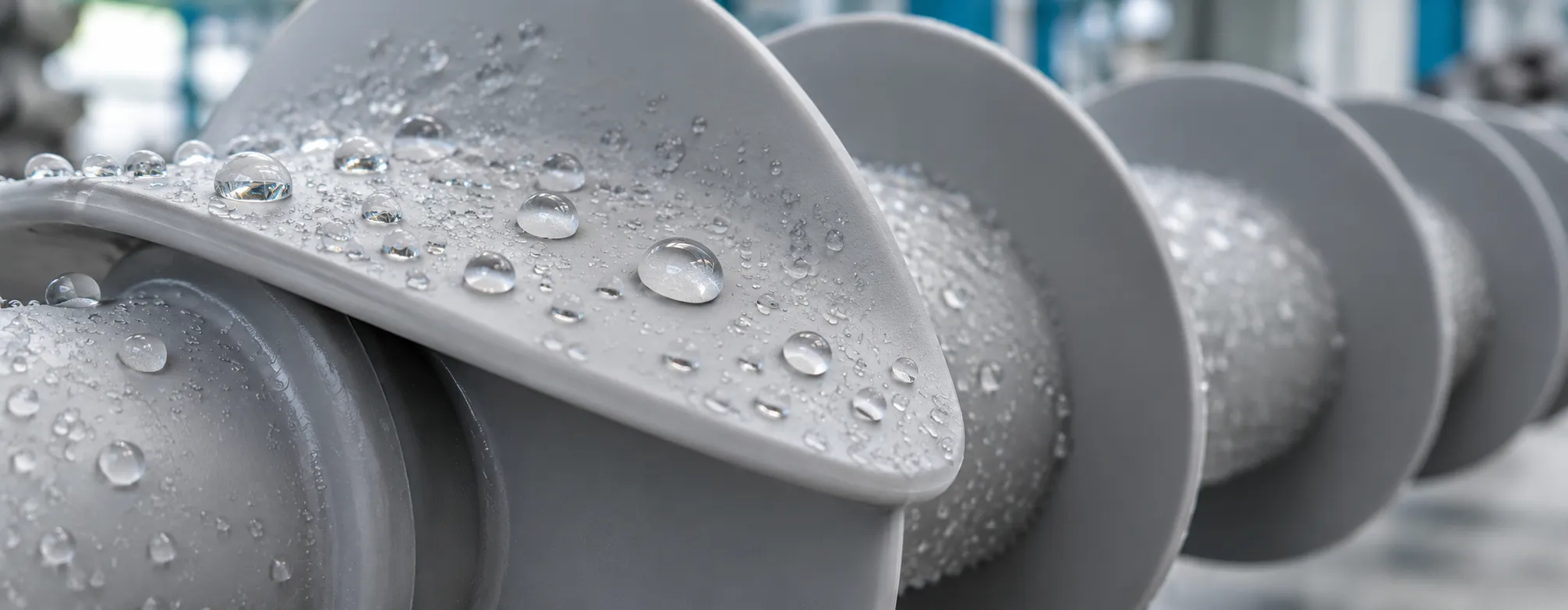
Hydrophobicity of silicone rubber is its ability to resist surface wetting by water. In composite insulators, this property helps the cured silicone housing maintain a water-repellent surface during outdoor service. Rain and condensation tend to form separate droplets rather than spreading immediately into a continuous film, supporting electrical insulation performance in polluted environments.
For insulator manufacturers, however, visible water beading is only the starting point. A useful material assessment also considers how hydrophobicity changes during electrical and environmental exposure, how it recovers, and whether it transfers to deposited pollution. These characteristics help distinguish an electrical-grade compound from silicone selected mainly for general molding applications.
What Makes Silicone Rubber Hydrophobic?
The silicone polymers commonly used in insulator housings have a siloxane backbone with methyl groups attached to silicon atoms. These methyl groups contribute to low surface energy, making it less favorable for water to spread across the surface. The result is the familiar droplet pattern associated with water-repellent silicone rubber.
[1]
Hydrophobicity describes surface wetting behavior. Dielectric strength describes resistance to electrical breakdown through the material. A compound can have good bulk insulation properties while its contaminated surface becomes more wettable. Both properties therefore belong in the material specification, together with mechanical strength and resistance to tracking and erosion.
The relevant surface is the cured silicone rubber on the finished shed or housing. A water-beading result on an uncured compound, a contaminated mold surface or a freshly applied release agent cannot be treated as proof of the housing material’s performance. Test specimens should represent the formulation and cure conditions used in production.
Why Hydrophobicity Matters for Composite Insulators
Outdoor insulators encounter rain, fog, condensation and airborne contamination. Salt and other soluble deposits can produce conductive moisture when wetted. If water forms a connected path along the housing, surface leakage current can increase. Local heating may create dry bands, across which electrical discharges can develop.
Hydrophobic silicone rubber interrupts this wetting pattern by encouraging discrete droplets. This can limit the formation of continuous conductive films and support pollution performance. It does not eliminate leakage current or guarantee freedom from flashover: droplets can deform, join together and participate in discharge processes under electrical stress.
[2]
Material selection must therefore work with the insulator design. Creepage distance, shed profile, electric-field distribution, interfaces and site pollution remain essential. For coastal lines, industrial substations and railway electrification, the relevant question is how the complete insulation system performs under representative exposure.
The benefit is especially relevant where wetting repeatedly activates surface contamination. A coastal installation may combine salt deposits with fog; an industrial location may expose sheds to dust and moisture. The material specification should reflect the expected contamination and wetting conditions, rather than relying on a generic description such as “weather-resistant silicone.”

Initial Hydrophobicity, Recovery and Transfer
Three related properties describe the dynamic behavior of silicone rubber. They answer different questions and should be evaluated separately.
Initial hydrophobicity
The water repellency of a newly prepared surface under defined conditions. It establishes a baseline but cannot demonstrate long-term outdoor performance.
Hydrophobicity recovery
The return of water repellency after a surface becomes less hydrophobic. Mobile siloxane species and surface rearrangement can contribute to this process.
[7]
Hydrophobicity transfer
The development of water repellency in an adhering pollution layer as low-molecular-weight siloxanes migrate from the silicone rubber into that layer.
[3]
Recovery and transfer are not interchangeable. Recovery concerns the silicone surface; transfer concerns material deposited on it. Pollution composition, particle structure and conditioning can affect transfer behavior. A result obtained with one artificial contaminant should not automatically be applied to every field environment.
[3]
There is also no universal recovery time for all insulator compounds. Compare materials using the same stress exposure, temperature, humidity and measurement schedule rather than relying on an isolated contact-angle value.
For manufacturers, these distinctions change the sample approval process. A new housing may show strong initial water repellency while a different compound performs better after the same aging exposure. Procurement teams should therefore compare the complete sequence—initial condition, stress response and recovery—using matching specimens and a shared protocol.
Can Silicone Rubber Lose Its Hydrophobicity?
Yes. Corona and other electrical discharges can alter surface chemistry, producing a more wettable surface. Severe or prolonged exposure may also cause damage that limits recovery. Temperature, moisture and previous aging history influence the observed behavior.
[1]
A lower hydrophobicity reading does not, by itself, establish the remaining service life of an insulator. Evaluate it alongside erosion, cracking, interface condition and electrical test results. Likewise, the return of water beading does not mean that physical damage has been repaired. Hydrophobicity recovery restores a surface property; it does not rebuild an eroded shed.
During field evaluation, record whether the surface is tested as received or after cleaning. Removing deposits changes the surface being examined and may change the result. Test several locations on the housing and document their exposure history. A single favorable reading from a sheltered area may not represent the condition of the entire insulator.
How Is Silicone Rubber Hydrophobicity Tested?
IEC TS 62073 provides guidance for measuring insulator surface hydrophobicity using surface-tension, contact-angle and spray methods. The measured result represents the condition at the time of testing, rather than a permanent material rating.
[4]
Water spray classification
The spray method compares wetting patterns with hydrophobicity classes. HC1 represents the most hydrophobic end of the scale, while HC7 represents extensive surface wetting. Classification depends on droplet shape and connected wet areas, not simply counting droplets. Use the applicable IEC procedure and reference criteria for formal assessment.
[5]
Contact-angle measurement
A contact-angle measurement quantifies droplet wetting on a test surface. Record specimen preparation, droplet volume, measurement timing and conditioning. Mold texture, cleaning and surface residues can influence the result, so test locations and preparation must remain consistent.
A higher contact angle generally indicates reduced wetting for otherwise comparable surfaces. It is not a stand-alone measure of pollution withstand. Contact angle, spray classification and electrical testing describe different aspects of performance, so they should not be converted into one another or used as substitutes for a finished-insulator test.
Recovery and pollution-layer assessment
For purchasing decisions, agree on a protocol that measures the baseline, the condition after defined stress, and subsequent recovery. Test pollution-layer transfer separately where relevant. Multiple specimens and documented conditions make comparisons more meaningful than a single photograph of water beads.
How to Select Silicone Rubber for Composite Insulators
Selecting silicone rubber for composite insulators requires an application-specific specification. Hardness and purchase price alone cannot establish suitability. The compound must combine hydrophobic behavior with electrical durability, mechanical integrity and reliable processing on your molding equipment.
| Selection factor | What to request or verify |
|---|---|
| Hydrophobic behavior | Initial condition, recovery and transfer results with the test method and conditioning stated. |
| Tracking and erosion | Reports identifying the compound, specimen preparation, test conditions and acceptance criteria. |
| Mechanical properties | Hardness, tensile strength, elongation and tear strength suited to shed geometry and handling. |
| Electrical properties | Dielectric strength and resistivity data, followed by finished-insulator validation. |
| Processing compatibility | Cure system, flow behavior, molding conditions, demolding and any post-curing requirements. |
| Supply consistency | Grade identification, batch traceability, agreed inspection data and formulation change control. |
Balance the silicone rubber formulation
Fillers such as reinforcing silica and alumina trihydrate contribute to the compound's overall performance balance. Filler characteristics and loading can also influence hydrophobic behavior. More filler does not automatically mean a better insulator material; the formulation needs evaluation as a complete system.
[6]
The polymer, reinforcing system, electrical-performance fillers and curing system all belong to the formulation review. Request data for the actual supplied grade, not for a broad silicone family. Cure and post-cure requirements should be agreed before comparing samples, because different preparation conditions can produce misleading material comparisons.
Validate the compound in your molding process
HTV/HCR silicone rubber is widely used for molded insulator housings. During a production trial, check cavity filling, trapped air, cure consistency, shed integrity and bonding to the core system. Control mold cleanliness and release agents so surface residues do not distort hydrophobicity measurements.
Retain specimens from trial and production batches. An approved laboratory plaque establishes material performance under defined conditions; a finished housing confirms how the compound behaves after your actual manufacturing process.
Agree on a sample approval sequence
Before placing a bulk order, define the acceptance criteria with your material supplier and testing team. Begin with the selected grade's technical data, then evaluate cured samples under consistent laboratory conditions. Follow with a molding trial using your intended core preparation, tooling and cure cycle. Confirm the finished insulator against the applicable project requirements.
Document the approved grade, processing settings and inspection plan so repeat orders can be compared with the original trial. If the formulation or manufacturing conditions change, review whether requalification is needed. This approach gives procurement teams a clearer basis for comparing total production cost, including material usage, molding yield and inspection, instead of judging suppliers only by the price per kilogram.
Silicone Rubber for Composite Insulator Manufacturers: Yakows
Yakows supplies HTV silicone rubber for composite insulators, with a focus on electrical-insulation materials for sheds and housings. Our role is to supply the silicone compound that manufacturers process into their finished insulation components.
For a material recommendation, share your insulator type, AC or DC application, installation environment, molding equipment, cure requirements and target properties. Include the required test methods and estimated purchasing volume. This gives the technical discussion a clear basis and helps align sample evaluation with production needs.
Explore our HTV silicone rubber range or silicone rubber for polymer insulators to review related material options.
For composite insulator manufacturers, the practical objective is a compound that meets the agreed specification and remains consistent between batches. Material selection, sample evaluation and production trials should be connected from the beginning, so purchasing decisions account for both insulation performance and manufacturing requirements.
Häufig gestellte Fragen
Is all silicone rubber suitable for composite insulators?
No. General-purpose silicone may repel water, but insulator housings also require appropriate tracking, erosion, mechanical, aging and processing performance. Select and qualify the exact electrical-insulation grade.
Does a higher contact angle always mean a better compound?
No. Initial contact angle is one indicator. Recovery, pollution-layer transfer and performance after aging provide additional information, while the finished insulator still needs its required validation.
Can hydrophobicity replace creepage distance?
No. Hydrophobicity supports surface performance but cannot replace appropriate creepage distance, shed design or electric-field control. Material and insulator design must be assessed together.
What should I send when requesting a silicone rubber quotation?
Provide the application, molding process, target hardness, performance specification, sample quantity and expected order volume. Include existing test requirements or a current compound specification where available.
Does hydrophobicity mean the insulator stays clean?
No. Contamination can still accumulate on silicone rubber sheds. Hydrophobicity describes wetting behavior; transfer can make an adhering layer more water-repellent. The amount and type of deposits still matter when assessing outdoor performance.
How long does silicone rubber take to recover hydrophobicity?
There is no fixed recovery time for every compound and exposure condition. Ask for a documented recovery curve under defined conditions, including the initial result, stress treatment, storage environment and measurement intervals.
Discuss Your Composite Insulator Silicone Rubber Requirements
For grade information, sample evaluation or a quotation, contact Yakows at info@yakows.com. Share your insulator application, molding method, target properties and expected order volume so we can discuss a suitable silicone rubber material for your production.
Technical References
- Loss and recovery in hydrophobicity of silicone rubber exposed to corona discharge. Polymer Degradation and Stability, 2006.
- Hydrophobicity transfer from silicone rubber to adhering pollutants and its effect on insulator performance. IEEE Transactions on Dielectrics and Electrical Insulation, 2006.
- Characteristics of Small-Molecule Migration of Silicone Rubber Insulator in Electrical Power Systems. Polymers, 2022.
- IEC TS 62073:2016: guidance on measuring insulator surface hydrophobicity, incorporating Corrigendum 1, July 2026.
- Hydrophobicity Classification of Composite Insulators Using Convolutional Neural Networks. CIGRE Science & Engineering, 2021.
- Enhancing Hydrophobic Stability of Silicone Rubber Insulators Under High-Voltage Direct Current Stress Through Optimised Nano-Fumed Silica Surface Area. High Voltage, 2026.
- Mechanisms of Hydrophobic Recovery of Poly(dimethylsiloxane) Elastomers after Plasma/Corona Treatments: A Minireview. Langmuir, 2024.