
5 applications du caoutchouc silicone HTV
Caoutchouc silicone HTV(High-Temperature Vulcanized) is one of the most versatile elastomer materials used in modern manufacturing and engineering. Thanks to its outstanding resistance to heat, weather, chemicals, and electrical stress, HTV silicone has become an essential material across industries ranging from power transmission to automotive manufacturing and medical production.
As industries continue to demand durable and high-performance materials, the importance of HTV silicone application continues to grow worldwide. Manufacturers value HTV silicone rubber for its long service life, flexibility, environmental resistance, and excellent insulating properties. These features make it suitable for both indoor and outdoor applications where traditional rubber materials may fail.
This article explores the major HTV silicone applications, their advantages, and why HTV silicone rubber remains a preferred solution for industrial and commercial products.
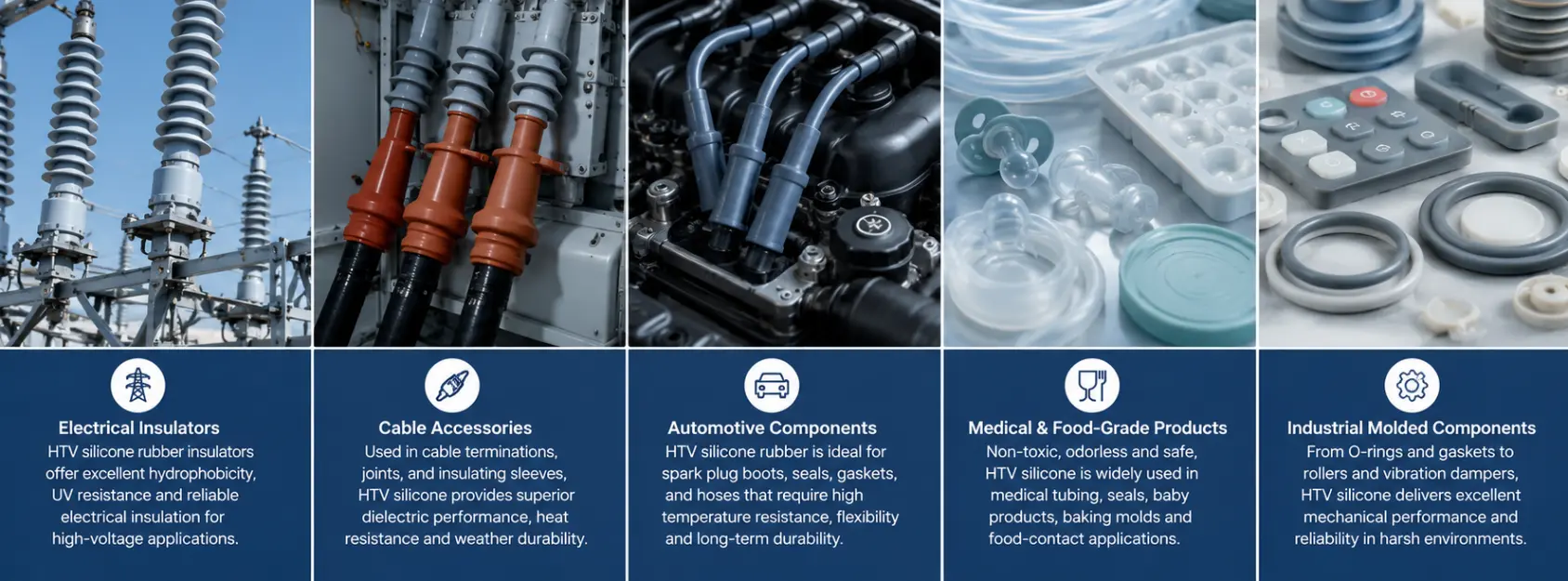
HTV Silicone Application in Electrical Insulators
One of the most important HTV silicone applications is in electrical insulation systems. Electrical utilities and power transmission companies rely heavily on HTV silicone rubber to manufacture high-voltage insulators because of its exceptional dielectric performance and environmental resistance.
HTV silicone insulators are commonly used in:
- Transmission lines
- Distribution systems
- Substations
- Railway electrification systems
- Switchgear insulation
Unlike ceramic or glass insulators, HTV silicone rubber insulators offer lightweight construction and superior hydrophobic properties. Their water-repellent surface helps reduce leakage current during rain, fog, or humid conditions. This significantly improves electrical safety and operational reliability.
Another major advantage of HTV silicone application in insulators is UV and ozone resistance. Outdoor electrical systems are constantly exposed to sunlight, pollution, acid rain, and temperature fluctuations. HTV silicone rubber maintains stable performance under these harsh environmental conditions for many years.
The material also provides excellent tracking and erosion resistance, which is essential in contaminated industrial and coastal environments. As a result, many global utility companies are replacing traditional porcelain insulators with HTV silicone composite insulators.
Benefits of HTV Silicone Rubber for Insulators
- Excellent electrical insulation performance
- Strong hydrophobicity
- Lightweight and easy installation
- Resistance to UV radiation and weather aging
- Long operational lifespan
- Reduced maintenance costs
Because of these advantages, HTV silicone application in electrical insulation continues to expand across modern smart grid systems and renewable energy infrastructure.
HTV Silicone Application in Cable Accessories
Another critical HTV silicone application is in cable accessories. Modern power cables and communication systems require reliable insulation materials capable of operating under extreme temperatures and electrical stress.
HTV silicone rubber is widely used in:
- Raccordements de câbles
- Cable joints
- Heat shrink tubing
- Insulating sleeves
- Medium and high-voltage cable accessories
The flexibility of HTV silicone allows manufacturers to produce cable components that can adapt to complex installation environments. At the same time, the material maintains excellent electrical insulation properties over long periods.
One of the key reasons for the popularity of HTV silicone application in cable systems is thermal resistance. Power cables often generate significant heat during operation. HTV silicone rubber can withstand continuous high temperatures without losing elasticity or insulation capability.
Additionally, HTV silicone materials are resistant to:
- Humidité
- Ozone
- Corrosion
- Chemicals
- Outdoor weather exposure
These characteristics make HTV silicone cable accessories highly reliable in industrial plants, renewable energy projects, underground cable systems, and offshore applications.
Why HTV Silicone Is Ideal for Cable Applications
HTV silicone rubber improves cable system safety and durability by preventing electrical leakage and insulation failure. Its flexibility also simplifies installation and reduces maintenance requirements.
As energy infrastructure becomes more advanced, HTV silicone application in cable accessories is expected to grow significantly in global markets.
HTV Silicone Application in Automotive Components
The automotive industry is another major sector where HTV silicone application plays a critical role. Modern vehicles operate under increasingly demanding thermal and mechanical conditions, requiring materials with superior performance and reliability.
HTV silicone rubber is commonly used in automotive products such as:
- Spark plug boots
- Ignition cables
- Engine seals
- Gaskets
- Turbocharger hoses
- Connector seals
- Sensor protection covers
Vehicle engines generate extreme temperatures and are constantly exposed to oils, fuels, vibration, and chemicals. HTV silicone rubber performs exceptionally well in these harsh environments due to its outstanding heat resistance and flexibility.
Unlike conventional rubber materials, HTV silicone maintains its elasticity even under long-term high-temperature exposure. This helps prevent cracking, hardening, and component failure.
Another important benefit of HTV silicone application in automotive manufacturing is electrical insulation. As electric vehicles and hybrid systems continue to grow, high-performance insulating materials are becoming increasingly important.
Advantages of HTV Silicone in the Automotive Industry
- High temperature resistance
- Excellent flexibility
- Long-term durability
- Resistance to oils and chemicals
- Superior electrical insulation
- Reduced maintenance and replacement costs
Automotive manufacturers worldwide continue to increase the use of HTV silicone rubber in both traditional and electric vehicle systems.
HTV Silicone Application in Medical and Food-Grade Products
Medical and food industries require materials that meet strict safety and hygiene standards. HTV silicone application has become highly important in these sectors because silicone rubber is non-toxic, odorless, and resistant to sterilization processes.
HTV silicone rubber is commonly used in:
- Medical tubing
- Healthcare seals
- Respiratory masks
- Pharmaceutical equipment
- Baby products
- Baking molds
- Kitchen utensils
- Food processing seals
One of the most valuable properties of HTV silicone in medical applications is biocompatibility. The material is safe for direct contact with the human body and can withstand repeated sterilization using steam, heat, or chemicals.
In food-grade applications, HTV silicone rubber offers excellent thermal stability and flexibility. It does not release harmful substances when exposed to high cooking or baking temperatures.
Benefits of HTV Silicone for Medical and Food Industries
- Non-toxic and environmentally friendly
- Resistant to bacteria and contamination
- Excellent high-temperature stability
- Durable and flexible
- Safe for food contact
- Easy to clean and sterilize
As global demand for healthcare and food safety products continues to rise, HTV silicone application in these industries is expected to expand rapidly.
HTV Silicone Application in Industrial Molded Components
Industrial manufacturing relies heavily on durable elastomer components for sealing, cushioning, vibration control, and mechanical protection. HTV silicone application is widely used for molded industrial products because of its excellent mechanical and thermal properties.
Common industrial molded components include:
- O-rings
- Seals
- Gaskets
- Rollers
- Keypads
- Shock absorbers
- Anti-vibration parts
HTV silicone rubber is highly suitable for industrial environments where components are exposed to:
- Températures extrêmes
- Mechanical stress
- Chemicals
- Humidité
- UV exposure
Industrial manufacturers prefer HTV silicone because it combines flexibility with long-term durability. The material maintains stable performance even after years of continuous operation.
Another major advantage is customization. HTV silicone rubber can be molded into complex shapes and manufactured in various hardness levels and colors depending on the application requirements.
Industrial Benefits of HTV Silicone Rubber
- Excellent compression set resistance
- Longue durée de vie
- Stable performance under harsh conditions
- Strong flexibility and elasticity
- Easy processing and molding
Because of these advantages, HTV silicone application continues to expand across industrial automation, electronics manufacturing, and heavy machinery sectors.
Why HTV Silicone Application Is Growing Globally
The global demand for HTV silicone rubber is increasing because industries require materials that offer reliability, safety, and long-term performance. Compared with traditional rubber materials, HTV silicone provides superior resistance to heat, aging, weather, and electrical stress.
Several trends are driving the growth of HTV silicone application worldwide:
- Expansion of renewable energy infrastructure
- Growth of electric vehicles
- Increasing demand for medical-grade materials
- Development of smart electrical grids
- Industrial automation and modernization
Manufacturers also prefer HTV silicone because it supports sustainable and low-maintenance product design. Its durability reduces replacement frequency and lowers long-term operational costs.
HTV Silicone Application and International Quality Certifications
Quality standards and international certifications play a critical role in the global HTV silicone rubber industry. Manufacturers and buyers increasingly focus on certified production systems to ensure product consistency, safety, and long-term reliability.
For HTV silicone application products used in electrical insulation, automotive systems, medical components, and industrial manufacturing, certifications demonstrate compliance with international quality requirements and industry regulations.
One of the most important certifications in the HTV silicone industry is ISO 9001. This certification confirms that the manufacturer operates under a well-structured quality management system designed to improve production efficiency, product quality, and customer satisfaction.
HTV silicone rubber manufacturers with ISO 9001 certification typically provide:
- Stable product quality
- Strict quality control procedures
- Traceable production management
- Consistent raw material standards
- Improved manufacturing efficiency
In addition to ISO 9001, many HTV silicone application manufacturers also comply with:
- ISO 14001 for environmental management
- ISO 45001 for occupational health and safety
- RoHS compliance for restricted hazardous substances
- REACH compliance for chemical safety standards
- UL certification for electrical safety applications
For electrical insulators and cable accessories, certifications are especially important because these products operate in high-voltage and harsh environmental conditions. Certified HTV silicone rubber products help ensure reliable insulation performance, weather resistance, and long service life.
In the automotive industry, certified HTV silicone components support strict quality and durability requirements for engine systems, ignition systems, and electric vehicle technologies. Automotive manufacturers often require suppliers to maintain advanced quality management standards to ensure production consistency.
Medical and food-grade HTV silicone applications also rely heavily on certified manufacturing processes. Compliance with international hygiene and safety regulations helps ensure that silicone products remain non-toxic, odorless, and suitable for direct human contact.
Industrial buyers worldwide increasingly prefer certified HTV silicone rubber suppliers because certifications reduce operational risks and improve confidence in product reliability. For exporters and global manufacturers, certifications also help meet international market access requirements.
As competition in the silicone rubber industry continues to increase, certified production systems have become an essential factor for building customer trust and maintaining long-term business partnerships.
Conclusion
HTV silicone rubber has become an essential material across numerous industries due to its outstanding thermal stability, electrical insulation, flexibility, and environmental resistance. From electrical insulators and cable accessories to automotive systems, medical products, and industrial molded components, HTV silicone application continues to expand rapidly worldwide.
Its ability to perform under extreme temperatures and harsh operating conditions makes HTV silicone rubber a reliable solution for modern industrial challenges. As technology advances and industrial demands grow, HTV silicone applications will continue to play a crucial role in supporting innovation, efficiency, and long-term product reliability.
Businesses looking for high-performance elastomer materials increasingly choose HTV silicone rubber because it delivers durability, safety, and cost-effective performance across a wide range of applications.