
Silicone Material Guide
Plage de températures du silicone
Silicone is widely used in applications that experience both high and low temperatures, but there is no single temperature limit that applies to every silicone product. The actual silicone temperature range depends on the polymer formulation, curing system, fillers, mechanical load, exposure time and application environment.
What Is the Silicone Temperature Range?
For many general-purpose silicone rubber materials, a typical long-term service range is approximately -50°C to +180°C. Certain commercial grades are designed for approximately -55°C to +200°C or +210°C, while specially formulated silicone materials can operate outside these ranges.
This does not mean that every silicone product can automatically be used at these temperatures. A silicone sealant, liquid silicone rubber, HTV silicone rubber, silicone gel and specialty high-voltage silicone compound can have different temperature ratings even though they belong to the same general material family.
The temperature stated on a technical data sheet is also normally based on specific conditions. Continuous exposure, short-term peak temperature, mechanical stress, air circulation, oxygen concentration, electrical stress and contact with chemicals can all influence actual service life.
A practical general reference for silicone rubber is around -50°C to +180°C for long-term use, while many engineered grades can extend to approximately -55°C to +200°C or +210°C. Always use the temperature rating of the exact silicone grade for product design.
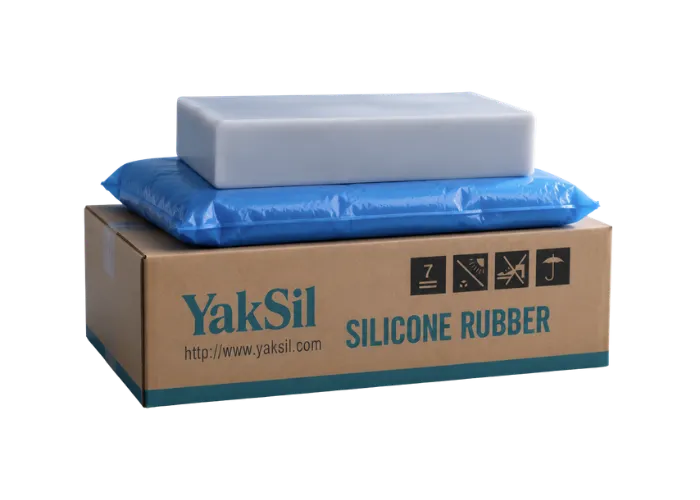
Typical Temperature Ranges of Different Silicone Materials
The term silicone covers many materials with different curing systems and physical forms. Their useful temperature ranges overlap, but they should not be treated as identical.
| Silicone type | Typical reference range | Common applications | Important consideration |
|---|---|---|---|
| General silicone rubber | About -50°C to +180°C | Seals, gaskets, tubing and insulation | Actual limit varies significantly by formulation |
| HTV / HCR silicone rubber | Many grades around -55°C to +200°C or +210°C | Extrusion, molded seals, cable insulation and composite insulators | Heat stabilizers may be recommended for extended high-temperature exposure |
| Caoutchouc de silicone liquide | Many grades around -55°C to +200°C or +210°C | Precision molded parts, connectors and electrical insulation | The exact range depends on the selected LSR grade |
| RTV silicone rubber | Often around -50°C to +180°C | Sealing, bonding, coating and encapsulation | Sealant and adhesive formulations may have lower upper limits |
| Special high-temperature silicone | Can exceed standard silicone ranges | Industrial ovens, aerospace and specialty equipment | Usually requires a specially formulated compound |
| Special low-temperature silicone | Can remain flexible below standard silicone ranges | Aerospace, cold climates and specialty sealing | Low-temperature flexibility must be verified by grade |
The values above are general engineering references rather than universal specifications. Product designers should always compare the technical data sheet, test method and actual operating conditions.
Why Can Silicone Handle a Wide Temperature Range?
The temperature resistance of silicone is closely related to its polymer structure. Silicone polymers contain a backbone based primarily on alternating silicon and oxygen atoms rather than the carbon-carbon backbone found in many conventional organic elastomers.
This structure gives silicone useful flexibility across a broad temperature range and good resistance to thermal and environmental aging. As temperature changes, the material generally experiences smaller changes in flexibility than many conventional rubbers.
However, silicone is not unaffected by temperature. Extremely low temperatures can reduce molecular mobility and increase hardness. Long-term exposure to excessive heat can gradually change the polymer network, increase hardness, reduce elongation and cause loss of mechanical strength.
The useful temperature range is therefore the range in which the silicone continues to provide the properties required by the application, not simply the temperature at which the material remains physically present.
Silicone Performance at Low Temperatures
One of the advantages of silicone rubber is its ability to remain flexible at temperatures where many conventional elastomers become significantly harder.
At low temperatures, polymer-chain movement decreases. This increases stiffness and can reduce the ability of a rubber component to deform, seal or absorb mechanical movement. Silicone generally maintains useful elasticity to lower temperatures than materials such as many natural-rubber or conventional synthetic-rubber formulations.
What Happens When Silicone Gets Very Cold?
As temperature decreases, silicone gradually becomes stiffer. At sufficiently low temperatures, certain silicone formulations can experience reversible crystallization or other changes that temporarily increase hardness.
This does not necessarily mean immediate failure. The important question is whether the component can still perform its intended function under mechanical load.
A static insulation housing may tolerate increased stiffness differently from a dynamic seal that must continuously flex. This is why low-temperature suitability should be evaluated at the component level.
Properties to Check at Low Temperature
- Flexibility
- Tensile behavior
- Tear resistance
- Compression recovery
- Impact resistance
- Adhesion to other materials
- Thermal contraction
- Electrical insulation performance
Silicone Performance at High Temperatures
Silicone rubber is widely selected for high-temperature applications because it can maintain elasticity and electrical insulation at temperatures that can cause faster deterioration in many organic elastomers.
Nevertheless, high temperature gradually accelerates chemical aging. Prolonged exposure above the recommended continuous-service temperature can increase hardness, reduce tensile strength and reduce elongation at break.
The rate of aging depends strongly on temperature. A compound that survives a short excursion to a high temperature may not be suitable for continuous exposure at the same temperature.
Continuous Temperature vs Peak Temperature
This distinction is extremely important when discussing the silicone temperature range.
Continuous service temperature describes a temperature at which a properly designed silicone component can operate for an extended period under specified conditions.
Peak temperature describes a short-duration temperature excursion. A silicone component may tolerate a peak well above its recommended continuous operating temperature without immediate failure.
Peak-temperature capability should never be used as the normal operating rating of the product.
A statement such as “silicone withstands 250°C” is incomplete unless it explains the silicone grade, exposure time, mechanical load and acceptable change in material properties.
How Temperature Changes Silicone Rubber Properties
| Propriété | Low-temperature effect | High-temperature effect |
|---|---|---|
| Dureté | Generally increases as the material becomes colder | Long-term thermal aging may gradually increase hardness |
| Allongement | May decrease as molecular movement becomes restricted | Can decrease after prolonged heat aging |
| Tensile strength | Behavior depends on formulation and test temperature | May decline after long-term excessive heat exposure |
| Déformation rémanente après compression | Cold stiffness can affect sealing response | High temperature can accelerate permanent deformation |
| Electrical properties | Generally remain useful across a wide range for electrical grades | Long-term thermal aging and contamination can affect performance |
| Dimensions | Material contracts | Material expands |
| Adhesion | Thermal contraction may stress bonded interfaces | Expansion and aging can stress the adhesive interface |
HTV Silicone Rubber Temperature Range
HTV silicone rubber, also called high-consistency rubber or HCR, is widely used when both thermal stability and mechanical performance are required.
Many commercial HTV grades are specified for service around -55°C to +200°C or +210°C. Certain formulations can be modified with heat stabilizers or specialty polymer systems when higher-temperature performance is required.
The recommended operating range should always be taken from the exact compound because fillers, curing chemistry, pigmentation and additives can change thermal performance.
HTV silicone is particularly important in electrical applications because it combines heat resistance with weather resistance, hydrophobicity and dielectric properties.
Typical HTV applications include:
- High-voltage composite insulator housings
- Wire and cable insulation
- Electrical connector seals
- Surge-arrester housings
- Cable accessories
- High-temperature gaskets
- Industrial profiles and tubing
Liquid Silicone Rubber Temperature Range
Liquid silicone rubber, or LSR, is a pumpable two-component silicone used primarily in automated injection molding.
Many cured LSR grades provide temperature resistance comparable to HTV silicone. Commercial products are available with specified operating ranges around -55°C to +200°C or +210°C, although individual grades vary.
The word liquid refers to the uncured processing condition. Once cured, LSR becomes a crosslinked solid elastomer and cannot be evaluated as a liquid during service.
LSR can be suitable for electrical connectors, precision insulation parts and some high-voltage components where automated molding and detailed geometry are required.
Silicone Temperature Range in Composite Insulators
Temperature performance is particularly important in the electric-power industry because composite insulators operate outdoors for many years while experiencing electrical, mechanical and environmental stress simultaneously.
A typical composite insulator consists of a fiberglass-reinforced polymer core, silicone rubber housing and weather sheds, and metal end fittings. The silicone housing provides external electrical insulation and protects the FRP core against moisture, ultraviolet radiation, contamination and environmental aging.
The silicone rubber used in a composite insulator must therefore tolerate more than a specified ambient temperature. It must continue to maintain hydrophobicity, mechanical integrity, interface adhesion and electrical performance during repeated thermal cycles.
The temperature capability of the silicone housing is only one part of the complete insulator rating. The FRP core, housing-to-core interface, primer system, end fittings, electric-field distribution and complete insulator design must also remain reliable.
Cold Weather and Composite Insulators
Composite insulators installed in cold climates may experience low ambient temperatures, ice, snow, freezing rain and repeated freeze-thaw cycles.
The silicone housing should retain sufficient flexibility to avoid cracking or tearing during mechanical movement and thermal contraction. The interface between the silicone housing and FRP core is also important because the materials have different thermal-expansion behavior.
Repeated cooling and warming can create cyclic stress at bonded interfaces. A silicone compound with good low-temperature flexibility can help accommodate this movement, but interface preparation and adhesion remain critical.
High Ambient Temperature and Solar Heating
In desert, tropical and high-solar-radiation environments, the surface temperature of an outdoor composite insulator may differ substantially from the measured air temperature.
Solar radiation heats the silicone housing, while dark contamination can further alter surface heating. Electrical leakage current and dry-band activity may also produce localized thermal stress.
This means the silicone compound should not be selected only according to the average local air temperature. Maximum surface temperature, solar radiation, electrical stress and long-term aging should be considered together.
Temperature and Hydrophobicity
Hydrophobicity is one of the most important advantages of silicone rubber in high-voltage outdoor insulation. A hydrophobic surface reduces the formation of a continuous water film and can help limit leakage current under wet and polluted conditions.
Temperature affects the mobility of low-molecular-weight silicone species within the housing. These species play an important role in hydrophobicity recovery and transfer to contamination layers.
Because temperature influences molecular mobility and aging, long-term hydrophobic performance should be evaluated together with environmental exposure rather than by a room-temperature water-drop test alone.
Temperature and Tracking/Erosion
Electrical discharges on contaminated insulator surfaces can create localized temperatures far above the normal ambient temperature. Repeated dry-band arcing can thermally attack the silicone housing and gradually produce erosion.
For this reason, high-voltage silicone rubber is normally formulated for tracking and erosion resistance in addition to ordinary thermal stability.
A silicone compound that performs well in a general heat-aging test is not automatically suitable for composite insulators. High-voltage housing materials must also resist electrical surface stress.
Temperature Effects on Composite Insulator Interfaces
The bonded interface between the silicone rubber housing and FRP core is one of the most important areas in a composite insulator.
Silicone rubber, fiberglass composite and metal fittings have different coefficients of thermal expansion. When temperature changes, each material expands or contracts by a different amount.
If the bonding system is poorly designed, repeated thermal cycling may contribute to interface separation, microgaps or moisture ingress.
Reliable composite-insulator manufacturing therefore requires the correct combination of silicone rubber, core surface preparation, primer, molding conditions and end-fitting sealing.
Material qualification should use the actual production combination rather than evaluating the silicone rubber independently.
Temperature Effects on Electrical Performance
Silicone rubber is widely used as an electrical insulator because properly formulated grades provide high volume resistivity and useful dielectric strength over a broad temperature range.
However, the electrical performance of a complete product depends on more than the silicone compound.
In a composite insulator, electrical stress is affected by the housing thickness, FRP core, metal fittings, shed profile, grading hardware, air interfaces and surface contamination.
Temperature can also change surface moisture, pollution conductivity and leakage-current behavior. These environmental effects may be more important in service than the small temperature-related change in the intrinsic dielectric properties of the silicone.
Composite Insulator Temperature Selection Checklist
When selecting silicone rubber for a composite insulator, the following temperature-related factors should be included in the material specification.
- Minimum ambient temperature: Define the coldest expected installation condition.
- Maximum ambient temperature: Include extreme regional temperatures rather than annual averages.
- Solar radiation: Consider housing surface temperature under direct sunlight.
- Thermal cycling: Evaluate repeated day-night and seasonal temperature changes.
- Cold flexibility: Confirm that the silicone housing remains sufficiently flexible at low temperature.
- Heat aging: Check changes in hardness, tensile strength and elongation after thermal exposure.
- Interface adhesion: Verify silicone-to-FRP bonding after thermal cycling.
- Hydrophobicity: Confirm that environmental aging does not cause unacceptable loss of surface performance.
- Tracking resistance: Use a high-voltage insulation grade rather than general-purpose silicone.
- End-fitting seal: Ensure expansion and contraction do not create moisture paths.
- Electric-field control: Review localized electrical stress near metal fittings.
- Complete-product testing: Qualify the finished insulator, not only the silicone material.
Silicone vs Other Rubber Materials at Different Temperatures
One reason silicone is widely selected for demanding industrial and electrical applications is that its useful temperature range is generally broader than that of many conventional elastomers.
| Matériau | General temperature behavior | Main advantage | Main limitation |
|---|---|---|---|
| Caoutchouc de silicone | Very broad low- and high-temperature capability | Thermal stability, weather resistance and flexibility | Mechanical tear and abrasion properties depend strongly on formulation |
| EPDM | Good moderate-temperature performance | Weather, ozone and water resistance | Generally lower high-temperature capability than specialty silicone |
| Nitrile rubber | Moderate temperature range | Oil and fuel resistance | Cold flexibility and weathering may be more limited |
| Caoutchouc naturel | More limited temperature capability | Excellent elasticity and mechanical properties | Lower resistance to heat, ozone and outdoor aging |
| Fluoroelastomer | Excellent high-temperature capability | Heat, oil and chemical resistance | Low-temperature flexibility and cost vary by grade |
These comparisons are general. Exact operating limits must always be taken from the selected material grade.
How to Choose Silicone for Extreme Temperatures
Start by defining the real operating conditions rather than selecting a material from a single maximum-temperature number.
- Define continuous temperature. Determine the normal long-term operating range.
- Define temperature peaks. Identify maximum temperature, duration and frequency.
- Define the lowest temperature. Confirm whether the component must flex or remain static at that temperature.
- Identify mechanical load. Consider compression, tension, vibration and thermal expansion.
- Check the environment. Include UV, ozone, humidity, chemicals, pollution and outdoor exposure.
- Select the correct silicone family. Compare HTV, LSR, RTV or specialty silicone according to manufacturing requirements.
- Review heat-aging data. Compare properties before and after thermal exposure.
- Test the final component. Production geometry and interfaces can change real-world performance.
Common Mistakes When Reading Silicone Temperature Ratings
Using the Maximum Temperature as a Continuous Rating
A short-term temperature limit and a long-term operating temperature are not the same. Continuous exposure can cause much more significant aging.
Assuming All Silicone Has the Same Range
Different silicone polymers, fillers, pigments and curing systems produce different thermal performance.
Ignoring Mechanical Load
A silicone sample may survive a temperature but fail to provide acceptable sealing, tear resistance or mechanical strength under load.
Ignoring Thermal Cycling
Repeated expansion and contraction can stress interfaces even when both the minimum and maximum temperatures are within the stated material range.
Ignoring the Complete Assembly
The silicone may tolerate the temperature while an adhesive, primer, FRP substrate, insert or metal-to-rubber interface fails.
Using a General Silicone Grade for High Voltage
Composite insulator housing requires more than temperature resistance. Hydrophobicity, tracking resistance, erosion resistance, electrical properties and interface reliability are also essential.
Testing Silicone Across the Operating Temperature Range
Temperature qualification should evaluate changes in functional properties rather than checking only whether the silicone has visibly cracked.
| Test | What it evaluates | Why it matters |
|---|---|---|
| Heat aging | Property changes after prolonged elevated temperature | Estimates resistance to thermal degradation |
| Low-temperature flexibility | Elastic behavior under cold conditions | Identifies hardening or brittle behavior |
| Thermal cycling | Repeated heating and cooling | Evaluates interfaces and dimensional movement |
| Tensile testing | Strength and elongation | Shows mechanical changes after aging |
| Tear testing | Résistance à la propagation des fissures | Important for thin rubber sections and insulator sheds |
| Déformation rémanente après compression | Déformation permanente après compression | Important for sealing applications |
| Electrical testing | Resistivity and dielectric behavior | Required for electrical insulation applications |
| Interface testing | Bonding after environmental exposure | Critical for composite insulator housings and inserts |
Foire aux questions
What temperature can silicone withstand?
Many general silicone rubber grades are used around -50°C to +180°C, while engineered grades may be rated around -55°C to +200°C or +210°C. Specialty materials may extend beyond these ranges.
What is the maximum temperature for silicone rubber?
There is no universal maximum temperature. It depends on the compound and whether the exposure is continuous or short-term. Use the technical data for the exact silicone grade.
Can silicone withstand 200°C?
Many silicone rubber grades are designed for operation near 200°C, but long-term suitability must be confirmed from the specific product data sheet.
Can silicone withstand freezing temperatures?
Yes. Many silicone grades retain useful flexibility well below 0°C, with commercial materials commonly specified to approximately -50°C or -55°C and some specialty grades operating lower.
Does silicone become brittle in cold weather?
Silicone becomes stiffer as temperature falls, but it generally retains flexibility at lower temperatures than many conventional elastomers. Extremely low temperatures can still cause significant hardening.
Does silicone melt at high temperatures?
Cured silicone rubber is a crosslinked thermoset elastomer and does not normally melt like a thermoplastic. Excessive heat eventually causes aging and degradation instead.
What is the HTV silicone rubber temperature range?
Many commercial HTV silicone rubber grades are specified around -55°C to +200°C or +210°C, but the exact range depends on formulation and application.
What temperature range is required for composite insulators?
There is no single silicone temperature range that defines every composite insulator. The housing material must be selected according to project environment and then qualified together with the FRP core, interfaces, end fittings and complete insulator design.
Why is silicone rubber used for outdoor composite insulators?
Silicone rubber combines electrical insulation, hydrophobicity, UV and ozone resistance, temperature flexibility and resistance to outdoor weathering. High-voltage grades are also formulated for tracking and erosion resistance.
Does temperature affect composite insulator hydrophobicity?
Temperature can influence molecular mobility, contamination behavior and material aging, so long-term hydrophobic performance should be evaluated under representative environmental conditions.