
Silicone Rubber Molding Processing
Caoutchouc de silicone molding processing refers to the manufacturing technologies used to shape silicone rubber into durable industrial, medical, automotive, and consumer products. The main silicone rubber molding processing methods include compression molding, injection molding, liquid silicone rubber molding (LSR), and transfer molding. Among these, liquid silicone rubber injection molding has become one of the fastest-growing silicone rubber manufacturing technologies because of its high precision, automation capability, and production efficiency. Today, silicone rubber is widely used because silicone rubber offers outstanding heat resistance, chemical stability, flexibility, electrical insulation, and long service life. According to industry market research, the global silicone rubber market is projected to exceed USD 12 billion in the coming years, driven by demand from electric vehicles, healthcare devices, electronics, renewable energy systems, and industrial automation. As manufacturers seek high-performance elastomer materials, silicone rubber molding processing has become a critical part of modern precision manufacturing.
Silicone rubber differs from traditional rubber materials because its molecular backbone consists primarily of silicon and oxygen bonds rather than carbon chains. This unique structure gives silicone rubber exceptional thermal resistance, weather resistance, and aging performance. Compared with natural rubber, EPDM, or nitrile rubber, silicone rubber maintains flexibility across extremely low and high temperatures while resisting ultraviolet radiation, ozone, oxidation, and moisture. These advantages make silicone rubber one of the most reliable elastomer materials available for demanding industrial applications.
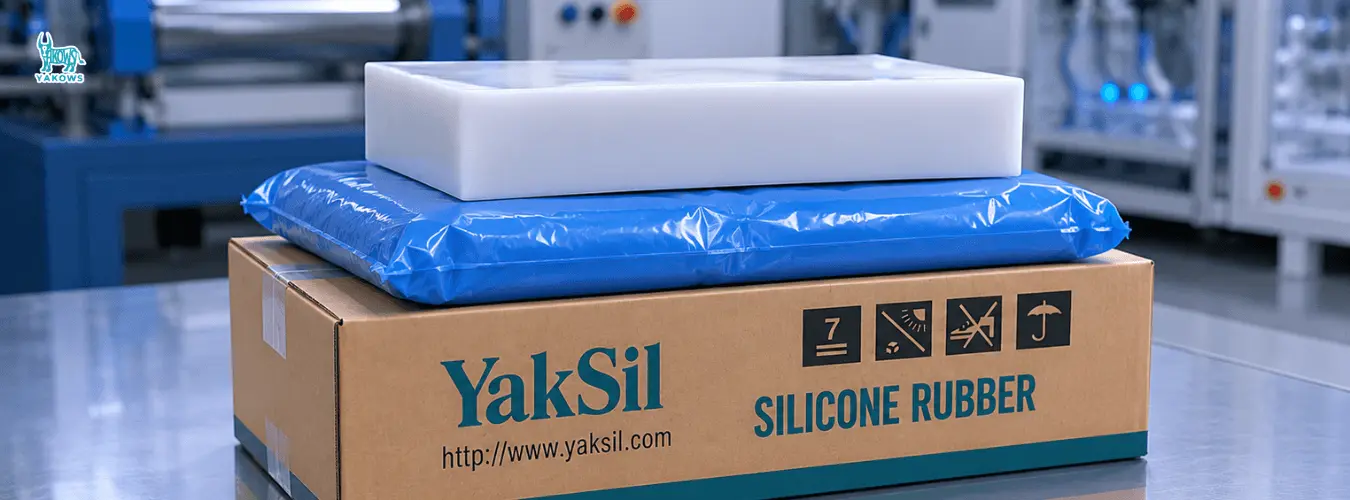
Main HTV Silicone Rubber Molding Processing Methods
HTV Silicone Rubber Compression Molding Processing
Compression molding is the most common and traditional HTV silicone rubber molding processing method. It is widely used because HTV silicone rubber materials generally have high viscosity and excellent mechanical strength, making them highly suitable for compression molding applications.
How HTV Silicone Rubber Compression Molding Works
In compression molding, pre-formed HTV silicone rubber material is placed directly into a heated mold cavity. The mold closes under pressure, forcing the silicone rubber to flow and fill the cavity while heat initiates vulcanization.
The standard HTV silicone rubber compression molding process includes:
- HTV silicone rubber material preparation
- Mold preheating
- Manual loading of silicone rubber
- Compression and vulcanization
- Demolding
- Flash trimming and finishing
- Post-curing if required
Compression molding remains highly popular for medium and large silicone rubber products because it offers relatively low tooling costs and excellent material utilization.
Advantages of HTV Silicone Rubber Compression Molding
HTV silicone rubber compression molding offers several important advantages:
- Lower mold investment compared with injection molding
- Excellent mechanical properties
- Suitable for thick-wall silicone rubber products
- Stable vulcanization performance
- Good dimensional stability for industrial applications
Many manufacturers prefer compression molding for producing:
- Silicone rubber gaskets
- Industrial seals
- Electrical insulators
- High-temperature pads
- Automotive silicone rubber components
Limitations of HTV Silicone Rubber Compression Molding
Although compression molding is widely used, it also has limitations:
- Longer production cycles
- Higher labor dependence
- Additional flash trimming requirements
- Lower automation efficiency compared with injection systems
However, for many industrial silicone rubber applications, compression molding still provides the best balance between cost and performance.
HTV Silicone Rubber Injection Molding Processing
Injection molding is becoming increasingly important in HTV silicone rubber manufacturing, especially for precision industrial products and high-volume production.
How HTV Silicone Rubber Injection Molding Works
In HTV silicone rubber injection molding, silicone rubber material is plasticized and injected into heated molds under pressure. The material cures rapidly inside the mold cavity, enabling efficient and repeatable production.
The process generally includes:
- Silicone rubber feeding
- Material plasticization
- High-pressure injection
- Vulcanization inside the mold
- Automatic demolding
- Product inspection
Modern HTV silicone rubber injection molding systems often integrate robotic automation and digital monitoring technologies.
Benefits of HTV Silicone Rubber Injection Molding
Injection molding offers several significant advantages:
- Faster production cycles
- Higher dimensional precision
- Better repeatability
- Reduced labor costs
- Lower material waste
- Improved automation capability
As manufacturers seek higher production efficiency, HTV silicone rubber injection molding continues expanding in automotive and electronics industries.
Applications of HTV Silicone Rubber Injection Molding
Typical applications include:
- Automotive connectors
- Precision silicone rubber seals
- Electronic components
- Medical silicone rubber parts
- Waterproof industrial products
HTV Silicone Rubber Extrusion Processing
Extrusion is another major HTV silicone rubber processing technology. Unlike molding processes, extrusion continuously shapes silicone rubber into profiles, tubes, cords, and strips.
How HTV Silicone Rubber Extrusion Works
In extrusion processing, HTV silicone rubber is forced through a die to create continuous profiles. After extrusion, the silicone rubber passes through vulcanization equipment for curing.
HTV silicone rubber extrusion is commonly used for:
- Silicone rubber tubing
- Door and window seals
- Cable insulation
- Industrial sealing strips
- Automotive weatherstrips
Advantages of HTV Silicone Rubber Extrusion
Extrusion processing provides:
- High production efficiency
- Continuous manufacturing capability
- Consistent profile dimensions
- Cost-effective mass production
Extruded HTV silicone rubber products are widely used across automotive, construction, energy, and electronics industries.
HTV Silicone Rubber Transfer Molding Processing
Transfer molding combines features of compression molding and injection molding. This process is suitable for silicone rubber parts with inserts or complex geometries.
Benefits of HTV Silicone Rubber Transfer Molding
Transfer molding provides:
- Better dimensional accuracy than compression molding
- Reduced air entrapment
- Improved insert encapsulation
- Enhanced precision for technical components
Applications include:
- Electrical connectors
- Sensor housings
- Embedded silicone rubber assemblies
Although less common than compression molding, transfer molding remains important for specialized HTV silicone rubber applications.
Why Silicone Rubber Is Essential in Modern Manufacturin
Silicone Rubber Offers Superior Thermal Stability
One of the most important reasons manufacturers choose silicone rubber is its excellent thermal stability. Standard silicone rubber materials can operate continuously between -60°C and 230°C, while specialized grades can tolerate even higher temperatures for short durations. In automotive turbocharger systems, aerospace insulation, industrial heating systems, and electronic devices, silicone rubber provides long-term reliability under harsh thermal conditions.
The increasing adoption of electric vehicles has accelerated demand for silicone rubber components. Battery systems, thermal management assemblies, charging connectors, and high-voltage cable insulation all require materials capable of resisting heat buildup and environmental stress. Silicone rubber has therefore become a strategic material in the EV supply chain.
Silicone Rubber Provides Long-Term Chemical Resistance
Silicone rubber is highly resistant to ozone, UV exposure, oxidation, moisture, and many industrial chemicals. This durability significantly extends product lifespan compared with conventional elastomers. Outdoor electrical enclosures, waterproof sealing systems, solar energy components, and industrial machinery frequently use silicone rubber because the material can maintain performance even after years of environmental exposure.
Silicone Rubber Maintains Excellent Flexibility
Unlike many synthetic rubbers that harden or crack over time, silicone rubber remains flexible across extreme temperatures. This flexibility allows silicone rubber products to maintain sealing performance, vibration absorption, and compression recovery under continuous mechanical stress.
Silicone Rubber Meets Medical and Food Safety Standards
Medical-grade silicone rubber has become increasingly important in healthcare manufacturing. Platinum-cured silicone rubber can comply with FDA, USP Class VI, and ISO 10993 requirements, making it suitable for medical tubing, respiratory devices, wearable healthcare products, and implantable components. Food-grade silicone rubber is also widely used in kitchenware, beverage systems, and food-processing equipment due to its non-toxic properties.
Why HTV Silicone Rubber Is Important in Modern Manufacturing
HTV Silicone Rubber Offers Excellent High-Temperature Resistance
One of the biggest advantages of HTV silicone rubber is its exceptional thermal stability. Unlike traditional elastomers such as EPDM, NBR, or natural rubber, HTV silicone rubber can continuously operate under extreme temperatures without losing elasticity or mechanical integrity.
Standard HTV silicone rubber typically performs well between:
- -60°C to 250°C continuous operation
- Up to 300°C for short-term exposure
This makes HTV silicone rubber highly suitable for:
- Automotive engine systems
- EV battery insulation
- Aerospace sealing systems
- Industrial heating equipment
- High-voltage electrical insulation
With the rapid growth of electric vehicles, HTV silicone rubber demand has increased significantly because EV systems require reliable thermal management and electrical insulation materials.
HTV Silicone Rubber Has Superior Weather and Aging Resistance
HTV silicone rubber performs exceptionally well in outdoor and harsh industrial environments. Because the molecular backbone of silicone rubber is based on silicon-oxygen bonds, HTV silicone rubber has superior resistance to:
- Rayonnement UV
- Exposition à l'ozone
- Oxydation
- Humidité
- Environmental aging
Compared with many conventional rubber materials, HTV silicone rubber products can maintain performance for over 20 years in demanding environments.
HTV Silicone Rubber Maintains Excellent Elasticity
Another key benefit of HTV silicone rubber is its flexibility across both low and high temperatures. Even under prolonged compression or vibration, HTV silicone rubber maintains sealing performance and elasticity.
This property is critical for:
- Industrial gaskets
- Automotive seals
- Vibration dampers
- Waterproof sealing systems
- Cable insulation components
HTV Silicone Rubber Material Characteristics
High Mechanical Strength of HTV Silicone Rubber
HTV silicone rubber generally provides better mechanical strength than liquid silicone rubber (LSR). This makes HTV silicone rubber ideal for demanding industrial applications requiring:
- Tear resistance
- Tensile strength
- Compression resistance
- Long-term durability
Industrial sealing systems and automotive components frequently rely on HTV silicone rubber because of these mechanical advantages.
HTV Silicone Rubber Hardness Range
HTV silicone rubber materials are available across a wide hardness range.
Typical hardness values include:
- 20 Shore A for soft sealing applications
- 40–60 Shore A for standard industrial products
- 70–80 Shore A for high-strength silicone rubber parts
This flexibility allows manufacturers to customize HTV silicone rubber properties based on application requirements.
HTV Silicone Rubber Color and Surface Options
HTV silicone rubber can be customized with:
- Transparent finishes
- Colored compounds
- Matte surfaces
- Gloss textures
- Conductive formulations
This versatility supports both industrial and consumer product manufacturing.
Complete HTV Silicone Rubber Manufacturing Workflow
HTV Silicone Rubber Material Mixing
Material preparation is one of the most critical stages in HTV silicone rubber manufacturing. Manufacturers carefully control:
- Filler dispersion
- Pigment consistency
- Catalyst ratios
- Material viscosity
- Contamination prevention
Proper mixing ensures stable curing and consistent product quality.
HTV Silicone Rubber Vulcanization Process
Vulcanization transforms raw silicone rubber into a durable elastomer through heat and curing chemistry.
Common HTV silicone rubber curing systems include:
- Peroxide curing
- Platinum curing
Peroxide-cured HTV silicone rubber is widely used because it offers excellent mechanical performance and cost efficiency.
HTV Silicone Rubber Post-Curing
Post-curing improves silicone rubber performance by removing volatile residues and stabilizing the material structure.
Post-curing can enhance:
- Heat resistance
- Mechanical stability
- Food-grade compliance
- Odor reduction
Medical and food-grade HTV silicone rubber products often require controlled post-curing processes.
Industries Using HTV Silicone Rubber Molding Processing
Automotive HTV Silicone Rubber Applications
The automotive industry is one of the largest consumers of HTV silicone rubber products.
HTV silicone rubber is widely used for:
- Turbocharger hoses
- Engine gaskets
- Battery insulation components
- Connector seals
- Thermal protection systems
The growth of electric vehicles is significantly increasing global demand for HTV silicone rubber materials.
Electrical and Energy HTV Silicone Rubber Applications
Electrical insulation is another major application area for HTV silicone rubber.
Common products include:
- High-voltage insulators
- Cable accessories
- Power transmission components
- Renewable energy sealing systems
Because HTV silicone rubber offers excellent dielectric performance, it is widely used in power infrastructure.
Industrial HTV Silicone Rubber Applications
Industrial manufacturers use HTV silicone rubber for:
- High-temperature seals
- Industrial rollers
- Mechanical gaskets
- Vibration control components
Long service life and thermal stability make HTV silicone rubber ideal for demanding industrial environments.
Medical HTV Silicone Rubber Applications
Medical-grade HTV silicone rubber is also widely used in healthcare applications.
Products include:
- Medical tubing
- Respiratory masks
- Healthcare sealing systems
- Wearable medical devices
Medical silicone rubber manufacturing often requires ISO-certified cleanroom environments.
Quality Standards for HTV Silicone Rubber Manufacturing
International Certifications for HTV Silicone Rubber Production
Professional HTV silicone rubber manufacturers often comply with:
- ISO 9001
- IATF 16949
- ISO 13485
- UL certification standards
These systems ensure product consistency and traceability.
HTV Silicone Rubber Testing Methods
Quality control testing commonly includes:
- Essais de résistance à la traction
- Analyse de la déformation rémanente après compression
- Tear resistance testing
- Évaluation du vieillissement thermique
- Mesure de la dureté
These tests help ensure HTV silicone rubber products meet industrial performance requirements.
Conclusion: Why HTV Silicone Rubber Molding Processing Is Critical for Modern Industry
HTV silicone rubber molding processing has become one of the most important manufacturing technologies in modern industrial production. Compression molding, injection molding, extrusion processing, and transfer molding each provide unique advantages depending on product structure, production volume, and application requirements. Among all silicone rubber materials, HTV silicone rubber remains highly valued because HTV silicone rubber offers exceptional heat resistance, mechanical strength, weather resistance, electrical insulation, and long-term durability.
As industries such as automotive, renewable energy, healthcare, electronics, and industrial automation continue evolving, demand for high-performance HTV silicone rubber products is expected to grow rapidly. Manufacturers investing in advanced HTV silicone rubber molding processing technologies can improve product quality, manufacturing efficiency, and long-term competitiveness in global markets.
For companies seeking reliable elastomer solutions for harsh industrial environments, HTV silicone rubber continues to be one of the most trusted and versatile materials available today.