
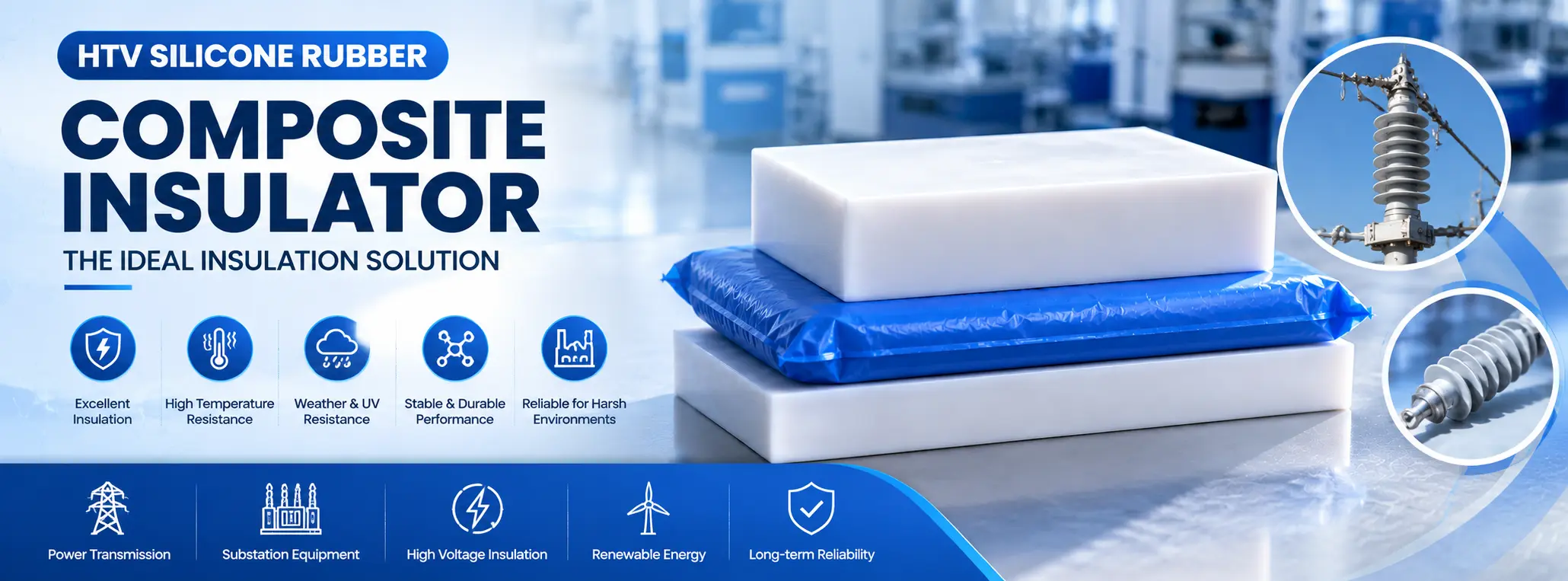
What Is HTV Silcione Rubber Used For
Caoutchouc silicone HTV, or High-Temperature Vulcanized silicone rubber, is a critical material for composite insulators in modern power transmission. Its combination of hydrophobicity, electrical insulation, mechanical strength, and environmental resistance ensures reliable long-term operation in high-voltage systems. Utilities and engineers use HTV silicone rubber to reduce maintenance, prevent flashovers, and increase system uptime, particularly in harsh environmental conditions such as coastal regions, industrial zones, or areas with heavy pollution. Advanced HTV formulations and proper installation methods provide solutions for tracking, erosion, and UV degradation, making HTV silicone rubber indispensable in high-performance composite insulators.
1. Overview of HTV Silicone Rubber in Composite Insulators
HTV silicone rubber is a high-performance elastomer produced by high-temperature vulcanization. It is designed to withstand extreme mechanical, thermal, and environmental stress. In composite insulators, it is used primarily as the housing material surrounding the fiberglass core rod, which provides structural strength.
Key properties of HTV silicone rubber include:
- Hydrophobic surface: Repels water, reduces leakage currents, and prevents flashover.
- High electrical insulation: Prevents surface tracking even under contaminated conditions.
- UV and ozone resistance: Maintains performance under prolonged outdoor exposure.
- Mechanical flexibility: Withstands tensile and bending stresses during installation and operation.
- Temperature tolerance: Performs reliably from -60°C to 250°C.
These properties make HTV silicone rubber ideal for replacing traditional porcelain and glass insulators, which are brittle, heavy, and prone to mechanical failure.
2. Electrical Advantages in Composite Insulators
Composite insulators with HTV silicone rubber housings are widely adopted due to their superior electrical performance:
2.1 Hydrophobicity and Leakage Reduction
HTV silicone rubber maintains a hydrophobic surface that prevents water from forming continuous conductive films, reducing surface leakage currents. Over time, even if the surface becomes polluted, HTV silicone rubber exhibits hydrophobic recovery, where water-repellent properties are naturally restored.
Solution: Utilities use HTV silicone rubber composite insulators in coastal or industrial areas to prevent flashovers caused by salt spray or chemical contamination.
2.2 High Dielectric Strength
HTV silicone rubber provides excellent insulation in both AC and DC systems. Its ability to prevent corona discharge and surface tracking ensures stable operation in high-voltage networks.
Solution: Composite insulators made with HTV silicone rubber reduce the risk of outages and improve grid reliability.
2.3 Pollution Performance
HTV silicone rubber effectively handles polluted environments. The hydrophobic surface prevents adhesion of dust and industrial residues, maintaining surface insulation even during heavy contamination.
Solution: Utilities in high-pollution zones deploy HTV silicone rubber insulators to minimize maintenance costs and avoid frequent cleaning cycles.
3. Mechanical Benefits and Installation Advantages
HTV silicone rubber also provides critical mechanical solutions for composite insulators:
- Elasticity: Absorbs mechanical stress from wind, ice, or seismic activity.
- Tear and abrasion resistance: Protects the fiberglass core from damage.
- Lightweight design: Simplifies transportation and installation.
- Vibration resistance: Ensures stability in long-span transmission lines.
Solution: Using HTV silicone rubber allows engineers to design longer transmission spans with fewer support structures, reducing infrastructure costs while maintaining safety.
4. Environmental Resistance and Aging
HTV silicone rubber provides exceptional long-term durability:
- UV and ozone resistance: Prevents surface degradation and brittleness.
- Hydrophobic recovery: Ensures water repellency after abrasion or pollution.
- Chemical resistance: Protects against acid rain, industrial pollutants, and bird droppings.
Solution: HTV silicone rubber composite insulators can achieve service lives of 25–30 years with minimal maintenance, even in harsh outdoor environments.
5. Manufacturing and Design Considerations
5.1 Housing Design
The HTV silicone rubber housing is designed to encapsulate the fiberglass core rod fully, creating a barrier against environmental factors while providing electrical insulation. Designers often add sheds or fins to increase surface distance and improve creepage performance.
5.2 Material Formulation
Modern HTV silicone rubber formulations include:
- Nano-fillers to enhance tracking and erosion resistance.
- UV stabilizers for prolonged outdoor exposure.
- Flame-retardant additives for additional safety.
- Hydrophobicity-promoting agents for pollution resistance.
Solution: Tailoring HTV silicone rubber formulations to site-specific environmental conditions ensures optimal performance and longevity.
6. Case Studies and Field Applications
6.1 Coastal Transmission Lines
In coastal regions, salt spray causes leakage and flashover in traditional porcelain insulators. HTV silicone rubber composite insulators maintain hydrophobicity, resist corrosion, and significantly reduce maintenance frequency.
6.2 Industrial Zones
Pollution and chemical exposure in industrial areas accelerate degradation in conventional insulators. HTV silicone rubber insulators resist contamination and maintain insulation performance, reducing downtime and maintenance costs.
6.3 Extreme Weather Conditions
HTV silicone rubber insulators withstand ice loading, high winds, and seismic events due to their flexibility and mechanical resilience, ensuring reliable operation even under extreme environmental stress.
7. Maintenance and Monitoring Solutions
7.1 Inspection Techniques
Composite insulators require visual inspections and infrared or ultrasonic testing to detect mechanical damage or contamination.
7.2 Cleaning Methods
Periodic cleaning may be necessary for extremely polluted areas, but HTV silicone rubber’s hydrophobic recovery reduces cleaning frequency compared to porcelain or glass.
7.3 Replacement Planning
HTV silicone rubber insulators have a long service life, but utilities plan replacement based on visual degradation, pollution levels, and dielectric performance.
Solution: Maintenance strategies combined with HTV silicone rubber’s durability reduce total lifecycle costs and enhance grid reliability.
8. Advances in HTV Silicone Rubber for Composite Insulators
- Enhanced nano-filler technologies improve erosion resistance.
- Self-cleaning and hydrophobic coatings reduce pollution accumulation.
- Smart materials integration allows monitoring of insulation health.
- Eco-friendly formulations reduce environmental impact during production.
Solution: These innovations extend service life, improve reliability, and reduce operational expenses for power networks.
9. Summary
HTV silicone rubber is the material of choice for composite insulators due to its hydrophobicity, electrical insulation, mechanical resilience, and environmental durability. It solves long-standing challenges of porcelain and glass insulators, providing lightweight, flexible, and low-maintenance solutions for modern power transmission and distribution. Utilities benefit from fewer outages, lower maintenance costs, and improved operational safety. Advances in HTV silicone rubber formulations continue to enhance composite insulator performance, making it an essential component in high-voltage systems worldwide.