
Understand The Medical Grade Silicone
At its core, silicone de qualité médicale is a specially engineered silicone material designed for safe use in medical and healthcare environments. Unlike standard industrial silicone rubber, medical silicone must satisfy stricter requirements related to biocompatibility, toxicity, chemical stability, and manufacturing control. These requirements are especially important for products that come into direct or indirect contact with the human body, including pharmaceutical systems, respiratory equipment, wearable devices, and medical tubing.
For manufacturers, healthcare brands, and OEM buyers, understanding what medical grade silicone actually means is essential because the material directly affects product safety, long-term reliability, and regulatory compliance. While many silicone materials may appear similar on the surface, the difference between ordinary industrial silicone and genuine medical grade silicone can be significant in terms of purity, biological safety, manufacturing standards, and performance stability.
To fully understand why medical grade silicone is so widely trusted in healthcare applications, it is first necessary to understand what silicone itself actually is.
Understanding the Foundation of Medical Silicone
Silicone is a synthetic elastomer primarily composed of silicon, oxygen, carbon, and hydrogen. Unlike traditional plastics, silicone contains a silicon-oxygen molecular backbone, which gives the material a unique combination of flexibility, durability, and thermal stability. This structure allows silicone to maintain its performance under conditions where many conventional rubber materials may crack, harden, or degrade.
Because of these properties, silicone has long been used in industries such as automotive manufacturing, electronics, aerospace, and consumer products. However, medical applications require a much higher level of material control and biological safety than most industrial environments.
This is where medical grade silicone becomes fundamentally different from ordinary silicone rubber.
Medical silicone is specifically formulated and manufactured for healthcare-related applications where the material may contact skin, tissue, bodily fluids, or pharmaceutical systems. In these environments, the material must remain stable without causing excessive irritation, toxicity, inflammation, or harmful biological reactions. Achieving this level of safety requires careful raw material selection, advanced processing methods, and strict quality control throughout production.
In addition, medical silicone materials are often evaluated according to internationally recognized testing standards such as ISO 10993, USP Class VI, FDA compliance requirements, and ISO 13485 manufacturing systems. These standards help verify that the material performs safely and consistently under medical conditions.
Rather than being simply “higher quality silicone,” medical grade silicone is better understood as a controlled material system designed specifically for healthcare reliability and long-term biological compatibility.
Why Medical Silicone Is Different From Ordinary Silicone Rubber
One of the most common misconceptions in the market is the assumption that all silicone materials are essentially the same. In reality, there are major differences between industrial silicone, food-grade silicone, and medical grade silicone.
Ordinary industrial silicone rubber is primarily designed for general mechanical or environmental performance. It may perform well in automotive parts, industrial seals, electrical insulation, or general consumer products, but it is not necessarily suitable for prolonged medical or biological contact.
Medical silicone, by contrast, is manufactured under much stricter processing conditions. The formulation is carefully controlled to minimize contaminants, volatile compounds, residual catalysts, and extractable substances that could potentially affect human health or sensitive pharmaceutical environments.
This difference becomes especially important in applications involving repeated sterilization, long-term skin contact, or fluid transfer systems used in healthcare settings. Medical silicone rubber is expected to maintain stable performance under demanding conditions while resisting degradation caused by heat, moisture, ozone, oxidation, and chemical exposure.
As a result, many healthcare manufacturers are replacing traditional rubber materials with medical silicone in applications where long-term reliability and biological safety are critical.
The growing use of medical silicone across the healthcare industry reflects not only its material performance, but also its versatility across a wide range of medical applications.
Why Silicone Rubber Is Widely Used in Medical Products
The healthcare industry requires materials that combine flexibility, durability, chemical resistance, and patient safety. Medical silicone rubber performs exceptionally well in all of these areas, which explains why it has become one of the most widely used elastomer materials in modern medical manufacturing.
One of the most important applications is medical silicone tubing. Silicone tubing is commonly used in pharmaceutical and healthcare systems because it offers excellent flexibility while maintaining chemical stability and sterilization compatibility. Compared with many conventional rubber tubes, silicone tubing is less likely to crack, harden, or degrade over time, even after repeated sterilization cycles.
Today, medical silicone tubing is widely used in:
- IV systems
- Peristaltic pumps
- Catheters
- Dialysis equipment
- Pharmaceutical transfer systems
- Laboratory fluid handling applications
- Respiratory equipment
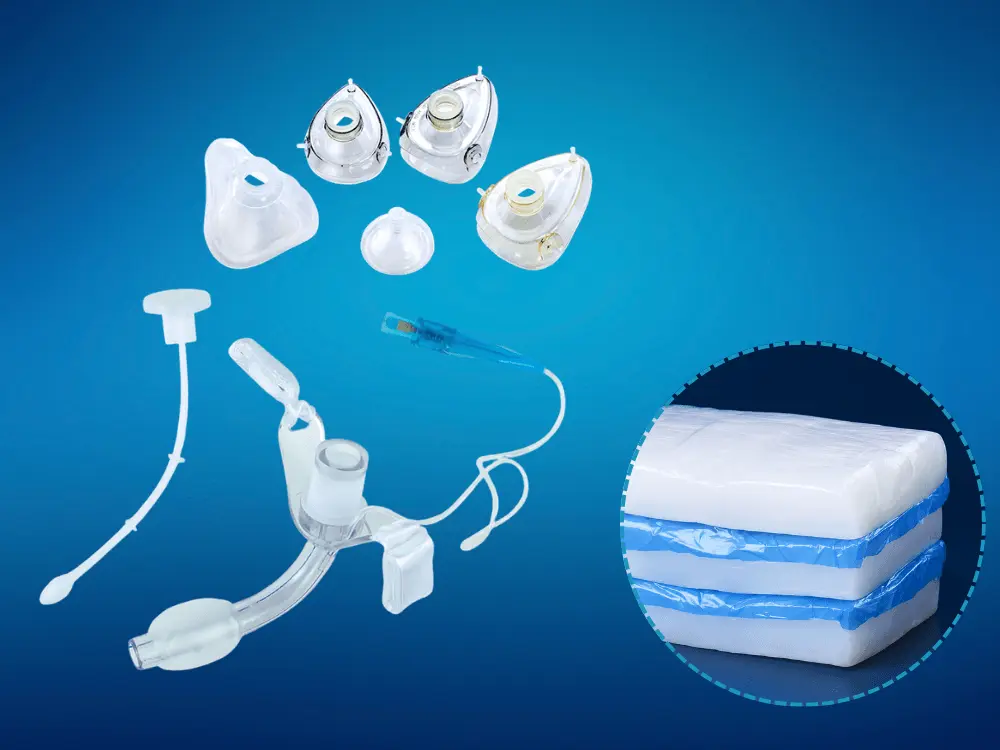
Beyond tubing applications, medical silicone has also become increasingly important in wearable healthcare technology. As wearable medical devices continue evolving, manufacturers require materials that remain soft and comfortable during prolonged skin contact. Medical silicone rubber has therefore become a preferred material for products such as continuous glucose monitoring systems, skin-contact sensors, medical wristbands, and respiratory masks.
Its soft texture, flexibility, and biocompatibility help improve patient comfort while maintaining long-term durability during daily use.
At the same time, silicone rubber is widely used in precision molded healthcare components, including seals, gaskets, valves, diaphragms, membranes, and connectors. These components are essential in ventilators, drug delivery systems, diagnostic equipment, and pharmaceutical machinery where stable performance and sterilization resistance are critical.
The ability of silicone to maintain elasticity and reliability under temperature fluctuations and repeated sterilization is one of the key reasons it continues to replace traditional rubber materials in medical manufacturing.
As demand for healthcare products continues growing, another important distinction has also become increasingly relevant: the difference between medical grade silicone and food-grade silicone.
Medical Grade Silicone vs Food Grade Silicone
Although medical grade silicone and food-grade silicone are often discussed together, they are not identical materials.
Food-grade silicone is primarily designed for food-contact applications such as kitchenware, beverage systems, baking products, and consumer goods. While it must meet food safety standards, it may not undergo the extensive biological testing required for medical applications.
Medical grade silicone, on the other hand, is specifically intended for environments where the material may contact skin, tissue, pharmaceutical fluids, or sensitive biological systems. Because of this, medical silicone generally requires stricter purity standards, additional biocompatibility testing, tighter manufacturing control, and more detailed regulatory documentation.
This distinction is important because many buyers mistakenly assume that FDA-compliant silicone automatically qualifies as medical grade silicone. In reality, healthcare applications often require a much higher level of material validation and manufacturing consistency.
The difference between these categories also explains why genuine medical silicone rubber products are typically more expensive than standard food-grade silicone products.
Beyond material formulation and testing, the manufacturing process itself also plays a major role in determining whether a silicone product can truly meet medical standards.
How Medical Silicone Rubber Products Are Manufactured
The manufacturing process is one of the defining factors that separates medical silicone from ordinary silicone products. Even high-quality raw silicone materials may fail to meet medical standards if production conditions are not properly controlled.
Medical silicone rubber products are typically manufactured using carefully selected raw materials combined with specialized curing systems designed for healthcare applications. Throughout production, manufacturers must maintain strict control over contamination, consistency, and processing stability.
Depending on the product design and application, medical silicone products may be produced through injection molding, compression molding, extrusion, or transfer molding.
Among these technologies, Liquid Silicone Rubber (LSR) molding has become especially important in the medical industry. LSR allows highly automated and precise manufacturing, making it ideal for complex healthcare components that require tight tolerances and consistent quality.
Compared with traditional silicone processing methods, LSR manufacturing offers several important advantages:
- Higher molding precision
- Faster production cycles
- Better consistency
- Lower contamination risk
- Improved transparency
- Enhanced automation capability
Because of these advantages, LSR is widely used for wearable device components, respiratory products, infant care products, and precision molded medical silicone parts.
After molding, many medical silicone products also undergo post-curing processes to remove residual volatile substances and improve long-term material stability. For higher-end healthcare applications, production may additionally take place inside cleanroom environments to further reduce contamination risks.
Since manufacturing quality directly affects medical product performance, selecting the right silicone supplier becomes an important decision for healthcare brands and OEM manufacturers.
Choosing the Right Medical Silicone Manufacturer
Not all silicone manufacturers have the technical capability to produce genuine medical-grade products consistently. In some cases, low-cost silicone products may involve unstable raw materials, insufficient post-curing, inconsistent molding quality, or inadequate contamination control.
These issues may eventually compromise product reliability, biological safety, or regulatory compliance.
For this reason, experienced healthcare manufacturers usually look for suppliers with strong technical expertise and well-established quality systems. A professional medical silicone manufacturer should typically provide:
- ISO 13485 certified production systems
- Medical-grade raw material sourcing
- Cleanroom manufacturing capability
- Technical documentation and traceability
- Biocompatibility reports
- Stable quality control systems
- Custom silicone molding expertise
Equally important is the supplier’s engineering capability. Experienced silicone manufacturers can help optimize material hardness, transparency, tear resistance, compression set performance, and sterilization compatibility based on the intended application.
This level of technical support is especially valuable for custom silicone tubing, wearable healthcare products, and precision molded medical components.
As healthcare technology continues advancing, the importance of high-performance medical silicone materials is expected to grow even further.
Conclusion
Medical grade silicone is far more than ordinary silicone rubber marketed for healthcare use. It is a carefully engineered material system developed specifically for applications where safety, biological compatibility, durability, and long-term stability are essential.
Its unique ability to combine flexibility, chemical resistance, sterilization compatibility, and biocompatibility has made medical silicone rubber one of the most trusted materials in modern healthcare manufacturing.
From silicone tubing and pharmaceutical systems to wearable healthcare devices and precision molded rubber components, medical silicone continues to support innovation across the global medical industry.
As demand for safer, cleaner, and more reliable healthcare products continues increasing, understanding what specifically makes silicone “medical grade” has become increasingly important for manufacturers, sourcing professionals, and healthcare brands seeking dependable long-term material solutions.