
Why Silicone Rubber Is Used for High-Voltage Electrical Insulation
High-voltage equipment requires insulation materials that can perform reliably under electrical stress, extreme temperatures, moisture, and outdoor contamination. Among the materials available today, silicone rubber has become a widely used solution for high-voltage electrical insulation.
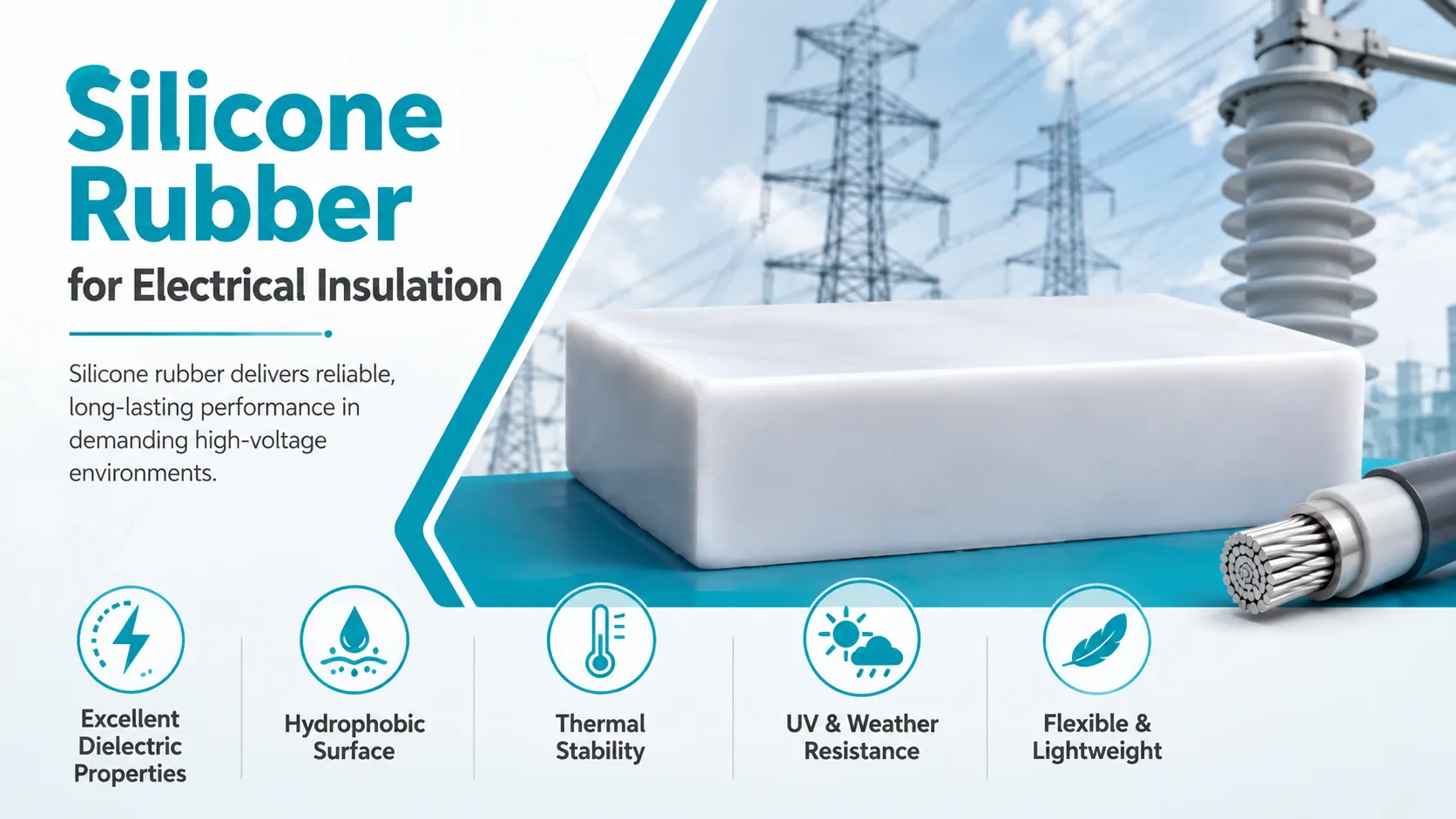
Its combination of dielectric performance, flexibility, hydrophobicity, weather resistance, and thermal stability makes it suitable for insulators, cable accessories, surge arresters, bushings, connectors, and many other electrical components.
O que é borracha de silicone?
Silicone rubber is an elastomer made from silicone-based polymers. Unlike many conventional organic rubber materials, its molecular structure contains a silicon-oxygen backbone. This structure gives the material excellent resistance to heat, cold, ultraviolet radiation, ozone, moisture, and environmental aging.
Depending on the formulation and manufacturing process, silicone rubber can be produced with different hardness levels, mechanical properties, colors, and electrical characteristics. It can also be molded into complex shapes, making it suitable for both standard and customized high-voltage components.
Why Electrical Insulation Is Critical in High-Voltage Systems
The purpose of electrical insulation is to prevent unwanted current flow between conductive parts and surrounding structures. In high-voltage systems, insulation must withstand much greater electrical stress than it would encounter in ordinary low-voltage applications.
If an insulation material loses its dielectric strength, surface resistance, or mechanical integrity, the result may be leakage current, partial discharge, tracking, flashover, equipment failure, or a serious safety hazard.
For this reason, high-voltage electrical insulation must maintain stable performance throughout long-term exposure to demanding operating and environmental conditions.
Key Reasons Silicone Rubber Is Used for Electrical Insulation
1. Excellent Dielectric Properties
One of the main reasons silicone rubber is selected for electrical insulation is its strong dielectric performance. Properly formulated silicone rubber can resist electrical breakdown and reduce current leakage across insulated components.
Its electrical properties remain relatively stable across a wide temperature range, which is especially important for equipment exposed to changing loads and operating environments.
2. Superior Hydrophobicity
Silicone rubber naturally repels water. Instead of spreading into a continuous film, moisture tends to form separate droplets on the material's surface.
This hydrophobic behavior helps reduce the formation of conductive surface paths. As a result, silicone rubber insulation can offer better resistance to leakage current and flashover in wet, humid, or polluted environments.
Hydrophobicity is especially valuable for outdoor high-voltage equipment installed in coastal areas, industrial zones, dusty locations, and regions with frequent rain or fog.
3. Hydrophobicity Recovery
A particularly important characteristic of silicone rubber is its ability to recover surface hydrophobicity after temporary exposure to contamination or electrical activity.
Low-molecular-weight silicone components can migrate toward the surface and help restore water-repellent behavior. This property supports long-term electrical insulation performance in demanding outdoor conditions.
4. Resistance to Tracking and Erosion
High-voltage insulation surfaces may be exposed to moisture, contamination, leakage current, and localized electrical discharges. Over time, these conditions can produce conductive tracks or erode the insulation surface.
High-quality silicone rubber compounds can be formulated to resist tracking and erosion. This helps protect the insulation profile and reduces the risk of premature failure.
5. Wide Operating Temperature Range
Silicone rubber can maintain flexibility and insulation performance across a broad temperature range. It does not become brittle as easily as some materials in cold environments, and it can withstand elevated temperatures without rapidly losing its functional properties.
This makes silicone rubber electrical insulation suitable for equipment installed in regions with extreme seasonal temperatures or exposed to heat generated during operation.
6. UV, Ozone, and Weather Resistance
Outdoor electrical equipment is continuously exposed to sunlight, oxygen, ozone, rain, wind, and temperature changes. These factors can cause many polymeric insulation materials to crack, fade, harden, or deteriorate.
Silicone rubber offers strong resistance to ultraviolet radiation, ozone, and general weathering. This durability helps extend the service life of outdoor electrical insulation components.
7. Lightweight and Flexible Construction
Compared with traditional ceramic insulation, silicone rubber components can be significantly lighter. Lower weight can simplify transportation, installation, and maintenance while reducing mechanical loads on supporting structures.
The flexibility of silicone rubber also improves impact resistance. It is less likely to shatter during handling, installation, transportation, vandalism, or severe weather events.
8. Design Flexibility
Silicone rubber can be molded into complex sheds, housings, seals, and protective profiles. Manufacturers can optimize creepage distance, surface shape, thickness, and mechanical interfaces according to the voltage level and operating environment.
This design flexibility allows silicone rubber to support a wide range of customized electrical insulation solutions.
Common High-Voltage Applications
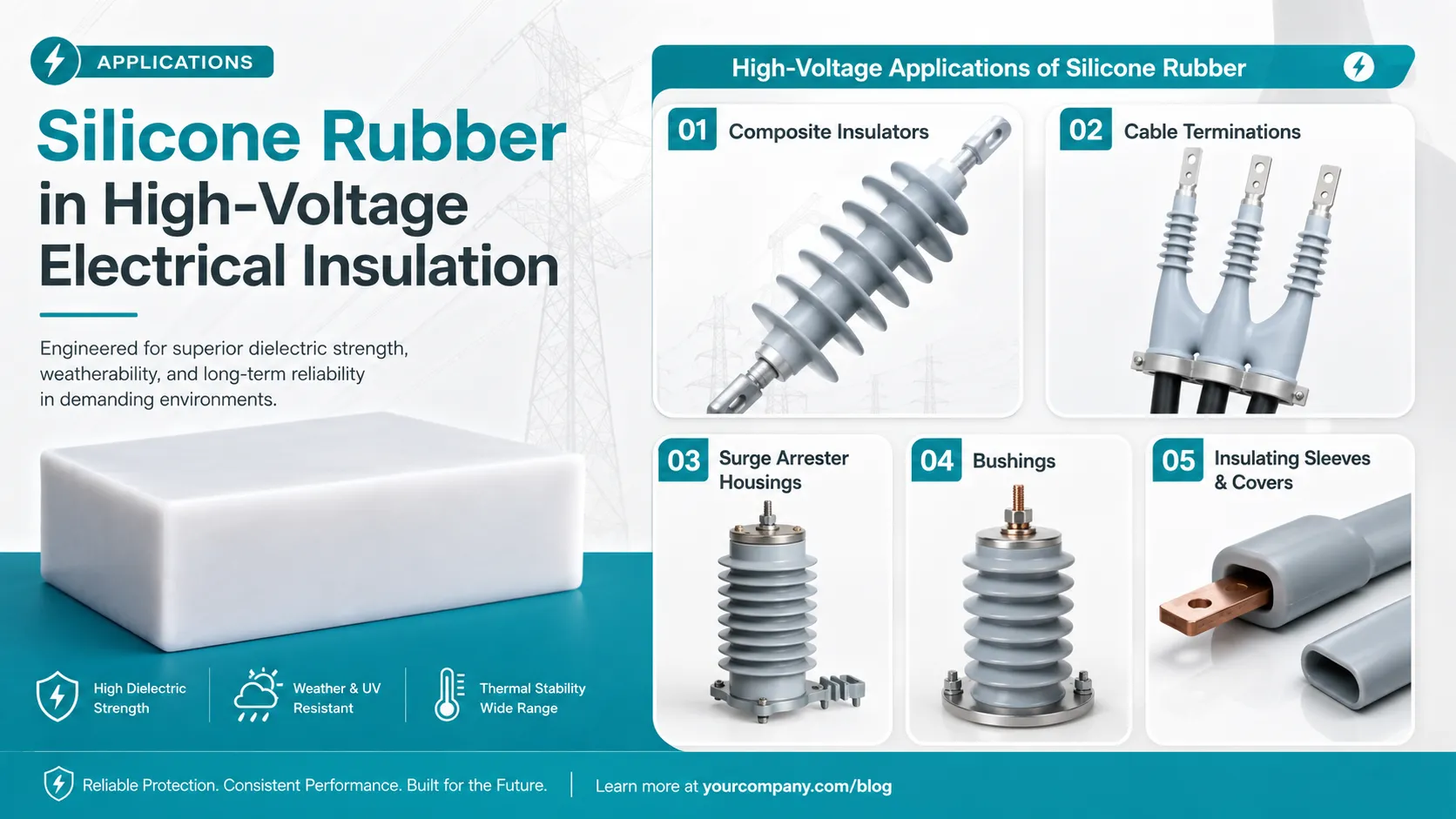
Silicone rubber is used in many components throughout power generation, transmission, distribution, railway, industrial, and renewable-energy systems.
- Composite suspension and line post insulators
- High-voltage cable terminations
- Cable joints and separable connectors
- Surge arrester housings
- Transformer and switchgear bushings
- Insulating boots and protective covers
- Cold-shrink and pre-molded accessories
- Electrical seals, gaskets, and insulating sleeves
In these applications, silicone rubber may act as the primary insulation material, an external weather-resistant housing, or a protective interface between different electrical components.
Silicone Rubber vs. Traditional Insulation Materials
| Propriedade | Borracha de silicone | Traditional Ceramic Insulation |
|---|---|---|
| Peso | Lightweight | Relatively heavy |
| Impact resistance | Flexible and resistant to shattering | Rigid and may break under impact |
| Hidrofobicidade | Excellent water-repellent surface | Surface may become wet more easily |
| Design flexibility | Easy to mold into complex profiles | More limited manufacturing flexibility |
| Outdoor performance | Strong UV, ozone, and weather resistance | Durable but heavier and more fragile |
Traditional materials still have important roles in high-voltage systems. However, silicone rubber is often preferred when low weight, hydrophobicity, impact resistance, and installation efficiency are key project requirements.
Factors That Affect Silicone Rubber Insulation Performance
Not every silicone rubber compound provides the same level of performance. The reliability of the finished insulation component depends on material formulation, design, manufacturing control, and application conditions.
- Silicone polymer quality and purity
- Type and amount of reinforcing fillers
- Tracking- and erosion-resistant additives
- Curing system and curing consistency
- Component thickness and insulation profile
- Bonding between silicone rubber and the internal core
- Operating voltage and electrical stress distribution
- Pollution level, humidity, altitude, and temperature
Manufacturers should select compounds and component designs according to the intended voltage class, environment, mechanical load, and applicable testing requirements.
How to Choose Silicone Rubber for Electrical Insulation
When evaluating silicone rubber for a high-voltage electrical insulation application, buyers and engineers should consider more than basic hardness or color.
- Define the operating voltage. Confirm the rated voltage, impulse requirements, and expected electrical stress.
- Evaluate the environment. Consider moisture, salt fog, dust, industrial pollution, UV exposure, altitude, and temperature.
- Review dielectric performance. Check dielectric strength, volume resistivity, dielectric constant, and dissipation characteristics.
- Check tracking and erosion resistance. This is particularly important for outdoor and contaminated environments.
- Confirm mechanical requirements. Review tensile strength, elongation, tear resistance, hardness, and compression behavior.
- Verify manufacturing consistency. Stable mixing, molding, curing, and inspection processes are essential for reliable insulation products.
Does Silicone Rubber Require Maintenance?
Silicone rubber insulation generally requires less cleaning than some conventional insulation surfaces because of its water-repellent properties. However, no material is completely maintenance-free.
Components should still be inspected for cuts, punctures, abnormal erosion, loose connections, severe contamination, or damage caused by installation and external forces. Maintenance intervals should be based on the equipment type, operating environment, and system reliability requirements.
Conclusão
Silicone rubber is widely used for high-voltage electrical insulation because it combines dependable dielectric properties with excellent hydrophobicity, weather resistance, thermal stability, flexibility, and design versatility.
These advantages make it particularly valuable for outdoor power equipment, cable systems, surge protection devices, and composite insulators operating under demanding environmental conditions.
The final performance of a silicone rubber insulation component depends on selecting the correct compound, designing the component properly, and maintaining consistent manufacturing quality. With the right material and design, silicone rubber can provide a durable and efficient insulation solution for modern high-voltage systems.