
High Temperature Vulcanized Silicone Rubber: Properties, Processing and Industrial Applications
High Temperature Vulcanized Silicone Rubber (HTV) is a high-consistency silicone elastomer that is shaped and cured under controlled heat to produce flexible, durable rubber components. It is widely used in industrial molding, extrusion, electrical insulation, automotive components, wire and cable systems, and high-voltage power equipment.
Unlike conventional liquid silicone materials, HTV silicone rubber is generally supplied as a solid, gum-like compound. Its formulation can be adjusted through polymer selection, reinforcing silica, curing systems and functional additives to achieve specific requirements for hardness, tensile strength, tear resistance, temperature stability and electrical insulation.
For manufacturers, selecting the right HTV compound involves more than comparing hardness or maximum temperature. Processing compatibility, curing behavior, mechanical properties, dielectric performance and long-term environmental durability all influence the performance of the finished component.
This guide examines the material structure, vulcanization chemistry, processing methods, technical specifications and industrial applications of high temperature vulcanized silicone rubber, with particular attention to composite insulators and electrical insulation manufacturing.
YAKOWS · HTV / HCR MATERIAL SOLUTIONS
HTV Silicone Rubber Compounds for Industrial and Electrical Applications
Yakows supplies solid HTV/HCR silicone rubber compounds for molded, extruded and specialized electrical components. Different material grades can be evaluated according to hardness, mechanical properties, electrical requirements and production processes.
GENERAL INDUSTRIAL GRADES
HTV Silicone Rubber Compound
Solid heat-curable silicone rubber for compression molding, injection molding, extrusion, transfer molding and other industrial manufacturing processes.
HIGH-VOLTAGE ELECTRICAL INSULATION
YK-3160 Silicone Rubber for Composite Insulators
Electrical-grade HTV/HCR compounds for composite insulator sheds and housings, line-post and station-post insulators, and polymer-housed surge arresters.
SPECIALIZED ELECTRICAL COMPONENTS
HTV Silicone Rubber for Surge Arrester Housings
Material solutions for outdoor high-voltage insulation components requiring electrical performance, weather resistance and stable molding behavior.
Need an HTV grade matched to your formulation, mold or electrical application?
1. What Is High Temperature Vulcanized Silicone Rubber?
High Temperature Vulcanized Silicone Rubber is a heat-curable silicone elastomer that is processed from a high-consistency, solid compound into a crosslinked rubber material.
Before curing, HTV typically has a firm, kneadable consistency. It can be shaped through molding, extrusion or calendering. When exposed to the specified heat and curing system, its polymer chains form a three-dimensional crosslinked network, transforming the uncured compound into an elastic solid.
HTV is commonly associated with High Consistency Rubber (HCR), also known as solid silicone rubber, heat-cured silicone rubber or millable silicone rubber.
What Does High Temperature Vulcanized Mean?
The term describes the heat-activated vulcanization process used to cure the material. It should not be interpreted as a universal maximum operating temperature.
Two different HTV grades may have different continuous service temperatures, heat-aging behavior and mechanical retention depending on their polymer structure, curing chemistry, fillers and additives.
Therefore, manufacturers should distinguish between:
- Vulcanization temperature: The temperature used during manufacturing to cure the uncured silicone compound.
- Continuous service temperature: The temperature at which the finished component is designed to operate over an extended period.
- Short-term temperature exposure: A temporary temperature condition that may be tolerated under specified circumstances.
These values are related to different performance requirements and should not be treated as interchangeable.
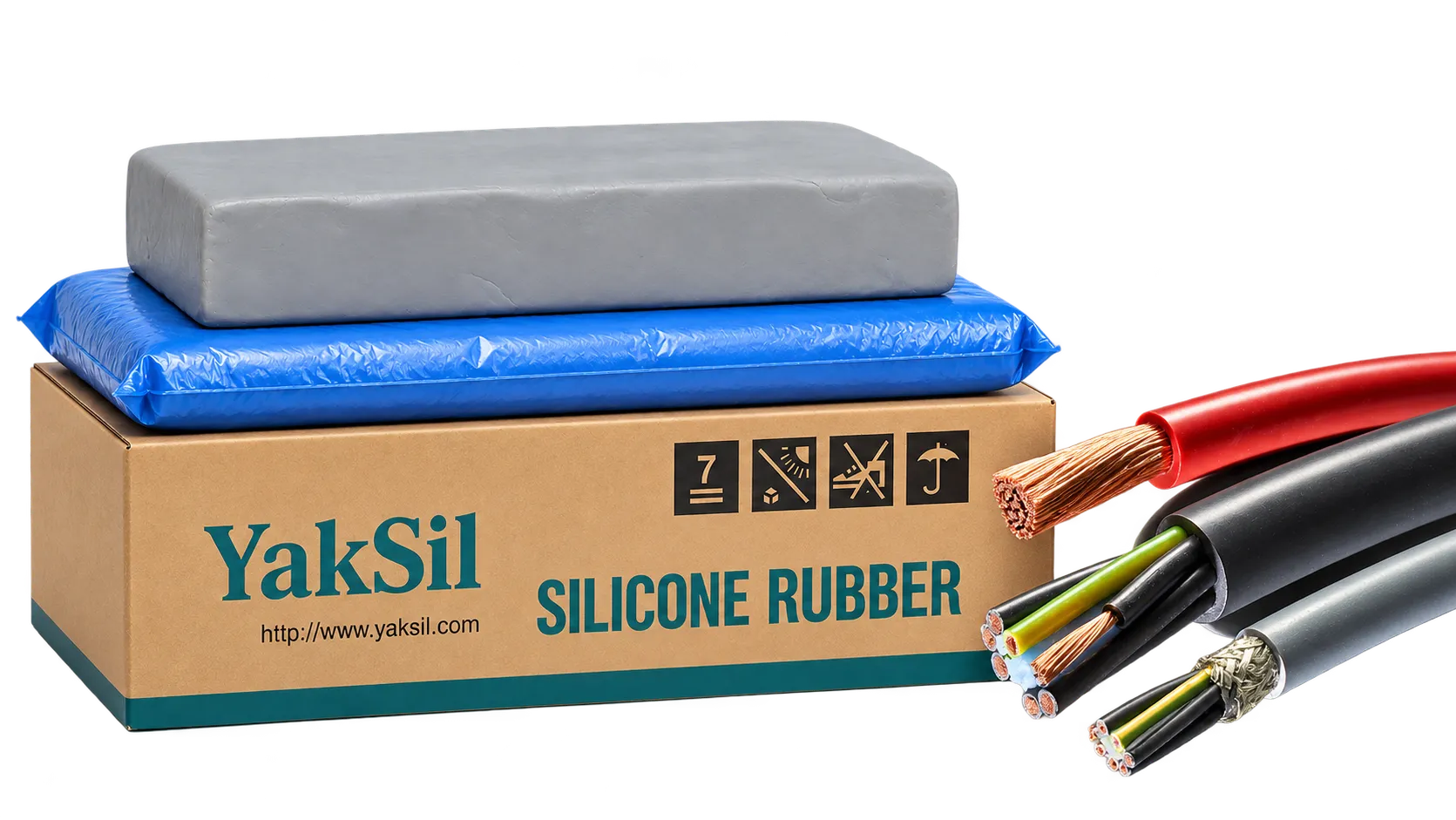
2. What Is HTV Silicone Rubber Made Of?
The performance of high temperature vulcanized silicone rubber comes from the interaction between its silicone polymer, reinforcing fillers, curing system and functional additives.
Polímero de silicone
The base polymer is generally a high-molecular-weight polysiloxane gum. Its main molecular backbone consists of alternating silicon and oxygen atoms, with organic groups attached to the silicon atoms.
VMQ is a widely used silicone rubber family. The molecular structure contributes to flexibility, thermal stability, weather resistance and electrical properties.
Specialized silicone polymer structures can also be selected when an application requires particular low-temperature, chemical or mechanical characteristics.
Sílica de reforço
Reinforcing silica is a major component of many HTV formulations. Fumed or precipitated silica can improve mechanical strength by interacting with the silicone polymer network.
Its influence extends beyond tensile strength. The type, surface characteristics, loading and dispersion of silica can also affect tear resistance, hardness, extrusion behavior and compound processability.
Curing Agents and Crosslinking Components
The curing system converts the uncured silicone gum into an elastic network. Depending on the formulation, HTV compounds can use organic peroxide curing or platinum-catalyzed addition curing.
The curing system influences processing conditions, production efficiency, post-curing requirements and the properties of the finished material.
Functional Additives and Pigments
Additional ingredients may be incorporated to achieve specific requirements, such as:
- Heat-aging stability.
- Flame-retardant performance.
- Electrical insulation and tracking resistance.
- Thermal conductivity.
- Color and visual identification.
- Improved processing and release behavior.
Not every HTV formulation contains the same ingredients. Additives must be compatible with the curing system and the final product's mechanical and electrical requirements.
3. How Does High Temperature Vulcanized Silicone Rubber Cure?
Vulcanization is the chemical process that transforms an uncured silicone compound into a stable elastomer. The curing reaction forms crosslinks between polymer chains, creating the material's elastic structure.
Two major curing approaches are used in HTV/HCR silicone rubber manufacturing.
Peroxide-Cured HTV Silicone Rubber
Peroxide curing is widely used for solid silicone rubber molding and extrusion. Under appropriate heating conditions, the peroxide decomposes and initiates reactions that form crosslinks between silicone polymer chains.
Peroxide-cured compounds are commonly considered for:
- Industrial molded rubber components.
- Extruded silicone profiles and tubing.
- Electrical insulation components.
- Sheets, gaskets and sealing products.
Some peroxide-cured materials require post-curing in a ventilated oven to reduce volatile residues and achieve the required final properties. Whether post-curing is necessary depends on the formulation and application.
Platinum-Cured HTV Silicone Rubber
Platinum-cured HTV uses an addition-curing reaction involving a platinum catalyst and suitable reactive silicone components.
Depending on the grade, this system may offer advantages such as rapid curing, low volatile byproduct formation and favorable mechanical-property balance.
However, platinum curing is sensitive to certain contaminants, including sulfur-containing compounds, amines and some organotin materials. Equipment cleanliness and material compatibility must be controlled during production.
Peroxide Curing vs. Platinum Curing
| Comparison | Peroxide-Cured HTV | Platinum-Cured HTV |
|---|---|---|
| Mecanismo de cura | Peroxide-initiated crosslinking. | Platinum-catalyzed addition curing. |
| Processamento | Heat-activated molding and extrusion. | Heat-activated molding and extrusion. |
| Subprodutos | May generate decomposition-related residues or volatile byproducts. | Addition curing does not generate the same peroxide decomposition byproducts. |
| Post-Curing | May be required depending on grade and application. | Requirements depend on the product and intended use. |
| Key Consideration | Curing efficiency and residual volatile control. | Catalyst compatibility and contamination control. |
The choice should be based on the actual compound, manufacturing process and finished-product requirements rather than assuming that one curing system is universally better.
4. Key Properties of High Temperature Vulcanized Silicone Rubber
HTV silicone rubber is selected for its combination of thermal, mechanical, electrical and environmental properties. However, each property must be evaluated using the technical data of the specific grade.
Thermal Stability and Temperature Resistance
The silicone polymer structure provides good thermal stability compared with many conventional organic elastomers.
Suitable HTV grades can maintain useful flexibility and mechanical performance under elevated-temperature conditions. Actual continuous operating limits depend on polymer selection, stabilizers, curing system, mechanical load and exposure time.
When specifying material for high-temperature service, evaluate heat aging, tensile retention, elongation retention, hardness changes and compression set rather than relying only on a stated maximum temperature.
Isolamento elétrico
Electrical-grade HTV silicone rubber is formulated to provide high electrical resistance and suitable dielectric performance.
Its electrical behavior is important in composite insulators, surge arrester housings, cable accessories and other electrical components. The material must be evaluated for dielectric strength and other application-specific electrical properties.
Hidrofobicidade
Silicone rubber has naturally water-repellent surface characteristics. Hydrophobicity is especially valuable in outdoor electrical insulation because it helps limit the formation of continuous conductive water films on exposed surfaces.
Surface hydrophobicity, its retention and recovery behavior should be considered when evaluating silicone rubber for polluted or humid operating environments.
UV, Ozone and Weather Resistance
HTV silicone rubber is widely used outdoors because of its resistance to UV radiation, ozone and environmental exposure. This is important for power transmission equipment, outdoor electrical housings and exposed industrial components.
Tensile and Tear Strength
Tensile strength measures the material's resistance to tensile loading, while tear strength evaluates resistance to crack initiation or propagation under a specified test method.
Both properties influence the reliability of molded and extruded components, particularly those with thin sections, sharp edges or complex profiles.
Compression Set and Elastic Recovery
For sealing components, compression set is an important indicator of residual deformation after compression and recovery under specified conditions.
It should be evaluated alongside hardness, sealing geometry, operating temperature and long-term mechanical loading.
| Propriedade | Typical Evaluation Method | Por que isso é importante |
|---|---|---|
| Dureza | ASTM D2240 | Controls material firmness and deformation behavior. |
| Resistência à tração | ASTM D412 | Evaluates resistance to tensile loading. |
| Alongamento na ruptura | ASTM D412 | Indicates stretching capability before failure. |
| Resistência ao rasgo | ASTM D624 | Evaluates resistance to tear propagation. |
| Deformação residual por compressão | ASTM D395 | Measures residual deformation after compression. |
| Rigidez dielétrica | Applicable dielectric breakdown test | Evaluates electrical insulation performance. |
| Rastreamento e erosão | IEC 60587, where applicable | Evaluates resistance to electrical surface degradation. |
5. Manufacturing and Processing Methods for HTV Silicone Rubber
High temperature vulcanized silicone rubber is suitable for several manufacturing processes. The correct process depends on the material's consistency, component geometry, production volume and required dimensional accuracy.
Moldagem por compressão
Compression molding is commonly used for seals, gaskets, insulator sheds and other molded silicone components.
A measured preform is placed into a heated mold cavity. Pressure distributes the compound throughout the cavity while heat activates the curing system.
Important process variables include material weight, mold temperature, pressure, cure time, venting and demolding conditions.
Moldagem por injeção
HTV injection molding uses specialized equipment to feed solid silicone compound into heated mold cavities.
It can improve automation and production consistency for complex molded components, especially when a stable material supply and suitable mold design are available.
Compound plasticity, injection pressure, mold filling, venting and curing behavior should be evaluated together.
Moldagem por transferência
In transfer molding, the compound is placed in a separate chamber and forced into the closed mold cavity through runners.
This method can be useful for components containing metal inserts or designs where controlled material distribution is important.
Extrusão
HTV silicone rubber extrusion produces continuous products by forcing uncured compound through a shaped die.
Common products include:
- Silicone rubber tubing.
- Industrial sealing profiles.
- Insulating sleeves and strips.
- Wire and cable insulation.
- Silicone cords and flexible sections.
After extrusion, the compound passes through a controlled curing system. Line speed, die geometry, material plasticity and heating conditions influence dimensional consistency and surface quality.
Calandragem
Calendering passes silicone compound through controlled rollers to produce sheets with a specified thickness. The resulting material may be used in sheet products, reinforced silicone composites and other industrial components.
| Método de processamento | Common Products | Main Process Considerations |
|---|---|---|
| Moldagem por compressão | Seals, gaskets, insulator sheds and custom molded components. | Preform weight, mold pressure, curing and release. |
| Moldagem por injeção | Complex molded parts and electrical components. | Plasticity, flow, cavity filling and cycle consistency. |
| Moldagem por transferência | Insert-molded components and precision parts. | Transfer pressure, runner design and material distribution. |
| Extrusão | Tubing, profiles, cords and cable insulation. | Die design, line speed and continuous curing. |
| Calandragem | Sheets and reinforced silicone materials. | Thickness control, roller conditions and uniformity. |
6. High Temperature Vulcanized Silicone Rubber vs. LSR and RTV
HTV, LSR and RTV are different categories of silicone elastomers. The main differences involve uncured consistency, material handling, curing chemistry and manufacturing processes.
| Recurso | HTV / HCR | LSR | RTV |
|---|---|---|---|
| Forma não curada | Solid, gum-like compound. | Pumpable two-component liquid. | Liquid or paste-like material. |
| Typical Curing | Heat-activated peroxide or platinum curing. | Heat-activated platinum addition curing. | Room-temperature moisture or chemical curing. |
| Processamento | Compression, transfer, injection molding and extrusion. | Liquid injection molding. | Dispensing, casting, sealing and encapsulation. |
| Manuseio de materiais | Mixing, milling and preform preparation as required. | Metering and mixing of two components. | Application from cartridge or mixed liquid system. |
| Aplicações típicas | Industrial molded parts, profiles, cables and electrical insulation. | Precision molded components and automated production. | Sealants, potting, bonding and encapsulation. |
Important: LSR is also heat-vulcanized. The distinction is not simply that HTV uses heat while LSR does not. HTV/HCR is generally a solid, high-consistency compound, whereas LSR is a pumpable liquid system processed through specialized injection equipment.
For manufacturers producing solid rubber profiles, thick molded parts or large electrical insulation components, HTV/HCR can offer a suitable combination of material handling and production flexibility.
7. Industrial Applications of High Temperature Vulcanized Silicone Rubber
HTV silicone rubber is used across industries where flexibility, thermal stability, electrical performance and long-term mechanical reliability are required.
Automotive and New Energy Vehicles
HTV silicone compounds are used in automotive sealing systems, protective boots, flexible tubing, electrical insulation components and selected battery-related applications.
For NEV applications, the compound must be evaluated for temperature exposure, electrical insulation, mechanical vibration and compatibility with the surrounding materials.
Wire and Cable Manufacturing
Extruded HTV silicone rubber is used in industrial cables, appliance wiring, railway systems and selected power cable applications.
Material selection considers dielectric performance, flexibility, heat aging, flame behavior and the requirements of the finished cable construction.
Industrial Seals and Gaskets
HTV silicone rubber can be formulated into molded seals, gaskets and flexible profiles that require temperature stability and elastic recovery.
Hardness, compression set, tear resistance and the sealing geometry should be considered together.
Medical and Food-Contact Components
Specialized HTV grades may be used for tubing, seals, molded parts and other components where relevant purity, extractables and regulatory requirements apply.
Not every HTV grade is suitable for medical or food-contact use. The specific formulation and supporting compliance documentation must be verified for the intended market.
Electrical and Power Equipment
Electrical-grade HTV silicone rubber is widely used in composite insulators, surge arrester housings, insulating components and selected cable accessories.
These applications require a material balance that includes mechanical durability, dielectric performance, weather resistance and stable production behavior.
8. High Temperature Vulcanized Silicone Rubber for the Power Industry
Electrical-grade HTV silicone rubber is an important material for outdoor high-voltage insulation systems. Its application value comes from the combination of electrical insulation, hydrophobicity, mechanical strength and environmental resistance.
Borracha de silicone HTV para isoladores compostos
Composite insulators are commonly constructed with a fiberglass-reinforced polymer core, silicone rubber housing and weather sheds, and metal end fittings.
The HTV silicone housing and sheds provide the external insulating surface. They protect the core and contribute to the required creepage distance and outdoor insulation performance.
For composite insulator manufacturers, the compound must support reliable molding of complex shed geometries while maintaining suitable electrical and mechanical properties.
Key Requirements for Composite Insulator HTV
- Hydrophobicity: Supports water-repellent surface behavior under wet and polluted conditions.
- Tracking resistance: Helps resist the formation of conductive surface paths.
- Erosion resistance: Helps limit surface degradation caused by electrical discharge and environmental stress.
- Dielectric strength: Provides the required electrical insulation performance.
- Tear and tensile strength: Supports shed integrity, demolding and handling.
- Weather resistance: Supports long-term exposure to UV, ozone, humidity and temperature cycling.
- Processing stability: Helps achieve consistent cavity filling, curing and finished surface quality.
HTV Silicone Rubber for Polymer-Housed Surge Arresters
Polymer-housed surge arresters use external insulating housings to protect internal electrical components and provide environmental separation.
Electrical-grade HTV silicone rubber can be selected for molded arrester housings where dielectric properties, hydrophobicity, tracking resistance, erosion resistance and mechanical strength are important.
HTV Silicone Rubber for Cable Accessories
Selected high-voltage cable accessories use silicone rubber insulation and sealing components. Their requirements may include electrical insulation, flexibility, dimensional stability, mechanical integrity and compatibility with the cable system.
Material selection must match the design of the accessory and its operating voltage, geometry and electrical qualification requirements.
For these power applications, ordinary industrial HTV grades should not automatically be considered interchangeable with electrical-grade formulations.
9. YK-3160 Electrical-Grade HTV Silicone Rubber: Technical Specifications
Yakows YK-3160 is a solid HTV/HCR silicone rubber series developed for composite insulator sheds and housings, line-post and station-post insulators, and polymer-housed surge arresters.
The series includes three grade directions designed for different mechanical and electrical performance requirements.
| Technical Property | YK-3160D | YK-3160Z | YK-3160G |
|---|---|---|---|
| Material Type | HTV / HCR | HTV / HCR | HTV / HCR |
| Dureza | 65 ± 3 Shore A | 65 ± 3 Shore A | 60 ± 3 Shore A |
| Resistência à tração | ≥ 4.0 MPa | ≥ 4.5 MPa | ≥ 5.0 MPa |
| Alongamento na ruptura | ≥ 220% | ≥ 220% | ≥ 240% |
| Resistência ao rasgo | ≥ 10 kN/m | ≥ 10 kN/m | ≥ 12 kN/m |
| Breakdown Field Strength | ≥ 20 kV/mm | ≥ 21 kV/mm | ≥ 22 kV/mm |
How to Compare the Three YK-3160 Grades
YK-3160D – Balanced Grade: A starting option for general composite insulator housing projects that require a balanced combination of mechanical and electrical properties.
YK-3160Z – Enhanced Electrical and Tensile Profile: Maintains a typical hardness of 65 Shore A while offering higher listed tensile strength and breakdown field strength than YK-3160D.
YK-3160G – Higher Mechanical Performance: Uses a softer 60 Shore A hardness profile and offers higher listed tensile strength, elongation, tear strength and breakdown field strength in the series.
These are published product specifications for initial grade comparison. Confirm the latest technical datasheet, test conditions, sample performance and finished-insulator requirements before material approval.
10. Quality Control and Testing for HTV Silicone Rubber
Quality control should cover both uncured compound behavior and finished elastomer properties. A consistent manufacturing process is essential for repeatable molding, extrusion and product performance.
| Quality Item | Relevant Test Method | Purpose |
|---|---|---|
| Dureza | ASTM D2240 | Verify material hardness and grade consistency. |
| Tensile and Elongation | ASTM D412 | Evaluate mechanical strength and stretching capability. |
| Resistência ao rasgo | ASTM D624 | Evaluate resistance to tear propagation. |
| Deformação residual por compressão | ASTM D395 | Evaluate residual deformation under compression. |
| Dielectric Properties | Applicable electrical test methods | Verify insulation performance. |
| Rastreamento e erosão | IEC 60587, where applicable | Evaluate resistance to electrical surface degradation. |
| Finished Composite Insulator | IEC 61109, where applicable | Evaluate relevant finished composite insulator performance. |
Material-level testing and finished-product qualification are different stages. Passing an individual rubber test does not automatically qualify the complete insulator, cable accessory or electrical assembly.
11. How to Select a Reliable HTV Silicone Rubber Supplier
For OEM manufacturers, choosing an HTV silicone rubber supplier requires more than comparing the price per kilogram. The compound must meet the required properties, work with the available equipment and provide consistent performance across production batches.
1. Confirm the Material Grade
Clarify whether the project requires general-purpose HTV, high-tear HTV, flame-retardant silicone or electrical-grade HTV for high-voltage components.
2. Review the Technical Datasheet
Request hardness, tensile strength, elongation, tear strength, compression set and application-specific electrical properties. Confirm the test methods and conditions behind the reported values.
3. Match the Compound to the Manufacturing Process
Provide details about compression molding, transfer molding, injection molding or extrusion. Material plasticity, curing behavior and mold-filling requirements can influence production results.
4. Evaluate Application-Specific Performance
For electrical applications, review dielectric performance, hydrophobicity, tracking resistance, erosion resistance and relevant aging tests. For industrial seals, pay particular attention to compression set, tear strength and media compatibility.
5. Request Samples and Conduct Production Trials
Laboratory data is useful for initial screening, but actual production trials are necessary to confirm cavity filling, curing, demolding, dimensions and finished-product performance.
6. Verify Supply Consistency
Ask about batch identification, quality documentation, TDS, SDS, COA and repeat-order controls. Consistent material performance is important for OEM production and long-term supply planning.
Information to Include in an HTV Silicone Rubber RFQ
| RFQ Requirement | Information to Provide |
|---|---|
| Inscrição | Seals, molded components, cables, composite insulators or other products. |
| Dureza | Target Shore A value and tolerance. |
| Propriedades mecânicas | Tensile strength, elongation, tear strength and compression set. |
| Electrical Requirements | Dielectric strength, resistivity, tracking and other applicable targets. |
| Método de processamento | Compression, transfer, injection molding or extrusion. |
| Operating Conditions | Temperature, humidity, UV, ozone and chemical exposure. |
| Commercial Details | Sample quantity, annual demand, packaging and delivery requirements. |
Looking for a Reliable High Temperature Vulcanized Silicone Rubber Manufacturer?
Yakows provides HTV/HCR silicone rubber compounds for industrial molding, extrusion and electrical insulation applications.
Our product range includes general industrial HTV silicone rubber and specialized electrical-grade compounds for composite insulators and polymer-housed surge arresters.
Share your target hardness, mechanical specifications, processing method and final application. Our team can help evaluate suitable grades and provide relevant technical documentation and sample support.
Request a Quote & Technical Support →
E-mail: info@yakows.com
Frequently Asked Questions About High Temperature Vulcanized Silicone Rubber
What is high temperature vulcanized silicone rubber?
It is a solid, high-consistency silicone rubber compound that is shaped and cured using heat. After vulcanization, the material becomes an elastic silicone elastomer suitable for molding, extrusion and other industrial processes.
Is HTV silicone rubber the same as HCR silicone rubber?
HTV and HCR are closely related terms and are frequently used interchangeably in the silicone industry. HTV describes the heat-vulcanization process, while HCR describes the high-consistency form of the solid silicone compound.
What is the difference between HTV and LSR silicone rubber?
HTV/HCR is generally supplied as a solid, high-consistency compound, while LSR is a pumpable two-component liquid system. Both can be heat-cured, but they use different material handling and manufacturing processes.
Does high temperature vulcanized mean the rubber can withstand extremely high temperatures?
No. High temperature vulcanized describes the curing process rather than a universal service temperature. Continuous and short-term operating limits must be confirmed using the technical data of the specific grade.
What are the main curing systems for HTV silicone rubber?
Two commonly used systems are organic peroxide curing and platinum-catalyzed addition curing. The appropriate system depends on the compound, manufacturing process and final application.
Can HTV silicone rubber be used for extrusion?
Yes. Suitable HTV grades can be extruded into tubing, sealing profiles, cords, sleeves and cable insulation. Die design, compound plasticity and continuous curing conditions must be matched to the production line.
What hardness range is available for HTV silicone rubber?
HTV silicone rubber is available in a wide range of hardness grades. The appropriate Shore A value depends on the compound, component design, mechanical requirements and production process. Yakows can review grade requirements for specific applications.
Is HTV silicone rubber suitable for composite insulators?
Yes. Electrical-grade HTV/HCR silicone rubber is widely used for composite insulator sheds and housings. The compound must meet the relevant mechanical, dielectric, hydrophobicity, tracking and outdoor-aging requirements.
What is the difference between peroxide-cured and platinum-cured HTV?
Peroxide-cured HTV uses peroxide-initiated crosslinking, while platinum-cured HTV uses an addition-curing reaction. They differ in curing chemistry, byproduct behavior and contamination sensitivity. The selection depends on the grade and application.
How can I select the right HTV silicone rubber grade?
Start with the final application, required hardness, tensile strength, tear strength, elongation, curing system and manufacturing process. Electrical applications also require dielectric and environmental performance data. Production trials should confirm the final grade.