
Silicon Materials and Industry Applications
Aplicação do silício
The application of silicon is essential to modern engineering, from semiconductors and solar cells to power electronics, industrial materials, electrical insulation, silicone rubber, sealants, coatings, adhesives and thermal management solutions.
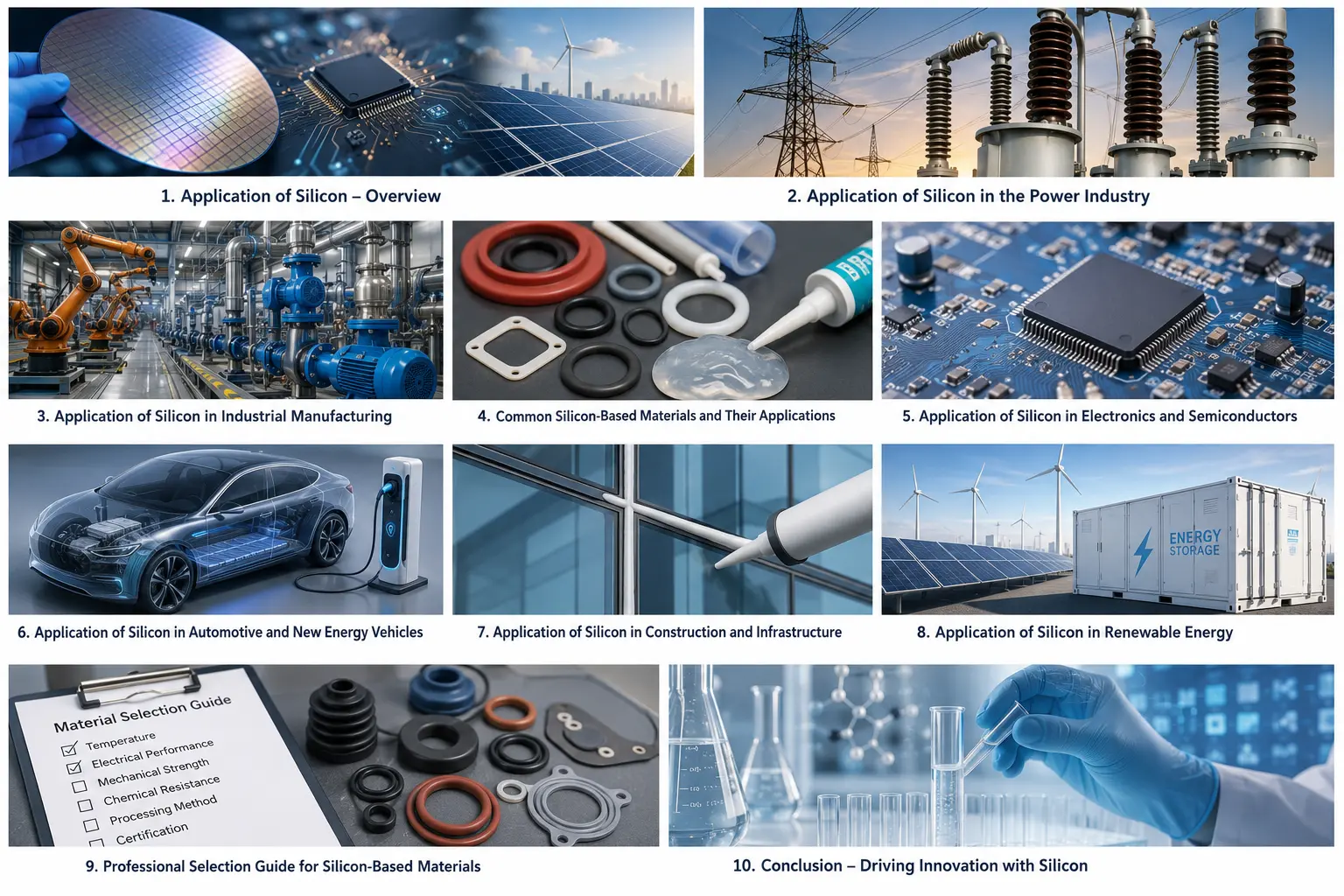
The application of silicon is one of the most important topics in materials science, electrical engineering and industrial manufacturing. Silicon is not only the foundation of semiconductor technology, but also a key raw material for solar energy, metallurgy, glass, ceramics, construction materials and silicon-based chemical products. In addition, silicon chemistry supports a wide family of silicone materials used for sealing, bonding, insulation, molding, potting, coating and long-term protection.
A professional article about the application of silicon must clearly distinguish between silicon and silicone. Silicon is a chemical element used in wafers, solar cells, silicon carbide devices, aluminum alloys, ferrosilicon, silica and silicate materials. Silicone is a group of silicon-based polymers known for flexibility, thermal stability, weather resistance, electrical insulation and chemical durability. Both silicon and silicone are closely connected in industrial supply chains, but their functions are different.
This guide explains the application of silicon across power systems, industrial equipment, electronics, renewable energy, automotive manufacturing, construction and advanced materials. It also covers long-tail topics such as application of silicon in power industry, silicon carbide power electronics, silicone rubber for electrical insulation, RTV silicone sealant applications, HTV silicone rubber applications, LSR silicone molding, silicone potting compound for electronics, thermal conductive silicone, silicone gel encapsulation and fluorosilicone for oil resistant sealing.
Silicon as an Element
Silicon is used in semiconductors, solar wafers, silicon carbide power devices, aluminum alloys, ferrosilicon, glass, ceramics, refractories, silica and silicates.
Silicone as a Material Family
Silicone materials are used for electrical insulation, industrial sealing, thermal management, flexible bonding, waterproofing, potting, encapsulation and molded rubber components.
Application of Silicon in the Power Industry
The power industry is one of the most important fields for the application of silicon. Power generation, transmission, distribution and conversion systems require materials with excellent electrical performance, thermal stability and long-term reliability. Silicon appears in power semiconductors, silicon carbide devices, insulation systems, cable accessories, protective coatings and electronic control modules.
Traditional silicon-based power semiconductors are widely used in rectifiers, thyristors, IGBTs, control circuits and industrial power supplies. As power systems demand higher efficiency and higher switching frequency, silicon carbide power electronics have become increasingly important. Silicon carbide, often called SiC, is a wide bandgap material used in electric vehicle inverters, solar inverters, fast charging stations, industrial motor drives, rail traction, energy storage systems and smart grid equipment.
Silicone materials are also critical in electrical power applications. Silicone rubber for electrical insulation is used in composite insulators, surge arresters, cable terminations, cable joints, bushings and high-voltage housings. Silicone rubber offers strong weather resistance and excellent hydrophobicity, which helps reduce surface leakage current in polluted or humid environments.
RTV silicone coatings are applied to ceramic or glass insulators to improve anti-pollution performance. HTV silicone rubber and HCR silicone are used for molded insulation parts, cable sleeves and high-voltage protection components. Silicone gel and silicone potting compounds are used to protect electronic modules from moisture, dust, vibration and electrical stress.
Application of Silicon in Industrial Manufacturing
Industrial manufacturing uses silicon in both raw material production and finished engineering components. Silicon metal is used to produce aluminum alloys, silicone chemicals and high-purity materials. Ferrosilicon is widely used in steelmaking as a deoxidizer and alloying agent. Silica and silicate materials are used in glass, ceramics, cement, refractories, fillers, abrasives and insulation materials.
Silicone rubber products are common in pumps, valves, compressors, heat exchangers, food processing machines, chemical equipment, industrial ovens, automation systems and mechanical assemblies. These systems require seals, gaskets, tubes, sheets, profiles and molded parts that can resist heat, compression, aging and vibration. This is where silicon-derived elastomers create significant value.
HTV silicone rubber applications include industrial gaskets, O-rings, extruded profiles, heat-resistant hoses, insulation sleeves, rollers and custom molded rubber parts. HTV silicone is suitable for compression molding, transfer molding, extrusion and calendering. HCR silicone, also known as high consistency rubber, is selected when mechanical strength, tear resistance and process stability are important.
RTV silicone is more suitable for on-site sealing, bonding, repair and maintenance because it cures at room temperature. It is widely used as an industrial sealant, flange sealant, adhesive, gasket maker, cabinet sealant and electrical potting material. For industrial buyers, the right material choice depends on temperature range, media compatibility, hardness, compression set, tensile strength, tear resistance and production process.
| Material Type | Descrição | Aplicações típicas | Key Performance Factors |
|---|---|---|---|
| Silicon Metal | Elemental silicon used as an industrial raw material. | Aluminum alloys, silicone chemicals, solar materials and metallurgy. | Purity, particle size, impurity control and downstream process. |
| Silicon Wafers | High-purity silicon substrates for electronic devices. | Semiconductors, sensors, integrated circuits and solar cells. | Purity, resistivity, crystal orientation and wafer diameter. |
| Silicon Carbide | Wide bandgap material for high-efficiency power electronics. | EV inverters, solar inverters, chargers and industrial drives. | Voltage rating, thermal design, switching frequency and reliability. |
| HTV Silicone | Heat-vulcanized silicone rubber for strong molded and extruded parts. | Cable insulation, gaskets, tubes, seals and industrial profiles. | Hardness, tensile strength, tear resistance and compression set. |
| LSR | Liquid silicone rubber for automated injection molding. | Precision seals, connectors, medical parts and electronics. | Cycle time, tolerance, cleanliness and bonding performance. |
| Silicone RTV | Room-temperature curing silicone for sealing and protection. | Sealants, coatings, adhesives, potting and field repair. | Cure chemistry, adhesion, working time and corrosion behavior. |
| Silicone Gel | Soft silicone material for cushioning and encapsulation. | Power modules, sensors, LED protection and electronic assemblies. | Dielectric strength, softness, reworkability and stability. |
| Fluorosilicone | Modified silicone with better resistance to oils and fuels. | Aerospace seals, fuel system gaskets and oil-resistant parts. | Fuel resistance, low-temperature flexibility and seal design. |
Application of Silicon in Electronics and Semiconductors
The electronics industry is the best-known example of the application of silicon. High-purity silicon is processed into wafers and used to manufacture integrated circuits, microchips, sensors, memory devices, diodes, transistors and power components. Through controlled doping and advanced wafer processing, silicon can be engineered to control electrical behavior with high precision.
Beyond semiconductor chips, silicone materials protect electronic systems from environmental and mechanical damage. Silicone potting compound for electronics is used to encapsulate components and protect them from moisture, dust, vibration and electrical stress. Silicone conformal coating is used on printed circuit boards to create a thin protective layer while maintaining flexibility. Silicone gel is used when sensitive components require soft encapsulation and stress relief.
Thermally conductive silicone materials are used in power modules, LED lighting, processors, battery packs, inverters and control units. Silicone thermal pads, silicone gap fillers, silicone adhesives and silicone encapsulants help transfer heat away from sensitive components. Important selection factors include thermal conductivity, dielectric strength, flame rating, viscosity, cure speed, adhesion and long-term performance under thermal cycling.
Application of Silicon in Automotive and New Energy Vehicles
The automotive industry uses silicon-based technologies in both electronic and mechanical systems. Traditional vehicles rely on silicon-based sensors, control chips, ignition systems and electronic modules. Electric vehicles rely even more on silicon and silicon carbide power devices for battery management, charging systems, motor control and power conversion.
Silicone rubber is widely used in automotive sealing and insulation because vehicles operate under vibration, heat, cold, moisture, oil exposure and long-term mechanical stress. HTV silicone and HCR silicone are used for engine gaskets, turbocharger hoses, connector seals, ignition cable insulation, lighting seals and battery pack components. LSR is used for high-precision molded parts that require automated production and stable quality.
In new energy vehicles, thermally conductive silicone materials are used around batteries, power electronics and charging systems. Silicone foam and silicone sponge provide cushioning, gap sealing, dust protection and vibration control. Fluorosilicone is selected in areas exposed to fuels, oils and aggressive automotive fluids.
HTV and HCR Silicone
Suitable for molded gaskets, extruded profiles, cable insulation, heat-resistant tubes and durable industrial rubber parts.
Silicone RTV
Used for room-temperature sealing, bonding, coating, repair, potting, encapsulation and waterproof protection.
LSR Silicone Molding
Ideal for high-volume precision parts, connectors, seals, medical components, electronic parts and automotive applications.
```
Application of Silicon in Construction and Infrastructure
Construction is another major field for the application of silicon. Silica, silicates, glass, cement and mineral-based materials are used in buildings, bridges, tunnels, roads and public infrastructure. These materials provide strength, durability, fire resistance and structural performance in modern construction.
Silicone sealants are widely used in building envelopes, curtain walls, windows, doors, sanitary joints, roofing systems, expansion joints and waterproofing applications. The advantage of silicone sealant is its long-term elasticity, ultraviolet resistance, temperature resistance and weather durability. These properties help joints maintain sealing performance even when building materials expand, contract or move.
RTV silicone sealant applications in construction include glass bonding, facade sealing, neutral cure sealing, fire-resistant joint sealing, sanitary sealing and outdoor waterproofing. Neutral cure silicone is often selected for metal, glass, concrete and stone because it is less likely to cause corrosion or substrate problems.
Application of Silicon in Renewable Energy
Renewable energy depends heavily on silicon. Crystalline silicon solar cells are among the most widely used photovoltaic technologies. Silicon wafers are processed into solar cells and assembled into modules for residential, commercial and utility-scale power generation. This makes the application of silicon central to solar energy development.
Silicone materials also protect renewable energy systems. Solar modules, junction boxes, inverters, cable entries and outdoor electronic housings require materials that resist ultraviolet exposure, rain, humidity, wind and thermal cycling. Silicone adhesives, silicone sealants, silicone potting compounds and thermal conductive silicone materials help improve long-term reliability.
Wind energy systems also use silicone sealing and insulation materials in sensors, control cabinets, connectors, cable systems and outdoor housings. The main requirements are weather resistance, electrical insulation, vibration resistance and stable performance over many years of service.
Professional Selection Guide for Silicon-Based Materials
Choosing the right silicon-based material requires a clear understanding of the working environment. Engineers and buyers should evaluate temperature range, electrical stress, mechanical load, chemical exposure, moisture, ultraviolet exposure, vibration, processing method, certification requirements and expected service life.
- Choose silicon wafers for semiconductors, solar cells, sensors and integrated circuits.
- Choose silicon carbide for high-efficiency power electronics, EV inverters, fast chargers and solar inverters.
- Choose HTV or HCR silicone for molded rubber parts, extruded profiles, cable insulation and durable industrial seals.
- Choose LSR for automated injection molding, precision components and high-volume production.
- Choose RTV silicone for room-temperature sealing, bonding, repair, coating, potting and encapsulation.
- Choose silicone gel for soft protection, stress relief and electronic encapsulation.
- Choose thermally conductive silicone for heat dissipation in batteries, LEDs, power modules and electronic assemblies.
- Choose fluorosilicone for sealing applications exposed to fuel, oil and aggressive fluids.
The most reliable material choice is not always the most expensive one. It is the material that matches the real service environment, processing method and performance target. A technically correct selection can reduce downtime, improve safety, lower maintenance cost and extend product service life.
FAQ About the Application of Silicon
Conclusão
The application of silicon is broad, technical and essential to modern industry. Silicon supports semiconductors, solar cells, silicon carbide power electronics, metallurgy, glass, ceramics, construction materials and advanced chemical production. Through silicone chemistry, silicon also supports sealing, bonding, insulation, potting, coating, thermal management and precision molded components.
In the power industry, silicon-based technologies improve energy conversion, electrical insulation and equipment reliability. In industrial manufacturing, they provide durable seals, gaskets, tubes, profiles, coatings and protective materials. In electronics, they protect sensitive components from moisture, heat, vibration and electrical stress. In automotive, renewable energy and construction, silicon-based materials improve safety, durability and long-term performance.
A professional understanding of the application of silicon requires both material knowledge and application experience. By selecting the correct silicon, silicon carbide, HTV silicone, RTV silicone, LSR, silicone gel, silicone coating, thermally conductive silicone or fluorosilicone material, engineers and buyers can improve product reliability, reduce maintenance risk and achieve better performance across demanding industries.