
How Heat Resistant is Silicone?
Silicone is widely selected for seals, insulation, cables, cookware, electronics, and high-temperature industrial components because it remains flexible and stable across a much broader temperature range than many conventional elastomers. However, the question “How heat resistant is silicone?” does not have one universal answer. The practical limit depends on the silicone chemistry, curing system, additives, part geometry, exposure time, mechanical load, surrounding atmosphere, and the performance requirement of the finished component.
What Is Silicone and Why Does It Resist Heat?
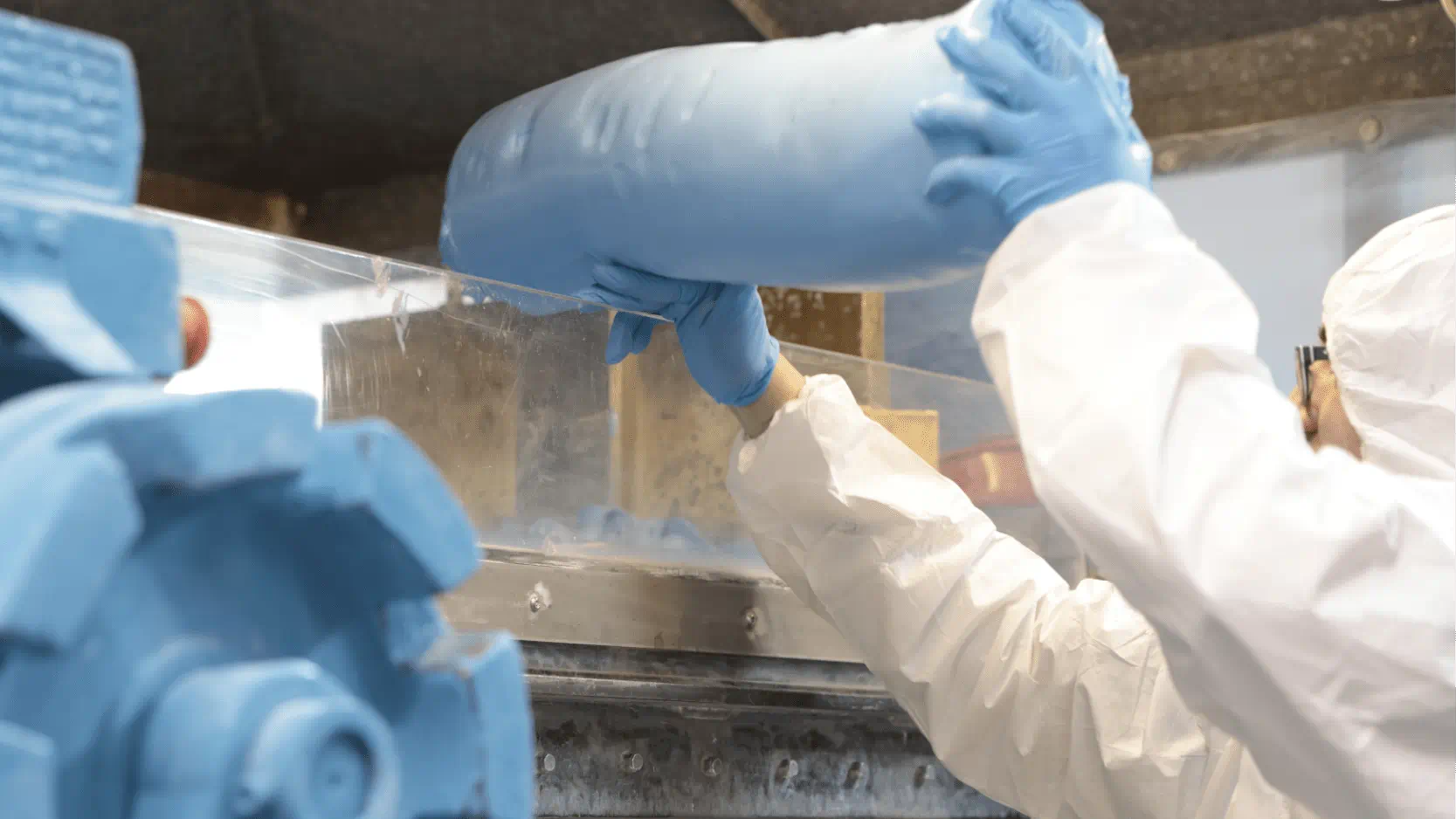
Silicone is a family of synthetic polymers built around a silicon-oxygen backbone, often described as a siloxane chain. Organic groups attached to this backbone allow manufacturers to adjust hardness, elasticity, fluid resistance, electrical behavior, curing speed, and processing method. Silicone may be supplied as liquid silicone rubber (LSR), high-consistency rubber (HCR), room-temperature-vulcanizing silicone (RTV), gels, foams, resins, fluids, or specialty compounds.
The silicon-oxygen backbone is one of the main reasons silicone performs well at elevated temperatures. Compared with many carbon-based rubber chains, the siloxane structure has good thermal and oxidative stability. A correctly formulated silicone elastomer can therefore retain flexibility, electrical insulation, and sealing performance after repeated heating and cooling. This does not mean silicone is unaffected by heat. Prolonged exposure can still cause hardening, loss of elongation, compression-set growth, surface cracking, discoloration, or gradual loss of mechanical strength.
Typical Temperature Range of Silicone
General-purpose silicone rubber commonly operates from approximately -50°C to 200°C (-58°F to 392°F). Many well-designed grades can serve continuously around 200°C to 230°C, while selected heat-stabilized materials may tolerate 250°C or more under suitable conditions. Specialty formulations can reach approximately 300°C, and certain high-heat compounds are developed for short-duration exposure at or above that level. At the low-temperature end, specialty silicone can remain flexible far below -50°C.
| Silicone category | Typical practical range | Common applications |
|---|---|---|
| General-purpose silicone rubber | -50°C to 200°C | Gaskets, seals, hoses, appliance parts |
| Heat-stabilized silicone | Up to about 230°C-250°C | Ovens, engine compartments, industrial equipment |
| Special high-temperature silicone | Up to about 300°C, depending on grade and duration | Thermal shields, advanced mobility, process equipment |
| Fluorosilicone | Often about -60°C to 200°C | Fuel, oil, solvent, aerospace, and automotive seals |
| RTV silicone sealant | Product-specific; often around -50°C to 200°C | Bonding, gasketing, electronics, maintenance sealing |
Continuous Heat Resistance vs. Short-Term Peak Temperature
One of the most common specification mistakes is treating a peak-temperature claim as a continuous service rating. A silicone component may survive a brief temperature spike of 280°C but lose useful life rapidly if held at that temperature for hundreds of hours. Heat aging is cumulative: higher temperature normally accelerates chemical degradation, especially when oxygen, pressure, vibration, steam, aggressive fluids, or electrical stress are also present.
Engineers should define both the normal operating temperature and the worst-case excursion. A practical specification might state that a gasket must operate continuously at 180°C, survive repeated 220°C cycles, and tolerate a 250°C emergency peak for ten minutes. This is much more useful than asking only for “high-temperature silicone.” Time, temperature, duty cycle, and failure criteria must be evaluated together.
What Happens When Silicone Gets Too Hot?
As silicone approaches or exceeds its recommended limit, its properties change gradually rather than disappearing at one exact temperature. Early signs may include color change, increased hardness, reduced elongation, loss of tear strength, permanent deformation, or reduced adhesion to a substrate. Under severe thermal oxidation, the polymer network can break down and the surface may become brittle. At still higher temperatures, silicone can decompose and leave a silica-rich residue.
Heat resistance should not be confused with fire resistance. A silicone compound may tolerate high operating temperatures without being suitable for direct flame, fire barriers, life-safety cables, or certified firestop systems. Those applications require specially formulated materials and relevant fire, smoke, toxicity, or flame-spread testing. A generic silicone sealant should never be substituted for a certified fire-resistant product solely because both materials are called silicone.
Why Silicone Matters in the Power and Electrical Industry
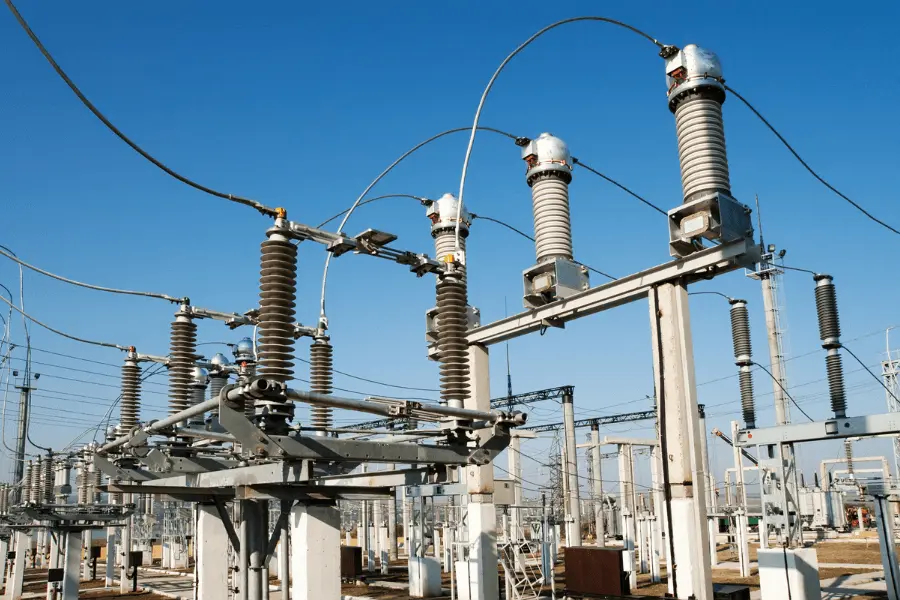
The power industry uses silicone because thermal resistance is combined with electrical insulation, weatherability, flexibility, and resistance to ultraviolet light, ozone, and moisture. These properties are valuable in equipment that must remain reliable through decades of temperature cycling and outdoor exposure.
In transmission and distribution systems, silicone rubber is used for composite insulator housings, cable joints, cable terminations, stress cones, surge-arrester housings, transformer-related seals, connectors, and protective boots. Outdoor silicone insulators can maintain a water-repellent surface that helps manage contamination and wet conditions. Cable-accessory compounds must also accommodate thermal expansion and contraction while maintaining intimate contact around the cable insulation.
Heat resistance is especially important where electrical current raises conductor temperature. Silicone-insulated cables may be used in industrial plants, rail systems, buildings, power generation equipment, and emergency circuits where conventional insulation could embrittle or soften. Certain silicone cable constructions are designed to maintain circuit integrity during fire exposure, but this performance depends on the complete certified cable system, not silicone rubber alone.
Electrical design also requires more than a temperature rating. Engineers must evaluate dielectric strength, tracking and erosion resistance, partial-discharge behavior, flame performance, hydrophobicity, tensile properties, creepage distance, pollution severity, and compatibility with semiconductive layers or cable accessories. A silicone that performs well as an oven gasket may be unsuitable for a high-voltage termination because the electrical requirements are completely different.
Other Professional Industries That Depend on Heat-Resistant Silicone
Automotive and New-Energy Vehicles
Silicone is used in turbocharger hoses, ignition boots, connector seals, battery-pack gaskets, thermal-management components, sensor seals, lighting systems, and under-hood parts. Electric and hybrid vehicles create demanding combinations of heat, voltage, vibration, coolant exposure, and tight packaging. Heat-resistant silicone can protect sensitive connections while remaining elastic through repeated thermal cycling. Fluorosilicone may be selected when fuel or hydrocarbon-fluid resistance is more important than the highest possible temperature capability.
Electronics and Semiconductor Manufacturing
In electronics, silicone appears in potting compounds, conformal coatings, thermal interface materials, gap fillers, keypad components, wire seals, and LED encapsulation. Its wide operating range helps reduce stress between materials with different thermal-expansion rates. Thermally conductive silicone can transfer heat away from power modules, inverters, processors, and battery systems, although thermal conductivity and heat resistance are separate properties and must both be specified.
Aerospace, Rail, and Mass Transit
Aircraft and rail applications use silicone in seals, ducts, vibration-control parts, electrical insulation, fire-resistant components, and environmental protection. These industries often require performance across extreme cold and heat, low smoke generation, flame resistance, and long service life. Qualification may include thermal cycling, fluid immersion, altitude effects, dynamic loading, and strict traceability of the material and manufacturing process.
Food Processing and Commercial Appliances
Food-grade silicone is common in oven seals, bakery molds, tubing, dispensing systems, coffee machines, and commercial kitchen equipment. It can remain flexible through repeated heating, cooling, washing, and steam exposure. However, “heat resistant” does not automatically mean “food contact approved.” The compound, pigment, additives, processing conditions, and intended contact environment must comply with the applicable food-contact regulations.
Industrial Processing and Machinery
Industrial silicone components include oven-door seals, expansion joints, flexible connectors, pump and valve seals, furnace-area insulation, rollers, diaphragms, and masking products used during coating or finishing. In these environments, hot air may be less damaging than hot oil, pressurized steam, abrasive powder, or reactive chemicals at the same temperature. Material selection must therefore consider the complete process medium.
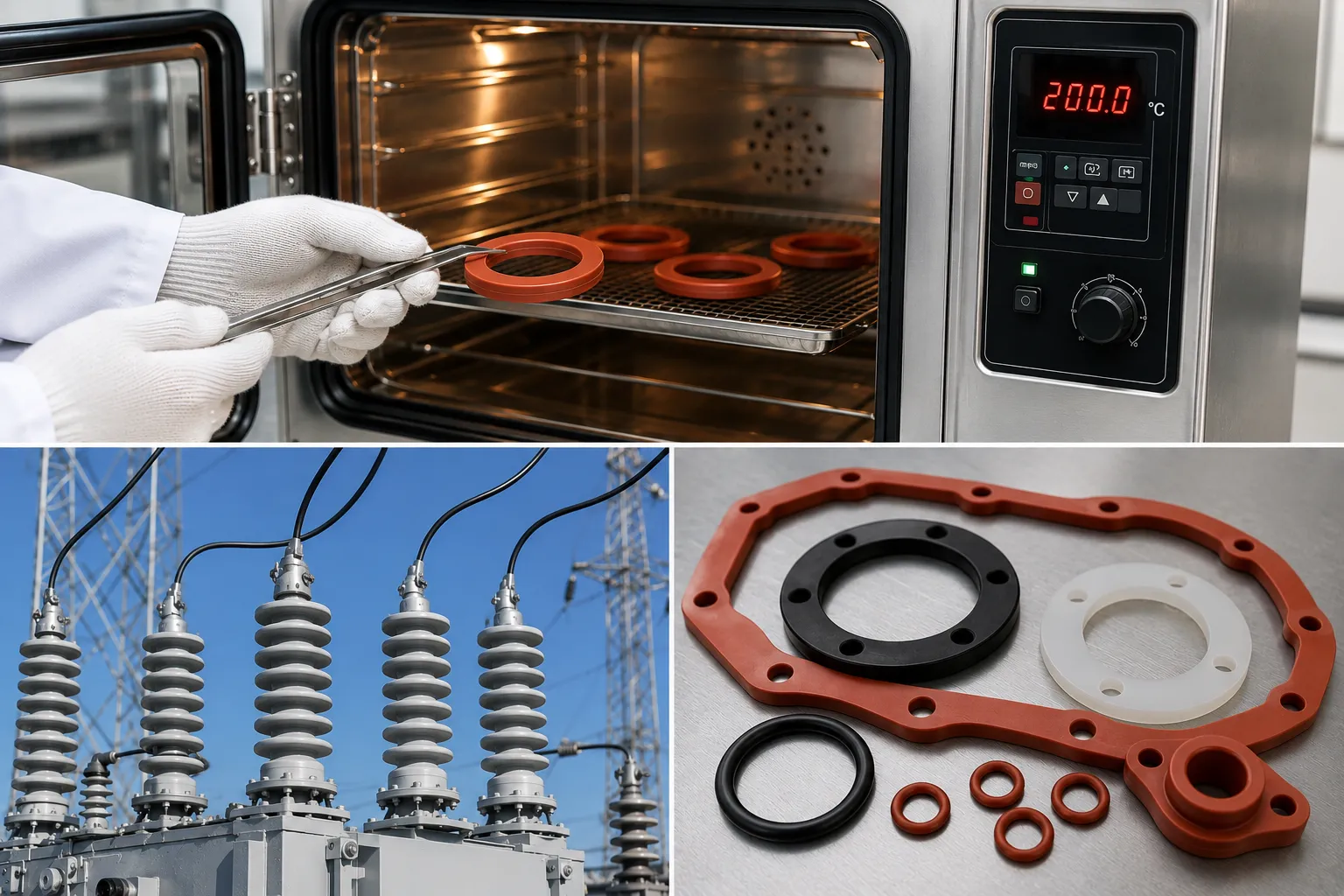
Key Factors That Change Silicone Heat Resistance
- Formulation: Polymer type, reinforcing filler, heat stabilizer, pigment, and additive package can significantly change thermal aging.
- Curing system: Platinum-cured and peroxide-cured silicones may differ in purity, by-products, compression set, and final properties.
- Post-curing: Some molded silicone parts require post-curing to remove volatiles and stabilize performance before high-temperature or regulated use.
- Part thickness: Thick sections and confined assemblies can retain heat and curing by-products differently from thin test specimens.
- Mechanical stress: A relaxed seal may survive heat better than a highly compressed, stretched, or dynamically flexed component.
- Atmosphere: Air, inert gas, vacuum, steam, and oxygen-rich environments can produce different aging behavior.
- Chemical exposure: Oils, fuels, acids, cleaning agents, coolants, and process chemicals may reduce useful temperature limits.
- Electrical stress: Voltage, corona, arcing, tracking, and contamination add failure mechanisms not captured by oven aging alone.
Silicone Compared with Other Elastomers
Silicone generally offers a wider usable temperature range than natural rubber, EPDM, nitrile rubber, and many thermoplastic elastomers. It also maintains flexibility at low temperatures and resists weathering exceptionally well. Its limitations include relatively modest abrasion resistance, vulnerability to tearing in some formulations, gas permeability, and poorer resistance to certain fuels or concentrated chemicals.
Fluorocarbon rubber may outperform standard silicone in hot oils, fuels, and aggressive chemical environments, while EPDM can be an economical choice for steam, water, and weathering at moderate temperatures. The best material is therefore not automatically the one with the highest headline temperature. It is the material that maintains the required sealing, electrical, mechanical, and regulatory properties throughout the actual service life.
How to Select the Right Heat-Resistant Silicone
- Define continuous, cyclic, and emergency peak temperatures.
- Identify contact media, pressure, voltage, movement, and environmental exposure.
- Set measurable requirements for hardness, tensile strength, elongation, compression set, dielectric performance, and flame behavior.
- Review the supplier’s technical data sheet for the exact grade, not a generic silicone description.
- Confirm regulatory and industry requirements for electrical, food, medical, transportation, or fire-safety applications.
- Prototype the real geometry and test it under accelerated and application-representative conditions.
- Inspect aged parts for sealing force, cracking, adhesion, electrical performance, and dimensional change.
For critical equipment, the material supplier, part manufacturer, and system engineer should agree on the test method and acceptance criteria. This is particularly important in the power industry, aerospace, medical devices, battery systems, and fire-safety applications, where a small component failure can affect the entire system.
Các câu hỏi thường gặp
Can silicone withstand 200°C?
Many silicone rubber grades can operate at 200°C, but service life depends on exposure time, formulation, mechanical load, and surrounding media. Always verify the exact product data sheet.
Can silicone withstand 300°C?
Special high-temperature silicone grades may tolerate approximately 300°C, often for limited durations or carefully controlled conditions. Standard household or general-purpose silicone should not be assumed to perform at this level.
Does silicone melt when heated?
Crosslinked silicone rubber does not melt like a conventional thermoplastic. It gradually loses properties and eventually decomposes when exposed to excessive heat.
Is all silicone safe for ovens or food equipment?
No. The product must have an appropriate temperature rating and food-contact compliance for the intended use. Industrial sealants, mold-making silicones, and electrical compounds may contain additives that are not intended for food contact.
Is silicone suitable for high-voltage equipment?
Special electrical-grade silicone is widely used in insulators and cable accessories. Suitability depends on dielectric, tracking, erosion, weathering, contamination, and system-design requirements, not heat resistance alone.
Conclusion: How Heat Resistant Is Silicone?
Silicone is one of the most versatile heat-resistant elastomer families available. A general-purpose silicone may operate reliably near 200°C, heat-stabilized grades may extend toward 230°C-250°C, and specialized compounds may reach approximately 300°C under defined conditions. Its combination of thermal stability, flexibility, weather resistance, and electrical insulation explains its importance in the power industry, automotive systems, electronics, aerospace, food processing, and industrial machinery.
The correct engineering question is not simply “How hot can silicone get?” It is “How long must this exact silicone component preserve its required properties under the complete combination of heat, load, voltage, chemicals, weather, and safety requirements?” Answering that question with product-specific data and application testing is the safest way to obtain reliable performance.