
Hướng dẫn về vật liệu silicone
High Temp Silicone
High temp silicone is a specially formulated silicone material designed for applications where continuous heat exposure, thermal cycling, and demanding environmental conditions require reliable sealing, bonding, insulation, and protection. Compared with standard silicone products, high temperature silicone provides improved thermal stability, durability, and long-term performance in industrial environments.
What Is High Temp Silicone?
High temp silicone is a silicone-based elastomer or sealant engineered to maintain its physical properties under elevated temperatures. It is commonly used when ordinary sealants or adhesives cannot provide sufficient heat resistance, flexibility, or durability.
The unique molecular structure of silicone, based on silicon and oxygen bonds, provides excellent resistance to thermal degradation, oxidation, ultraviolet exposure, and environmental aging. This allows high temperature silicone to remain flexible and functional even after long-term exposure to demanding conditions.
High temp silicone products are available in different forms, including sealants, adhesives, coatings, gasket materials, molding compounds, and encapsulation materials. Each formulation is designed for specific requirements such as heat resistance, chemical exposure, electrical insulation, or mechanical flexibility.
Unlike rigid heat-resistant materials, silicone remains elastic after curing. This flexibility allows it to accommodate vibration, expansion, contraction, and movement between different materials.
How Does High Temp Silicone Work?
High temp silicone works through a chemical curing process that transforms a liquid or paste material into a flexible rubber-like elastomer. During curing, silicone polymer chains form a stable three-dimensional structure.
This cured structure provides resistance against heat, moisture, weathering, and mechanical stress. The silicone backbone is more stable at high temperatures compared with many organic polymer materials.
Different curing systems affect the final performance of high temp silicone. One-part silicone products normally cure through moisture in the surrounding environment, while two-part silicone systems cure after mixing a base component with a curing agent.
The final performance depends on formulation design, filler selection, curing chemistry, and application conditions. Therefore, selecting the correct high temp silicone requires understanding the actual operating environment rather than only looking at the temperature rating.
High Temp Silicone Temperature Range
The temperature capability of high temp silicone depends on the specific formulation and application requirements. Different silicone materials are designed for different levels of continuous heat exposure and short-term temperature peaks.
Standard silicone products may handle moderate temperatures, while specialized high temp silicone formulations are developed for engines, heating equipment, industrial ovens, furnaces, exhaust systems, and other high-temperature applications.
When selecting a silicone material, engineers should consider continuous operating temperature, maximum temperature spikes, thermal cycling frequency, and exposure duration.
A material that withstands a short high-temperature event may not provide reliable performance during continuous operation. Always evaluate the manufacturer's technical data and actual working conditions.
High Temp Silicone vs Regular Silicone
Although both materials are silicone-based, high temp silicone and standard silicone are designed for different service conditions. High temperature formulations typically include specialized additives and chemical structures to improve thermal stability.
| Tính năng | High Temp Silicone | Regular Silicone |
|---|---|---|
| Khả năng chịu nhiệt | Designed for higher continuous operating temperatures and thermal cycling environments. | Suitable for general sealing and bonding applications with moderate temperature requirements. |
| Ổn định nhiệt | Maintains flexibility and sealing performance under prolonged heat exposure. | May experience faster aging when exposed to extreme temperatures. |
| Các ứng dụng điển hình | Automotive engines, industrial equipment, ovens, furnaces, heating systems, electronics. | General construction sealing, household applications, low-temperature industrial uses. |
| Long-Term Aging Resistance | Designed for demanding environments involving heat, oxidation, and thermal cycling. | Suitable for normal environmental conditions. |
| Yêu cầu về hiệu suất | Selected when heat resistance, durability, and reliability are critical. | Selected for general-purpose sealing where extreme conditions are not expected. |
Applications of High Temp Silicone
High temp silicone is widely used in industries where heat resistance and flexible sealing performance are required.
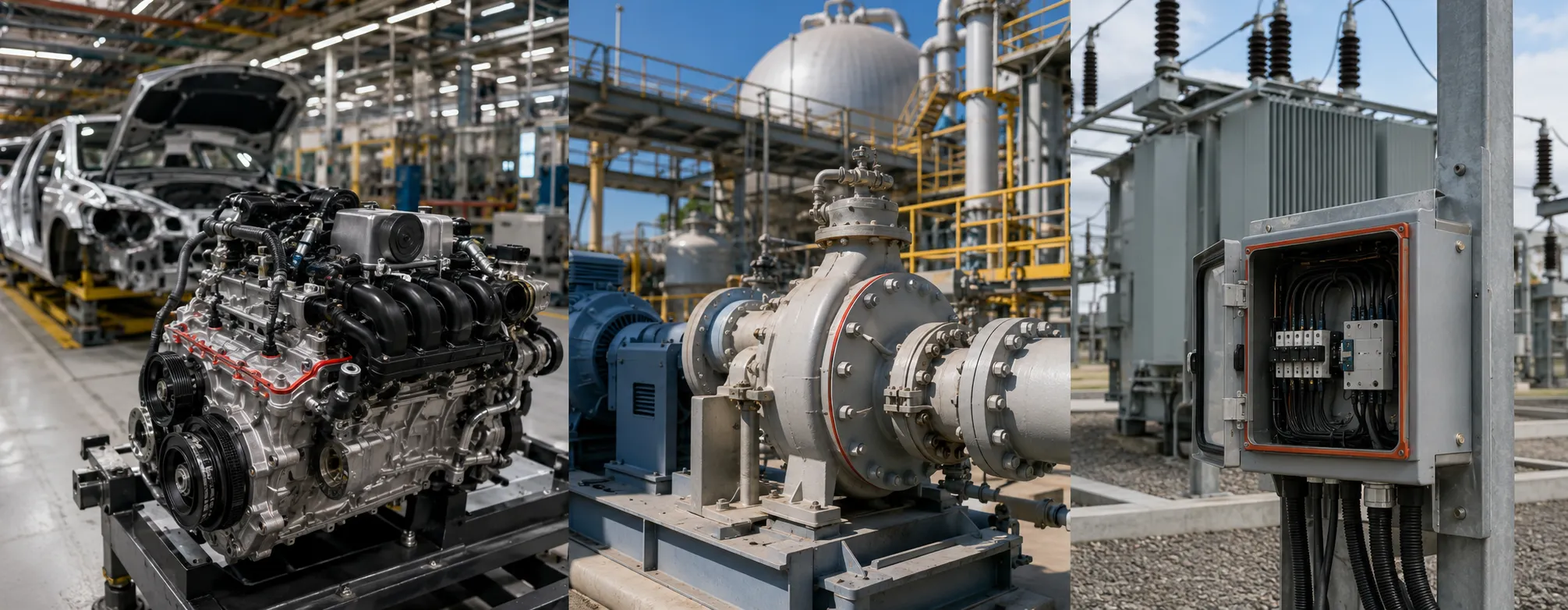
Ngành công nghiệp ô tô
Automotive applications often expose materials to high temperatures, vibration, and chemical fluids. High temp silicone is used for sealing engine components, heat-resistant connections, gaskets, sensors, and various automotive assemblies.
Thiết bị công nghiệp
Industrial machines frequently operate under heat, vibration, and continuous mechanical stress. High temperature silicone helps protect joints, covers, housings, and equipment interfaces.
Electrical and Electronics
High temp silicone provides insulation and environmental protection for electronic components exposed to heat. It can be used for sealing connectors, protecting sensors, and encapsulating sensitive parts.
Heating Systems
Ovens, furnaces, heaters, and HVAC equipment require materials that can maintain flexibility under elevated temperatures. High temp silicone is commonly selected for these applications.
How to Select High Temp Silicone
Choosing the correct high temp silicone requires evaluating temperature, materials, environment, and application requirements.
Nhiệt độ hoạt động
Confirm the actual working temperature, including continuous exposure and occasional temperature peaks. Selecting a product based only on maximum temperature can lead to premature failure.
Material Compatibility
The silicone must bond properly with the application surface, including metals, glass, ceramics, plastics, and coated materials.
Chemical Exposure
Consider exposure to oils, fuels, solvents, cleaning chemicals, and industrial fluids. Chemical compatibility should be verified before installation.
Curing Requirements
Consider whether a one-part moisture-cure product or a two-part silicone system is more suitable for the production process and application environment.
High Temp Silicone Application Guide
Proper surface preparation is essential for reliable performance. Surfaces should be clean, dry, and free from oil, dust, corrosion, and contamination.
The correct amount of silicone should be applied to ensure complete contact without excessive material. Over-application may increase curing time and create unnecessary stress in assembled components.
After application, sufficient curing time should be allowed before exposing the material to maximum temperature, pressure, or mechanical stress.
For critical industrial applications, testing on actual materials before full production use is recommended.
Các câu hỏi thường gặp
What Is High Temp Silicone Used For?
High temp silicone is used for heat-resistant sealing, bonding, insulation, and protection in automotive, industrial, electronics, HVAC, and heating applications.
Is High Temp Silicone Waterproof?
Most cured high temp silicone products provide excellent moisture resistance. However, continuous immersion or special water-contact applications require specific product approval.
Can High Temp Silicone Be Used on Metal?
Yes. Many high temp silicone products are designed for metal surfaces such as aluminum, steel, and stainless steel when proper surface preparation is performed.
How Long Does High Temp Silicone Last?
Service life depends on temperature, chemical exposure, installation quality, and operating conditions. Properly selected silicone can provide long-term performance in demanding environments.
Kết luận
High temp silicone provides a reliable solution for applications requiring heat resistance, flexibility, and long-term sealing performance. Its unique silicone chemistry allows it to maintain stability under thermal stress, vibration, and environmental exposure.
By selecting the correct formulation, preparing surfaces properly, and following recommended installation procedures, high temperature silicone can provide dependable performance in demanding industrial applications.