
Silicone Rubber Buying Guide
Buying silicone rubber is not simply a matter of choosing a Shore A hardness and comparing price per kilogram. The right material must match your manufacturing process, operating environment, mechanical requirements, electrical performance, compliance needs and production volume. This guide explains what industrial buyers and engineers should check before requesting a quote, approving a sample or selecting a silicone rubber supplier.
Start With the Application, Not the Price
Two silicone rubber compounds can have the same hardness and still perform very differently in production. One may be designed for extrusion, while another is optimized for compression molding. One may prioritize tear strength, while another is formulated for electrical insulation, heat aging, low compression set or food-contact applications.
For this reason, a useful silicone rubber RFQ should start with the final application and processing method rather than a simple request such as “60 Shore A silicone rubber, please quote.” Before comparing suppliers, define where the material will be used, how it will be processed, what conditions it will face and which properties are important to the finished component.
Which Type of Silicone Rubber Do You Need?
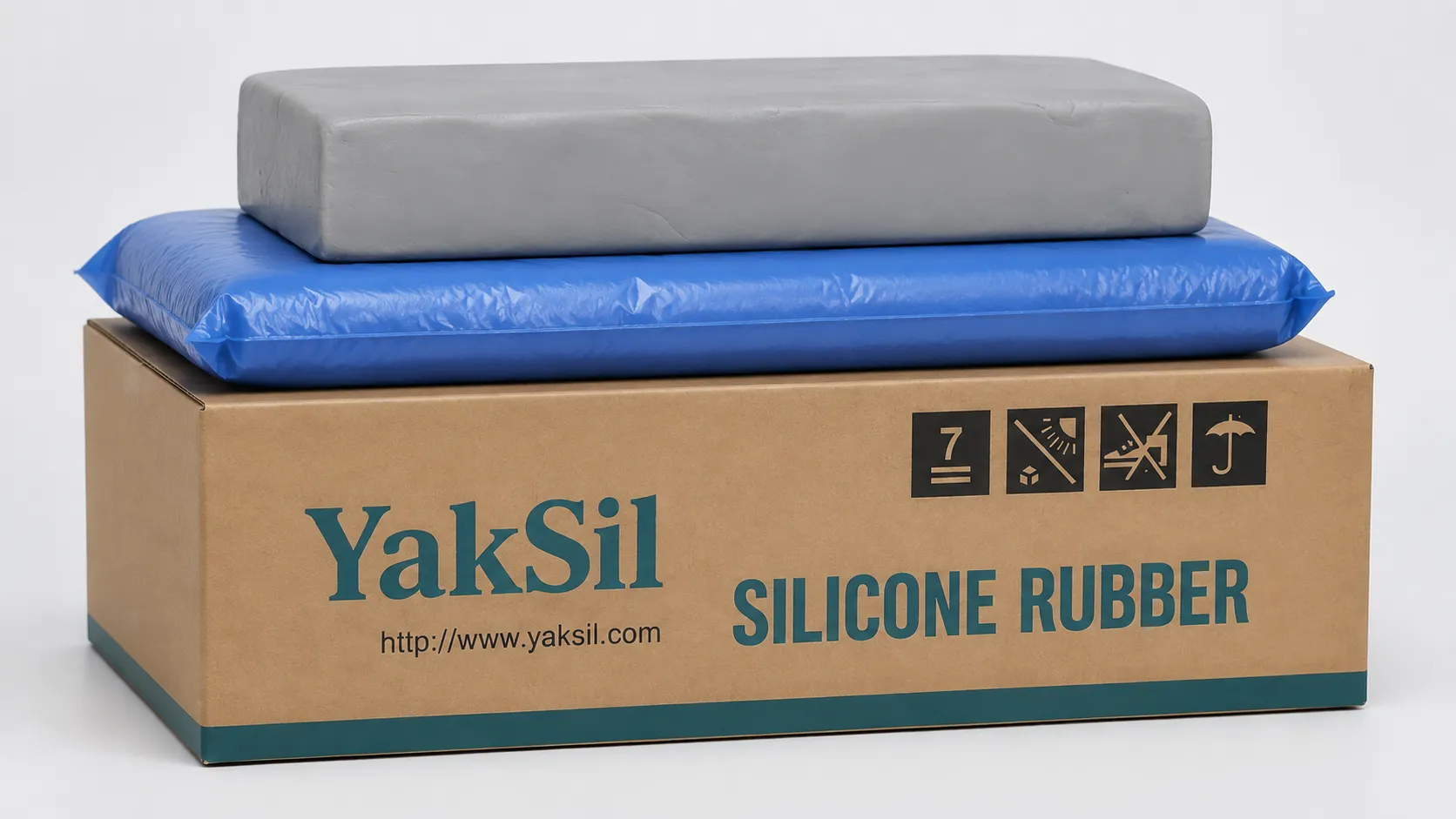
Silicone rubber is supplied in several material forms. For industrial purchasing, the most important distinction is how the silicone is processed and cured. The major groups include high consistency silicone rubber, liquid silicone rubber and room-temperature vulcanizing silicone.
| Material Type | Typical Form | Common Processing | Typical Buying Considerations |
|---|---|---|---|
| HTV / HCR | High-consistency, gum-like compound | Compression molding, extrusion, calendering and transfer molding | Hardness, tear strength, cure system, extrusion behavior, heat aging and electrical performance |
| LSR | Two-part liquid silicone | Đúc phun chất lỏng | Viscosity, mixing ratio, cure speed, automation, mold filling and cleanliness |
| RTV | One- or two-part flowable material | Sealing, potting, encapsulation and room-temperature curing | Cure chemistry, working time, adhesion and depth of cure |
For manufacturers producing industrial molded components, cable insulation, composite insulators, seals, profiles or high-temperature parts, HTV/HCR silicone rubber is often the most relevant category. These compounds can be formulated around mechanical, electrical, thermal and processing requirements.
For a broader comparison of these material families, see our guide to silicone rubber types and distinctions.
Match the Silicone Rubber to Your Processing Method
Processing method should be confirmed before the material specification is finalized. A compound that performs well in compression molding may not provide the same surface quality, dimensional control or line stability when used for extrusion.
Đúc ép
Evaluate mold flow, cure behavior, demolding, flash control and the mechanical strength of the cured component.
Đùn
Check feeding stability, dimensional control, surface quality, green strength and compatibility with the curing line.
Quá trình cán phẳng
Controlled rheology and consistent sheet formation are important for silicone sheets, coated fabrics and similar products.
Injection Processing
Viscosity, cure speed, mold filling and temperature control become especially important in automated molding systems.
If you are sourcing high-consistency compounds, understanding how they are produced can also help when evaluating suppliers. See the HTV silicone rubber manufacturing process.
How to Read a Silicone Rubber Technical Datasheet
A technical datasheet is useful only when the buyer understands what each value means. A higher value is not automatically better. The correct target depends on the finished component, operating conditions, processing method and test standard.
| Tài sản | Why Buyers Check It | What to Confirm |
|---|---|---|
| Shore A Hardness | Indicates relative softness or stiffness | Target hardness, tolerance and test method |
| Độ bền kéo | Shows resistance to tensile failure | Minimum requirement and test standard |
| Độ giãn dài khi đứt | Indicates how far the cured rubber can stretch before failure | Minimum value and test conditions |
| Độ bền kéo | Important for thin sections, seals and demolding | Specimen type, test method and minimum value |
| Độ biến dạng vĩnh viễn do nén | Important for long-term sealing performance | Temperature, duration and compression condition |
| Mật độ | Affects material consumption and can indicate formulation consistency | Target or acceptable range |
| Heat Aging | Shows how well properties are retained after thermal exposure | Temperature, duration and property retention |
| Độ bền điện môi | Important for electrical insulation applications | Minimum value, sample thickness and test method |
| Điện trở suất thể tích | Indicates resistance to electrical current through the material | Test condition and minimum requirement |
When comparing materials from different suppliers, the most important rule is to compare test methods and test conditions, not only the final numbers. Tear, tensile, compression set and electrical results can all change depending on the way the test is performed.
Do Not Compare Supplier Datasheets by Numbers Alone
A common purchasing mistake is placing two silicone rubber datasheets side by side and selecting the compound with the highest tensile strength, elongation or tear strength.
This approach can be misleading if the suppliers use different test standards, specimen geometries, curing conditions or post-curing procedures. For critical properties, ask the supplier how the test was performed and which acceptance limit applies to the quoted material.
What to Ask the Supplier
For important material properties, request the test standard, curing condition, specimen preparation and acceptance requirement. This makes comparisons much more meaningful than relying on numbers copied from unrelated technical datasheets.
Electrical Silicone Rubber Requires More Than High Dielectric Strength
Electrical applications show why silicone rubber should not be purchased according to one datasheet number. High dielectric strength may be important, but real electrical components can also face moisture, pollution, temperature changes, UV exposure, corona, mechanical loading and long-term aging.
Composite insulators may require hydrophobicity, tracking and erosion resistance, weather resistance and sufficient tear strength. Wire and cable applications can place greater emphasis on electrical insulation, extrusion behavior, thermal aging and flexibility.
| Ứng dụng | Properties Commonly Evaluated |
|---|---|
| Composite Insulators | Hydrophobic behavior, tracking resistance, erosion resistance, weathering, tensile and tear strength |
| Dây và cáp | Dielectric properties, extrusion stability, flexibility, heat aging and mechanical strength |
| EV Components | Electrical insulation, temperature resistance, aging stability, sealing and process consistency |
| Electrical Molded Parts | Dielectric strength, volume resistivity, dimensional stability and mechanical durability |
When electrical performance is part of your project specification, provide the actual application and required test criteria. Asking only for “electrical grade silicone rubber” leaves too much room for interpretation.
Define Temperature Requirements Clearly
Silicone rubber is widely selected for high-temperature applications, but a single maximum-temperature number does not describe the full service environment.
Continuous operating temperature, short thermal peaks and laboratory heat-aging conditions should be treated separately. Long-term exposure can gradually change hardness, tensile strength, elongation and compression behavior.
When requesting a high-temperature silicone rubber, provide the continuous service temperature, expected peak temperature, exposure duration and the properties that must remain within specification.
Check Compliance Against the Actual Market and Application
Compliance requirements should be defined according to the intended end use and target market. Terms such as “FDA silicone,” “LFGB silicone,” “REACH certified” or “RoHS certified” are often used too loosely in purchasing discussions.
Instead, buyers should ask what regulation, declaration, recommendation or test report applies to the exact silicone rubber grade.
| Requirement | Typical Procurement Question |
|---|---|
| FDA / 21 CFR | Is documentation available for the intended food-contact use, including applicable requirements such as 21 CFR 177.2600 where relevant? |
| LFGB / BfR | Which German or European food-contact requirement is referenced, and what supporting test or declaration is available? |
| REACH | Can the supplier provide an applicable declaration referring to the relevant Candidate List version or date? |
| RoHS | Can supporting documentation be provided for the exact grade supplied to the relevant electrical or electronic supply chain? |
For food-contact projects, also confirm whether the documentation relates to the raw compound, a cured test specimen or the final manufactured article. Processing, pigments, curing conditions and post-curing may affect the final compliance assessment.
What Determines Silicone Rubber Price?
There is no single meaningful silicone rubber price without defining the grade. A general-purpose compound, high-tear material, electrical tracking-resistant formulation and food-contact compound can have very different raw-material, processing and testing requirements.
The main cost factors can be viewed more clearly as six purchasing variables.
Custom colors, special packaging, small trial quantities, application-specific testing and formulation development can also affect the final quotation.
The lowest material price does not always produce the lowest finished-part cost. Unstable extrusion, difficult demolding, excessive scrap, variable curing or rejected batches can quickly outweigh a small difference in raw-material price.
MOQ and Lead Time Should Be Confirmed for the Actual Grade
Minimum order quantity and production lead time vary according to the grade, level of customization, production schedule and packaging format. A standard compound may have very different commercial conditions from a custom electrical or color-matched formulation.
| Commercial Item | What to Request |
|---|---|
| Trial Quantity | Quantity available for initial molding or extrusion evaluation |
| Production MOQ | Minimum quantity for routine production orders |
| Sample Lead Time | Estimated time to prepare and dispatch evaluation material |
| Production Lead Time | Standard manufacturing time after order confirmation |
| Custom Grade Lead Time | Time required for formulation adjustment, testing and approval |
| Quotation Validity | Period during which the quotation remains commercially valid |
Test a Sample Before Approving Production Supply
A datasheet can narrow the material selection, but a production trial is usually the best way to determine whether the silicone rubber works with your equipment and finished product.
For molding, evaluate cure behavior, mold filling, demolding, surface finish, dimensional stability and scrap rate. For extrusion, check feed behavior, surface quality, dimensional control, curing speed and production-line stability.
Batch Consistency Matters More Than a Perfect Sample
A supplier can make one excellent laboratory sample. Industrial buyers need something more difficult: repeatable performance from production batch to production batch.
Batch consistency becomes especially important in extrusion, cable production, electrical insulation and automated molding because small changes in rheology, curing behavior or mechanical properties can affect production efficiency and finished-component performance.
| Quality Control Item | Question for the Supplier |
|---|---|
| Batch Testing | Which material properties are checked before routine batches are released? |
| Certificate of Analysis | Is a CoA available, and which test results does it include? |
| Lot Traceability | Can each package be traced back to its production batch? |
| Raw-Material Traceability | Can production records be reviewed when a quality issue occurs? |
| Change Control | How are customers informed about significant formulation or raw-material changes? |
| Complaint Investigation | Can the supplier investigate an issue using the customer's lot number? |
Packaging, Shelf Life and Storage Are Part of the Specification
Packaging can affect production handling, inventory control and traceability. Before ordering, confirm the package weight, packaging format, product label, production date, recommended storage conditions and shelf life.
If the material will be stored for several months or shipped internationally, buyers may also want to define a minimum remaining shelf life upon delivery.
How to Evaluate a Silicone Rubber Supplier
A capable silicone rubber supplier should do more than send a price list. The supplier should understand enough about the material to discuss application requirements, processing conditions, technical trade-offs and production concerns.
| Evaluation Area | What Good Supplier Support Looks Like |
|---|---|
| Lựa chọn vật liệu | The supplier asks about the application, process and target performance before recommending a grade. |
| Thông số kỹ thuật | Datasheet values are connected to meaningful test methods and conditions. |
| Sample Support | Trial material corresponds to the grade intended for commercial production. |
| Tùy chỉnh | Hardness, color and functional performance can be discussed when a standard grade is not suitable. |
| Kiểm soát chất lượng | Batch testing, identification and traceability procedures can be explained clearly. |
| Hỗ trợ tuân thủ | Documents relate to the exact grade and target market rather than generic marketing claims. |
| Commercial Terms | MOQ, lead time, packaging, shipping basis and quotation validity are clearly stated. |
| Technical Communication | The supplier can support troubleshooting during qualification and production trials. |
What Should Be Included in a Silicone Rubber RFQ?
The more complete the RFQ, the easier it is to receive quotations that can actually be compared. If some parameters are not yet known, identify them as open and ask the supplier to recommend an appropriate option.
A Practical Silicone Rubber Supplier Comparison
When several suppliers have passed the initial technical review, compare them using the same criteria. Unit price should be considered together with processing performance, documentation, quality consistency and supply risk.
| Supplier | Grade Fit | Sample | MOQ | Lead Time | Khả năng truy xuất nguồn gốc | Hỗ trợ kỹ thuật |
|---|---|---|---|---|---|---|
| Supplier A | — | — | — | — | — | — |
| Supplier B | — | — | — | — | — | — |
| Supplier C | — | — | — | — | — | — |
A slightly lower raw-material price does not always result in a lower finished-part cost. Processing waste, unstable curing, dimensional variation, rejected batches and repeated qualification work can quickly outweigh a small difference in price per kilogram.
Silicone Rubber for Different Industrial Applications
The final specification should reflect the environment in which the finished component will operate. A universal silicone grade rarely provides the best balance of performance, processing and cost for every application.
Electrical & High Voltage
Evaluate dielectric performance, hydrophobicity, tracking and erosion resistance, mechanical strength and outdoor aging.
Dây và cáp
Combine electrical insulation requirements with extrusion stability, flexibility, heat aging and surface quality.
EV & Automotive
Consider temperature cycling, insulation, sealing performance, mechanical durability and production consistency.
Industrial Molding
Balance hardness, tensile strength, tear resistance, mold flow, demolding and dimensional stability.
High-Temperature Parts
Confirm continuous service temperature and long-term property retention rather than only a short peak value.
Food-Contact Applications
Define the target market, applicable requirements, curing conditions and required supporting documentation.
Buying Silicone Rubber from Yakows
Yakows supplies HTV/HCR silicone rubber compounds for industrial applications including electrical insulation, composite insulators, wire and cable, EV components, high-temperature parts, food-contact projects and general industrial molding.
Instead of choosing a compound by hardness alone, buyers can provide the application, processing method, target properties, compliance requirements and estimated purchasing volume. This information makes it easier to recommend an existing grade or discuss an application-specific formulation.
Material Recommendation
Send your application, processing method and target material properties.
Sample Evaluation
Discuss technical data and sample availability before approving production supply.
Commercial RFQ
Provide quantity, specification and destination for a commercial quotation.
Các câu hỏi thường gặp
What information should I provide when buying silicone rubber?
Provide the final application, processing method, target hardness, mechanical requirements, operating temperature, electrical requirements if applicable, compliance needs, color, quantity and delivery destination. If some parameters are unknown, the supplier can recommend suitable options based on the application.
Is HTV silicone rubber the same as HCR silicone rubber?
The terms overlap significantly in industrial use. HCR refers to high consistency rubber, while HTV refers to high-temperature vulcanizing silicone. High-consistency silicone compounds cured by heat are commonly described using both terms.
Can I compare silicone rubber only by Shore A hardness?
No. Shore A hardness does not define tensile strength, elongation, tear resistance, compression set, heat aging, electrical behavior or processing characteristics.
Is higher tear strength always better?
No. Higher tear strength can be useful for demanding molded parts, but the material still needs to match hardness, processing behavior, cure system, heat resistance, electrical properties and cost requirements.
How should silicone rubber prices be compared?
Compare materials using the same technical specification, quantity, packaging, testing requirements, delivery destination and Incoterm. A price per kilogram without these details may not represent equivalent materials.
Should I request a sample before buying silicone rubber?
For most new industrial applications, production testing is recommended. It allows you to evaluate processing behavior, curing, surface quality, dimensional control and finished-part performance before approving regular supply.
What documents can a silicone rubber supplier provide?
Depending on the grade and project, documents may include a technical datasheet, safety data sheet, Certificate of Analysis, compliance declarations, test reports and batch traceability information.