
Silicone Rubber Guide
HTV Silicone Rubber Guide
This guide explains what HTV silicone rubber is, how it is formulated and cured, its main properties, common processing methods, applications and material selection considerations.
What Is HTV Silicone Rubber?
HTV silicone rubber is a high-consistency silicone elastomer that requires heat to complete the vulcanization process. Before curing, it normally has a firm, gum-like consistency. After curing, it becomes a flexible and durable rubber material.
HTV stands for high-temperature vulcanizing. It is also commonly called high-consistency rubber, HCR silicone, solid silicone rubber, millable silicone rubber or heat-cured silicone rubber.
The term high-temperature vulcanizing describes the curing process. It does not mean that every HTV silicone rubber grade has the same maximum service temperature. Actual performance depends on the formulation, curing system, processing conditions and finished-product design.
HTV silicone rubber can be processed by extrusion, compression molding, transfer molding, injection molding and calendering. These methods are used to manufacture tubing, profiles, sheets, seals, electrical insulation and custom molded components.
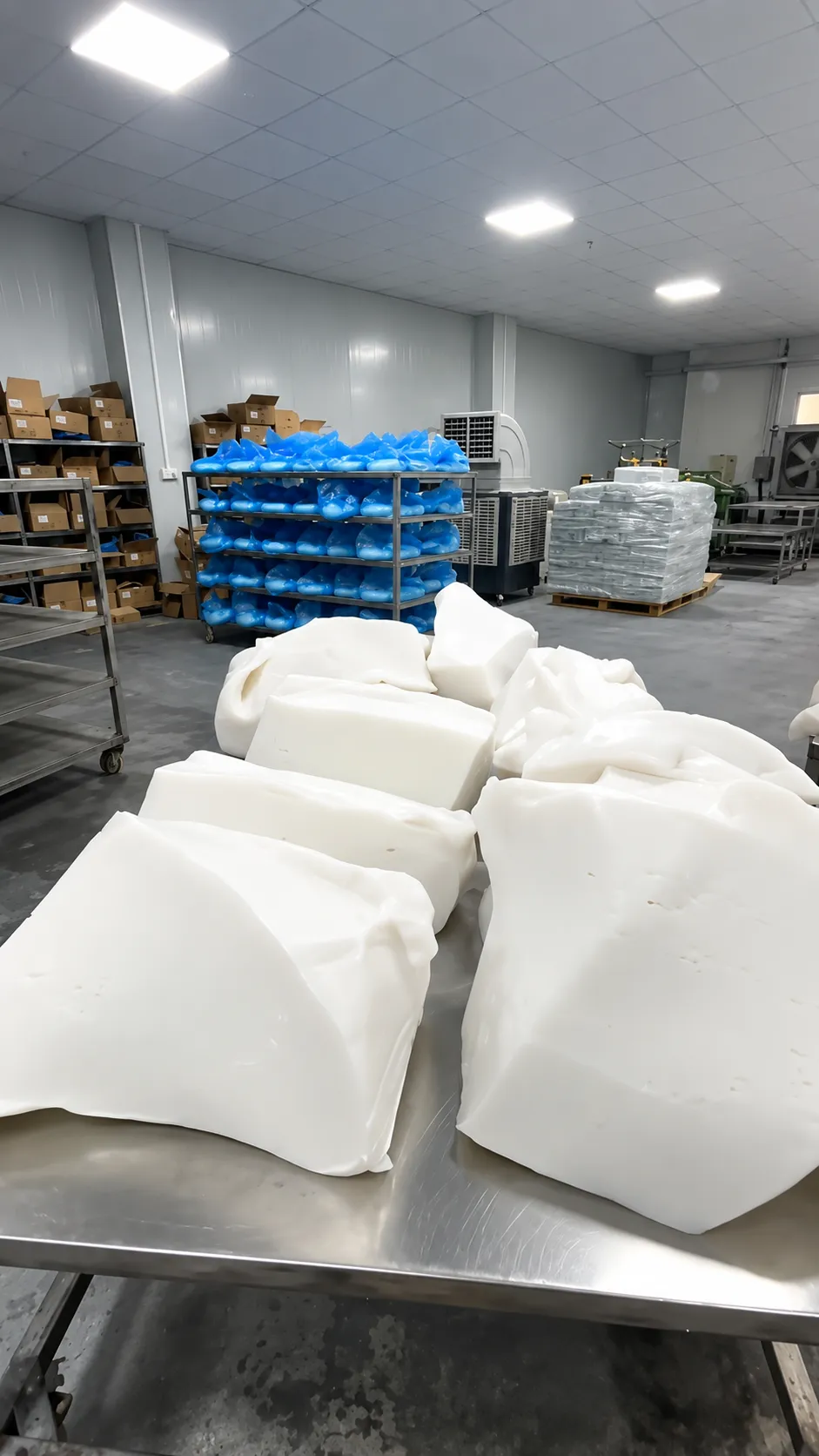
What Is HTV Silicone Rubber Made From?
An HTV silicone rubber compound normally contains silicone polymer, reinforcing fillers, a curing system, processing aids, pigments and optional functional additives.
Silicone Polymer
The base material is a high-molecular-weight silicone polymer. Its silicon-oxygen backbone contributes to flexibility, thermal stability, weather resistance and electrical performance.
Reinforcing Fillers
Silica is commonly used to improve tensile strength, tear resistance, hardness and dimensional stability. Filler type and dispersion also influence extrusion and molding behavior.
Curing Agents
Peroxide or platinum-based curing systems create permanent crosslinks between silicone polymer chains during heating.
Processing Additives
Processing aids can improve mixing, extrusion stability, mold release, surface appearance and storage behavior.
Pigments
Compatible pigments provide product identification, color coding or branding. The selected pigment must not interfere with curing or required material properties.
Functional Additives
Special additives may improve heat resistance, flame performance, conductivity, thermal conductivity, oil resistance or electrical tracking resistance.
HTV Silicone Rubber Curing Systems
Curing converts the uncured silicone compound into an elastic rubber. Temperature, curing time and catalyst concentration must be controlled according to the selected compound.
Peroxide-Cured HTV Silicone
Peroxide curing is widely used for general extrusion and molding applications. It is common in tubing, profiles, cable insulation, sheets, gaskets and industrial molded components.
Some peroxide-cured products require post-curing in a ventilated oven. Post-curing may reduce volatile residues, complete property development and improve stability during elevated-temperature service.
Platinum-Cured HTV Silicone
Platinum-cured HTV silicone uses an addition reaction. It may be selected when clean curing, low odor or controlled extractables are important.
Platinum systems can be inhibited by sulfur compounds, amines, organotin materials and other contaminants. Mixing equipment, tools and production surfaces must therefore be controlled carefully.
Key HTV Silicone Rubber Properties
The performance of HTV silicone rubber depends on its polymer system, reinforcing fillers, curing chemistry and processing conditions. Technical data should always be checked for the exact material grade.
Temperature Resistance
HTV silicone rubber can retain useful flexibility and mechanical performance across a broad temperature range. Continuous and short-term temperature limits depend on the formulation, exposure time and mechanical load.
Low-Temperature Flexibility
Suitable HTV silicone compounds remain flexible under cold conditions where many conventional elastomers become harder or more brittle.
Weather and Ozone Resistance
Silicone rubber provides strong resistance to ultraviolet radiation, ozone, humidity and repeated outdoor exposure.
Electrical Insulation
Electrical-grade HTV silicone can provide high electrical resistance and stable dielectric performance under changing temperature and environmental conditions.
Hydrophobicity
Silicone rubber has a naturally water-repellent surface. This property is valuable for outdoor electrical insulation, cable accessories and moisture-resistant components.
Elastic Recovery
Correctly cured components can recover after repeated stretching, bending and compression. Compression set should still be tested under the actual operating conditions.
Chemical Stability
HTV silicone generally performs well in water and many environmental conditions. Resistance to oils, fuels, solvents, acids, steam and cleaning chemicals must be checked separately.
Formulation Flexibility
Hardness, color, tear strength, flame behavior, conductivity and thermal performance can be modified for different products and industries.
HTV Silicone Rubber Processing Methods
Extrusion
Extrusion pushes uncured HTV silicone continuously through a shaped die. It is commonly used for tubing, cords, profiles, sealing strips, hoses and cable insulation.
The extruded material is then cured using hot air, radiant heat, steam or another controlled heating process. Die design, line speed and curing conditions affect dimensions and surface quality.
Compression Molding
A measured silicone preform is placed inside a heated mold. Pressure forces the material to fill the mold cavity while heat activates the curing system.
Compression molding is suitable for seals, gaskets, diaphragms, electrical components and custom molded parts.
Transfer Molding
In transfer molding, the silicone compound is placed in a separate chamber and pushed through runners into closed mold cavities. This method can improve material distribution and is useful for components containing inserts.
Injection Molding
High-consistency rubber injection equipment feeds the silicone compound into a heated mold. This method can provide greater automation and more consistent material handling than manual compression molding.
Calendering
Calendering passes the silicone compound through controlled rollers to produce sheets with a specified thickness. Silicone may also be applied to fabric or fiberglass reinforcement.
Coating and Laminating
HTV silicone can be combined with textile, fiberglass and other reinforcement materials to produce electrical, thermal and protective composite products.
Typical HTV Silicone Production Process
- Define product requirements. Specify dimensions, hardness, color, temperature, chemical exposure and mechanical properties.
- Select the compound. Choose an HTV silicone grade designed for the intended manufacturing method.
- Prepare the material. Add the approved curing agent, pigment or functional additive using controlled mixing equipment.
- Shape the product. Extrude, mold, inject, transfer or calender the uncured compound.
- Heat cure. Apply the specified temperature and curing time.
- Post-cure when required. Use a controlled ventilated oven process when specified.
- Finish the component. Trim flash, cut profiles, clean surfaces and complete assembly.
- Inspect and test. Check dimensions, appearance, hardness and application-specific properties.
HTV vs LSR vs RTV Silicone Rubber
HTV, LSR and RTV are all silicone elastomers, but they differ in uncured form, processing method and curing conditions.
| Feature | HTV / HCR | LSR | RTV |
|---|---|---|---|
| Uncured form | Firm, gum-like compound | Pumpable two-component liquid | Liquid or paste |
| Main curing method | Heat curing | Heat curing | Room-temperature curing |
| Common processing | Extrusion, molding and calendering | Liquid injection molding | Casting, sealing and bonding |
| Typical products | Tubing, profiles, sheets and molded parts | Precision molded components | Sealants, molds and encapsulants |
| Production suitability | Low- to high-volume manufacturing | Automated high-volume molding | In-place curing and assembly |
HTV Silicone Rubber Applications
Electrical Insulation
HTV silicone is used for composite insulator housings, cable accessories, insulating sleeves, connector seals, boots and other high-voltage components.
Wire and Cable
Extruded HTV silicone provides flexible insulation for industrial cables, transportation systems, appliances and high-temperature electrical equipment.
Automotive Components
Common applications include connector seals, ignition components, gaskets, hoses, boots and vibration-resistant parts.
Industrial Seals
HTV silicone is used for O-rings, gaskets, diaphragms, profiles and other flexible sealing components.
Food-Processing Equipment
Appropriately documented grades may be used for tubing, seals, baking products and food-processing equipment.
Healthcare Products
Specialized grades may be used for medical tubing, seals and molded components when supported by the required biological and regulatory evaluation.
Consumer Products
HTV silicone is also used in kitchenware, appliance components, grips, sporting goods and other durable molded products.
Aerospace and Transportation
Specialty compounds may be selected where temperature cycling, electrical insulation, flame performance and long-term durability are important.
How to Select HTV Silicone Rubber
- Processing method: Confirm whether the material will be extruded, compression molded, injection molded, transferred or calendered.
- Hardness: Consider flexibility, sealing force, wall thickness and assembly conditions.
- Mechanical properties: Review tensile strength, elongation, tear resistance and compression set.
- Temperature: Define continuous exposure, short-term peaks and cold-service conditions.
- Chemical exposure: Identify contact with water, steam, oils, fuels, solvents and cleaning agents.
- Curing system: Select peroxide or platinum curing according to production and cleanliness requirements.
- Post-curing: Confirm whether the finished component requires additional oven treatment.
- Documentation: Verify electrical, food-contact, healthcare or flame-performance requirements.
- Production trials: Test the compound in the actual manufacturing process before mass production.
Common HTV Silicone Rubber Problems
| Problem | Possible cause | Corrective direction |
|---|---|---|
| Incomplete cure | Low temperature, short curing time or incorrect catalyst | Verify material preparation and curing conditions |
| Air bubbles | Trapped air, moisture or poor mold venting | Improve material handling and venting |
| Excessive flash | Too much material, worn tooling or low clamping force | Control material quantity and inspect the mold |
| Poor surface finish | Contamination, damaged tooling or unsuitable temperature | Clean the equipment and optimize the process |
| Dimensional variation | Inconsistent material charge, shrinkage or pressure | Standardize production settings |
| Cure inhibition | Contamination affecting a platinum-cure system | Separate tools and remove incompatible materials |
Frequently Asked Questions
What does HTV silicone rubber mean?
HTV means high-temperature vulcanizing silicone rubber. It is a high-consistency silicone compound that requires heat to cure.
Is HTV silicone the same as HCR?
The terms normally describe the same general material category. HCR refers to the high-consistency form, while HTV refers to heat curing.
Can HTV silicone rubber be extruded?
Yes. Extrusion is commonly used for tubing, cords, profiles, cable insulation and continuous seals.
Does HTV silicone require post-curing?
Some compounds and applications require post-curing, while others do not. Follow the instructions for the exact material grade.
Is HTV silicone electrically insulating?
Many HTV silicone grades provide electrical insulation. Conductive and static-dissipative formulations are also available.
Is HTV silicone suitable for food applications?
Only a grade supported by appropriate food-contact documentation should be selected.