
Silicone Supplier for OEMs
Choosing the right silicone supplier for OEMs involves much more than comparing material prices or Shore A hardness. For an original equipment manufacturer, silicone rubber becomes part of a production system. It must run consistently on existing equipment, meet the mechanical and functional requirements of the finished product, and remain stable from one production batch to the next.
OEM applications can range from composite insulators and high-voltage cable to EV components, industrial seals, food-processing equipment and precision molded parts. Each application creates a different combination of requirements for hardness, tensile strength, tear resistance, heat aging, electrical insulation, curing behavior and processing stability.
A reliable silicone rubber supplier therefore needs to support material selection before production, sample validation during development and quality consistency after the project moves into volume manufacturing.
This guide explains what OEM buyers should expect from a silicone supplier, how to evaluate silicone rubber compounds, which questions to ask during supplier qualification and how to reduce the risks of switching or developing a new material.
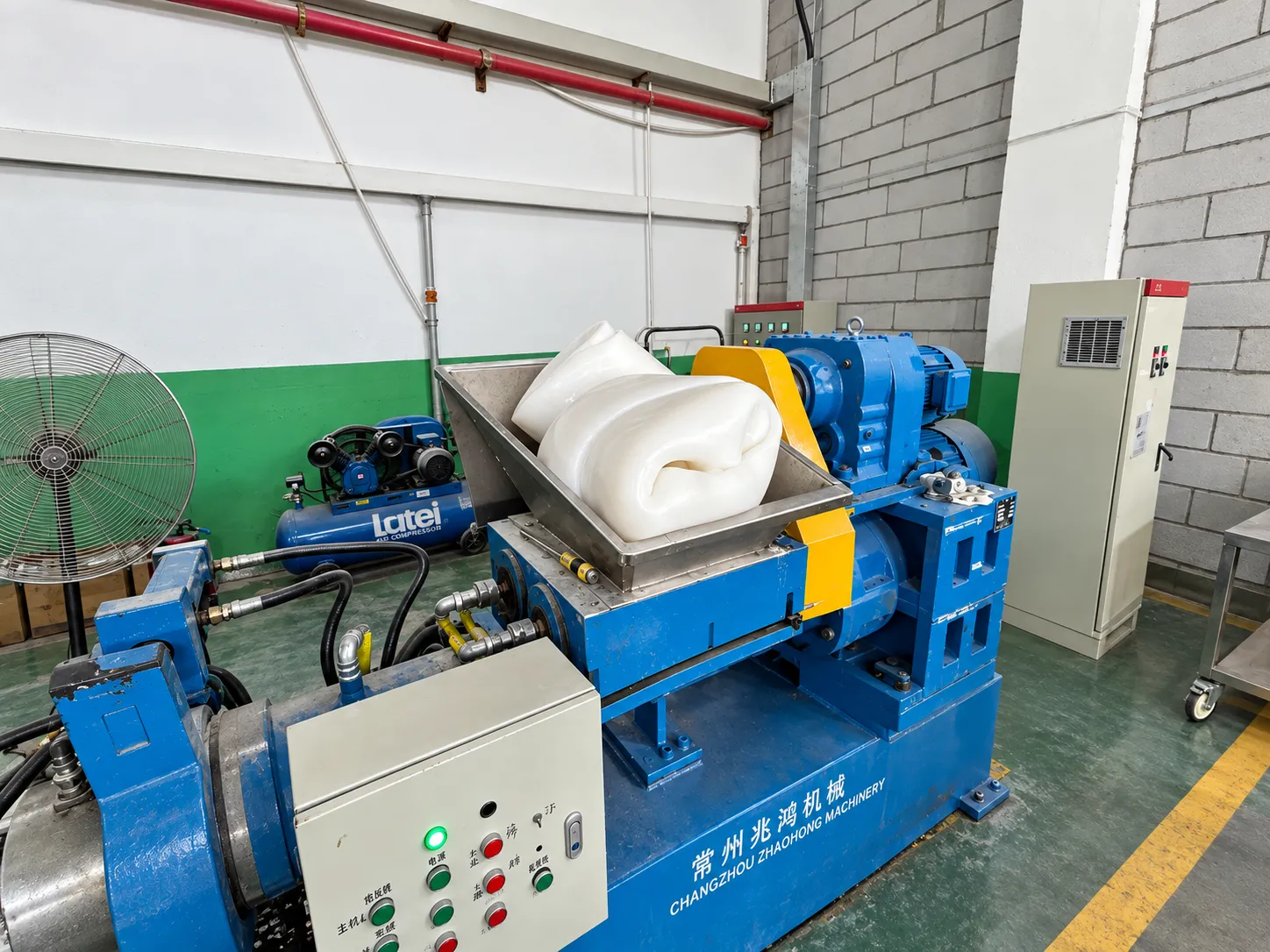
What Does an OEM Need from a Silicone Supplier?
An OEM usually does not purchase silicone rubber simply as a raw material. The silicone must eventually become part of a finished component or assembly.
This means the supplier needs to understand how the material will be processed and what the finished product is expected to do.
Why OEM Silicone Sourcing Is Different from Buying Standard Rubber
For simple applications, a buyer may be able to order a standard silicone grade based on hardness and color alone.
OEM projects are usually more complicated because the silicone interacts with the production process, component design and final equipment performance.
For example, two silicone compounds may both be listed as 60 Shore A. One may extrude smoothly through a cable line, while another requires higher pressure and produces excessive die swell. One may provide strong tracking resistance for high-voltage insulation, while another is designed only for general industrial molding.
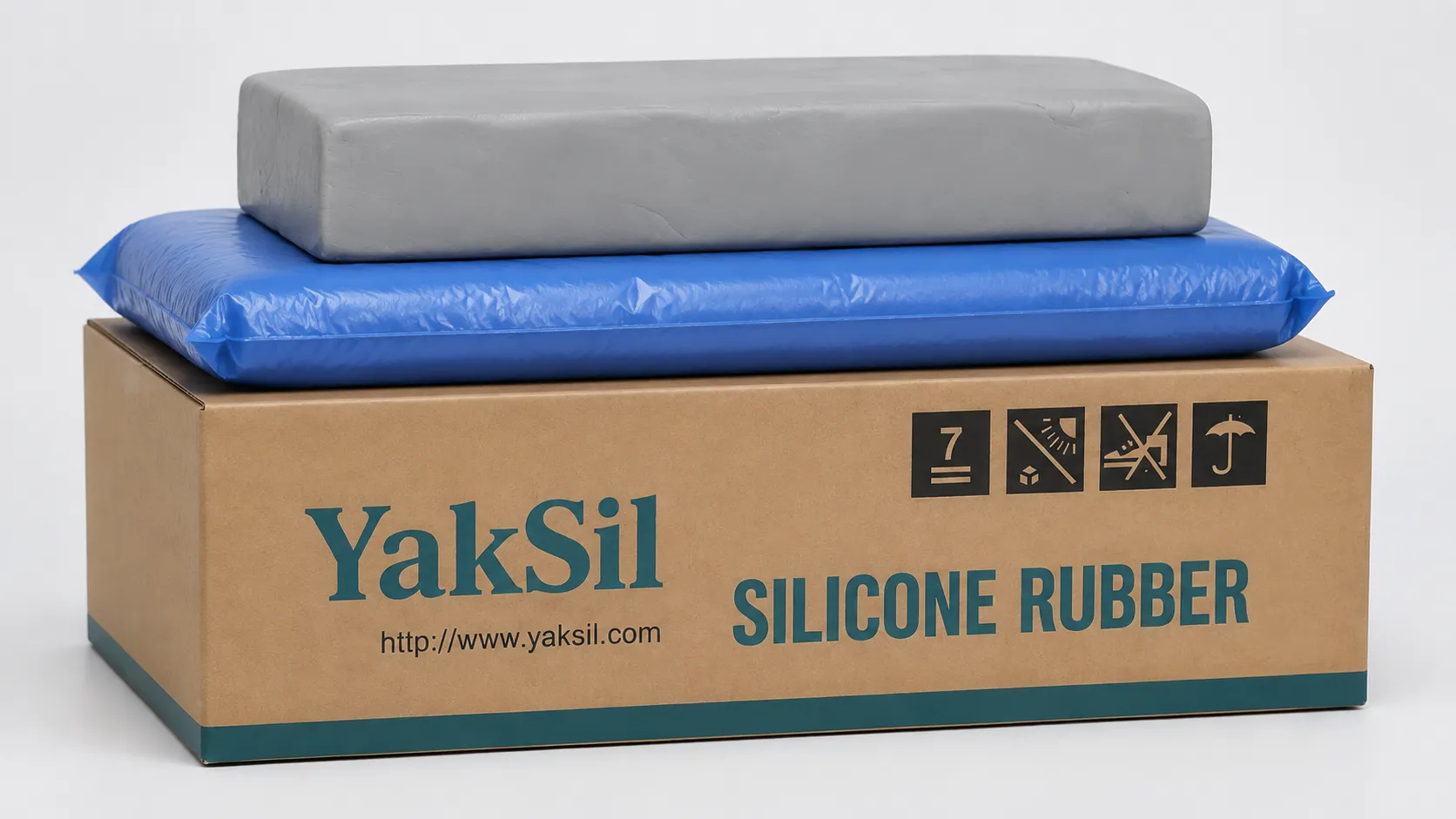
What Types of Silicone Rubber Can an OEM Source?
The first material decision is often the type of silicone system required by the manufacturing process.
| Silicone Type | Material Form | Typical Processing | Common OEM Applications |
|---|---|---|---|
| HTV / HCR Silicone | High-consistency gum-like compound | Extrusion, compression molding, transfer molding, injection molding | Cable, composite insulators, seals, profiles and industrial parts |
| LSR | Two-component liquid | Liquid injection molding | Precision seals, connectors, medical, food-contact and automated molded parts |
| RTV Silicone | Liquid or paste-like material | Room-temperature curing | Potting, sealing, mold making and specialized assembly applications |
| Custom Silicone Compound | Application-specific formulation | Depends on material system | Projects requiring customized processing or functional properties |
The correct silicone type should normally be selected around production equipment and component design before detailed formulation optimization begins.
HTV and HCR Silicone for OEM Manufacturing
HTV/HCR silicone rubber is widely used by OEM manufacturers that require extrusion, compression molding or high-consistency injection molding.
The uncured material has a gum-like consistency and can be formulated across different Shore A hardness levels and mechanical-property ranges.
HCR is particularly important in wire and cable, composite insulators, industrial seals, gaskets and larger molded components.
OEM buyers should evaluate not only the cured properties but also the uncured material characteristics that influence production.
Liquid Silicone Rubber for OEM Production
LSR is particularly attractive for OEMs producing precision molded parts at medium or high production volumes.
The two liquid components are metered, mixed and injected into a heated mold. This allows a high degree of automation and repeatability when equipment and tooling are properly configured.
OEM applications can include electrical connector seals, EV components, food-contact products, medical components and other detailed molded parts.
When qualifying an LSR supplier, manufacturers should consider viscosity consistency, A/B component control, curing behavior, mechanical properties and compatibility with the actual injection-molding system.
Custom Silicone Compounds for OEM Applications
A standard silicone rubber grade may not always match an OEM's production or finished-product requirements.
Custom formulation becomes useful when the customer needs a specific combination of hardness, mechanical performance, thermal resistance, electrical properties or processing behavior.
Customization should solve a defined engineering requirement rather than adding specifications that do not create value for the finished product.
Batch-to-Batch Consistency Is Critical for OEMs
One of the most important characteristics of an industrial silicone supplier is not the best laboratory result from one sample. It is the ability to reproduce the same material behavior repeatedly.
Small variations in compound plasticity, filler dispersion, curing behavior or viscosity can create large changes on a production line.
| Material Variation | Possible OEM Production Effect |
|---|---|
| Hardness Variation | Changes in sealing, assembly force or finished-part feel |
| Plasticity Variation | Changes in extrusion pressure or mold filling |
| Cure Variation | Different cycle times, under-cure or processing instability |
| Filler Dispersion Variation | Changes in mechanical or electrical performance |
| Color Variation | Appearance inconsistency between production lots |
| Viscosity Variation | Changes in injection or dispensing behavior |
For high-volume OEM manufacturing, consistent processing behavior can be as important as the nominal values on the technical datasheet.
What Quality Controls Should a Silicone Supplier Have?
A silicone supplier serving OEM projects should use quality controls appropriate to the material and application.
Routine testing may include hardness, tensile strength, elongation, tear strength and density. Specialized materials may also require electrical, thermal or application-specific testing.
Silicone Supplier for Electrical OEMs
Electrical OEM applications often require much more than ordinary silicone rubber.
Composite insulators, cable systems, surge arrester housings, electrical connectors and other high-voltage products may require specialized silicone compounds with controlled dielectric and surface electrical properties.
Electrical OEMs should therefore qualify the complete compound for the intended insulation system rather than sourcing material based only on hardness and price.
Silicone Supplier for Composite Insulator OEMs
Composite insulator manufacturing is a good example of why application-specific silicone selection matters.
The silicone rubber housing must flow around the FRP core and form thin shed geometry while still providing hydrophobicity, tracking and erosion resistance and long-term outdoor durability.
A compound with excellent electrical properties can still create production problems if mold flow or tear strength is unsuitable.
Likewise, a material that molds easily is not sufficient if its long-term electrical performance does not meet the application requirements.
Silicone Supplier for Wire and Cable OEMs
Wire and cable manufacturers often require HCR silicone compounds that provide stable continuous extrusion as well as reliable electrical and thermal performance.
Important processing characteristics include feed stability, extrusion pressure, die swell, surface finish and dimensional control.
The finished insulation may also need heat-aging resistance, dielectric strength, flexibility and flame performance depending on the cable design.
| Cable Requirement | Supplier Evaluation |
|---|---|
| Extrusion Stability | Consistent feed, pressure and output |
| Surface Quality | Smooth insulation after extrusion and curing |
| Electrical Insulation | Dielectric properties appropriate to the cable |
| Heat Aging | Retention of mechanical properties after elevated-temperature exposure |
| Flexibility | Mechanical performance during installation and cable movement |
Silicone Supplier for EV OEM Applications
EV manufacturers and component suppliers use silicone elastomers in high-voltage cable, battery systems, connectors, seals and heat-resistant components.
These applications can combine electrical insulation, thermal cycling, vibration, sealing and flame-related requirements within a single assembly.
An OEM silicone supplier may therefore need to provide several different compound families rather than one universal EV material.
Food Grade Silicone Supplier for OEMs
Food equipment and kitchenware OEMs may require silicone compounds for seals, tubing, molded products and food-processing components.
In these applications, food-contact suitability must be evaluated together with mechanical and processing requirements.
The supplier should be able to clarify which regulatory or test documentation applies to the selected grade rather than using the phrase "food grade" as a generic marketing claim.
Depending on the target market and product, OEM buyers may need to consider applicable FDA 21 CFR provisions, LFGB-related requirements, BfR recommendations, REACH documentation or other specifications.
The exact formulation, pigments, curing process and finished-product conditions may all influence final qualification.
What Documents Should OEM Buyers Request?
Documentation helps OEM procurement and engineering teams determine whether a silicone compound is suitable for qualification and ongoing production.
| Document | Purpose |
|---|---|
| Technical Datasheet | Basic material properties and processing information |
| Batch Test Information | Supports verification of specified production properties |
| Safety Documentation | Supports material handling and workplace requirements |
| Compliance Documentation | Supports food-contact, environmental or customer-specific requirements where applicable |
| Application Test Reports | Supports specialized electrical, thermal or other performance claims |
| Processing Guidance | Provides curing, molding or extrusion recommendations |
The required documentation should be agreed during qualification rather than discovered only after mass production has started.
How Should an OEM Qualify a New Silicone Supplier?
A structured qualification process reduces the risk of moving directly from a datasheet comparison into commercial production.
Define the Real Application Requirements
Identify the final product, processing method, target hardness, operating environment and critical mechanical or functional properties.
Review Technical Data
Compare relevant mechanical, thermal, electrical and processing properties instead of focusing only on one number.
Test Material Samples
Perform laboratory evaluation using conditions relevant to the finished application.
Run a Production Trial
Process the silicone on the actual extrusion, compression molding or injection equipment.
Evaluate Finished Parts
Check dimensions, surface quality, mechanical properties and functional performance.
Confirm Commercial Supply
Review packaging, lead time, batch control, documentation and expected order quantities.
Why a Production Trial Matters More Than a Datasheet
Datasheets are useful for narrowing down candidate silicone materials, but they cannot reproduce every manufacturing condition.
A laboratory test specimen is different from a complex molded part, long cable extrusion or composite insulator housing.
A production trial reveals how the material behaves in the actual process.
How to Replace an Existing Silicone Material
OEMs often search for a new silicone supplier because of cost, lead-time problems, inconsistent material or a need for better technical performance.
The safest replacement strategy is not simply to ask another supplier for the same Shore A hardness.
The existing material should be evaluated as a complete benchmark.
| Current Material Information | Why It Helps |
|---|---|
| Shore A Hardness | Provides a starting point for cured firmness |
| Tensile & Elongation | Helps establish mechanical requirements |
| Tear Strength | Important for thin and highly deformed parts |
| Density | Provides information about formulation and finished-part weight |
| Processing Conditions | Shows how the current material behaves on production equipment |
| Current Problem | Identifies what the replacement material actually needs to improve |
If possible, the OEM should provide the existing datasheet, a material sample and information about the production process.
Common Reasons OEMs Change Silicone Suppliers
Changing suppliers is usually driven by a specific commercial or technical problem.
Why the Lowest Silicone Price Is Not Always the Lowest OEM Cost
Silicone rubber is usually purchased by weight, but OEM production cost is determined by more than material price per kilogram.
A lower-cost compound can become more expensive if it creates a higher scrap rate, slower molding cycles, excessive flash, difficult extrusion or frequent line adjustments.
For high-volume production, a small improvement in process stability can sometimes create more value than a small reduction in raw-material price.
How Important Is Silicone Supplier Lead Time?
Lead time becomes increasingly important once a silicone compound is approved for mass production.
OEMs typically need enough inventory to protect the production line without carrying unnecessarily large raw-material stocks.
A supplier should therefore provide realistic information about production lead time, packaging, minimum order quantities and repeat-order planning.
For customized compounds, buyers should also understand whether each order is made to specification and whether additional production time is required.
Should an OEM Use One Silicone Grade for Multiple Products?
Standardizing one material across several products can simplify procurement and inventory, but it is not always technically optimal.
A 60 Shore A electrical silicone used for a composite insulator may have unnecessary filler chemistry for a simple industrial gasket. Likewise, a general-purpose molding grade may not provide the extrusion behavior required for cable manufacturing.
Material standardization makes sense when the actual requirements overlap. It should not force a specialized application to accept unsuitable performance.
How to Compare Silicone Supplier Samples
When evaluating multiple silicone suppliers, all candidate materials should be tested under comparable conditions.
| Comparison Area | Evaluation |
|---|---|
| Hardness | Compare after equivalent curing conditions |
| Tensile / Elongation | Use the same test method and specimen conditions |
| Tear Strength | Use equivalent tear-test geometry and standard |
| Processing | Use comparable machine settings where practical |
| Finished Part | Evaluate dimensions, appearance and functional performance |
| Aging | Use the same time and temperature conditions |
This makes supplier comparisons more meaningful than placing unrelated datasheet values side by side.
Questions to Ask a Silicone Supplier Before Approval
What Should an OEM Include in a Silicone Material RFQ?
A detailed RFQ helps a silicone supplier recommend the right material faster and reduces unnecessary sample cycles.
Silicone Supplier for OEMs — Yakows
Yakows supplies silicone rubber compounds for OEM manufacturers across electrical, wire and cable, EV, industrial molding, sealing and food-contact applications.
Material options include HTV/HCR silicone rubber, liquid silicone rubber and customized compounds developed around different processing and finished-product requirements.
For OEM projects, material selection can consider Shore A hardness, tensile strength, elongation, tear resistance, heat aging, electrical performance, cure characteristics and production behavior rather than relying on one specification alone.
Customers developing a new product or replacing an existing silicone material can provide the current datasheet, processing method, application requirements and production problems for comparison.
The goal is to identify a silicone compound that performs consistently on the OEM production line and continues to meet the required properties of the finished product during commercial manufacturing.
Frequently Asked Questions
What should an OEM look for in a silicone supplier?
An OEM should evaluate material consistency, technical support, customization capability, quality control, documentation, production scalability and the supplier's ability to support real processing requirements.
Can a silicone supplier customize Shore A hardness?
Yes. Silicone compounds can be formulated across different hardness ranges, although changing hardness can also influence other mechanical and processing properties.
Can an OEM replace silicone with the same Shore A hardness?
Matching Shore A alone is not enough. Tensile strength, elongation, tear resistance, density, cure behavior and production processing should also be compared.
What is the difference between HTV/HCR and LSR for OEMs?
HTV/HCR is a high-consistency silicone commonly used for extrusion and conventional molding, while LSR is a flowable two-component system used mainly for automated liquid injection molding.
Can silicone compounds be customized for electrical OEMs?
Yes. Electrical-grade compounds can be developed around dielectric, hydrophobic, tracking, erosion, thermal and mechanical requirements depending on the application.
Why is a production trial important before changing suppliers?
A trial shows how the new compound behaves on the actual OEM equipment and reveals processing differences that cannot be predicted from a technical datasheet alone.
What information should an OEM send to a silicone supplier?
Useful information includes the final application, processing method, hardness, mechanical requirements, temperature, existing material, known production problems and estimated demand.
Should an OEM choose the lowest-cost silicone supplier?
Material price should be considered together with scrap, cycle time, production stability, quality consistency, technical support and supply reliability.
Can OEMs request small quantities for testing?
Trial quantities are commonly used during supplier qualification so the OEM can perform material and production testing before commercial approval.
Why is batch consistency important for silicone rubber?
Variation in plasticity, cure behavior, filler dispersion or other properties can affect production settings and finished-part quality even when nominal hardness remains unchanged.