
Borracha de Silicone-Silicone Rubber
Borracha de silicone, commonly known in English as silicone rubber, is one of the most versatile elastomer materials used across modern industries. From household products and medical devices to automotive parts, electronics, food-grade seals, and industrial gaskets, silicone rubber has become a preferred material wherever flexibility, durability, temperature resistance, and chemical stability are required. Its unique combination of properties makes it different from natural rubber and many synthetic rubbers, especially in demanding environments.
The term “borracha de silicone” is widely used in Portuguese-speaking markets, but the material itself is recognized globally as silicone rubber. Whether a company is sourcing silicone sheets, custom molded silicone parts, silicone tubing, silicone seals, or high-performance rubber components, understanding this material can help buyers choose the right product for their specific application.
What Is Borracha de Silicone?
Borracha de silicone is a synthetic rubber made from silicone polymers. Unlike traditional rubbers that are mainly carbon-based, silicone rubber has a backbone made of silicon, oxygen, carbon, and hydrogen. This chemical structure gives silicone rubber excellent thermal stability, weather resistance, and long-term flexibility.
In simple terms, silicone rubber is soft, elastic, and durable. It can be stretched, compressed, molded, extruded, and formed into many shapes without losing its basic performance. It is available in different hardness levels, colors, thicknesses, and grades, depending on the application.
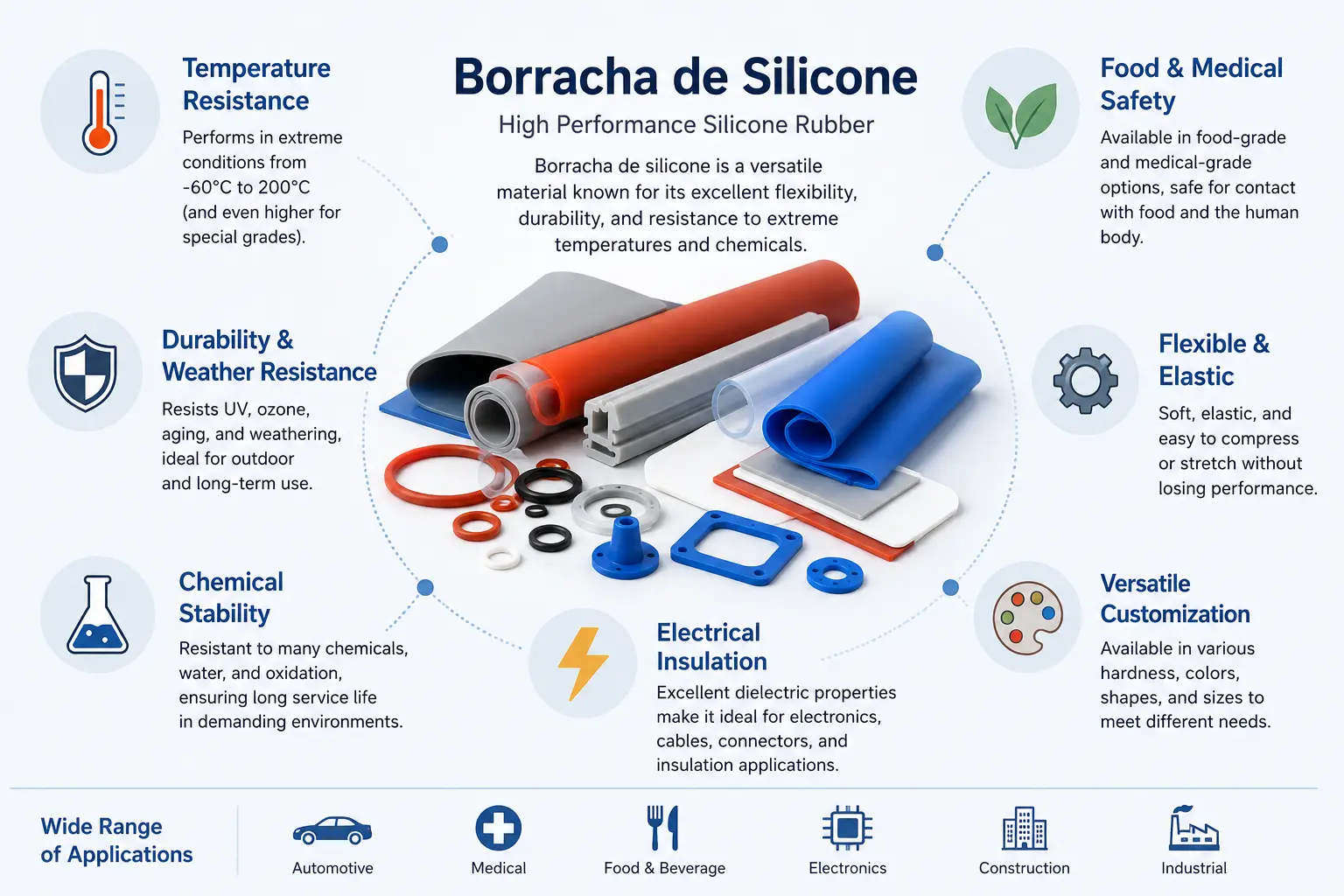
One of the reasons borracha de silicone is so popular is that it performs well in both high and low temperatures. Many silicone rubber products can withstand temperatures from around -60°C to 200°C, and some special grades can tolerate even higher temperatures for short periods. This makes silicone ideal for applications where ordinary rubber would crack, melt, harden, or degrade.
Key Properties of Borracha de Silicone
Silicone rubber is valued because it offers a balanced set of mechanical, thermal, and chemical properties. Some of the most important features include:
1. Excellent Temperature Resistance
Borracha de silicone is well known for its ability to remain stable under extreme temperatures. In cold conditions, it stays flexible and does not become brittle easily. In hot conditions, it resists deformation and maintains its shape better than many other elastomers. This is why silicone rubber is often used in ovens, engines, heating systems, and outdoor environments.
2. Flexibility and Elasticity
Silicone rubber can bend, stretch, and return to its original shape. This elasticity makes it suitable for seals, gaskets, O-rings, tubing, vibration dampers, and flexible connectors. Even after long-term compression, high-quality silicone rubber can maintain good sealing performance.
3. Weather and UV Resistance
Unlike some rubbers that degrade when exposed to sunlight, ozone, rain, or oxygen, borracha de silicone has excellent outdoor durability. It does not crack or age quickly under UV exposure. This makes it useful for outdoor seals, solar equipment, lighting systems, construction profiles, and marine applications.
4. Chemical Stability
Silicone rubber has good resistance to many chemicals, water, and oxidation. It is not suitable for every chemical environment, especially certain fuels and strong acids, but it performs very well in many general industrial and household conditions. Its chemical stability also helps it maintain performance over a long service life.
5. Electrical Insulation
Borracha de silicone is an excellent electrical insulator. It is commonly used in cable insulation, connectors, keypads, electronic seals, and protective covers. Because it resists heat and moisture, it is especially useful in electrical and electronic products that must operate safely and reliably.
6. Food and Medical Compatibility
Food-grade and medical-grade silicone rubber are widely used because they can be produced to meet strict safety and hygiene requirements. Food-grade borracha de silicone is commonly found in baking molds, baby products, kitchen utensils, food processing seals, and beverage tubing. Medical-grade silicone is used in tubing, seals, implants, respiratory masks, and other healthcare applications.
Common Types of Borracha de Silicone
There are several types of silicone rubber, and each type is designed for different manufacturing methods and performance needs.
Solid Silicone Rubber
Solid silicone rubber is commonly used for compression molding, transfer molding, and extrusion. It is supplied in sheets, rolls, strips, or blocks and can be processed into gaskets, seals, profiles, and molded parts. This type is widely used in industrial applications.
Liquid Silicone Rubber
Liquid silicone rubber, often called LSR, is a two-component material used in injection molding. It is suitable for producing high-precision parts with consistent quality. LSR is popular in medical devices, baby products, electronics, automotive components, and consumer goods because it supports clean, efficient, and automated production.
High-Temperature Vulcanized Silicone
High-temperature vulcanized silicone rubber is cured using heat. It provides strong mechanical performance and is commonly used for extruded profiles, molded components, and industrial products that require durability.
Room-Temperature Vulcanized Silicone
Room-temperature vulcanized silicone, or RTV silicone, cures at room temperature. It is often used as a sealant, adhesive, mold-making material, or repair compound. RTV silicone is common in construction, electronics, automotive repair, and DIY applications.
Major Applications of Borracha de Silicone
Because borracha de silicone has such a broad performance range, it is used in many different industries.
Automotive Industry
In vehicles, silicone rubber is used for seals, hoses, gaskets, spark plug boots, vibration parts, and electrical insulation. It performs well near engines and other hot areas where ordinary rubber may fail. Its resistance to temperature changes makes it useful in both traditional vehicles and electric vehicles.
Medical and Healthcare Products
Medical-grade silicone rubber is valued for its biocompatibility, flexibility, and sterilization resistance. It is used in catheters, breathing tubes, medical seals, syringe components, wound care products, masks, and wearable healthcare devices. Its softness also makes it comfortable for products that contact the skin.
Food and Beverage Industry
Food-grade borracha de silicone is used in baking mats, molds, tubing, seals, bottle caps, kitchen utensils, and food processing equipment. It does not easily absorb odors or flavors, and it can withstand repeated heating and washing. This makes it a practical material for both commercial and home kitchen products.
Electronics and Electrical Equipment
Silicone rubber protects electronic components from heat, dust, water, and vibration. It is used in keypads, connector seals, cable insulation, thermal pads, LED lighting seals, and protective covers. Its electrical insulation properties help improve safety and product reliability.
Construction and Architecture
In construction, silicone rubber appears in sealants, expansion joints, window seals, facade systems, roofing components, and weatherproof profiles. Its UV and weather resistance make it suitable for long-term outdoor use. Silicone sealants are especially popular because they bond well to glass, metal, ceramic, and many building materials.
Industrial Manufacturing
Industrial users rely on borracha de silicone for gaskets, sheets, rollers, membranes, washers, vacuum seals, and machine parts. It is often chosen when equipment must operate in high heat, cold, moisture, or exposure to cleaning agents. Custom silicone parts can be designed for specific machinery and production lines.
Consumer Products
Silicone rubber is everywhere in daily life. Phone cases, watch bands, cooking tools, baby pacifiers, sports equipment, water bottle seals, cosmetic applicators, and household accessories often use silicone. Consumers like it because it feels soft, is easy to clean, and comes in many colors.
Advantages of Borracha de Silicone Compared with Other Rubbers
Compared with natural rubber, nitrile rubber, EPDM, or neoprene, borracha de silicone offers several unique advantages. Its temperature range is broader, its weather resistance is stronger, and its aging performance is often better. It is also available in food-grade and medical-grade formulations, which makes it suitable for sensitive applications.
However, silicone rubber is not always the best choice for every situation. It can have lower tear resistance than some other rubbers, and it may not resist petroleum oils or fuels as well as nitrile rubber or fluorocarbon rubber. For this reason, material selection should always consider the operating environment, temperature, pressure, chemicals, and mechanical stress.
How Borracha de Silicone Is Manufactured
Silicone rubber products can be manufactured through several processes. The most common methods include extrusion, compression molding, injection molding, calendaring, and die cutting.
Extrusion is used to produce continuous shapes such as tubes, cords, strips, and profiles. Compression molding is suitable for custom gaskets, seals, and medium-volume molded parts. Injection molding, especially with liquid silicone rubber, is ideal for high-volume production of complex and precise parts. Calendaring is used to make silicone sheets, while die cutting can create flat gaskets and pads from sheet material.
After forming, silicone rubber is usually cured or vulcanized to achieve its final elastic properties. Some products may also receive post-curing, surface treatment, printing, coating, or bonding depending on customer requirements.
Choosing the Right Borracha de Silicone Product
When selecting borracha de silicone, buyers should consider several technical factors. Hardness is one of the most important. Silicone rubber hardness is usually measured in Shore A. Soft silicone may be around 20 Shore A, while harder silicone may reach 70 or 80 Shore A. Softer grades are better for flexible seals, while harder grades are used for structural or wear-resistant parts.
Temperature range is another key factor. For high-heat applications, a high-temperature silicone grade may be required. For food or medical use, the material should meet relevant safety standards. For outdoor use, UV and weather resistance should be confirmed. For electrical applications, dielectric strength and insulation performance may be important.
Color, thickness, size tolerance, compression set, tensile strength, elongation, and tear resistance can also affect performance. For custom parts, it is best to provide drawings, samples, or detailed specifications to the manufacturer.
Maintenance and Care of Silicone Rubber Products
Borracha de silicone is generally easy to maintain. Most silicone products can be cleaned with mild soap and water. Food-grade silicone items are often dishwasher safe, but users should always follow the supplier’s instructions. Avoid using sharp tools, abrasive cleaners, or incompatible chemicals that could damage the surface.
For industrial silicone seals and gaskets, regular inspection is recommended. Look for cracks, permanent deformation, swelling, hardening, or loss of elasticity. Although silicone rubber has a long service life, replacement may be necessary when parts are exposed to extreme stress, high pressure, or aggressive chemicals.
Sustainability and Environmental Considerations
Silicone rubber is durable, long-lasting, and reusable in many applications. Because it does not degrade quickly, it can reduce the need for frequent replacement. This is an advantage in industrial and consumer products where long service life matters.
At the same time, silicone is not biodegradable like some natural materials. Recycling silicone rubber can be more challenging than recycling common plastics, although specialized recycling options exist in some markets. Choosing high-quality borracha de silicone products with a longer lifespan can help reduce waste over time.
Market Demand for Borracha de Silicone
The demand for borracha de silicone continues to grow because industries need materials that can handle stricter performance requirements. Medical technology, electric vehicles, renewable energy, smart electronics, food processing, and advanced manufacturing all depend on reliable elastomer materials. Silicone rubber fits many of these needs because it combines flexibility, safety, and resistance to harsh conditions.
For global buyers, the keyword “borracha de silicone” is especially useful when searching for suppliers in Portuguese-speaking countries or targeting customers in Brazil, Portugal, Angola, Mozambique, and other markets where Portuguese is used. In English-speaking markets, related search terms include silicone rubber, silicone sheet, silicone gasket, silicone seal, silicone tubing, liquid silicone rubber, and food-grade silicone rubber.
Conclusion
Borracha de silicone is a high-performance material with a wide range of uses across industries and everyday products. Its excellent temperature resistance, flexibility, weather stability, electrical insulation, and availability in food-grade and medical-grade options make it one of the most valuable synthetic rubbers in the world.
Whether used in automotive systems, healthcare devices, kitchenware, electronics, construction, or industrial machinery, silicone rubber offers dependable performance and long service life. By understanding its properties, types, manufacturing methods, and selection criteria, buyers and engineers can choose the right borracha de silicone solution for their needs.
As technology advances and product requirements become more demanding, silicone rubber will continue to play an important role in modern manufacturing. For companies looking for a flexible, durable, and reliable elastomer, borracha de silicone remains one of the best material choices available today.