
Silicone Rubber Under Heat, UV and Electrical Stress
Silicone rubber is widely used in electrical, high-voltage, cable, automotive and outdoor industrial applications because it can retain flexibility while resisting heat, ultraviolet radiation, moisture and electrical stress. These advantages, however, do not mean the material is unaffected by long-term service conditions.
Heat can gradually change hardness and mechanical properties. UV and outdoor weathering can alter the surface. Electrical discharges can lead to tracking, erosion or localized thermal damage. In real equipment, these stresses often occur at the same time rather than independently.
Understanding how silicone rubber responds to combined aging is therefore important when selecting compounds for composite insulators, wire and cable, EV high-voltage systems, outdoor seals and other components expected to remain reliable for long periods.
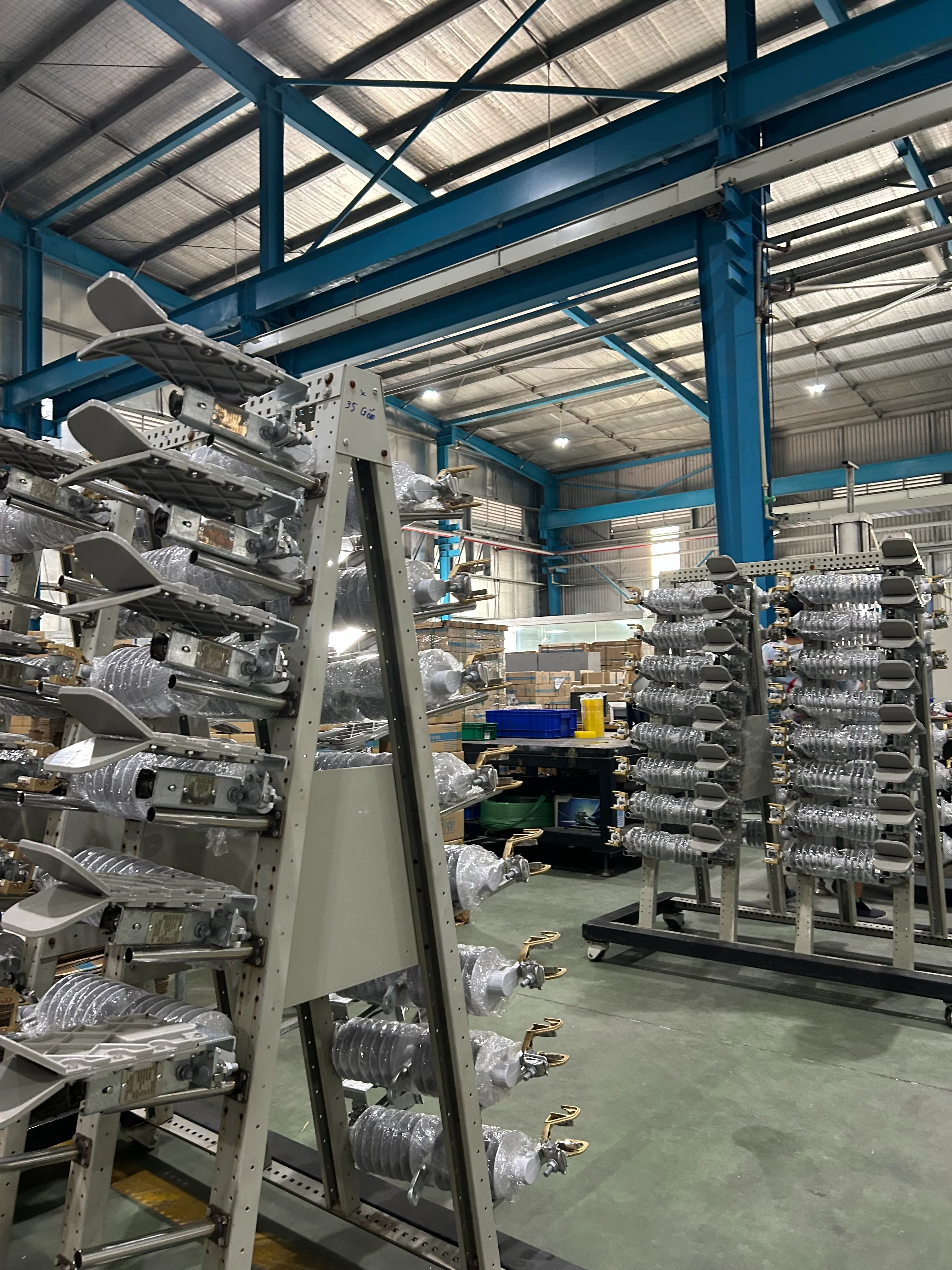
Why Long-Term Stress Matters for Silicone Rubber
Material selection often begins with a datasheet. Buyers compare Shore A hardness, tensile strength, elongation, tear strength, dielectric strength and operating temperature. These values are useful, but they usually represent a material tested under controlled conditions.
Real service environments are more complicated. A silicone rubber component installed outdoors may experience summer heat, winter cold, direct sunlight, rain, pollution, vibration and electrical fields over many years. A cable inside an EV may face heat, bending, vibration and electrical stress during every operating cycle.
The material therefore needs to do more than pass its initial specification. It must retain enough of its original properties after prolonged exposure to the actual environment.
What Happens to Silicone Rubber Under Heat?
Silicone rubber is well known for heat resistance, but high temperature still affects the material over time. Heat accelerates chemical and physical aging processes, and the results may become visible through changes in hardness, tensile strength, elongation or surface condition.
Depending on the formulation and exposure conditions, prolonged heat can gradually make a silicone compound harder and less extensible. A part that was originally flexible may remain intact but become less capable of stretching, sealing or absorbing movement.
This distinction is important because a silicone component does not need to melt or visibly burn before heat aging becomes relevant. A seal can fail because compression recovery has changed. A cable can become less flexible. A molded boot can become more vulnerable to tearing during maintenance.
| Heat-Aging Change | Possible Effect on the Finished Part |
|---|---|
| Hardness Increase | Reduced flexibility and higher force required for deformation |
| Elongation Loss | Greater risk of cracking during stretching or bending |
| Tensile Change | Reduced mechanical margin in loaded or assembled parts |
| Compression Recovery Loss | Reduced sealing pressure in gaskets and connector seals |
| Surface Degradation | Possible roughness, cracking or visible aging after severe exposure |
Continuous Temperature Is Different From Peak Temperature
One of the most common mistakes when evaluating silicone rubber is relying on a single maximum temperature number.
A material may tolerate a short exposure to a high temperature without immediate failure, but continuous operation at the same temperature can produce very different results. Long-term aging is determined not only by how hot the material becomes but also by how long it remains there.
For industrial material selection, it is usually more useful to define the expected service temperature and required property retention than to ask only for the highest temperature the silicone can survive.
Why Silicone Rubber Handles Heat Better Than Many Elastomers
The thermal behavior of silicone rubber is strongly related to its siloxane backbone. The Si–O structure differs from the carbon-carbon backbone found in many conventional organic elastomers and contributes to silicone's ability to remain flexible over a broad temperature range.
However, the final performance of a commercial silicone compound also depends on polymer structure, reinforcing silica, heat stabilizers, pigments, curing system and other formulation ingredients.
This means two materials both sold as silicone rubber may have different long-term heat-aging behavior. A general-purpose molding grade should not automatically be treated as equivalent to a compound specifically formulated for prolonged high-temperature service.
How UV Exposure Affects Silicone Rubber
Outdoor silicone rubber is continuously exposed to solar radiation. Ultraviolet light has enough energy to damage many polymer materials over time, which is why outdoor insulation, seals and protective components need strong weather resistance.
Silicone rubber generally performs well under UV exposure compared with many conventional elastomers, but outdoor aging still depends on the formulation and service environment. UV rarely acts alone. Heat, moisture, ozone, pollution and mechanical stress may all affect the same surface.
A well-formulated outdoor silicone compound is designed to maintain useful flexibility and surface integrity despite repeated exposure. For electrical applications, maintaining the surface condition is especially important because damaged or heavily contaminated areas can influence leakage current and discharge behavior.
UV Is Only One Part of Outdoor Weathering
Outdoor aging should not be reduced to ultraviolet resistance alone. Silicone rubber used on a transmission line, cable accessory, charging component or outdoor electrical enclosure may experience several environmental stresses simultaneously.
Sunlight
UV radiation and solar heating continuously affect exposed surfaces.
Rain & Humidity
Moisture can influence surface conductivity and electrical leakage behavior.
Ozone
Outdoor and electrical environments can expose elastomers to ozone and oxidative aging.
Pollution
Dust, salt and industrial contaminants can accumulate on electrical insulation surfaces.
Temperature Cycling
Repeated heating and cooling create expansion and contraction of the material and surrounding components.
Mechanical Stress
Vibration, wind, bending or assembly forces may interact with environmental aging.
Why Hydrophobicity Matters Outdoors
One of the important characteristics of silicone rubber in outdoor electrical insulation is its hydrophobic surface. Water tends to form droplets rather than spreading immediately into a continuous film.
This can be valuable on high-voltage insulation because a continuous wet and contaminated surface can support leakage current. Reducing continuous water-film formation can therefore help improve surface electrical behavior.
Silicone materials are also known for the ability of low-molecular-weight silicone species within the material to migrate toward the surface. Under suitable conditions, this can contribute to recovery of hydrophobic behavior after the surface has been contaminated or stressed.
This characteristic is one reason silicone rubber is widely used in composite insulator housings and other outdoor high-voltage components.
What Electrical Stress Does to Silicone Rubber
Silicone rubber is generally an excellent electrical insulator, but high-voltage environments can create stresses that are very different from ordinary dielectric testing.
Moisture and contamination can produce leakage current across an insulating surface. Localized current can generate heat, dry parts of the surface and create small discharge events. Repeated electrical activity can gradually damage the insulation if the material does not have sufficient resistance to tracking and erosion.
| Electrical Stress | What It Means |
|---|---|
| Leakage Current | Current flowing along a contaminated or wet insulation surface |
| Dry-Band Arcing | Localized discharge across dry regions created by uneven surface heating |
| Tracking | Formation of a conductive path along the insulation surface |
| Erosion | Physical loss or degradation of material caused by repeated discharge and thermal activity |
| Corona / Partial Discharge | Localized electrical discharge that can contribute to long-term surface or interface damage |
Tracking and Erosion Are Not the Same Failure
Tracking and erosion are often discussed together, but they describe different forms of electrical degradation.
Tracking involves the development of a conductive path along the material surface. This path can reduce the effective insulation capability and increase the risk of electrical failure.
Erosion refers to physical loss of material caused by repeated electrical discharge and localized heating. The surface may gradually become rough, pitted or recessed.
For high-voltage silicone rubber, a good compound should be formulated to resist both processes where the application requires it. Tracking and erosion performance is especially important for outdoor insulators, cable accessories and other components exposed to contaminated high-field environments.
Why Filler Systems Matter Under Electrical Stress
The performance of electrical silicone rubber depends strongly on its filler system. Reinforcing silica contributes to mechanical strength, while additional mineral fillers may be incorporated to improve behavior under electrical and thermal stress.
In high-voltage formulations, filler selection can influence tracking resistance, erosion resistance, heat dissipation, hardness, tear strength and processing viscosity.
This creates a formulation challenge. Adding functional fillers may improve electrical durability but can also change elongation, density, extrusion behavior or mold flow. The compound therefore needs to balance electrical performance with mechanical and processing requirements.
Heat and Electrical Stress Can Reinforce Each Other
Electrical and thermal aging should not always be treated as separate problems. Electrical leakage and discharge can create localized heat, while elevated temperature can accelerate material aging.
For example, contamination on an outdoor insulator can allow leakage current to flow across the surface. Local heating can create dry regions. Electrical discharge across those regions generates further heat and surface damage.
If the silicone compound has insufficient tracking and erosion resistance, repeated cycles can gradually remove material or create electrically weak areas.
This interaction is one reason high-voltage compounds are normally evaluated under more demanding conditions than general-purpose industrial silicone rubber.
Heat, UV and Electrical Stress Often Occur Together
Outdoor high-voltage equipment provides a clear example of combined aging. A composite insulator installed outdoors may be heated by the sun during the day, cooled at night, exposed to UV radiation continuously, covered by dust or salt and then wetted by rain or fog.
At the same time, the component remains under electrical stress. Pollution and moisture can change surface conductivity, while discharge activity can produce additional local heating.
None of these stresses needs to be extreme by itself. Long-term reliability depends on how the material responds to their combined effect over repeated cycles.
Silicone Rubber in Composite Insulators
Composite insulators are among the most demanding applications for outdoor electrical silicone rubber. The silicone housing protects the structural core while providing an external insulating surface.
The material needs to maintain hydrophobicity, resist UV and weathering, tolerate temperature changes and withstand electrical tracking and erosion. At the same time, it needs sufficient tear strength and elongation to survive molding, handling and long-term service.
For manufacturers, processing also matters. A compound with strong laboratory electrical properties can still create production problems if it molds inconsistently, traps contamination or develops surface defects.
This is why composite-insulator silicone grades are normally selected as complete electrical and processing systems rather than by dielectric strength alone.
For a deeper look at this application, see Silicone Rubber in High-Voltage Applications.
Silicone Rubber in Wire and Cable
Wire and cable insulation is another application where combined stress matters. A silicone cable may operate near heat-generating equipment while also bending, vibrating and carrying electrical load.
The cable compound must therefore provide both electrical insulation and mechanical flexibility. Heat aging should not reduce elongation to the point where bending causes cracking, and the extrusion process must produce a uniform insulation layer without contamination or weak zones.
| Cable Requirement | Why It Matters |
|---|---|
| Dielectric Performance | Provides electrical isolation around the conductor |
| Extrusion Stability | Helps maintain consistent wall thickness and smooth surface quality |
| Heat Aging | Helps ensure tensile strength and elongation remain useful over time |
| Flexibility | Allows cable routing and repeated movement without cracking |
| Material Cleanliness | Reduces contamination and defects within critical insulation layers |
Silicone Rubber in EV High-Voltage Systems
EV systems combine many of the stresses discussed in this article. High-voltage cable, connectors, boots, grommets and seals may experience heat, vibration, electrical stress, temperature cycling and environmental exposure.
Silicone rubber is valuable in these systems because it can combine electrical insulation with flexible mechanical behavior over a broad temperature range. However, each component requires a different balance of properties.
A cable grade may prioritize extrusion stability and heat aging. A connector seal may place more emphasis on compression set. A molded insulating boot may require high tear strength and elongation.
For more detail, see Silicone Rubber in EV High-Voltage Systems.
How Heat Aging Changes Mechanical Properties
Mechanical-property retention is one of the clearest ways to evaluate silicone rubber aging. Instead of asking only whether a material survives a certain temperature, engineers can measure how much its properties change after exposure.
What Does Aged Silicone Rubber Look Like?
Not every failure is immediately visible, but aging can produce several warning signs depending on the stress and formulation.
The material may become harder, less flexible or easier to tear. Outdoor surfaces may become rough or contaminated. Electrical discharge can create pitting, erosion or darkened regions. Severe heat exposure can cause cracking or dimensional changes.
Visual inspection is useful, but it should not replace testing. A silicone part can look acceptable while already showing significant reductions in elongation or sealing performance.
How Is Silicone Rubber Aging Tested?
Laboratory aging attempts to reproduce important service stresses in a controlled and accelerated way. The exact test program depends on the finished application.
Heat-aging tests expose cured silicone samples to elevated temperatures for a defined period and then measure changes in hardness, tensile strength and elongation.
Weathering tests can combine UV radiation, moisture and temperature cycling to evaluate surface durability. Electrical insulation materials may also undergo tracking and erosion testing designed to expose the surface to conductive contamination and electrical stress.
| Test Area | What It Helps Evaluate |
|---|---|
| Heat Aging | Mechanical-property retention after elevated-temperature exposure |
| UV / Weathering | Surface resistance to radiation, moisture and environmental aging |
| Tracking & Erosion | Surface durability under contaminated electrical stress |
| Dielectric Testing | Electrical breakdown behavior under defined conditions |
| Mechanical Testing | Tensile, elongation, tear and hardness before and after aging |
| Compression Testing | Long-term recovery behavior of sealing materials |
For high-voltage applications, tracking and erosion evaluations may use methods based on standards such as IEC 60587 where relevant to the project. The applicable test should always be selected according to the finished component specification rather than simply because it appears on a raw-material datasheet.
Accelerated Aging Is Not the Same as Exact Service Life
Accelerated testing is useful for comparing formulations and identifying weak materials, but it does not automatically provide an exact number of years of field life.
Real environments vary. Temperature changes, UV intensity, pollution, rainfall, electrical field distribution and mechanical loading differ by location and equipment design.
A strong qualification program therefore combines laboratory testing, engineering experience, production validation and, where available, field-performance information.
Processing Quality Also Influences Long-Term Reliability
A good formulation can still perform poorly if the compound is not processed correctly. Contamination, poor filler dispersion, incorrect curing or inconsistent molding can create weak regions before the component ever enters service.
Electrical insulation is particularly sensitive to defects because localized contamination, voids or damaged surfaces can concentrate electrical stress.
| Processing Problem | Possible Long-Term Effect |
|---|---|
| Poor Filler Dispersion | Inconsistent mechanical, thermal or electrical behavior |
| Contamination | Surface or internal weak points in electrical insulation |
| Incorrect Cure | Reduced mechanical strength or unstable properties |
| Surface Defects | Possible concentration points for moisture, dirt or electrical activity |
| Batch Variation | Changes in molding, extrusion and long-term performance |
How to Select Silicone Rubber for Combined Stress
The most reliable material-selection process starts with the actual service environment. Instead of requesting only “high temperature silicone” or “electrical silicone rubber,” define the stresses the component is expected to experience.
Once these conditions are defined, hardness, tensile strength, elongation, tear resistance, electrical properties and aging requirements can be selected around the actual application.
Do Not Select Silicone Rubber by Hardness Alone
Shore A hardness is useful, but two silicone compounds with the same hardness can have completely different aging behavior.
One 60 Shore A material may be optimized for general-purpose molding. Another may be formulated for high tear strength. A third may be designed for composite insulators with tracking-resistant fillers. A fourth may prioritize long-term high-temperature performance.
For demanding environments, hardness should therefore be treated as only one part of the material specification.
What Buyers Should Ask a Silicone Rubber Supplier
When a component will operate under heat, UV or electrical stress, supplier discussions should go beyond basic datasheet values.
Silicone Rubber for Demanding Environments from Yakows
Yakows supplies HTV/HCR silicone rubber compounds for electrical insulation, composite insulators, wire and cable, EV high-voltage systems, high-temperature components and other demanding industrial applications.
Different environments require different formulation priorities. Composite-insulator materials may focus on hydrophobicity, tracking and erosion resistance. Cable compounds may require stable extrusion together with dielectric performance and heat-aging resistance. EV components may need a balance of insulation, flexibility, tear strength and compression behavior.
For material evaluation, customers can provide the final application, processing method, target hardness, operating temperature, electrical requirements, mechanical properties and expected environmental exposure. These details help identify a suitable silicone rubber compound for the actual service conditions.
Frequently Asked Questions
Does silicone rubber degrade in heat?
Yes. Silicone rubber generally has excellent heat resistance, but prolonged elevated-temperature exposure can still change hardness, tensile strength, elongation and compression behavior. The rate of change depends on the formulation and exposure conditions.
Is silicone rubber UV resistant?
Silicone rubber generally provides strong resistance to UV and outdoor weathering compared with many conventional elastomers. Actual long-term performance depends on formulation, environmental exposure and the complete combination of stresses.
What happens to silicone rubber under electrical stress?
Electrical-grade silicone can provide excellent insulation, but contaminated or wet surfaces may experience leakage current and discharge activity. Under severe conditions, this can contribute to tracking, erosion and localized thermal damage.
What is tracking in silicone rubber?
Tracking is the formation of a conductive path along the surface of an insulating material after repeated electrical stress, contamination and discharge activity.
What is electrical erosion?
Electrical erosion is physical degradation or material loss from an insulating surface caused by repeated electrical discharge and localized heating.
Why is silicone rubber used for outdoor high-voltage insulation?
Silicone rubber combines electrical insulation with hydrophobic surface behavior, UV resistance, weather resistance, flexibility and the ability to formulate for tracking and erosion resistance.
Does UV exposure make silicone rubber brittle?
Properly formulated silicone generally performs well under UV exposure, but long-term outdoor aging should still be evaluated together with heat, moisture, ozone and mechanical stress.
Can high temperature reduce silicone rubber elongation?
Yes. Prolonged heat exposure can gradually reduce elongation depending on the compound and aging conditions, even if the material remains visually intact.
How should silicone rubber aging be tested?
The test program should reflect the application and may include heat aging, mechanical-property retention, UV or weathering exposure, dielectric testing, tracking and erosion testing and compression-set evaluation.