
Caoutchouc de silicone liquide (LSR) has emerged as one of the most versatile and high-performance polymer materials in modern manufacturing. Its unique combination of flexibility, durability, chemical resistance, and thermal stability has made it an indispensable material in industries ranging from medical devices to automotive components, electronics, and consumer products. Unlike traditional solid silicone rubbers that require labor-intensive compression or transfer molding, LSR is a low-viscosity, two-part platinum-catalyzed elastomer that enables precise injection molding. This allows manufacturers to produce complex geometries with tight tolerances at high volumes, maintaining consistent quality while meeting demanding performance standards.
The growing popularity of LSR is driven not only by its functional advantages but also by its ability to support rapid prototyping and high-volume production simultaneously. Designers and engineers increasingly rely on LSR when products require both durability and intricate design features that conventional silicone materials cannot easily achieve.
Understanding Liquid Silicone Rubber
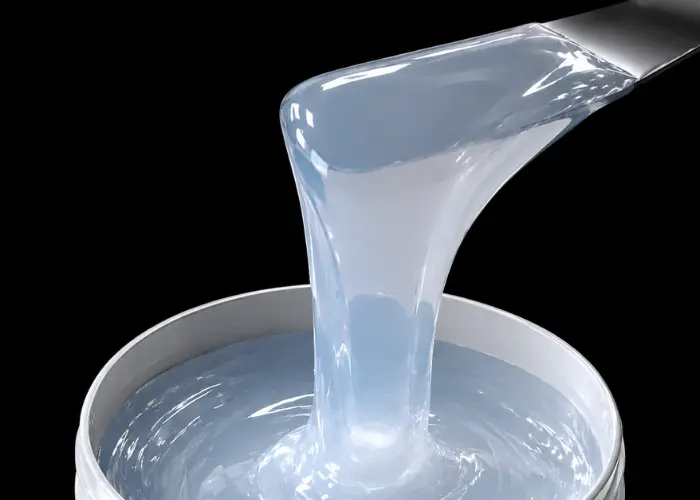
At its core, Liquid Silicone Rubber is composed of three essential elements: a polydimethylsiloxane (PDMS) backbone, crosslinkers, and a platinum-based catalyst. The PDMS backbone provides flexibility, thermal stability, and chemical inertness, while crosslinkers enable the polymer chains to bond during curing, forming a solid, elastic material. The platinum catalyst initiates a rapid addition-cure reaction when Part A and Part B are mixed, transforming the liquid into a stable elastomer. This reaction ensures that the material maintains its mechanical properties across a wide temperature range, typically from -50°C to 250°C, with specialized formulations capable of even higher thermal endurance.
LSR differs from High-Temperature Vulcanization (HTV) silicone primarily in its processing and performance characteristics. While HTV silicone is solid and requires compression or transfer molding, LSR’s low viscosity allows it to flow into intricate mold cavities, making it ideal for precise, high-volume manufacturing. This distinction makes LSR particularly suitable for applications where both design complexity and consistent production quality are critical.
Key Properties of Liquid Silicone Rubber
Liquid Silicone Rubber exhibits a rare combination of mechanical, thermal, and chemical properties that sets it apart from other elastomers. Mechanically, it can endure significant stretching without tearing and maintains its shape under prolonged compression, which is critical for seals, gaskets, and flexible components. Thermally, LSR withstands extreme temperatures without degradation, making it reliable for automotive and electronic applications. Chemically, it is highly resistant to oils, water, detergents, and many aggressive substances, while its non-toxic nature ensures safety in medical and food-grade products. Additionally, LSR provides excellent electrical insulation, further expanding its applicability in sensitive electronic devices.
The following table highlights the key differences between LSR and HTV silicone, illustrating why LSR is often preferred for precision applications:
| Fonctionnalité | Caoutchouc de silicone liquide (LSR) | High-Temperature Vulcanization (HTV) Silicone |
|---|---|---|
| Form | Liquid, low viscosity | Solid, gum-like |
| Traitement | Injection molding | Compression or transfer molding |
| Cure Type | Platinum-catalyzed addition | Peroxide or condensation |
| Production Speed | Fast, suitable for high-volume | Slower, batch-limited |
| Design Flexibility | High, intricate geometries possible | Limited for complex shapes |
| Temperature Range | -50°C to 250°C (higher for special grades) | -60°C to 200°C |
| Biocompatibility | Excellent, suitable for medical/food use | Moderate, may require additional treatment |
Liquid Silicone Rubber Manufacturing Process
The production of Liquid Silicone Rubber is largely based on injection molding, a process that balances precision with scalability. First, Parts A and B are accurately metered and mixed using automated dosing equipment to guarantee consistent curing and material performance. The mixture is then injected into heated molds under high pressure, allowing the liquid to fill even the most intricate cavities. The platinum-catalyzed reaction cures the material within minutes, enabling fast production cycles that are particularly advantageous for large-scale manufacturing.
After demolding, LSR parts may undergo additional post-processing steps, including trimming, surface finishing, sterilization (for medical applications), or assembly with other components. The combination of speed, repeatability, and precision makes LSR manufacturing highly efficient while ensuring each component meets strict quality standards.
Liquid Silicone Rubber Applications
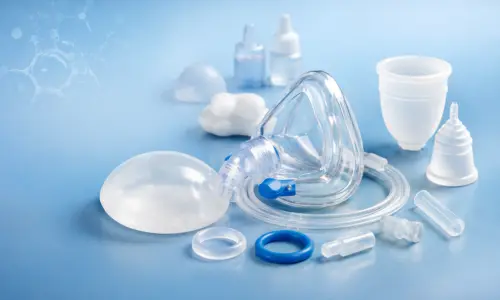
The versatility of Liquid Silicone Rubber is evident in its wide range of applications. In the medical sector, LSR’s biocompatibility and ability to withstand sterilization processes allow it to be used in catheters, tubing, respiratory masks, and even implantable devices. Its chemical inertness ensures patient safety, while its flexibility supports ergonomic and functional designs that enhance usability.
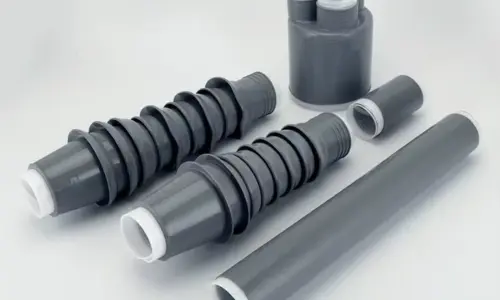
In the automotive industry, LSR is widely used for seals, gaskets, vibration-dampening components, and flexible connectors that must endure extreme temperatures, mechanical stress, and exposure to oils or chemicals. The rise of electric vehicles has further increased LSR’s demand for battery insulation and thermal management components.
The electronics industry relies on LSR for keypads, buttons, flexible circuits, and insulators, capitalizing on its electrical insulating properties and long-term thermal stability. Even in consumer products, LSR is valued for its heat resistance, non-toxicity, and flexibility, finding applications in bakeware, kitchen utensils, and wearable devices. Its ability to be molded into complex shapes and colored for aesthetic appeal allows it to meet both functional and design requirements simultaneously.
Industry Trends Of Liquid Silicone Rubber
The demand for Liquid Silicone Rubber continues to grow across all major sectors. In healthcare, the expansion of minimally invasive medical devices and sterilizable components drives the need for biocompatible elastomers. In automotive and electronics, electric vehicles, flexible electronics, and wearables create demand for heat-resistant, durable elastomers. Sustainability considerations are prompting research into recyclable LSR formulations and more efficient production techniques.
Automation and robotics are transforming LSR manufacturing by increasing precision, reducing waste, and enabling faster production cycles. With ongoing innovation in formulations, process technology, and applications, LSR is poised to remain a core material for industries requiring reliable, high-performance elastomers well into the future.
Conclusion
Liquid Silicone Rubber is a high-performance, versatile material that bridges the gap between engineering precision and functional durability. Its chemical stability, thermal resilience, and mechanical strength, combined with the precision and efficiency of injection molding, make it indispensable across medical, automotive, electronics, and consumer applications. As advancements in formulation, sustainability, and automation continue to optimize its properties and production, LSR will remain a cornerstone material for manufacturers and designers seeking reliable, innovative, and long-lasting elastomeric solutions.
What are the advantages of using Yakows LSR?
Yakows Liquid Silicone Rubber offers superior durability, flexibility, thermal and chemical resistance, and precise molding capabilities. Our LSR can be customized with colorants, additives, and hardness variations to meet specific application needs. Combined with fast curing and high repeatability, Yakows LSR ensures products meet both functional and aesthetic requirements efficiently.
Is Liquid Silicone Rubber safe for medical and food applications?
Yes. LSR is chemically inert, non-toxic, and biocompatible. It can withstand sterilization processes such as steam, radiation, or ethylene oxide without degradation. Yakows provides FDA-compliant and ISO-certified LSR materials suitable for medical, food-contact, and other sensitive applications.
Can Yakows provide custom LSR formulations?
Absolutely. Yakows specializes in customizing LSR formulations for specific hardness, color, flame retardancy, and mechanical properties. Our technical team works closely with clients to develop LSR solutions optimized for performance, manufacturing efficiency, and regulatory compliance.
Caoutchouc de silicone liquide