
HTV Silicone Rubber Is the Most Reliable Material for Modern Composite Insulators
In today’s power transmission and distribution industry, the long-term reliability of insulation materials directly influences the safety, operational stability, and economic efficiency of electrical networks. As transmission voltages continue to increase and environmental conditions become more demanding, traditional insulation materials are no longer able to satisfy the performance expectations of modern utilities and infrastructure projects. Compared with conventional porcelain and glass insulators, composite insulators manufactured with Caoutchouc silicone HTV(High Temperature Vulcanized) provide significantly better hydrophobicity, pollution resistance, weather durability, mechanical flexibility, and long-term electrical stability. These advantages have made HTV silicone for composite insulator manufacturing a widely preferred material in modern power transmission and distribution systems.
The growing complexity of global power systems has accelerated the demand for advanced insulating materials capable of maintaining stable performance under extreme environmental conditions. Coastal regions face severe salt contamination, industrial zones experience chemical pollution, desert transmission lines are exposed to ultraviolet radiation and sand erosion, while tropical and humid climates continuously challenge insulation reliability through moisture accumulation. Under these conditions, HTV silicone rubber has demonstrated exceptional adaptability and operational consistency, making it one of the most trusted materials in the modern power industry.
For composite insulators, material selection is far more than a manufacturing decision. The quality of the polymer housing directly affects electrical safety, flashover resistance, service life, and maintenance cost. This is why professional composite insulator manufacturers place strong emphasis on high-performance silicone rubber systems with proven long-term reliability. At Yakows, we focus on delivering premium HTV silicone rubber solutions specifically engineered for composite insulator applications. Through the use of internationally recognized raw materials, advanced compounding technology, ISO 9001 certified manufacturing systems, and strict quality control procedures, Yakows provides stable and reliable silicone rubber materials that support the evolving demands of modern power infrastructure.
The Development of Composite Insulators and the Rise of HTV Silicone Rubber
To understand why HTV silicone rubber has become the dominant material for composite insulators, it is important to first examine the evolution of outdoor insulation technology. For many decades, porcelain and glass insulators were widely used in transmission and distribution systems because they offered acceptable insulation capability and relatively high mechanical strength. However, as power systems expanded into more complex environments and transmission voltages increased, the limitations of traditional materials became increasingly evident.
Conventional porcelain insulators are heavy, brittle, difficult to transport, and vulnerable to contamination flashover under polluted conditions. Glass insulators also present operational limitations, particularly in environments with heavy contamination or mechanical stress. Utilities operating in coastal, industrial, or high-humidity regions often faced rising maintenance costs and increased flashover risks due to pollution accumulation on insulator surfaces.
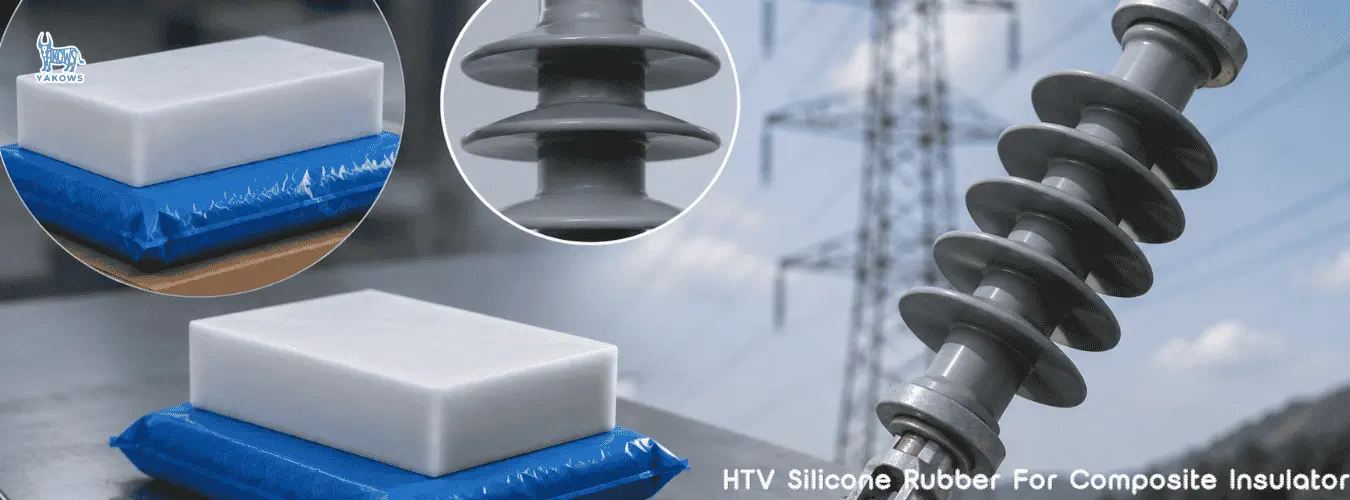
The emergence of composite insulators represented a major technological advancement for the power industry. Unlike traditional insulators, composite insulators combine a fiberglass reinforced core rod, metal end fittings, and an external polymer housing with sheds designed to improve insulation performance. Among the various polymer materials available, HTV silicone rubber quickly became the preferred choice because it successfully combines electrical insulation capability with exceptional environmental resistance.
The widespread adoption of HTV silicone rubber fundamentally changed the performance expectations of outdoor insulation systems. Unlike conventional materials that gradually lose insulation performance under contamination and moisture exposure, HTV silicone rubber maintains excellent hydrophobicity and stable electrical behavior even under severe environmental stress. This capability significantly reduces leakage current, minimizes flashover risk, and improves long-term operational reliability.
Today, HTV silicone rubber composite insulators are widely used in transmission lines, substations, railway electrification systems, renewable energy projects, and industrial power networks across the world. Their growing adoption reflects the industry’s increasing demand for insulation materials capable of delivering both reliability and long service life under challenging operating conditions.
Understanding HTV Silicone Rubber and Its Material Structure
The outstanding performance of HTV silicone rubber originates from its unique molecular structure and specialized material formulation. HTV silicone rubber refers to High Temperature Vulcanized silicone elastomer materials produced through thermal curing processes. The material is primarily composed of polysiloxane polymers reinforced with high-purity silica fillers and additional functional additives designed to improve electrical, thermal, and mechanical performance.
Unlike many conventional organic polymers, silicone rubber possesses a molecular backbone consisting of alternating silicon and oxygen atoms. This Si-O-Si structure provides exceptional thermal stability, ultraviolet resistance, oxidation resistance, and environmental durability. The molecular flexibility of silicone rubber also contributes to its elasticity and long-term crack resistance under outdoor exposure.
During the vulcanization process, the material forms a stable cross-linked elastomer network capable of maintaining excellent mechanical and electrical performance over extended service periods. This cross-linked structure allows HTV silicone rubber to resist ozone exposure, temperature fluctuation, humidity, ultraviolet radiation, and environmental aging far more effectively than many alternative polymer systems.
Another defining characteristic of HTV silicone rubber is its hydrophobicity transfer capability. Even after prolonged exposure to contamination or environmental aging, low molecular weight silicone chains migrate to the material surface and restore water repellency. This dynamic self-recovery mechanism is one of the key reasons why HTV silicone rubber performs exceptionally well in outdoor high-voltage applications.
Because of these structural and chemical advantages, HTV silicone rubber has become one of the most important polymer materials in modern electrical insulation technology.
What Properties Are Required for Composite Insulators?
Before analyzing the specific advantages of HTV silicone rubber, it is essential to understand the demanding performance requirements of composite insulator materials. Outdoor insulators operate continuously under electrical stress while facing long-term exposure to environmental contamination, temperature fluctuation, moisture, ultraviolet radiation, and mechanical loading. Therefore, the polymer housing material must satisfy multiple performance requirements simultaneously.
The most fundamental requirement is electrical insulation performance. Composite insulators are continuously exposed to high voltage stress and electric field concentration. The housing material must maintain high dielectric strength, low electrical conductivity, and strong resistance to electrical tracking and surface erosion. If the material degrades under electrical stress, the risk of flashover and insulation failure increases significantly.
At the same time, outdoor insulation materials must possess excellent hydrophobicity. Rain, fog, humidity, industrial pollution, and salt contamination can create conductive layers on insulator surfaces. If water spreads across the surface and forms continuous conductive films, leakage current increases rapidly and may trigger flashover events. Therefore, maintaining a water-repellent surface is essential for reliable outdoor insulation performance.
Long-term weather resistance is equally critical. Composite insulators often remain in service for more than thirty years while continuously exposed to sunlight, ozone, acid rain, temperature cycling, and environmental aging. The housing material must retain flexibility, surface integrity, and electrical properties throughout its operational life.
Mechanical reliability is another major requirement. The silicone housing must protect the fiberglass core rod from moisture ingress while maintaining strong adhesion with both the core rod and metal end fittings. The material must also tolerate vibration, mechanical stress, and thermal expansion without cracking or interface failure.
In addition, tracking and erosion resistance are essential for high-voltage systems. Surface discharge activity caused by contamination or electrical stress can gradually degrade polymer materials. A high-quality insulation material must resist arc-induced damage and maintain stable electrical performance over long operating periods.
These demanding requirements explain why only a limited number of polymer materials are suitable for composite insulator applications. Among them, HTV silicone rubber stands out because it successfully combines all of these critical performance characteristics.
Why HTV Silicone Rubber Is Ideal for Composite Insulators
The reason HTV silicone rubber has become the preferred material for composite insulators lies in its ability to satisfy every major operational requirement simultaneously. Few materials can combine excellent dielectric performance, environmental resistance, hydrophobicity, mechanical flexibility, and long-term durability within a single material system.
One of the most important advantages of HTV silicone rubber is its exceptional hydrophobicity. Water does not spread across the silicone surface to form conductive films. Instead, it forms discrete droplets that significantly reduce surface conductivity and leakage current. This characteristic directly improves flashover resistance in outdoor environments.
Even more importantly, HTV silicone rubber demonstrates hydrophobicity transfer capability. Low molecular weight silicone components migrate from the bulk material to the surface and even onto contamination layers, restoring water repellency over time. This self-recovery mechanism allows the material to maintain insulation performance even after prolonged environmental exposure.
In addition to hydrophobicity, HTV silicone rubber provides excellent resistance to ultraviolet radiation and environmental aging. Outdoor insulation systems are continuously exposed to sunlight and harsh weather conditions, both of which can rapidly degrade ordinary polymer materials. However, the inorganic Si-O molecular backbone of silicone rubber provides superior resistance to ultraviolet degradation, oxidation, and weathering. As a result, HTV silicone rubber maintains stable flexibility and electrical performance throughout long service periods.
Another important advantage is tracking and erosion resistance. Under contaminated conditions, electrical discharges may occur on insulator surfaces. If the material lacks sufficient resistance, these discharges gradually damage the polymer surface and reduce insulation reliability. High-quality HTV silicone rubber formulations contain specialized fillers such as ATH (Aluminum Trihydrate), which improve thermal stability and suppress arc-induced degradation.
The lightweight nature of HTV silicone rubber composite insulators also offers substantial practical benefits. Compared with porcelain insulators, composite insulators are significantly lighter, which simplifies transportation and installation while reducing mechanical loading on transmission towers.
At the same time, HTV silicone rubber provides superior mechanical flexibility. Unlike brittle porcelain materials, silicone rubber housings can tolerate vibration, impact, and mechanical stress without catastrophic failure. This characteristic improves operational safety and reduces transportation damage.
Because HTV silicone rubber combines these electrical, environmental, and mechanical advantages within a single material system, it has become the leading solution for modern composite insulation technology.
Hydrophobicity: The Core Performance Advantage
Among all the performance characteristics of HTV silicone rubber, hydrophobicity is widely considered the most important feature for outdoor composite insulators. Outdoor electrical systems constantly face contamination from salt, dust, industrial particles, and environmental pollutants. When combined with moisture, these contaminants can create conductive layers on insulator surfaces and increase leakage current.
Traditional insulation materials often struggle under these conditions because water spreads across the surface and forms conductive films. HTV silicone rubber behaves differently. Due to its highly hydrophobic surface characteristics, water forms separate droplets instead of continuous layers, significantly reducing surface conductivity.
More importantly, HTV silicone rubber possesses hydrophobicity transfer capability. Even after contamination or environmental aging, low molecular weight silicone molecules gradually migrate to the surface and restore water repellency. This unique self-recovery mechanism allows the material to maintain stable electrical performance over extended operating periods.
This characteristic is particularly valuable in coastal regions, industrial pollution zones, and humid climates where contamination flashover presents a serious operational risk. By reducing leakage current and minimizing flashover probability, HTV silicone rubber improves power system reliability while reducing maintenance requirements.
As global power networks continue to expand into more demanding environments, hydrophobicity has become one of the defining performance indicators for high-quality composite insulator materials.
Electrical Tracking and Erosion Resistance Under High Voltage Stress
While hydrophobicity improves surface insulation performance, long-term resistance to electrical stress is equally important for composite insulators. Outdoor insulators are continuously exposed to high voltage stress, localized electrical discharge, and contamination-related leakage current. Over time, these conditions may lead to electrical tracking and surface erosion.
Tracking refers to the formation of conductive carbonized paths on the material surface, while erosion involves physical degradation caused by arc activity and thermal stress. If the insulation material lacks sufficient resistance, long-term electrical discharge can eventually compromise insulation performance and shorten service life.
HTV silicone rubber demonstrates excellent tracking and erosion resistance because of both its molecular structure and specialized filler systems. High-quality formulations typically incorporate ATH and other functional fillers that suppress arc propagation and improve thermal stability.
During electrical discharge events, ATH releases water molecules through endothermic decomposition, helping reduce surface temperature and limit material degradation. This mechanism significantly enhances long-term resistance to electrical damage.
At Yakows, our HTV silicone rubber formulations are carefully optimized to maximize tracking resistance, erosion resistance, and long-term electrical stability. Through advanced compounding technology and strict material selection standards, we ensure reliable performance under demanding high-voltage operating conditions.
Long-Term Weather Resistance and Environmental Stability
In addition to electrical performance, environmental durability is another essential requirement for composite insulators. Outdoor electrical equipment may remain in service for decades while exposed to ultraviolet radiation, ozone, humidity, acid rain, pollution, and extreme temperature changes.
Many conventional polymers gradually become brittle, cracked, or degraded under these conditions. However, HTV silicone rubber provides outstanding resistance to weather aging because of its stable inorganic molecular structure.
The Si-O bond found in silicone rubber possesses significantly higher bond energy than the carbon-carbon bonds commonly found in ordinary organic polymers. As a result, HTV silicone rubber demonstrates superior resistance to ultraviolet degradation, oxidation, and environmental aging.
This long-term stability allows the material to maintain elasticity, surface integrity, and insulation performance throughout extended service periods. Such durability is especially important for remote transmission lines and infrastructure projects where maintenance access is difficult and operational reliability is critical.
Environmental adaptability is another important advantage. In coastal regions, HTV silicone rubber resists salt fog and moisture penetration. In industrial environments, it tolerates chemical pollution and acid rain. In desert regions, it withstands ultraviolet exposure and temperature fluctuation. This versatility makes HTV silicone rubber suitable for a wide range of global power system applications.
Because modern power infrastructure requires long-term operational reliability under diverse environmental conditions, weather resistance has become one of the most valuable characteristics of HTV silicone rubber composite insulators.
Why Raw Material Quality Determines Final Performance
Although HTV silicone rubber offers outstanding inherent properties, final product performance depends heavily on raw material quality, formulation design, and manufacturing precision. Not all silicone rubber materials deliver the same level of electrical reliability and environmental durability.
Key components such as silicone polymer base materials, reinforcing silica fillers, ATH flame retardants, curing systems, and functional additives must be carefully selected and precisely controlled. Material purity, particle size distribution, compatibility, and filler dispersion all influence the final electrical and mechanical properties of the product.
Poor-quality raw materials or unstable production processes can reduce hydrophobicity retention, weaken tracking resistance, accelerate aging, and compromise long-term reliability. Therefore, professional composite insulator manufacturers place strong emphasis on material consistency and production quality.
At Yakows, we understand that premium composite insulators require premium material systems. For this reason, we use internationally recognized high-quality raw materials to ensure excellent product consistency and stable electrical performance.
Our advanced compounding technology further improves filler dispersion and formulation stability. Strict production control ensures that every batch maintains reliable mechanical strength, processability, and insulation performance.
By combining high-grade raw materials with precision manufacturing processes, Yakows delivers HTV silicone rubber products capable of meeting the demanding requirements of modern high-voltage insulation systems.
Yakows HTV Silicone Rubber: Built for Reliable Power Infrastructure
As the global power industry continues to pursue higher reliability standards, material manufacturers must provide not only high-performance products but also stable quality systems and long-term technical support. Yakows is committed to delivering advanced HTV silicone rubber solutions specifically engineered for composite insulator manufacturers worldwide.
Our HTV silicone rubber products are developed with a strong focus on hydrophobicity retention, tracking resistance, weather durability, mechanical performance, and long-term operational stability. Through continuous research and development, we optimize both formulation design and manufacturing processes to meet evolving industry requirements.
One of the key strengths of Yakows is our strict quality management system. Our manufacturing operations comply with ISO 9001 standards, ensuring stable production control, process traceability, and consistent quality assurance throughout every manufacturing stage.
We also place great emphasis on raw material selection. Yakows uses internationally recognized premium silicone polymers, reinforcing fillers, and functional additives to guarantee superior product consistency and long-term performance reliability.
Our advanced production equipment and precision mixing technology further improve formulation stability and batch consistency. Every production stage is carefully controlled to ensure excellent processing behavior, reliable curing performance, and stable electrical properties.
In practical applications, Yakows HTV silicone rubber provides excellent hydrophobicity retention, superior tracking and erosion resistance, outstanding weather durability, and stable insulation performance under severe environmental conditions.
Beyond product quality, Yakows also focuses on technical service and customer cooperation. We work closely with composite insulator manufacturers to optimize material selection, improve production efficiency, and support long-term application reliability.
As power systems continue to evolve toward higher voltage levels and more demanding operating environments, Yakows remains committed to advancing silicone rubber technology and supporting the future development of global electrical infrastructure.
Conclusion
HTV silicone rubber has become the preferred material for composite insulators because it successfully combines hydrophobicity, electrical insulation performance, weather resistance, tracking resistance, mechanical flexibility, and long-term reliability within a single material system. Compared with traditional insulation materials, HTV silicone rubber significantly improves operational safety, reduces maintenance requirements, and enhances overall power system reliability.
The increasingly demanding operating conditions of modern transmission and distribution systems require insulation materials capable of maintaining stable performance under pollution, moisture, ultraviolet radiation, temperature fluctuation, and continuous electrical stress. HTV silicone rubber consistently meets these challenges through its unique molecular structure and advanced material properties.
However, the final performance of HTV silicone rubber depends heavily on raw material quality, formulation design, manufacturing precision, and quality management standards. This is why professional composite insulator manufacturers prioritize reliable material suppliers with proven technical capability and stable production systems.
Yakows is committed to delivering premium HTV silicone rubber solutions specifically engineered for composite insulator applications. Through ISO 9001 certified manufacturing systems, internationally recognized raw materials, advanced production technology, and strict quality control standards, Yakows provides reliable materials that support the long-term stability of modern electrical infrastructure.
As global power networks continue to expand and evolve, high-performance HTV silicone rubber will remain an essential material for ensuring safe, efficient, and reliable electrical transmission systems worldwide.