
HTV or LSR for Electrical Insulation?
Choosing between HTV and LSR for electrical insulation involves more than comparing two forms of silicone rubber. The right material must meet the electrical specification, suit the component geometry and process consistently on your production equipment. For composite insulator manufacturers, outdoor surface performance and reliable molding are equally important.
Both HTV silicone rubber and liquid silicone rubber can be formulated for electrical applications. Neither material family is automatically the better insulator. The decision should be based on the exact compound, curing system, service environment and results from representative samples.
As a starting point, consider HTV when your production depends on high-consistency rubber molding or extrusion. Consider LSR when controlled liquid injection molding, detailed cavity filling and automated metering are central to the project. Then qualify the selected electrical-insulation grade against your application requirements.
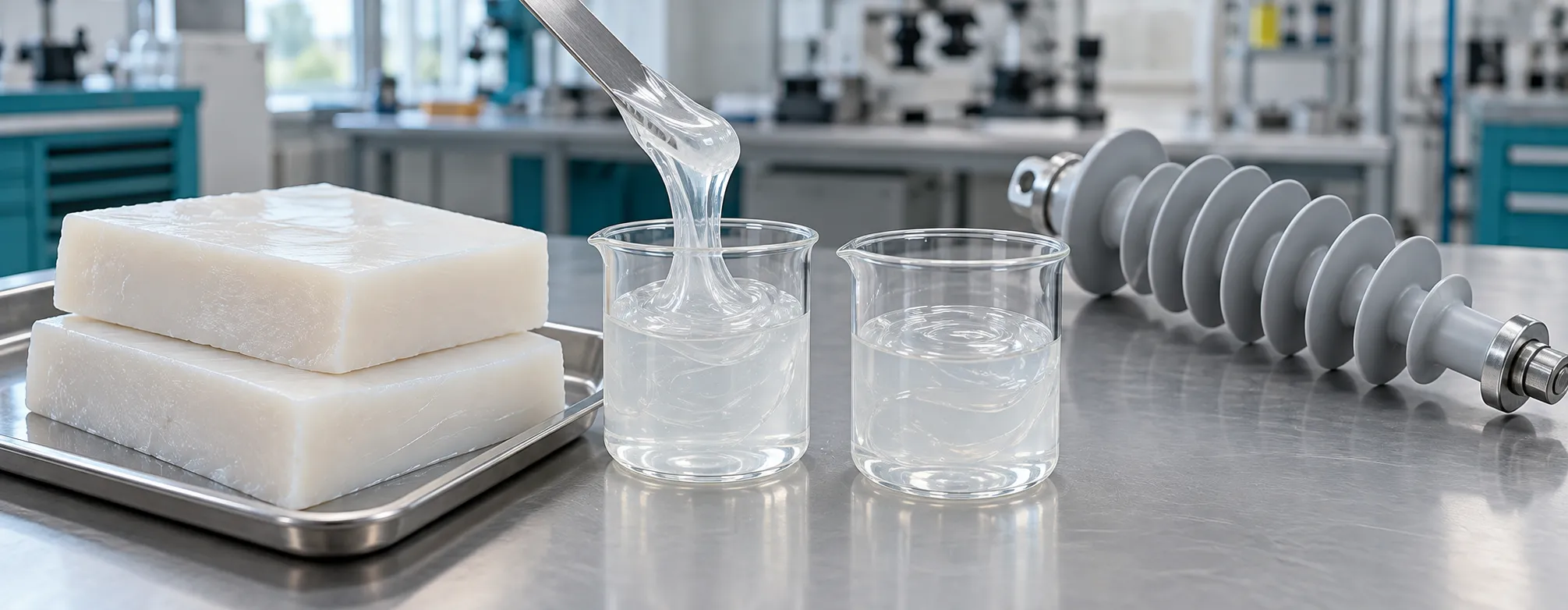
Qu'est-ce que le caoutchouc silicone HTV ?
HTV means high-temperature-vulcanized silicone rubber. In industrial material selection, the term commonly refers to solid, gum-like silicone compounds also described as HCR, or high-consistency rubber. The material is shaped and heat-cured into a permanent elastomer.
Depending on the formulation and equipment, HTV silicone rubber can be processed by compression molding, transfer molding, rubber injection molding or extrusion followed by curing. Electrical grades are used for applications such as composite insulator housings, cable insulation and molded protective components.
HTV compounds may use peroxide or platinum addition curing. The curing system affects preparation, storage, processing and finishing requirements. Confirm whether the supplied material is ready to use or requires an approved curing agent before production.
What Is LSR for Electrical Insulation?
LSR, or liquid silicone rubber, is usually supplied as a pumpable, two-component material. The A and B components are metered and mixed before injection into a heated mold. Once cured, LSR becomes a solid silicone elastomer; it does not remain liquid inside the finished insulation component.
Commercial molding LSR typically uses platinum addition curing. Equal A/B metering is common, but the specified ratio and processing conditions must follow the selected grade's technical data sheet. Uniform mixing, controlled material temperature and suitable tooling are essential.
Electrical-grade LSR is available for insulators, cable accessories and other molded electrical parts. Its flow and metering characteristics can support detailed features and repeatable production. A general-purpose LSR grade should still be evaluated separately before use in demanding outdoor insulation.
HTV vs LSR: The Main Differences
The clearest distinction is how the uncured silicone rubber is handled and processed. Electrical performance must be compared using grade-specific data rather than inferred from material form.
| Selection factor | HTV / HCR silicone rubber | Caoutchouc de silicone liquide |
|---|---|---|
| Supply form | High-consistency, gum-like compound | Pumpable A/B components |
| Common processing | Compression, transfer or rubber injection molding; extrusion | Metering, mixing and liquid injection molding |
| Système de durcissement | Peroxide or platinum, depending on grade | Typically platinum addition cure |
| Production controls | Compound preparation, feeding, flow and cure consistency | A/B ratio, mixing, temperature and injection control |
| Tooling priorities | Filling, venting, demolding and cure uniformity | Sealing, venting, flash control and temperature uniformity |
| Electrical suitability | Requires an appropriate electrical-insulation formulation | Requires an appropriate electrical-insulation formulation |
| Post-curing | Follow the selected grade and application requirements | Follow the selected grade and application requirements |
| Cost comparison | Evaluate the complete molding or extrusion process | Evaluate the complete metering and molding process |
Both processes can be automated. LSR is associated with automated liquid injection molding, but HTV injection and extrusion lines can also achieve repeatable industrial production. Compare the equipment and process window available to your factory, not only the material name.
Which Silicone Rubber Provides Better Electrical Insulation?
There is no universal ranking. The polymer, fillers, cure chemistry, cleanliness and finished-part quality determine the performance of each silicone rubber compound. Compare HTV and LSR grades intended for the same duty under equivalent test conditions.
Dielectric strength and resistivity
Dielectric strength describes resistance to breakdown through the material. Volume resistivity describes resistance to current flow through its bulk. Request the test method, specimen thickness and conditioning alongside the reported values.
A higher laboratory breakdown value alone does not establish a finished component's voltage rating. Geometry, interfaces, air gaps and electric-field concentration also affect the insulation system. Validate the actual molded component after narrowing the material shortlist.
Tracking and erosion resistance
For outdoor electrical insulation, surface durability matters as much as bulk dielectric properties. Contamination and moisture can support leakage current and electrical discharges, making resistance to tracking and erosion relevant to compound selection.
IEC 60587 describes inclined-plane methods for evaluating tracking and erosion resistance at power frequencies. Ask for results identifying the exact material and test conditions. A flame rating or a generic statement such as “high-voltage silicone” does not replace this evaluation, and power-frequency results do not establish DC performance by themselves.
Hydrophobicity and outdoor aging
Suitable silicone rubber housings provide water-repellent surfaces that can limit continuous wetting. Assess initial hydrophobicity, recovery after defined stress and transfer to pollution layers where relevant. These characteristics should be evaluated for the selected formulation rather than assumed identical across HTV and LSR.
Also review mechanical and electrical properties after representative aging. For exposed insulation, a clean specimen tested immediately after molding gives only part of the information needed for approval.
When Should You Choose HTV for Electrical Insulation?
HTV deserves consideration when an existing factory is equipped for high-consistency rubber processing or when the product requires an extrusion route. It is also a practical candidate for molded composite insulator sheds and housings when the compound matches the tooling and production requirements.
During evaluation, check compound handling, mold filling, curing, tear resistance during demolding and surface quality. For longer housings or complex shed profiles, confirm that the material fills the actual cavity without trapped air or incomplete sections.
Choose the formulation around the component rather than hardness alone. Similar Shore A values can accompany different tear strength, flow behavior, dielectric performance and tracking resistance. Your existing HTV process is a useful starting point, but a new electrical application still requires grade-specific approval.
When Should You Choose LSR for Electrical Insulation?
LSR deserves consideration when the project benefits from controlled A/B feeding, liquid injection molding and detailed cavity filling. Applications can include insulating boots, cable interfaces, connector-related components and appropriately qualified outdoor insulator housings.
Lower uncured viscosity can assist filling, but it also places demands on mold sealing and flash control. Part geometry, venting and temperature distribution must be evaluated together. The relevant advantage is a stable production process, not simply choosing a liquid material.
Platinum-cured systems also require control of substances that can inhibit curing. Check compatibility with pigments, primers, inserts and workshop materials. For overmolding, confirm the substrate and bonding method: standard LSR does not automatically bond to every metal or plastic.
HTV or LSR for Composite Insulator Housings?
Both can be candidates when suitable electrical grades and manufacturing processes are available. In a composite insulator, the silicone rubber housing protects the core and provides the external insulating surface, while the core and end fittings form the main mechanical load path.
For suspension, line-post and other outdoor designs, review shed geometry, housing thickness, molding quality and the core-to-housing interface. A good material test result cannot compensate for an interface defect or unsuitable finished-insulator design.
Evaluate the candidate compound on representative housings, including the intended core preparation and cure cycle. Confirm adhesion, shed integrity and the electrical tests required for the finished insulator. Select HTV or LSR only after both material and production results meet the project specification.
Compare Production Cost, Not Just Silicone Rubber Price
The lowest price per kilogram may not produce the lowest cost per accepted part. Include material usage, scrap, labor, cycle time, mold maintenance, post-curing and inspection in the comparison. For a new process, account for metering equipment, tooling and operator training.
Compare trial results at realistic volumes. An automated LSR line may offer advantages for a stable, repeatable part family, while an established HTV line may suit another product mix. Neither outcome is universal. Base the purchasing decision on production yield and the total process required to make conforming parts.
What Should Buyers Confirm Before Ordering?
A useful RFQ connects the electrical application with the manufacturing process. Provide the information below so suppliers can recommend a relevant silicone rubber grade.
- Component type, drawing, dimensions and critical shed or sealing features.
- AC or DC duty, indoor or outdoor exposure, contamination and temperature conditions.
- Required dielectric, resistivity, tracking, erosion and aging tests.
- Target hardness, tensile strength, elongation and tear resistance.
- Molding or extrusion equipment, cure system, substrate and bonding requirements.
- Sample quantity, expected order volume and technical documentation requirements.
Request the selected grade's technical data sheet, safety data sheet and relevant test reports. Agree on batch-release criteria and traceability. Where post-curing is specified, evaluate samples with the same finishing conditions planned for production.
Approve the material through a sequence: technical review, controlled specimen testing, production trial and finished-component validation. Retain the approved formulation reference and process settings so repeat orders can be compared with the original approval.
Electrical Insulation Silicone Rubber from Yakows
Yakows supplies silicone rubber materials for manufacturers, including HTV silicone rubber for composite insulators et caoutchouc de silicone liquide. Grade selection should connect the required electrical performance with your part geometry and production method.
Send your application, processing conditions and technical specification to info@yakows.com to discuss material options, documentation and sample requirements.
Foire aux questions
Is HTV always better than LSR for high-voltage insulation?
No. Suitable electrical grades exist in both families. Compare the exact compounds, aging results, processing behavior and finished-component performance before choosing.
Can LSR be used for composite insulators?
Yes, when the grade is suitable for outdoor electrical insulation and the molding process is qualified. General-purpose LSR properties alone do not establish suitability for an insulator housing.
Is HTV silicone rubber always peroxide-cured?
No. HTV/HCR compounds can use peroxide or platinum addition curing. Confirm the supplied cure system and preparation instructions for the selected grade.
Can LSR replace HTV in an existing mold?
Not automatically. Material feeding, mixing, cavity sealing, venting and thermal control may require changes. Review the tooling and equipment before attempting a substitution.
Does liquid silicone rubber require post-curing?
It depends on the grade and application. Follow the specified process and validate electrical and mechanical properties using the finishing conditions intended for production.