
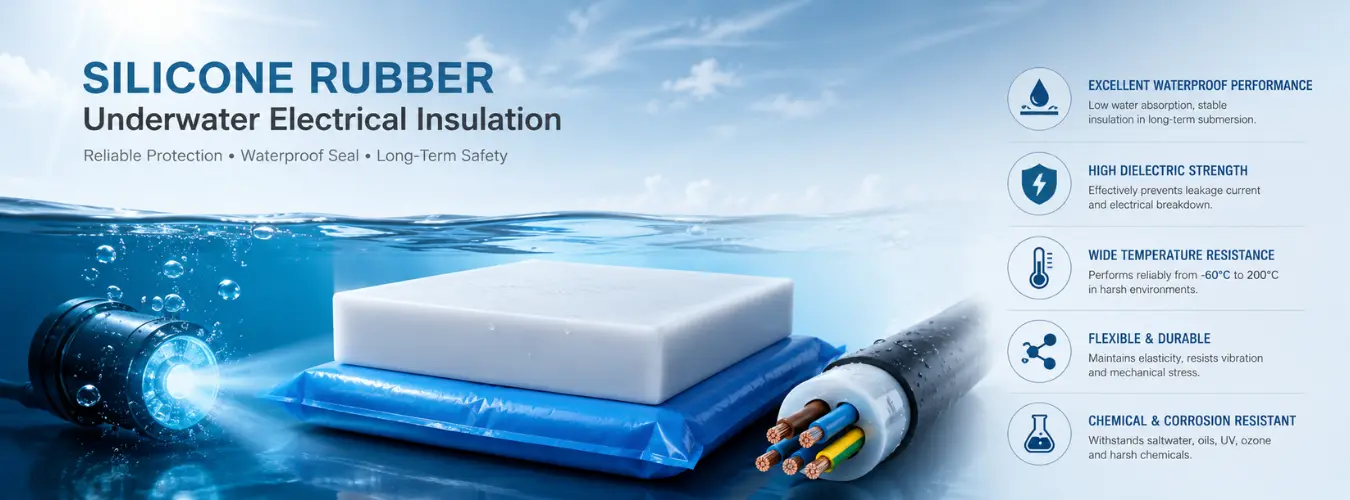
Silicone use in underwater
Silicone is widely considered one of the safest and most reliable materials for underwater electrical insulation when the correct type of silicone is selected and properly applied. In marine systems, underwater lighting, aquariums, electrical connectors, industrial pumps, offshore equipment, and waterproof electronics, silicone offers outstanding water resistance, dielectric strength, thermal stability, UV resistance, and long-term flexibility. Compared with many traditional insulating materials, silicone rubber maintains insulating performance even in wet, submerged, high-humidity, and chemically aggressive environments.
However, not all silicone products are equally suitable for underwater electrical insulation. The safety and performance of silicone depend on several critical factors, including silicone formulation, curing type, depth of water exposure, salinity, operating voltage, temperature range, mechanical stress, and long-term environmental conditions. Neutral-cure silicone and specially engineered RTV silicone compounds are generally preferred for underwater electrical applications because they minimize corrosion risks and maintain stable dielectric properties.
For low-voltage underwater applications, silicone is typically an excellent insulator. For medium- and high-voltage systems, engineers must evaluate dielectric breakdown resistance, insulation coordination, water ingress protection, and regulatory standards carefully. In industrial and mission-critical environments, silicone is often combined with epoxy resins, heat-shrink tubing, or specialized waterproof connector systems to achieve higher reliability and compliance.
This article explores whether silicone is safe to use underwater as an electrical insulator, how silicone performs in submerged conditions, its dielectric characteristics, advantages and limitations, common applications, engineering best practices, and the most important safety considerations for long-term underwater electrical insulation.
Why silicone rubber is trusted for underwater electrical insulation
From our perspective as silicone rubber manufacturers, we design products specifically for underwater insulation, considering dielectric stability, chemical resistance, and long-term flexibility. Silicone rubber outperforms many conventional insulating materials under prolonged wet or submerged conditions.
High dielectric strength and low water absorption
Electrical-grade silicone rubber offers dielectric strength typically ranging 20–30 kV/mm, which is sufficient for low- and medium-voltage underwater systems. Its low water absorption ensures that insulation resistance remains high even after prolonged immersion.
Key advantages include:
- Stable dielectric properties in freshwater and saltwater
- Resistance to leakage current and surface tracking
- Hydrophobic surface that repels water, reducing arcing risk
Flexibility prevents mechanical failure
Silicone rubber maintains flexibility over a wide temperature range (-60°C to 200°C). This characteristic prevents cracking, tearing, or detachment under mechanical stress, vibration, or thermal cycling—common challenges in underwater applications.
Applications benefiting from flexibility:
- Submersible pump seals
- Underwater cable joints
- Marine electronic housings
- Offshore instrumentation
- Aquaculture sensors
Environmental stability
Our silicone rubber formulations are resistant to:
- Rayonnement UV
- Exposition à l'ozone
- Saltwater corrosion
- Oxidation and chemical degradation
This ensures long-term performance for systems that transition between submerged and splash-zone conditions.
How silicone functions as an electrical insulator underwater
Silicone rubber acts as a dielectric barrier because of its low free electron density and high resistivity. From our R&D perspective, we focus on formulations that maintain insulation even under continuous water exposure.
Hydrophobic surface reduces electrical risk
Silicone’s hydrophobic nature prevents water from forming conductive layers across the surface. This reduces:
- Leakage currents
- Surface tracking and arcing
- Moisture penetration into the insulation layer
Hydrophobicity is particularly valuable in marine and offshore installations, where conductivity of saltwater is high.
Thermal stability ensures consistent insulation
Underwater systems experience temperature fluctuations. Silicone maintains dielectric properties across a wide range, ensuring reliability for:
- Cold-water submersion
- Industrial heating and cooling cycles
- Offshore operations
Types of silicone used for underwater electrical insulation
We produce and supply different silicone formulations tailored to underwater electrical applications:
Electrical-grade RTV silicone
- Cures at room temperature
- Provides flexible, moisture-resistant insulation
- Excellent adhesion to metals and plastics
- Long-term dielectric stability
Applications: waterproof cable joints, electronic potting, underwater sensors, marine lighting systems.
Neutral-cure silicone
- Releases non-corrosive byproducts during curing
- Compatible with metals and electronic components
- Preferred for long-term submerged applications
Silicone gel
- Soft, vibration-absorbing material
- Encapsulates sensitive underwater electronics
- Provides thermal stability and moisture protection
Applications: submersible sensors, offshore monitoring modules, underwater instrumentation.
Advantages of silicone for underwater electrical insulation
From our manufacturing and R&D experience, the benefits of silicone rubber include:
High thermal and chemical resistance
- Operates reliably between -60°C and 200°C
- Resists saltwater, oils, fuels, cleaning chemicals, and biological contaminants
Long operational life
- High-quality silicone remains effective for 20+ years under proper installation and environmental conditions
- Insulation integrity is maintained despite mechanical stress, UV exposure, and water immersion
Environmental and human safety
- Fully cured silicone is chemically inert
- Suitable for aquaculture, water treatment, and food-processing electrical systems
Limitations to consider
Although silicone performs well underwater, there are limitations:
Mechanical vulnerability
- Softer than rigid insulation
- Can be damaged by abrasion, cutting, or punctures
Protection strategies:
- Armored cables
- Protective conduits
- Epoxy overmolding
- Heat-shrink tubing
High-voltage applications
- High-voltage underwater insulation may require additional protective layers
- Partial discharge, electrical treeing, and dielectric breakdown are potential risks
Installation sensitivity
- Air pockets, incomplete curing, or surface contamination can compromise performance
- Proper surface preparation and application are critical
Silicone compared to other underwater insulators
- Epoxy resin: rigid, high dielectric strength, but less flexible
- PVC: cheap, limited UV and thermal resistance
- Polyurethane: abrasion-resistant but susceptible to hydrolysis over time
- Silicone: combines flexibility, thermal stability, chemical resistance, and hydrophobicity, making it optimal for underwater applications
Best practices for using silicone underwater
From our perspective as silicone manufacturers, the following practices ensure safety and longevity:
- Select the correct formulation: Electrical-grade, marine-rated, neutral-cure or RTV silicone
- Surface preparation: Clean, dry, and prime surfaces as recommended
- Avoid air pockets: Apply silicone evenly, fill cavities completely
- Combine with additional protection: Waterproof glands, heat-shrink tubing, epoxy overmolding
- Follow curing guidelines strictly
- Regular inspection: Check for mechanical damage or degradation
Common applications
- Marine and offshore equipment: navigation systems, submersible electronics, offshore platforms
- Underwater LED lighting: encapsulation, cable sealing, connector protection
- Aquariums and water features: pumps, heaters, filtration, lighting
- Submersible pumps: motor windings, electronics, cable entries
Conclusion
From our professional perspective as silicone rubber experts and manufacturers, silicone is safe to use underwater as an electrical insulator when proper type selection, installation, and curing procedures are followed. Its high dielectric strength, hydrophobicity, flexibility, thermal and chemical stability make it suitable for a wide range of submerged applications, from marine electronics to offshore instrumentation.
Success in underwater electrical insulation depends not only on silicone itself but also on surface preparation, proper application, protective measures, and routine maintenance. By following these practices, silicone rubber ensures long-term safety, reliability, and performance in demanding submerged environments.