
Liquid Silicone Rubber for Mold Making
Liquid silicone rubber for mold making is widely used to reproduce detailed shapes from master models, prototypes, sculptures, industrial parts and decorative components. Its low viscosity allows the material to flow around complex surfaces, while the cured silicone remains flexible enough to release cast parts without damaging fine details.
One important point is terminology. In industrial silicone processing, LSR usually means liquid silicone rubber designed for injection molding. In mold making, however, buyers often use the phrase “liquid silicone rubber” more broadly to describe pourable two-part RTV silicone systems used to create flexible molds. These materials may use platinum-cure or tin-cure chemistry depending on the application.
This guide explains how liquid silicone rubber for mold making works, the differences between cure systems, how to choose hardness and viscosity, what causes curing problems and which properties matter when selecting a mold-making silicone.
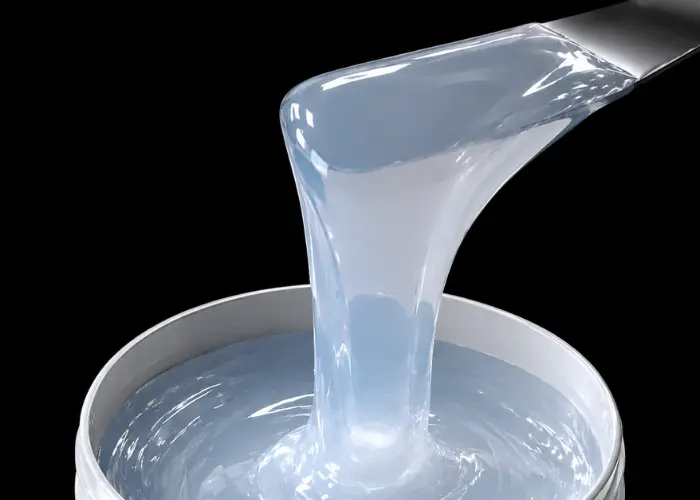
What Is Liquid Silicone Rubber for Mold Making?
Liquid silicone rubber for mold making is a flowable silicone elastomer system that is mixed, poured or brushed around a master pattern and then cured to form a flexible negative mold.
The uncured material usually consists of two components. After the components are mixed at the specified ratio, a chemical crosslinking reaction begins. The liquid gradually becomes an elastic silicone rubber capable of being bent, stretched and peeled away from complex shapes.
This flexibility makes silicone particularly useful when the master contains undercuts, fine texture or narrow details that would be difficult to reproduce with a rigid mold material.
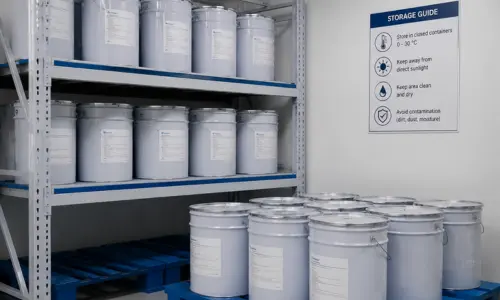
LSR and RTV Mold-Making Silicone Are Not Always the Same
This is one of the most important distinctions for buyers.
LSR, or liquid silicone rubber, is commonly used in industrial injection molding. It is typically supplied as a two-component liquid system that is metered through automated equipment and injected into a heated mold.
RTV silicone, meaning room-temperature vulcanizing silicone, is more commonly associated with mold making because it can be mixed and poured directly around a master without injection molding equipment.
| Matériau | Typical Processing | Common Use |
|---|---|---|
| LSR | Automated liquid injection molding | Precision molded silicone components |
| RTV-2 Silicone | Mix and pour or brush around a master | Flexible silicone molds |
| HTV / HCR Silicone | Compression molding, extrusion or calendering | Industrial molded and extruded silicone parts |
For this reason, someone searching for “liquid silicone rubber for mold making” should confirm whether they need a pourable RTV mold-making material or an injection-molding LSR.
Why Silicone Rubber Is Used for Mold Making
Silicone rubber is widely selected for molds because it combines flexibility with strong detail reproduction. A correctly formulated mold-making silicone can flow into small surface features, cure around complex shapes and then flex during demolding.
Fine Detail Reproduction
Low-viscosity silicone can flow around small textures, edges and surface patterns.
Flexible Demolding
The cured mold can deform around undercuts and return to its original shape.
Résistance à la déchirure
Good tear strength helps reduce damage when molds are repeatedly stretched during demolding.
Stabilité dimensionnelle
Low-shrinkage formulations help preserve accurate mold dimensions.
Résistance à la température
Suitable silicone molds can tolerate elevated temperatures depending on the formulation and casting process.
Release Performance
Silicone surfaces often release many casting materials easily, although release agents may still be required in some systems.
Platinum-Cure vs Tin-Cure Silicone for Mold Making
Two major cure systems are widely used in liquid silicone rubber for mold making: platinum-catalyzed addition cure and tin-catalyzed condensation cure.
Both can produce flexible silicone molds, but they differ in shrinkage, curing behavior, inhibition sensitivity and long-term performance.
| Characteristic | Platinum-Cure Silicone | Tin-Cure Silicone |
|---|---|---|
| Cure Chemistry | Addition cure | Condensation cure |
| Shrinkage | Generally very low | Typically higher than addition-cure systems |
| Dimensional Accuracy | Excellent for precision molds | Suitable for many general mold-making applications |
| Cure Inhibition | More sensitive to certain contaminants | Usually less sensitive to inhibition |
| Applications typiques | Precision molds, repeated production, detailed prototypes | General casting, sculpture, decorative molds and cost-sensitive projects |
Neither system is automatically correct for every project. Platinum-cure silicone is often preferred where low shrinkage and dimensional precision are important, while tin-cure systems may be easier to use with a wider range of master materials.
How Shore A Hardness Affects a Silicone Mold
Hardness is one of the first specifications buyers consider when selecting mold-making silicone. It is commonly measured using the Shore A scale.
Softer silicone molds flex more easily and can be useful for deep undercuts or delicate masters. Harder silicone provides greater dimensional support and may be better for larger parts or molds that need to maintain shape without excessive deformation.
The correct hardness also depends on mold thickness, part geometry, casting material and whether a rigid support shell or mother mold will be used.
Why Viscosity Matters
Viscosity describes how easily the uncured liquid silicone flows. It has a major influence on mixing, pouring, air release and detail reproduction.
Lower-viscosity materials flow more easily into narrow details and are usually easier to degas. Higher-viscosity materials may provide advantages in certain brush-on systems or vertical applications but can trap air more easily if mixing and pouring are not controlled.
Tear Strength Is Critical for Reusable Silicone Molds
A silicone mold can fail even if its tensile strength is relatively high. Repeated demolding places concentrated stress around thin sections, sharp corners and deep undercuts.
Tear strength measures how resistant the rubber is to the growth of an existing cut or tear. High tear strength is especially important for molds with thin walls, complex geometry or repeated production cycles.
A low-tear mold may begin with a small nick and gradually split further each time a casting is removed.
| Propriété | Why It Matters in Mold Making |
|---|---|
| Résistance à la déchirure | Helps resist crack growth during repeated demolding |
| Résistance à la traction | Indicates resistance to pulling forces |
| Allongement | Shows how far the mold can stretch before breaking |
| Dureté | Influences flexibility and structural support |
Why Low Shrinkage Matters
Dimensional accuracy is especially important when molds are used for prototypes, technical components, replicas or repeated production.
Any dimensional change during curing can affect the size of the final casting. Addition-cure platinum silicone systems are often selected where very low shrinkage is important.
However, mold accuracy is not controlled by silicone shrinkage alone. Mixing ratio, cure temperature, master stability, support structure and casting conditions can all influence the final dimensions.
Working Time and Cure Time
Working time, sometimes called pot life, describes how long the mixed silicone remains processable before viscosity increases significantly.
Cure time is the period required before the silicone has crosslinked sufficiently to demold.
A longer working time can be useful for large or complicated molds because it provides more time for mixing, vacuum degassing and controlled pouring. Faster cure systems can improve production speed but provide less time to remove air bubbles.
How to Mix Liquid Silicone Rubber for Mold Making
Accurate mixing is essential. The two components should be measured according to the supplier's specified ratio and mixed thoroughly enough to distribute the catalyst throughout the silicone.
Incorrect ratios can cause incomplete curing, soft areas or inconsistent properties. Poor mixing can also leave uncured streaks inside the finished mold.
During mixing, it is important to scrape the sides and bottom of the container while minimizing unnecessary air incorporation.
Do You Need Vacuum Degassing?
Vacuum degassing is commonly used when bubbles in the mold surface would affect detail or dimensional accuracy.
Mixing can introduce air into the liquid silicone. Under vacuum, the trapped air expands and rises out of the material before pouring.
Not every mold-making project requires vacuum equipment. Some low-viscosity systems are designed to release bubbles more easily, and careful pouring can reduce air entrapment. However, vacuum degassing remains useful for high-detail masters, precision parts and molds where surface quality is critical.
How to Pour Silicone Without Trapping Air
Pouring technique can significantly affect mold quality. Instead of pouring directly across the entire surface, the silicone can be introduced slowly from one location and allowed to rise around the master.
A thin stream can also help stretch and break some air bubbles during pouring.
Deep cavities, sharp recesses and textured surfaces may benefit from applying a thin initial layer of silicone before filling the remainder of the mold box.
What Is Cure Inhibition?
Cure inhibition occurs when the silicone fails to cure properly because another substance interferes with the crosslinking reaction.
This issue is especially important with platinum-cure silicone. Certain sulfur-containing materials, amines, some adhesives, latex products and uncured resins can interfere with platinum-catalyzed curing.
The silicone may remain sticky, soft or completely uncured where it contacts the incompatible surface.
Master Materials and Surface Compatibility
Silicone molds can be produced from many master materials, including metal, plastic, resin, wood, plaster, stone and previously molded parts. However, porous surfaces can absorb material or trap air, while chemically reactive surfaces may interfere with curing.
| Master Material | Considérations habituelles |
|---|---|
| Metal | Usually dimensionally stable and suitable for detailed molds |
| 3D-Printed Resin | May require full post-curing and compatibility testing |
| Wood | Porous surfaces may need sealing |
| Plaster | Porous and may require surface sealing before molding |
| Clay | Compatibility depends on clay chemistry and cure system |
| Existing Silicone | Silicone-to-silicone contact can require release treatment depending on the process |
Do Silicone Molds Need a Release Agent?
Silicone rubber naturally releases many casting materials relatively well, but a release agent may still be useful or necessary.
The need depends on the master material, casting resin, silicone chemistry and whether silicone is being cast against silicone.
A release agent can help reduce adhesion, protect delicate masters and extend mold life. However, excessive release agent can affect surface reproduction or finished-part appearance.
What Materials Can Be Cast in Silicone Molds?
One reason silicone molds are so widely used is that they can work with many casting materials when the correct silicone grade is selected.
Polyurethane Resin
Widely used for prototypes, decorative parts and short-run production.
Epoxy Resin
Used for decorative casting, technical prototypes and encapsulated parts.
Wax
Common in candle making, investment casting patterns and decorative reproduction.
Gypsum & Plaster
Suitable for architectural, decorative and model-making applications.
Concrete
Used in decorative elements, architectural textures and small precast components.
Other Casting Materials
Compatibility should be confirmed when using aggressive chemicals or high-temperature casting systems.
How Long Does a Silicone Mold Last?
Mold life depends on much more than the silicone itself. Casting material, demolding force, mold geometry, temperature and production frequency all affect service life.
Highly aggressive resins can gradually attack the mold surface. Thin sections can tear. Deep undercuts can place repeated mechanical stress on the same areas.
A high-tear silicone mold with adequate wall thickness and good processing can usually provide more casting cycles than a poorly mixed or underspecified material.
One-Part vs Two-Part Silicone Molds
Simple components with a flat back or one open surface can often be reproduced using a one-part block mold.
More complicated three-dimensional masters may require a two-part or multi-part silicone mold so that the casting can be removed without damaging the mold.
The mold design should therefore be planned before silicone is poured. Parting lines, vents, gates, support shells and mold thickness can all influence casting quality.
Pourable Molds vs Brush-On Silicone Molds
Pourable silicone is commonly used when the master can be placed inside a mold box and surrounded completely by liquid material.
Brush-on silicone is more useful for large sculptures, architectural surfaces or objects where filling a complete mold box would consume excessive material.
| Method | Advantages | Utilisation type |
|---|---|---|
| Pourable Mold | Simple processing and consistent mold thickness | Small and medium parts, prototypes, technical components |
| Brush-On Mold | Uses less silicone on large surfaces | Sculpture, architecture and large decorative masters |
Common Problems When Making Silicone Molds
Many mold failures are caused by processing rather than by the silicone polymer itself.
| Problem | Cause possible |
|---|---|
| Sticky or Uncured Surface | Cure inhibition, incorrect mixing ratio or insufficient mixing |
| Bulles d'air | High viscosity, aggressive mixing or poor pouring technique |
| Premature Tearing | Low tear strength, thin mold walls or difficult undercuts |
| Dimensional Change | Silicone shrinkage, unstable master or incorrect curing conditions |
| Poor Surface Detail | Trapped air, contamination or incomplete contact with the master |
| Short Mold Life | Aggressive casting materials, high temperature or repeated mechanical stress |
How to Choose Liquid Silicone Rubber for Mold Making
The correct mold-making silicone should be selected according to the master, casting material and expected production cycle.
What Should Buyers Include in an RFQ?
A mold-making silicone supplier can recommend a more suitable grade when the application details are clear.
Where HTV/HCR Silicone Fits Into Mold Production
HTV/HCR silicone rubber is different from pourable mold-making RTV silicone. It is supplied as a high-consistency, gum-like compound rather than a low-viscosity liquid.
HCR is normally compression molded, extruded or calendered into finished silicone products and is not usually poured around a master to create a flexible reproduction mold.
This distinction matters when buyers contact a silicone supplier. Requesting “silicone rubber for mold making” can refer either to silicone used to make the mold or silicone used as the molded final product.
For more information about high-consistency silicone, see What Is HCR Silicone?
Industrial Silicone Rubber from Yakows
Yakows supplies silicone rubber materials for industrial applications, including HTV/HCR and liquid silicone systems for different processing requirements.
When discussing a mold-related project, it is important to identify whether the requirement is for a pourable silicone used to create a flexible mold or for silicone rubber that will become the finished molded component.
Customers can provide the end application, processing method, required hardness, viscosity, curing system, temperature conditions and expected production volume so that the appropriate silicone material family can be evaluated.
Foire aux questions
What is liquid silicone rubber for mold making?
It is a flowable silicone elastomer system used to surround a master model and cure into a flexible negative mold for casting resin, wax, plaster and other compatible materials.
Is LSR the same as mold-making silicone?
Not always. Industrial LSR usually refers to liquid silicone rubber used for injection molding, while mold-making silicone is commonly a pourable two-part RTV system.
Which silicone is best for mold making?
The correct material depends on hardness, viscosity, tear strength, shrinkage, master compatibility, casting material and required mold life.
Is platinum-cure silicone better for molds?
Platinum-cure silicone usually provides very low shrinkage and strong dimensional stability, but it can be more sensitive to cure inhibition. Tin-cure silicone may be more tolerant of some master materials.
What Shore hardness should mold-making silicone have?
There is no universal hardness. Soft grades are useful for complex undercuts, while harder grades provide more structural support for larger or less flexible molds.
Do I need to vacuum degas silicone rubber?
Vacuum degassing can improve bubble removal and surface detail, especially for precision molds, although some low-viscosity systems can be processed successfully without vacuum equipment.
Why is my silicone mold still sticky?
Possible causes include cure inhibition, incorrect mixing ratio, incomplete mixing or unsuitable curing conditions.
Can silicone molds be used for epoxy resin?
Many silicone mold systems are compatible with epoxy resin, but the exact silicone and epoxy chemistry should be checked with the material supplier.
Can liquid silicone rubber copy fine details?
Yes. One of the main advantages of low-viscosity mold-making silicone is its ability to flow around detailed surfaces and reproduce fine textures.
How long does a silicone mold last?
Mold life depends on tear strength, mold design, casting chemistry, demolding stress, temperature and how frequently the mold is used.