
How to Choose the Right HCR Silicone for Your Production
Choosing the right HCR silicone is not simply a matter of selecting a Shore A hardness from a datasheet. Two high consistency rubber compounds can have the same hardness while behaving very differently during milling, extrusion, compression molding or transfer molding.
The best HCR silicone for production is the grade that matches both the finished-part requirements and the manufacturing process. A cable compound needs stable extrusion and controlled die swell. A molded seal may require good cavity flow and tear resistance. An electrical compound may need high dielectric performance together with tracking and erosion resistance. A food-contact component may require a completely different formulation and documentation package.
This guide explains how to choose HCR silicone based on processing method, hardness, plasticity, mechanical properties, curing system, temperature resistance, electrical performance and production consistency.
Start with the Production Process, Not the Hardness
One of the most common mistakes in HCR silicone sourcing is starting with a statement such as “We need 60 Shore A silicone.” Hardness is important, but it does not tell the supplier how the material must behave during manufacturing.
A better starting point is the actual production process. HCR silicone can be formulated for extrusion, compression molding, transfer molding, calendering and other high-consistency rubber processes. Each process places different demands on the uncured compound.
押出成形
Requires stable feeding, predictable pressure, controlled die swell and smooth surface quality.
Compression Molding
Requires suitable mold flow, cure behavior, release and dimensional stability.
Transfer Molding
Requires controlled flow through runners while maintaining enough scorch safety.
カレンダー加工
Requires consistent plasticity, sheet formation and thickness control.
The correct HCR silicone should therefore be chosen around what happens before curing as well as what properties are required after curing.
HCRシリコーンとは何ですか?
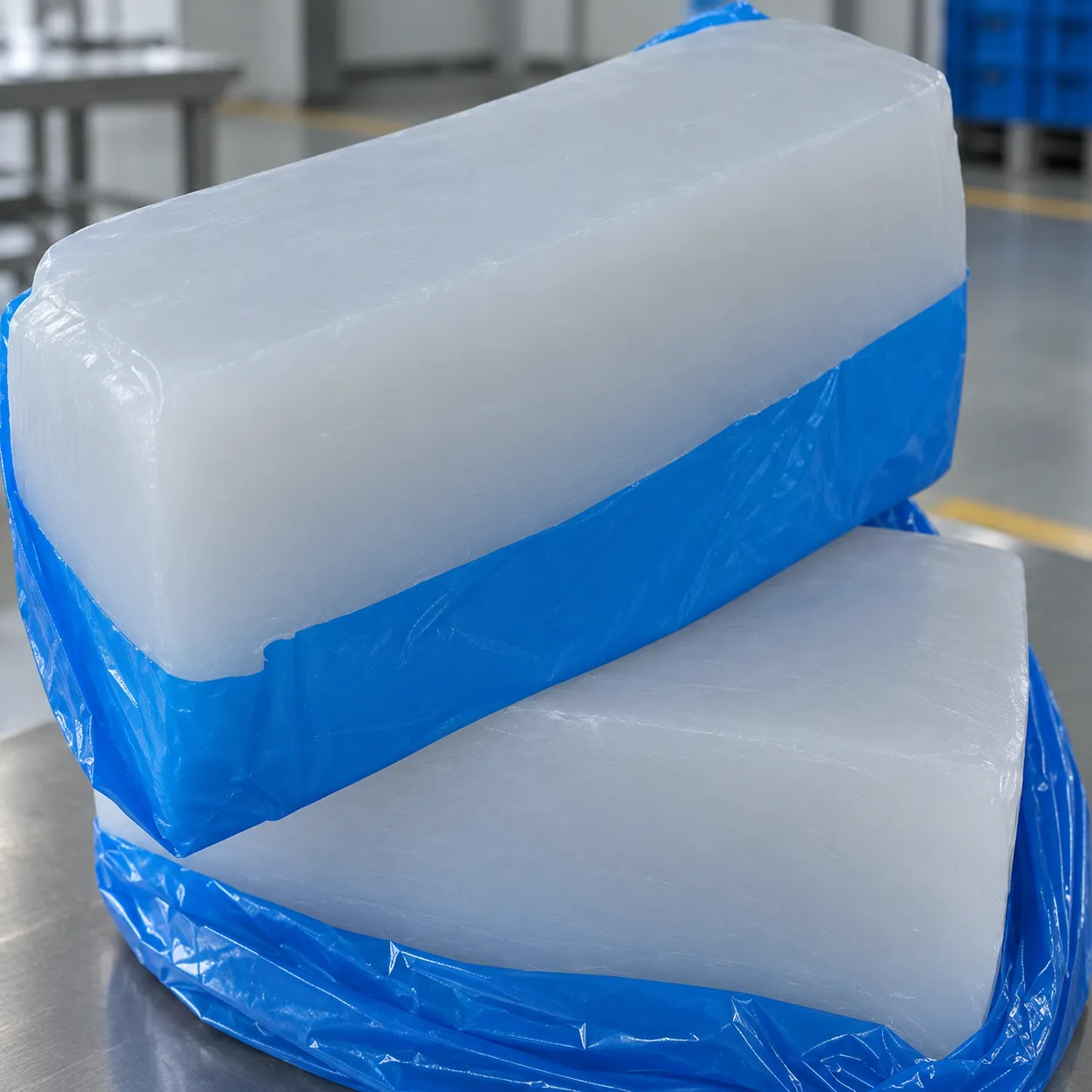
HCR stands for high consistency rubber. It describes a solid, gum-like silicone rubber compound with much higher consistency than liquid silicone rubber.
HCR silicone is commonly based on high-molecular-weight silicone gum reinforced with silica and combined with processing aids, pigments, functional fillers and a curing system. It is usually processed using conventional rubber equipment such as two-roll mills, extruders and compression presses.
In many industrial contexts, HCR is closely associated with HTV silicone because these materials are typically vulcanized using heat.
HCR describes the material form; HTV describes the heat-vulcanizing process.The terms are frequently used together, but they are not exactly the same definition.
HCR Silicone vs LSR: The Processing Difference Matters
HCR silicone and liquid silicone rubber can both produce high-performance silicone parts, but they require very different production systems.
| 特徴 | HCR Silicone | LSR |
|---|---|---|
| Uncured Form | Solid, gum-like compound | Flowable two-component liquid |
| 代表的な処理 | Extrusion, compression molding, transfer molding, calendering | 液体射出成形 |
| Material Handling | Often processed with mills, preforms or extrusion feed systems | Metered through automated A/B pumping systems |
| Common Applications | Cable, seals, insulators, sheets, profiles and industrial molded parts | Precision molded components and automated high-volume production |
If your factory already operates rubber extrusion or compression-molding equipment, HCR silicone may fit the existing production route much more naturally than LSR.
Choose HCR Silicone According to the Final Product
The same HCR silicone grade should not be expected to perform equally well in every industry. A formulation is usually optimized around a particular combination of processing and end-use requirements.
Wire & CableExtrusion stability, dielectric performance, heat aging and flexibility are usually important.
Composite InsulatorsHydrophobicity, tracking resistance, erosion resistance and outdoor weatherability become critical.
Industrial SealsCompression set, tear strength, hardness and thermal resistance are common priorities.
EV ComponentsElectrical insulation, temperature cycling, tear strength and long-term reliability may all matter.
Food-Contact ProductsProcessing performance must be combined with the required food-contact documentation.
High-Temperature PartsHeat-aging retention can be more important than initial room-temperature properties.
Do Not Choose HCR Silicone by Shore A Hardness Alone
Hardness is useful, but it is only one property of the cured material. Two HCR silicone compounds can both be 60 Shore A and still differ in tensile strength, elongation, tear resistance, uncured plasticity, die swell and cure response.
One 60 Shore A grade may be optimized for extrusion. Another may be designed for high-tear molding. A third may contain a functional filler system for high-voltage insulation.
| 物件 | そこから読み取れること |
|---|---|
| ショアA硬度 | How soft or firm the cured rubber feels |
| 引張強度 | Resistance to pulling force |
| 伸び | How far the rubber can stretch before breaking |
| 引裂強さ | Resistance to growth of cuts and tears |
| Plasticity / Rheology | How the uncured compound behaves during processing |
| 行動の矯正 | How quickly the compound crosslinks under temperature |
Uncured Plasticity Can Determine Whether Production Runs Smoothly
For HCR silicone production, uncured behavior can be just as important as finished physical properties.
A compound with unsuitable plasticity may be difficult to band on a two-roll mill, may create excessive extrusion pressure or may not fill a mold as expected.
Plasticity and rheology are influenced by polymer molecular weight, silica reinforcement, filler-polymer interaction and processing aids.
Too StiffCan make milling, extrusion and mold filling more difficult.
BalancedProvides manageable processing while maintaining shape and mechanical performance.
Too SoftCan increase tack, flash, deformation or dimensional instability depending on the process.
For Extrusion, Focus on More Than Flow
HCR silicone used for extrusion must move through the extruder consistently, but easy flow alone does not guarantee good production.
The compound should feed smoothly, maintain stable pressure and produce an extrudate that holds its dimensions after leaving the die.
| Extrusion Property | Why It Matters |
|---|---|
| 飼料の安定性 | Helps prevent pressure fluctuations and inconsistent output. |
| Die Swell | Affects the relationship between die dimensions and final profile dimensions. |
| 表面品質 | Important for cable insulation, tubing and visible profiles. |
| Shape Retention | Helps the extrudate maintain geometry before vulcanization. |
| Cure Compatibility | The compound must match the continuous vulcanization method and line conditions. |
For cable and precision-profile applications, it is often worth running a production trial rather than choosing a grade from a datasheet alone.
For Compression Molding, Mold Flow and Release Become Critical
Compression-molding grades need a different processing balance. The compound must flow enough to fill the cavity before curing progresses too far, but excessive flow can create flash or poor dimensional control.
Demolding is also important. A high-tear grade may be needed where the part contains thin lips, deep undercuts or complex geometry.
Mold FillingThe compound must reach thin and complex areas before vulcanization advances.
Flash ControlExcessive flow can increase trimming requirements and material waste.
DemoldingMechanical strength and surface behavior influence how easily parts leave the mold.
Cycle TimeCure chemistry and part thickness affect productivity.
Tear Strength Matters More Than Many Buyers Expect
Tear strength is often overlooked when buyers focus only on hardness and tensile strength. In many molded silicone components, however, tearing begins at a thin edge, hole, groove or sharp geometry rather than through uniform tensile loading.
High-tear HCR silicone can be especially useful for boots, bellows, grommets, thin seals and other parts that are stretched during demolding or assembly.
Higher tear strength does not automatically make a compound better for every process. High-tear formulations may use different polymer and filler systems, which can also change processing behavior and cost.
Heat Resistance Should Be Evaluated Through Aging
If an HCR silicone component will operate at elevated temperature, do not evaluate only the advertised maximum temperature.
Long-term heat exposure can change hardness, tensile strength, elongation and compression behavior. What matters is whether the material retains enough performance after aging to continue performing its function.
Hardness ChangeDoes the rubber become significantly harder after thermal exposure?
Elongation RetentionDoes the material remain flexible enough for movement and assembly?
Tensile RetentionHow much mechanical strength remains after aging?
Compression BehaviorCan sealing parts maintain recovery after prolonged heat and compression?
For high-temperature applications, heat-aging data is usually more informative than one headline temperature number.
Electrical HCR Silicone Requires a Specialized Formulation
HCR silicone used for electrical insulation often needs properties that general-purpose silicone does not provide at the same level.
Composite-insulator compounds, for example, may require high hydrophobicity, tracking resistance, erosion resistance and weatherability. Cable compounds may prioritize dielectric properties, extrusion stability and long-term heat aging.
| Electrical Property | Why It Matters |
|---|---|
| 絶縁耐力 | Indicates resistance to electrical breakdown under defined test conditions. |
| 体積抵抗率 | Shows resistance to electrical current through the bulk material. |
| Tracking Resistance | Important for polluted or wet high-voltage surfaces. |
| Erosion Resistance | Helps resist material loss caused by electrical discharge and localized heating. |
| 疎水性 | Helps reduce continuous water-film formation on outdoor insulation surfaces. |
An electrical-grade HCR silicone may therefore process differently from a general-purpose compound even when both have the same hardness.
Choose the Cure System Around Your Process
HCR silicone can use peroxide curing systems, and certain high-consistency compounds can also be formulated for platinum-catalyzed addition curing.
The curing system influences processing temperature, scorch safety, vulcanization speed, post-curing requirements and final properties.
| キュア・システム | General Characteristics |
|---|---|
| Peroxide Cure | Widely used for conventional HCR extrusion and molding, with cure behavior dependent on the selected peroxide system. |
| Platinum Cure | Used in selected HCR applications requiring addition-cure chemistry and controlled formulation compatibility. |
The better choice depends on the production process, end-use requirement and any regulatory or cleanliness considerations.
Food-Contact HCR Silicone Needs More Than Good Mechanical Properties
HCR silicone is widely used in food-contact seals, tubing, kitchenware and industrial food-processing components.
For these applications, mechanical and processing performance must be combined with the documentation required for the target market.
Depending on the project, buyers may need support relating to FDA 21 CFR, LFGB, BfR Recommendation XV, REACH or other customer-specific requirements.
Food-contact compliance and material performance are separate questions.A compound can process very well and still be unsuitable for a particular food-contact requirement if the necessary formulation controls and documentation are not available.
Flame-Retardant HCR Silicone Is Another Specialized Category
High temperature resistance should not be confused with flame resistance. Standard HCR silicone can tolerate elevated temperatures, but a project that requires a defined flammability classification may need a dedicated flame-retardant compound.
Flame-retardant fillers and additives can change hardness, elongation, tear strength, density and processing behavior.
If a project requires UL 94 or another flame test, the actual material grade, test thickness and supporting documentation should be confirmed rather than assuming that all silicone rubber behaves the same under flame.
Color Is Part of the Formulation
Color is often treated as a simple cosmetic request, but pigments and color masterbatches become part of the HCR silicone compound.
They can influence cure behavior, surface appearance and processing, especially when higher pigment concentrations are required.
For electrical, food-contact or flame-rated applications, buyers should confirm whether the chosen pigment system is compatible with the technical and documentation requirements of the project.
Batch Consistency Can Matter More Than an Excellent Sample
A trial sample can perform perfectly while commercial production becomes difficult if batch-to-batch behavior varies.
Industrial customers should therefore evaluate how the HCR silicone supplier controls polymer, filler, mixing, heat treatment, homogenization and final testing.
Raw-Material ControlHelps reduce variation in polymer and filler characteristics.
Mixing ConsistencySupports stable filler dispersion and rheology.
Batch TestingConfirms key physical properties before release.
TraceabilityAllows production issues to be linked to individual material lots.
Supplier Change Requires Production Validation
Replacing one HCR silicone with another grade of the same hardness does not mean the production line can continue without adjustment.
The new material may have different plasticity, die swell, tack, cure response or mold flow. This can require changes to roll temperature, mill gap, extruder speed, die dimensions, molding pressure or cure time.
The same principle applies when changing between two grades from the same supplier.
Equivalent hardness does not mean process-equivalent compound.A controlled production trial should be part of material qualification whenever an HCR silicone grade changes.
Run a Trial Under Real Production Conditions
Datasheets are useful for narrowing the options, but they cannot fully predict what will happen on a specific extruder or mold.
A production trial should use equipment, cure conditions and part geometry that are as close as possible to normal commercial production.
For extrusion, monitor pressure stability, line speed, surface quality, die swell and dimensions. For molding, evaluate cavity filling, flash, cycle time, demolding and defect rate.
Processing StabilityDoes the material run consistently over time?
Finished DimensionsAre extrusion or molding dimensions stable?
Surface QualityAre roughness, bubbles, marks or contamination visible?
Final PropertiesDoes the cured part meet mechanical, thermal and electrical requirements?
How to Compare Two HCR Silicone Grades
If two suppliers offer materials with similar hardness, compare them using the properties that actually affect your product and process.
| Comparison Area | What to Review |
|---|---|
| Uncured Behavior | Plasticity, viscosity, tack and mill behavior |
| 押出成形 | Pressure, die swell, feed stability and surface quality |
| 成形 | Flow, flash, cure response and demolding |
| 機械的特性 | Hardness, tensile strength, elongation and tear strength |
| Aging | Property retention after heat or environmental exposure |
| Application Properties | Electrical, flame, food-contact or other special requirements |
| Consistency | Batch variation and long-term supply stability |
What Should Be Included in an HCR Silicone RFQ?
The more complete the RFQ, the easier it is for a supplier to recommend a material that actually works in production rather than simply matching one number on the datasheet.
Final ProductCable, seal, insulator, gasket, EV component, profile or other part
加工方法:押出成形、圧縮成形、トランスファー成形、またはカレンダー加工
HardnessTarget Shore A and acceptable tolerance
Uncured BehaviorAny preferred plasticity, tack or processing characteristics
Mechanical PropertiesTensile strength, elongation and tear strength
TemperatureContinuous operating temperature, peak temperature and heat-aging requirements
Electrical RequirementsDielectric strength, resistivity, tracking or erosion resistance if needed
ComplianceFood-contact, flame or customer-specific documentation
ColorNatural, translucent, black, red, orange or custom color
硬化システム:過酸化物、プラチナ、またはサプライヤーの推奨品
Current MaterialExisting grade and any processing problems that need improvement
Order VolumeTrial quantity, monthly demand and expected annual consumption
Choosing HCR Silicone from Yakows
Yakows supplies HCR/HTV silicone rubber compounds for extrusion, compression molding, electrical insulation, composite insulators, wire and cable, EV systems, food-contact applications, high-temperature components and general industrial molding.
Material selection can be based on more than Shore A hardness. Processing method, plasticity, mechanical properties, cure system, thermal aging, electrical performance and end-use requirements can all be considered when evaluating an HCR silicone grade.
For an existing production line, customers can also provide information about the current material and any problems such as roll tack, unstable extrusion, excessive die swell, difficult demolding or poor tear strength. This makes it easier to evaluate a grade around the real production requirement rather than simply matching a datasheet.
よくある質問
How do I choose the right HCR silicone?
Start with the processing method and final application, then compare hardness, uncured plasticity, tensile strength, elongation, tear strength, curing system, temperature performance and any electrical or regulatory requirements.
Is HCR silicone the same as HTV silicone?
HCR describes high consistency rubber, while HTV refers to high-temperature vulcanizing silicone. The terms often overlap in industrial use because HCR silicone is commonly heat cured.
Can two HCR silicone grades with the same hardness process differently?
Yes. Hardness describes the cured rubber, while processing behavior depends on polymer structure, reinforcing silica, plasticity, processing aids and cure chemistry.
Which HCR silicone is best for extrusion?
An extrusion grade should provide stable feeding, controlled die swell, suitable viscosity, good surface quality and compatibility with the intended vulcanization process.
Which HCR silicone is best for compression molding?
A molding grade should provide appropriate mold flow, cure response, demolding behavior and mechanical strength for the part geometry.
Does higher tear strength mean better HCR silicone?
Not necessarily. High tear strength is valuable for certain parts, but the ideal compound must balance tear performance with processing, hardness, elongation, cost and end-use requirements.
Is all HCR silicone electrically insulating?
Standard silicone rubber is generally electrically insulating, but specialized compounds can also be formulated as semiconductive or conductive materials using conductive fillers.
Can HCR silicone be used for food-contact products?
Yes, suitable grades can be formulated for food-contact applications, but buyers should confirm the exact documentation and intended market requirements.
Should I run a production trial before changing HCR silicone grades?
Yes. Even materials with similar datasheet properties can behave differently on actual extrusion or molding equipment.
What information should I send an HCR silicone supplier?
Provide the final product, processing method, hardness, mechanical properties, operating temperature, cure system, special electrical or compliance requirements, color and estimated order volume.