
Silicone Rubber Material & Purchasing Guide
Silicone Rubber Compound: Grades, Properties, Specifications & Buying Guide
A silicone rubber compound is a formulated silicone elastomer material designed to meet specific manufacturing and application requirements. It typically consists of a silicone base polymer, reinforcing fillers, curing agents, pigments and functional additives. By adjusting the formulation, manufacturers can produce compounds with different hardness levels, tensile strength, tear resistance, compression set and other performance characteristics.
For OEM manufacturers and industrial buyers, selecting the right silicone rubber compound is not simply about choosing a hardness grade. The material must also match the intended production process, component design, operating temperature, mechanical loading and applicable quality requirements.
This guide explains the main types of silicone rubber compounds, their technical properties, available grades, processing methods and customization options. It also provides a practical purchasing checklist to help buyers evaluate material specifications and identify a reliable silicone rubber compound supplier.
Yakows Silicone Rubber Solutions
Explore Silicone Rubber Compound Solutions
Yakows provides silicone rubber material options for industrial manufacturing, electrical insulation, sealing and other specialized applications. Select a material category according to your processing method and performance requirements.
HTV / HCR Silicone Rubber Compound
Solid silicone rubber compounds for compression molding, extrusion and industrial rubber manufacturing.
液体シリコーンゴム(LSR)
Liquid silicone systems for precision injection molding and repeatable production of complex components.
High Hardness Silicone Rubber
Specialized silicone compounds for applications requiring higher hardness and specific mechanical performance.
Electrical Insulation Silicone Rubber
Silicone rubber solutions for composite insulators, cable accessories and electrical insulation components.
Need a customized silicone rubber compound for your production requirements?
1. What Is Silicone Rubber Compound?
Silicone rubber compound is an engineered elastomer formulation based on silicone polymers. Unlike an unformulated silicone base gum, a finished compound contains selected ingredients that provide the processing characteristics and performance required for a particular application.
The formulation is developed to achieve a balance of properties such as flexibility, hardness, tensile strength, tear resistance, thermal stability and electrical insulation performance.
Depending on its physical form and curing system, silicone rubber compound can be supplied as a solid high-consistency material, a liquid two-component system or another application-specific formulation.
Silicone Rubber Compound vs. Raw Silicone Polymer
These two terms are related but do not describe exactly the same material.
- Silicone base polymer: The primary polymer that provides the basic molecular structure of the silicone material.
- Silicone rubber compound: A formulated material containing the base polymer and selected ingredients to achieve specific processing and performance requirements.
- Cured silicone rubber: The finished elastomer after the curing reaction has formed a crosslinked polymer network.
For industrial buyers, the distinction is important. When requesting material for production, it is necessary to specify whether the requirement is for a ready-to-process silicone rubber compound, a base polymer or a finished molded component.
2. What Is Silicone Rubber Compound Made Of?
The performance of silicone rubber depends heavily on its formulation. Different ingredients serve different functions, and their proportions and compatibility influence the compound's final characteristics.
| Component | Primary Function | Influence on Material |
|---|---|---|
| Silicone Base Polymer | Provides the main elastomeric polymer structure. | Flexibility, thermal behavior and basic material characteristics. |
| Reinforcing Silica | Improves reinforcement within the silicone matrix. | Tensile strength, tear resistance, hardness and mechanical performance. |
| Curing Agents | Initiate or facilitate crosslinking. | Cure characteristics and final elastomer properties. |
| Pigments | Provide the required material color. | Appearance and color consistency. |
| Functional Additives | Modify selected material characteristics. | Flame resistance, processing behavior and other specialized properties. |
| Processing Additives | Adjust compound handling and processing behavior. | Plasticity, flow, dispersion and manufacturing consistency. |
Why Does Formulation Matter?
Two silicone rubber compounds with the same Shore A hardness may have significantly different tensile strength, tear resistance, elongation and compression set.
This happens because hardness is only one characteristic of a formulation. Polymer selection, reinforcing filler characteristics, crosslinking chemistry and other ingredients also influence the finished material.
For example, a compound designed for a sealing gasket may prioritize compression set and long-term elasticity, while an electrical insulation compound may require a different balance of mechanical strength, electrical properties and environmental resistance.
Therefore, buyers should evaluate the complete technical specification instead of selecting a compound based on hardness alone.
3. Main Types of Silicone Rubber Compounds
Silicone rubber compounds are commonly categorized according to their physical form, consistency and curing system. For industrial purchasing, the most relevant categories include HCR/HTV, LSR and RTV silicone.
HCR / HTV Silicone Rubber Compound
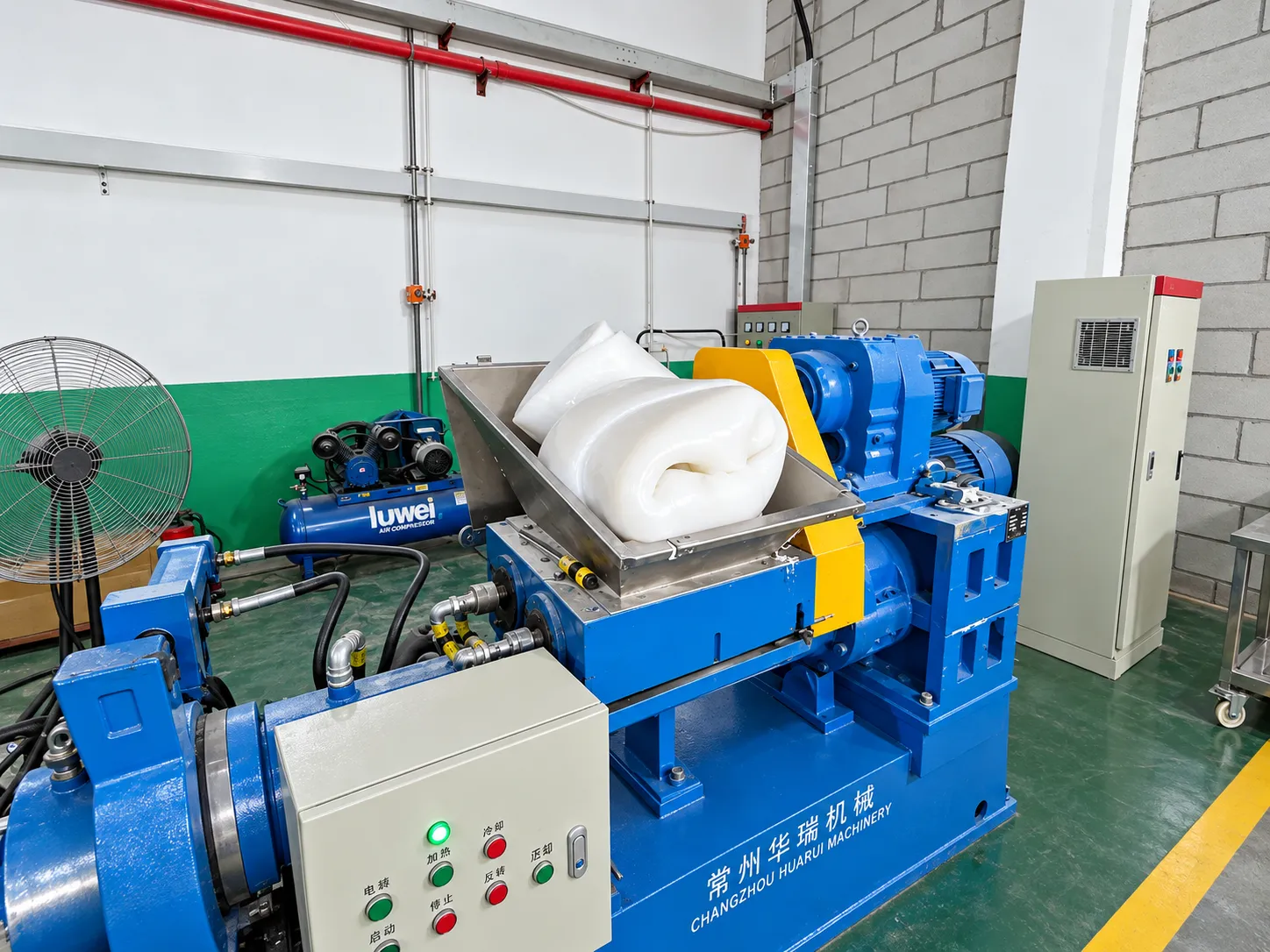
High Consistency Rubber (HCR) is a solid, high-viscosity silicone material. It is commonly supplied as a gum-like compound and processed using conventional rubber manufacturing equipment.
HTV stands for High Temperature Vulcanizing. In industrial sourcing, HTV and HCR are often used to describe solid, heat-cured silicone rubber compounds, although the terms technically emphasize different characteristics.
Common manufacturing methods include:
- 圧縮成形
- トランスファー成形
- Suitable HCR injection molding
- Rubber extrusion
- カレンダー加工
HCR silicone is widely used for seals, gaskets, tubing, cable insulation, industrial molded parts and composite insulator housings.
Explore Yakows HTV Silicone Rubber for solid silicone compound options.
液体シリコーンゴム(LSR)
Liquid silicone rubber is a low-viscosity silicone system commonly supplied as two separate components. The components are metered and mixed in a specified ratio before being injected into a mold.
LSR is particularly suitable for precision molding, complex geometries and automated manufacturing processes.
Typical applications include:
- Precision molded seals and gaskets
- Automotive silicone components
- Electrical and electronic components
- Selected medical and food-contact products, subject to grade-specific qualification
Explore Yakows Liquid Silicone Rubber for LSR material solutions.
RTV Silicone Rubber
Room Temperature Vulcanizing (RTV) silicone is designed to cure at or near room temperature under specified conditions. It is available in one-part and two-part systems, depending on the formulation.
RTV silicone is commonly used for sealing, bonding, encapsulation, coating and casting applications.
Comparison of Silicone Rubber Compound Types
| Material Type | Physical Form | 代表的な処理 | Common Applications |
|---|---|---|---|
| HCR / HTV | Solid, high consistency | Compression molding, extrusion and other suitable solid-rubber processes | Industrial parts, profiles, tubing and insulation |
| LSR | Liquid, commonly two-component | 液体射出成形 | Precision molded components and complex parts |
| RTV | One-part or two-part system | Dispensing, casting, sealing and application-specific methods | Sealants, bonding and encapsulation |
The right material is determined by the product design, manufacturing equipment, performance requirements and production volume. No single silicone rubber type is suitable for every application.
4. Key Technical Properties of Silicone Rubber Compound
When evaluating silicone rubber compounds, industrial buyers should review several mechanical, thermal and functional properties. The required parameters depend on the component's operating environment and manufacturing requirements.
硬度
Hardness indicates a material's resistance to indentation. Silicone rubber hardness is commonly measured using the Shore A scale, although other scales may be appropriate for certain materials.
Hardness selection depends on the intended product. Softer compounds may be appropriate for flexible seals and cushioning parts, while harder compounds may be needed for components requiring greater resistance to deformation.
Yakows offers HTV silicone rubber options across different hardness requirements, including grades within the 30A–90A range. The available grade and tolerance should be confirmed for the specific product.
引張強度
Tensile strength measures the maximum tensile stress a specimen withstands before breaking under a specified test. It is particularly relevant to parts exposed to pulling forces, stretching or mechanical loading.
A compound with suitable tensile strength helps maintain structural integrity during manufacturing, installation and service.
破断伸び
Elongation at break describes how much a specimen stretches before failure. It is expressed as a percentage of its original length.
This parameter is important for flexible components, seals, tubing and parts that experience repeated deformation.
引裂強さ
Tear strength measures resistance to the propagation of a tear under a specified test method. It is especially important for components with thin sections, sharp edges, cutouts or repeated mechanical movement.
圧縮永久ひずみ
Compression set measures the residual deformation remaining after a material has been compressed under specified conditions and then released.
For O-rings, gaskets and other sealing components, compression set is an important indicator of how well the material maintains its recovery after prolonged compression.
Thermal Resistance
Silicone rubber is often selected for applications involving elevated or low temperatures because of its thermal stability and flexibility over a wide temperature range.
However, the usable temperature range depends on the formulation, exposure duration, mechanical loading and required service life. Buyers should evaluate the actual operating conditions rather than relying on a general silicone temperature rating.
Electrical Properties
For electrical insulation applications, relevant properties may include volume resistivity, dielectric strength, dielectric constant and electrical tracking resistance, depending on the intended use.
For composite insulators and cable accessories, electrical performance should be evaluated together with mechanical properties, weather resistance and the relevant application standards.
Other Specialized Properties
Depending on the application, additional requirements may include:
- Flame retardancy and specified UL 94 performance.
- Resistance to UV radiation, ozone and outdoor aging.
- Hydrophobicity and hydrophobicity recovery for suitable electrical applications.
- Low compression set for long-term sealing.
- Specified color, appearance and dimensional stability.
- Food-contact or medical-grade documentation where applicable.
These properties may require specialized formulations and separate qualification testing. They should not be assumed to be present in every general-purpose silicone rubber compound.
5. How Do Silicone Rubber Compound Grades Differ?
Silicone rubber compounds are available in different grades to satisfy different mechanical, thermal, electrical and processing requirements. A grade is more than a hardness number; it represents a particular formulation and its associated performance characteristics.
| Compound Category | Key Selection Focus | Typical Application |
|---|---|---|
| General-Purpose Silicone | Balanced mechanical properties and processing behavior. | Industrial molded components and general sealing. |
| High-Tear Silicone | Resistance to tear propagation. | Thin profiles, seals and mechanically stressed components. |
| High-Hardness Silicone | Specified hardness and resistance to deformation. | Structural and specialized molded parts. |
| Low Compression Set Silicone | Elastic recovery after prolonged compression. | O-rings, gaskets and sealing components. |
| Flame-Retardant Silicone | Specified fire performance. | Electrical and industrial components. |
| 電気絶縁用シリコーン | Electrical, mechanical and environmental performance. | Insulators and cable accessories. |
| Food-Contact Silicone | Applicable regulatory and migration requirements. | Qualified food-contact components. |
When comparing two silicone rubber compound grades, review the complete technical datasheets. Similar hardness values do not necessarily mean similar mechanical performance or suitability for the same production process.
6. Silicone Rubber Compound Processing Methods
The selected compound must be compatible with the intended manufacturing process. Processing requirements influence material selection, production efficiency, finished-part quality and overall manufacturing cost.
圧縮成形
Compression molding is widely used for solid HCR/HTV silicone rubber compounds. A prepared quantity of compound is placed into a mold cavity and cured under heat and pressure.
Important considerations include preform weight, compound plasticity, mold design, venting, curing conditions and demolding performance.
Silicone Rubber Extrusion
Extrusion is suitable for continuous products such as silicone tubing, seals, gaskets, profiles and cable insulation. The compound is pushed through a die to obtain the required cross-sectional shape before undergoing a suitable curing process.
Compound consistency, feeding stability, die design and dimensional control are critical to maintaining product quality.
射出成形
Injection molding can be used for suitable HCR grades and is the principal manufacturing route for many LSR components.
For LSR, accurate metering and mixing of the liquid components are essential. For HCR, material feeding and injection behavior must be compatible with the equipment and formulation.
Transfer Molding
Transfer molding moves prepared silicone compound from a transfer chamber into the mold cavities. It can be suitable for selected complex components and multi-cavity production designs.
The correct manufacturing method should be established during product and material development. A compound that performs well in compression molding may not automatically provide the same processing behavior in extrusion or injection molding.
7. Industrial Applications of Silicone Rubber Compounds
Silicone rubber compounds are used across multiple industries because different formulations can be developed to meet specific mechanical, thermal, electrical and environmental requirements.
Electrical Power and Composite Insulators
Silicone rubber is widely used in composite insulator housings and electrical insulation components. Material selection may consider hydrophobicity, hydrophobicity recovery, tracking and erosion resistance, mechanical strength and long-term outdoor weathering performance.
For these applications, compound selection should be based on the electrical system requirements and relevant qualification standards, rather than general-purpose silicone properties alone.
Cables and Wire Accessories
Silicone rubber compounds are used in cable accessories, insulation components, protective sleeves and related products. Relevant requirements may include dielectric performance, flexibility, thermal stability and resistance to environmental exposure.
Automotive and New Energy Vehicles
Automotive applications may require silicone rubber compounds for seals, connectors, cable protection, gaskets and other components exposed to temperature changes, vibration and mechanical stress.
For new energy vehicle applications, material selection should account for the specific electrical, thermal and mechanical conditions of the component.
Industrial Seals and Gaskets
Silicone rubber is used in sealing products where flexibility, thermal performance and compression recovery are important. Depending on the design, buyers may prioritize low compression set, tear resistance, hardness and dimensional stability.
Medical and Food-Contact Components
Specialized silicone rubber grades may be used for medical devices, food-contact products and related applications. These materials require suitable formulation control, traceability and supporting compliance documentation.
A general-purpose silicone rubber compound should not be considered medical-grade or food-contact compliant without the relevant evidence and qualification.
8. Custom Silicone Rubber Compound: What Can Be Customized?
Standard silicone rubber grades may not satisfy every OEM requirement. Custom silicone rubber compounds can be developed or selected to address specific product designs, processing conditions and performance targets.
Hardness Customization
Hardness can be selected according to the required flexibility, support and deformation behavior. The target value and acceptable tolerance should be defined before material evaluation.
Mechanical Property Optimization
Depending on the application, the formulation may be adjusted to target tensile strength, tear resistance, elongation, compression set or other specified properties.
Color Customization
Silicone rubber compounds can be formulated in different colors using compatible pigments. Color requirements should include a reference sample or agreed color standard when appearance consistency is important.
Functional Performance
Specialized formulations may be developed for requirements such as flame retardancy, electrical insulation, outdoor weathering resistance, high-temperature performance or specific compression recovery characteristics.
Processing Compatibility
A custom compound should also be suitable for the customer's manufacturing equipment. Plasticity, feeding behavior, extrusion stability, mold filling and curing characteristics can all influence production performance.
Customization should therefore consider both finished-product properties and manufacturing requirements.
Information to Provide When Requesting a Custom Compound
- Product application and component design.
- Required hardness and tolerance.
- Target tensile strength, tear strength and elongation.
- Compression set or other critical mechanical requirements.
- Operating temperature and environmental conditions.
- Manufacturing method: molding, extrusion or injection.
- Color and appearance requirements.
- Applicable standards, certifications or test requirements.
The more complete the technical information, the easier it is to identify a suitable grade or develop a material solution for evaluation.
9. How to Read a Silicone Rubber Compound Technical Datasheet
A technical datasheet (TDS) is one of the most important documents when comparing silicone rubber compound suppliers. It provides material identification, test results, recommended processing information and other technical details.
Before purchasing, check the following information:
| Datasheet Item | What Buyers Should Verify |
|---|---|
| Product Grade | Confirm the exact material grade and intended application. |
| 硬度 | Check the Shore scale, target value and tolerance where specified. |
| 引張強度 | Review the reported value and applicable test method. |
| 破断伸び | Confirm the material's elongation performance under the specified test conditions. |
| 引裂強さ | Check the test method and specimen type before comparing suppliers. |
| 圧縮永久ひずみ | Check temperature, compression duration and recovery conditions. |
| Curing Conditions | Confirm the recommended curing system, temperature and time. |
| Storage and Shelf Life | Review storage temperature, packaging and expiration conditions. |
| Compliance Documentation | Verify the exact grade and scope of any claimed certification or compliance. |
Important: Datasheet values are often typical properties rather than guaranteed production specifications. Test results may vary according to specimen preparation, curing conditions, test method and laboratory conditions.
When comparing suppliers, make sure the same test standards and conditions are used. Otherwise, two reported values may not be directly comparable.
10. How to Choose a Reliable Silicone Rubber Compound Supplier
Choosing the right silicone rubber compound supplier is important for long-term production consistency. A low initial material price does not necessarily mean a lower total manufacturing cost if the compound causes processing problems, inconsistent quality or higher rejection rates.
1. Evaluate Manufacturing and Compounding Capability
Understand whether the supplier manufactures or formulates silicone rubber compounds, and whether its production capabilities match your required material type and volume.
Ask about production equipment, process control, available grades and the supplier's experience with similar applications.
2. Review Quality Control Procedures
Check whether the supplier has appropriate incoming material inspection, batch control, in-process monitoring and finished-product testing procedures.
Consistent production and traceable material batches are particularly important for OEM customers and long-term supply arrangements.
3. Request Technical Documentation
A professional supplier should be able to provide relevant technical information for the proposed grade. Depending on the application, this may include a TDS, safety data sheet, test reports and applicable compliance documents.
4. Confirm Customization and Sample Support
For specialized products, ask whether the supplier can evaluate target hardness, mechanical properties, color and processing requirements.
Sample testing helps determine whether the material is suitable for the actual production process before a large purchase is made.
5. Evaluate Supply Stability and Communication
Review production capacity, normal lead times, packaging, batch traceability and the supplier's ability to maintain consistent specifications across repeat orders.
Clear technical communication is also important when solving processing issues or adjusting material specifications.
11. Silicone Rubber Compound Purchasing Checklist
Before requesting a quotation or placing a bulk order, prepare the key technical and commercial information. This helps suppliers recommend a suitable grade and reduces unnecessary sample and production adjustments.
For bulk purchasing, it is also useful to establish an approved material specification and agreed acceptance criteria before production begins. This helps maintain consistency between initial samples and subsequent orders.
Frequently Asked Questions About Silicone Rubber Compound
What is a silicone rubber compound?
A silicone rubber compound is a formulated elastomer material consisting of a silicone base polymer and selected ingredients such as reinforcing fillers, curing agents, pigments and functional additives. It is designed for specific manufacturing and application requirements.
What are the main types of silicone rubber compounds?
The main industrial categories include high-consistency rubber (HCR/HTV), liquid silicone rubber (LSR) and room-temperature-vulcanizing silicone (RTV). They differ in physical form, processing requirements and curing systems.
What is the difference between silicone rubber and silicone rubber compound?
Silicone rubber compound refers to the formulated material before or during processing. Silicone rubber generally refers to the elastomer material, often after curing. In industrial purchasing, the terms may overlap, so buyers should clarify whether they need uncured compound or finished components.
How do I choose the right silicone rubber compound hardness?
Start with the product's mechanical and functional requirements. Consider deformation, sealing pressure, flexibility, installation conditions and operating loads. Hardness should be evaluated together with tensile strength, elongation, tear resistance and compression set.
Can silicone rubber compounds be customized?
Yes. Depending on the formulation and production capabilities, silicone rubber compounds can be developed or selected with different hardness levels, colors, mechanical properties, processing characteristics and specialized performance requirements.
What is the difference between HCR silicone and LSR?
HCR is a solid, high-consistency silicone material commonly processed through compression molding and extrusion. LSR is a liquid silicone system typically metered, mixed and injection molded. The correct choice depends on product design, equipment and production requirements.
What technical information should I request from a silicone rubber supplier?
Request the technical datasheet, product grade, hardness, tensile strength, elongation, tear strength, compression set, recommended processing conditions and relevant application-specific documentation.
Can I request silicone rubber compound samples before bulk purchasing?
Sample evaluation is an important step for industrial buyers. It allows manufacturers to check material processability, curing behavior, dimensions and finished-product performance before approving a compound for larger production orders. Confirm sample availability with the supplier.
How can I compare silicone rubber compound suppliers?
Compare technical specifications using consistent test methods, review quality control and batch traceability, assess manufacturing capability and evaluate sample support, documentation, supply stability and technical communication.
What determines the price of silicone rubber compound?
Price depends on the material formulation, hardness, reinforcing fillers, specialized performance requirements, processing characteristics, order quantity, packaging and delivery conditions. A proper quotation should be based on the required grade and specifications rather than the generic material name alone.
Yakows Silicone Rubber Manufacturer
Looking for a Silicone Rubber Compound Supplier?
Yakows provides silicone rubber material solutions for industrial and OEM manufacturing applications, including HTV/HCR and liquid silicone rubber.
Whether you need a standard silicone rubber grade or a compound matched to specific hardness, mechanical properties, processing methods or application conditions, our team can discuss your material requirements.
When requesting information, share your application, target specifications, manufacturing method and estimated order quantity to help identify a suitable material option.
Request a Silicone Rubber Quote →
メールアドレス: info@yakows.com