
How Silicone Rubber Improves Composite Insulator Performance?
Silicone rubber plays a critical role in the long-term performance of composite insulators used in overhead transmission lines, distribution networks, substations and other high-voltage systems. Unlike porcelain or glass insulators, a composite insulator typically uses a fiberglass-reinforced core for mechanical strength and a polymeric housing with sheds for electrical insulation and environmental protection.
The silicone rubber housing is not simply an outer cover. Its hydrophobic surface, resistance to UV and ozone, electrical insulation properties and ability to resist tracking and erosion directly influence how the composite insulator performs under rain, pollution, heat, electrical stress and years of outdoor exposure.
This article explains how silicone rubber improves composite insulator performance, which material properties matter most, how formulation affects service life and what manufacturers should consider when selecting an electrical-grade silicone compound.
Why Silicone Rubber Is Used in Composite Insulators
Composite insulators operate in environments where several types of stress occur at the same time. The surface may be exposed to rain, dust, salt, industrial pollution, ultraviolet radiation, ozone and temperature changes while also carrying a high electrical field.
Silicone rubber is widely used because it combines several functions in one material. It provides electrical insulation, forms a hydrophobic surface, protects the fiberglass core from the environment and maintains flexibility during thermal and mechanical cycling.
Hydrophobicity Is One of Silicone Rubber's Biggest Advantages
Hydrophobicity is one of the most important reasons silicone rubber performs well in outdoor high-voltage insulation.
On a hydrophobic surface, water tends to form separate droplets rather than immediately spreading into a continuous film. This reduces the formation of conductive surface paths when the insulator becomes wet.
The effect is especially valuable when pollution is present. Dust, salt or industrial contaminants can become conductive when wet. If moisture forms a continuous film across a contaminated surface, leakage current can increase significantly.
Silicone Rubber Can Transfer Hydrophobicity to Surface Contamination
A distinctive characteristic of silicone rubber is its ability to recover and, under suitable conditions, transfer hydrophobic behavior to contamination layers on the surface.
Low-molecular-weight silicone species within the material can migrate toward the surface and into deposited pollution. This can gradually make the contamination layer more water repellent.
This behavior is one reason silicone rubber performs differently from many other polymeric housing materials in polluted outdoor environments.
The rate and effectiveness of hydrophobicity transfer depend on the silicone formulation, contamination type, aging condition and environmental exposure.
How Hydrophobicity Helps Reduce Leakage Current
When moisture spreads across a contaminated insulator surface, the contamination layer can become electrically conductive. Leakage current then flows along the surface.
As current passes through nonuniform wet regions, some areas can dry more quickly and create localized dry bands. Electrical voltage can concentrate across these dry regions, producing dry-band arcing.
Silicone rubber's hydrophobic surface helps interrupt this process by making continuous wet conductive paths more difficult to form.
Tracking Resistance Protects the Insulating Surface
Tracking is the formation of a permanent conductive path across the surface of an insulating material after repeated electrical stress and contamination.
In outdoor high-voltage service, moisture, pollution and electrical discharge can create highly localized thermal and electrical stress. If the housing material cannot resist these conditions, carbonized or damaged paths may develop.
Electrical-grade silicone rubber compounds are therefore formulated to resist tracking rather than simply provide high dielectric strength through the bulk material.
| 物件 | What It Protects Against |
|---|---|
| 疎水性 | Continuous water-film formation and surface leakage |
| Tracking Resistance | Permanent conductive path formation |
| Erosion Resistance | Physical loss of material caused by discharge and localized heating |
| 絶縁耐力 | Electrical breakdown through the material |
Erosion Resistance Matters During Repeated Electrical Discharge
Tracking and erosion are closely related but not identical.
Erosion refers to the gradual physical removal or degradation of the silicone rubber surface caused by electrical discharges, heat and chemical attack.
Repeated dry-band arcing can create very high localized temperatures. If the compound does not dissipate or tolerate this stress effectively, the surface can become rough, cracked or deeply eroded.
For composite insulators, severe erosion can eventually reduce the thickness of the protective housing and expose deeper material to further electrical and environmental stress.
Why ATH Is Commonly Used in Electrical Silicone Rubber
Electrical-grade silicone rubber for composite insulators often contains substantial mineral filler systems. Aluminum trihydrate, commonly abbreviated as ATH, is widely used in many high-voltage silicone formulations.
ATH can help improve resistance to tracking and erosion under severe electrical stress. During intense localized heating, the filler can participate in endothermic processes and contribute to the thermal behavior of the compound.
However, simply adding more ATH does not automatically create a better silicone rubber.
More Filler Does Not Always Mean Better Performance
High filler loading can improve some electrical properties while making other characteristics more difficult to maintain.
Excessive filler can increase viscosity and hardness, reduce elongation and change mold flow. It can also make compound processing more demanding.
The objective is therefore to balance filler type, particle characteristics, surface treatment and loading with the silicone polymer and processing-aid system.
A well-designed composite-insulator compound should provide electrical protection without sacrificing the mechanical and processing properties required for reliable molding.
Silicone Rubber Protects the Fiberglass Core
The fiberglass-reinforced polymer core is the main load-bearing element in a typical composite insulator. The silicone rubber housing does not replace this structural core.
Instead, the silicone housing protects the core from moisture, contamination, UV exposure and external environmental damage while providing the external insulating surface.
This division of functions is important:
Damage to the silicone housing can therefore become a serious concern even when the fiberglass core remains mechanically intact.
Shed Design and Silicone Rubber Work Together
Composite insulator performance is influenced by both material properties and geometric design.
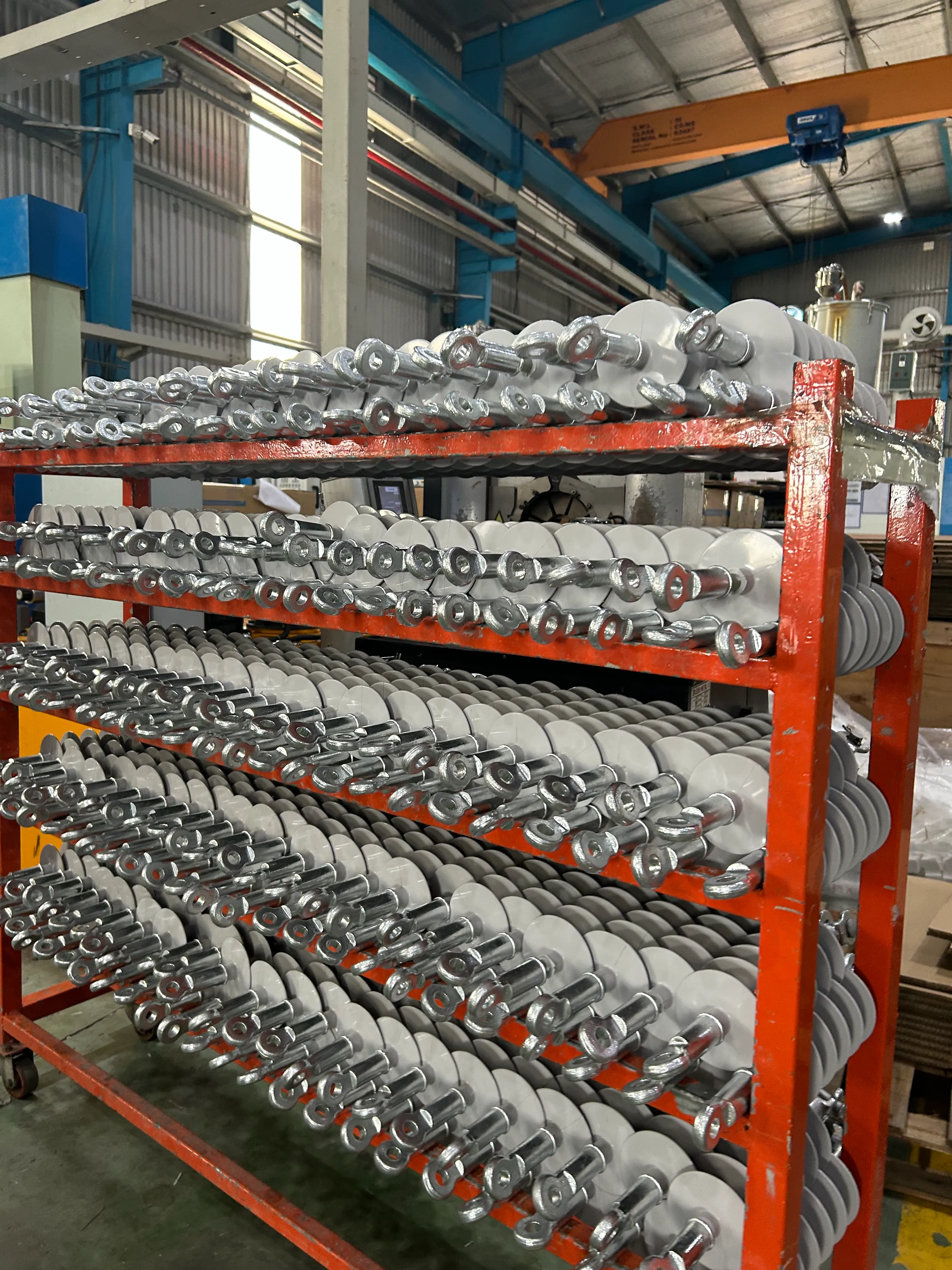
The silicone rubber sheds increase the creepage distance along the surface and help control how rainwater and contamination interact with the insulator.
Shed spacing, diameter, overhang and profile all influence pollution performance. The best silicone rubber cannot compensate for every design problem, and an excellent shed design still depends on a housing material that maintains hydrophobicity and electrical integrity.
UV Resistance Supports Long-Term Outdoor Service
Composite insulators may remain outdoors for many years under direct sunlight. Ultraviolet radiation can gradually degrade many polymer materials by changing surface chemistry and mechanical properties.
Silicone rubber is widely valued for outdoor applications because of its strong resistance to UV and weathering.
Long-term exposure can still change the surface, especially when UV occurs together with pollution, moisture, heat and electrical discharge. However, properly formulated silicone rubber generally provides strong durability in these combined outdoor conditions.
Ozone Resistance Is Important Around High-Voltage Equipment
Electrical discharges and corona activity can generate ozone around high-voltage equipment.
Ozone can attack certain conventional elastomers and contribute to surface cracking. Silicone rubber has strong ozone resistance, which makes it suitable for exposed high-voltage environments.
This resistance is particularly valuable around energized hardware, corona-prone regions and outdoor equipment where electrical and atmospheric stresses occur simultaneously.
Heat and Thermal Cycling Affect Composite Insulator Housings
Composite insulators experience temperature changes caused by weather, solar radiation, electrical loading and daily heating and cooling cycles.
The silicone housing and fiberglass core have different thermal and mechanical characteristics. Repeated thermal cycling can place stress on interfaces and sealing regions.
Silicone rubber's flexibility helps it accommodate dimensional changes without becoming excessively rigid.
Mechanical Properties Still Matter
Although the FRP core carries the primary mechanical load, the silicone rubber housing still needs adequate mechanical strength.
Manufacturing, installation, transportation and outdoor service can stretch, compress or impact the housing and sheds.
| Mechanical Property | Why It Matters |
|---|---|
| 引張強度 | Helps the housing resist pulling and deformation during manufacturing and service. |
| 伸び | Allows the material to flex without cracking. |
| 引裂強さ | Helps resist damage around shed edges and thin sections. |
| 硬度 | Affects flexibility, molding behavior and handling. |
A compound should not be selected only because it has strong electrical properties if the mechanical performance is too weak for reliable manufacturing and handling.
Why Tear Strength Is Important for Silicone Sheds
Composite insulator sheds are relatively thin compared with the central housing. Their edges may experience localized stress during molding, transport, installation or accidental impact.
A small cut can grow if the silicone rubber has insufficient tear resistance.
For this reason, tear strength is an important property even though it is sometimes given less attention than dielectric strength or tracking resistance.
Electrical Properties Beyond Surface Performance
Composite insulator silicone also needs suitable bulk electrical properties.
These properties need to remain sufficiently stable after environmental and thermal aging.
Pollution Severity Changes the Material Requirements
Not all composite insulators operate in the same environment.
Coastal areas can expose insulators to salt contamination. Industrial regions may deposit conductive or chemically aggressive pollution. Desert environments can create dust buildup, while humid regions combine contamination with frequent wetting.
The required creepage distance, shed design and housing formulation may therefore differ between projects.
Corona and Electric-Field Concentration Can Accelerate Aging
Electric-field intensity is not uniform across the entire composite insulator. Regions near energized end fittings can experience greater electrical stress.
If the local electric field becomes sufficiently high, corona activity can contribute to ozone generation, surface oxidation and localized aging.
Insulator geometry, grading devices and fitting design are therefore important parts of the complete system.
The silicone compound needs enough resistance to electrical and environmental degradation to tolerate the realistic field conditions of the application.
Housing-to-Core Adhesion Is Critical
The interface between silicone rubber and the internal core is another important area of composite insulator reliability.
Poor bonding, voids or contamination can create pathways for moisture and electrical stress. Over time, interface defects can undermine the environmental protection provided by the housing.
Material compatibility, surface preparation and the manufacturing process all influence this interface.
The silicone compound therefore needs to be compatible not only with the electrical requirements but also with the chosen molding and bonding process.
Why Processing Behavior Matters During Composite Insulator Molding
Even an excellent electrical formulation can create production problems if it does not process reliably.
HTV/HCR silicone used for composite insulator housings must fill the mold around the core and complex shed geometry while curing consistently.
Why Two Silicone Rubber Grades Can Process Differently
Two composite-insulator silicone compounds can have the same Shore A hardness and still behave differently during production.
Polymer molecular weight, reinforcing silica, ATH loading, surface treatment, processing aids and curing system all affect uncured rheology.
One compound may flow smoothly into thin shed areas, while another may require greater pressure or different cure conditions.
This is why hardness should never be the only specification used when changing silicone rubber suppliers.
Common Composite Insulator Housing Failure Signs
Long-term inspection can reveal several forms of housing degradation.
| Observed Condition | Possible Concern |
|---|---|
| Surface Erosion | Repeated electrical discharge or severe thermal stress |
| Tracking Marks | Loss of surface insulation under pollution and moisture |
| Cracking | Mechanical, thermal or environmental aging |
| Torn Sheds | Mechanical damage or insufficient tear strength |
| Loss of Hydrophobicity | Surface aging, contamination or temporary environmental effects |
| Interface Damage | Potential moisture ingress or bonding problems |
Temporary Hydrophobicity Loss Does Not Always Mean Permanent Failure
Silicone rubber surfaces can temporarily lose hydrophobicity after severe electrical discharge, contamination or environmental exposure.
One important characteristic of silicone materials is that hydrophobicity can recover after stress is removed, depending on the condition of the material and formulation.
This recovery behavior is another reason silicone rubber is widely used in outdoor high-voltage insulation.
However, severe erosion, deep cracking or permanent material damage cannot be corrected simply by hydrophobicity recovery.
How Silicone Rubber Compares with Porcelain and Glass
Composite insulators and traditional ceramic insulators use very different material systems.
Porcelain and glass are rigid inorganic materials, while silicone rubber composite insulators use a polymeric housing around a fiberglass core.
| 特徴 | Silicone Rubber Composite Insulator | Porcelain / Glass |
|---|---|---|
| 重量 | Generally much lighter | Heavier |
| Surface Behavior | Hydrophobic silicone housing | More hydrophilic surface behavior |
| Breakage | Polymeric housing is not brittle like ceramic | Rigid and brittle material system |
| Outdoor Pollution Performance | Benefits from silicone hydrophobicity | Depends strongly on geometry, contamination and maintenance |
| Mechanical Structure | FRP core carries the primary load | Ceramic body provides structural function |
The choice between these technologies depends on system design, voltage level, operating environment, utility practices and lifetime requirements.
How to Choose Silicone Rubber for Composite Insulators
Composite-insulator silicone should be selected as a complete electrical and processing material rather than as a generic rubber grade.
What Should Be Included in a Composite Insulator Silicone RFQ?
A clear RFQ helps the silicone supplier understand both the application and the production requirements.
Silicone Rubber for Composite Insulators from Yakows
Yakows supplies HTV/HCR silicone rubber compounds for composite insulators and other high-voltage electrical applications.
Composite-insulator grades can be evaluated around hydrophobicity, tracking and erosion resistance, dielectric properties, mechanical strength, weather aging and molding performance.
For manufacturers replacing an existing compound, it is useful to provide both the required electrical and mechanical specifications and information about current production behavior. Mold filling, shed tearing, cure stability and batch consistency can be as important to manufacturing as the final laboratory data.
The objective is not simply to match Shore A hardness, but to select a silicone rubber compound that supports both reliable production and long-term outdoor electrical performance.
よくある質問
Why is silicone rubber used in composite insulators?
Silicone rubber provides electrical insulation, hydrophobicity, tracking and erosion resistance, UV resistance, ozone resistance and environmental protection for the composite insulator core.
What is the most important advantage of silicone rubber on composite insulators?
Hydrophobic surface behavior is one of its most important advantages because it helps reduce continuous conductive water-film formation on contaminated outdoor surfaces.
What is hydrophobicity transfer?
Hydrophobicity transfer refers to the ability of silicone-related low-molecular-weight species to migrate into contamination layers and make those layers more water repellent over time.
Why is ATH added to composite insulator silicone rubber?
ATH is commonly used in electrical silicone formulations to support tracking and erosion resistance under severe electrical and thermal stress.
Does the silicone rubber carry the mechanical load of the insulator?
No. The FRP core normally provides the primary mechanical strength, while the silicone rubber housing provides external electrical insulation and environmental protection.
Why is tear strength important in composite insulators?
The thin shed edges can be damaged during molding, transportation or installation. Higher tear resistance helps prevent small cuts from growing into larger failures.
Can silicone rubber lose hydrophobicity?
Yes. Severe electrical or environmental stress can temporarily reduce hydrophobicity, but silicone rubber can recover surface hydrophobic behavior under suitable conditions.
Is every silicone rubber suitable for composite insulators?
No. Composite insulators require specialized electrical-grade compounds designed around hydrophobicity, tracking, erosion, weather aging, mechanical performance and molding requirements.
Can two composite-insulator silicone grades with the same hardness perform differently?
Yes. Polymer structure, ATH content, silica, processing aids, cure system and overall formulation can change electrical, mechanical and processing performance even when Shore A hardness is identical.
What should manufacturers test before changing silicone rubber suppliers?
Manufacturers should compare electrical, mechanical and aging data and also run production trials to evaluate mold flow, cure stability, demolding and finished insulator quality.