
Silicone Rubber Manufacturing Guide
How Is Silicone Rubber Made? A Step-by-Step Manufacturing Guide
Силиконовая резина is an engineered elastomer manufactured by combining silicone polymers with reinforcing fillers, curing agents and other formulation ingredients, then shaping and curing the compound into a finished product. Its manufacturing process determines important characteristics such as hardness, tensile strength, tear resistance, flexibility and dimensional stability.
Understanding how silicone rubber is made requires looking at two connected stages: the production of silicone polymers and the conversion of those polymers into usable rubber compounds and finished components. The process differs depending on whether the material is high-consistency silicone rubber (HCR/HTV), liquid silicone rubber (LSR) or room-temperature-vulcanizing silicone (RTV).
This guide explains the silicone rubber manufacturing process step by step, from raw materials and compounding to molding, extrusion, vulcanization and quality inspection. It also explains how manufacturers select the right silicone rubber compound for industrial and OEM applications.
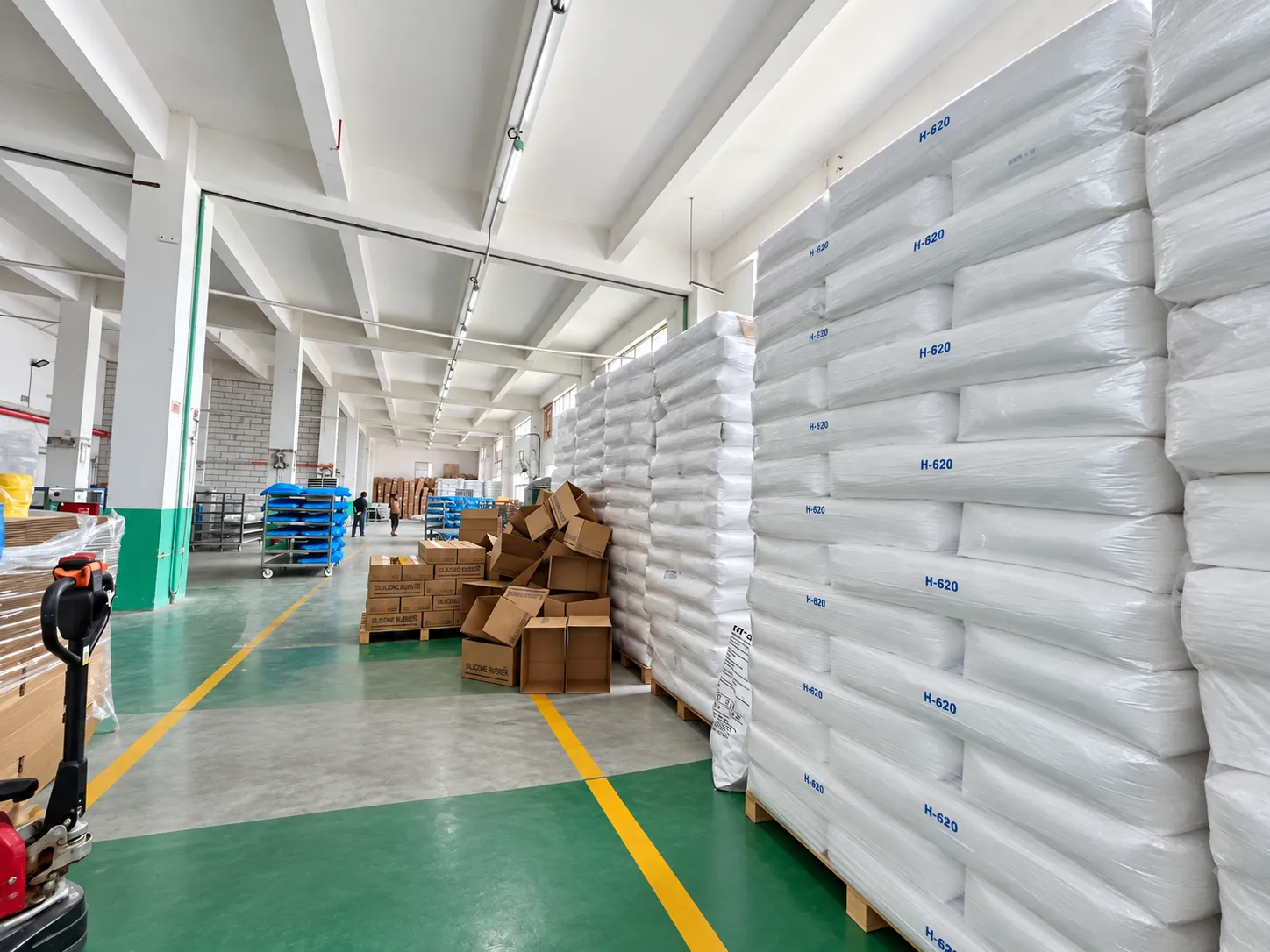
Yakows Silicone Rubber Solutions
Choose the Right Silicone Rubber for Your Production Process
The appropriate silicone rubber depends on the product design, manufacturing method, required mechanical properties and operating environment. Explore the main material categories before selecting a compound for production.
Силиконовый каучук HTV / HCR
Solid silicone rubber compounds for compression molding, extrusion and other industrial manufacturing processes.
Жидкий силиконовый каучук (LSR)
Liquid silicone systems for precision injection molding and repeatable production of complex components.
High Hardness Silicone Rubber
Specialized compound options for applications requiring a defined hardness and mechanical performance balance.
Silicone Rubber for Insulators and Cables
Material solutions for electrical insulation and demanding outdoor service conditions.
Looking for a silicone rubber compound matched to your manufacturing process?
1. How Is Silicone Rubber Made?
The silicone rubber manufacturing process varies by material type, but the general principle is to formulate a silicone polymer system, shape it into the required geometry and cure it to form an elastomer with stable properties.
For conventional solid silicone rubber, production typically includes compounding, forming and vulcanization. Liquid silicone rubber follows a different route in which liquid components are metered, mixed and injected into a mold. RTV silicone uses curing systems designed for room-temperature or other specified curing conditions.
01
Raw Material Preparation
Select the silicone polymer, reinforcing fillers, additives and curing system required for the target formulation.
02
Polymer and Compound Preparation
Produce or obtain the silicone base polymer, then incorporate the ingredients required for the selected compound.
03
Mixing and Compounding
Disperse reinforcing fillers and other formulation ingredients to establish the desired processability and material properties.
04
Forming and Shaping
Use compression molding, injection molding, extrusion or another suitable process to create the required geometry.
05
Vulcanization
Apply the appropriate curing conditions to crosslink the silicone and develop its elastomeric properties.
06
Inspection and Finishing
Inspect dimensions, appearance and specified material properties before the finished product is released.
These stages describe a general production route rather than a universal sequence. For example, an LSR system is mixed and injected using specialized equipment, whereas solid HCR normally requires suitable solid-compound handling and forming equipment.
2. What Raw Materials Are Used to Make Silicone Rubber?
Silicone rubber is not simply natural rubber or plastic with added silicon powder. It is based on silicone polymers whose molecular backbone contains alternating silicon and oxygen atoms, with organic groups attached to the silicon atoms.
The final compound combines a suitable polymer with other ingredients that help achieve the required strength, processing behavior, curing characteristics and application performance.
| Ingredient | Role in Manufacturing | What It Can Influence |
|---|---|---|
| Silicone Base Polymer | Provides the main elastomeric polymer structure. | Flexibility, temperature performance and basic processing behavior. |
| Армирующий кремнезем | Reinforces the silicone matrix when appropriately selected and dispersed. | Tensile strength, tear resistance, hardness and compound behavior. |
| Curing Agents or Crosslinking Components | Enable the polymer network to form during curing. | Cure behavior and final elastomer properties. |
| Pigments | Provide the required color and appearance. | Color consistency and, depending on the formulation, other material characteristics. |
| Functional Additives | Modify selected properties for specific applications. | Flame resistance, processing behavior or other targeted functions. |
Not every silicone rubber compound contains the same ingredients. The formulation depends on whether the material is intended for electrical insulation, sealing, extrusion, precision molding, medical applications or another industrial use.
For example, an electrical insulation compound may require a different combination of mechanical and electrical performance from a soft sealing material. Material selection therefore starts with the application requirements rather than a single universal recipe.
3. How Is Silicone Polymer Produced?
Before silicone rubber can be compounded, the silicone polymer itself must be produced. This upstream chemical manufacturing stage is different from the downstream process of turning a polymer compound into a rubber component.
Industrial silicone production generally begins with silicon-derived chemical feedstocks. In a conventional route, silicon reacts with methyl chloride to produce organochlorosilanes. Selected silanes are then hydrolyzed and condensed to form siloxane structures, which are further processed into silicone polymers with the molecular characteristics needed for different applications.
From silicon-based feedstocks to silicone polymer
- Organosilicon intermediate production: Silicon-based feedstocks are converted into organochlorosilanes through controlled chemical reactions.
- Hydrolysis and condensation: Selected intermediates are converted into siloxane structures.
- Polymerization and molecular adjustment: The resulting materials are processed to obtain the required polymer structure and molecular characteristics.
- Base polymer preparation: The polymer is prepared for the intended silicone product family, such as solid HCR/HTV or liquid silicone rubber.
The exact upstream route depends on the silicone chemistry and intended product. Manufacturers of finished silicone rubber compounds may purchase an already-produced silicone base polymer rather than operate the upstream chemical synthesis themselves.
This distinction matters when evaluating suppliers. A company producing silicone rubber compounds and molded materials may specialize in formulation, compounding, curing and quality control without manufacturing the original silicone polymer from its chemical feedstocks.
4. Silicone Rubber Compounding and Mixing
Compounding is one of the most important stages in silicone rubber manufacturing. The base polymer is combined with reinforcing fillers, pigments, curing ingredients and other approved additives to produce a material that can be processed into the intended component.
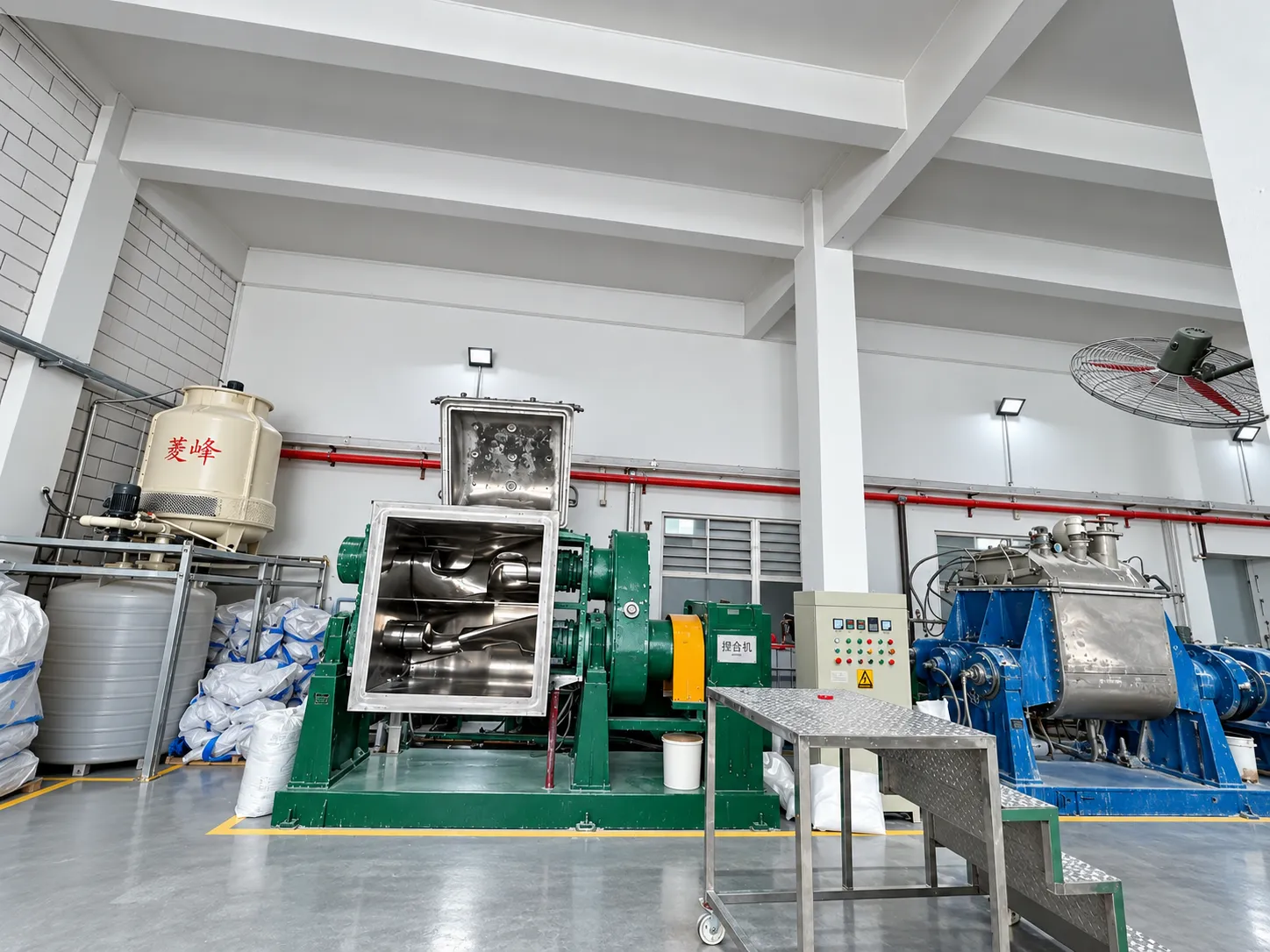
For solid silicone rubber, mixing may use equipment such as two-roll mills or internal mixers, depending on the formulation and production requirements. Liquid silicone rubber follows a different preparation route using controlled metering and mixing systems.
How solid silicone rubber is compounded
In solid HCR/HTV production, the silicone base and reinforcing ingredients are mixed to achieve suitable dispersion and compound consistency. Depending on the supply form, additional formulation ingredients may be introduced during this stage.
Uniform mixing helps reduce variation between batches and supports consistent processing. Poor dispersion or contamination can affect appearance, curing behavior and mechanical performance.
Important mixing controls
- Ingredient accuracy: Follow the approved formulation and addition sequence.
- Dispersion: Ensure reinforcing ingredients and pigments are distributed consistently.
- Temperature: Control material heating during mixing to avoid undesirable processing changes.
- Contamination prevention: Keep equipment, work surfaces and materials suitable for the compound being processed.
- Batch traceability: Record material identification and production information where required.
For ready-to-process compounds, the supplier may have already completed most or all formulation and mixing operations. Additional mixing or curing-agent incorporation should only be performed when specified by the supplier.
The objective is not simply to combine ingredients, but to produce a compound with repeatable processing behavior and properties that meet the application specification.
5. How Is Silicone Rubber Shaped into Finished Products?
After the material is prepared, it must be shaped into the required geometry before or during curing. The manufacturing method depends on the silicone form, product design, production volume and dimensional requirements.
Формование под давлением
Compression molding is commonly used for solid HCR/HTV silicone rubber. A prepared quantity of compound is placed in a mold cavity, and the mold closes under pressure. Heat then cures the material into the required shape.
This process is used for gaskets, seals, molded industrial parts and selected electrical insulation components. Preform quantity, mold design, venting, curing conditions and demolding technique all influence the final result.
Injection molding
Injection molding forces silicone material into a mold through an injection system. It can support repeatable production of complex parts, but the equipment and material handling requirements differ between solid HCR and liquid LSR.
LSR is typically metered and mixed from its specified liquid components before injection into a heated mold. HCR injection molding uses suitable equipment designed to handle the high-consistency compound.
Silicone rubber extrusion
Extrusion pushes a continuous supply of silicone compound through a die to create products with a consistent cross-sectional design. Common examples include silicone tubing, seals, gaskets, profiles and cable-related products.
Extrusion requires stable feeding, appropriate die design, dimensional control and a compatible curing system. The finished profile may change dimensions during curing and cooling, so these effects must be considered during process development.
Other manufacturing methods
Transfer molding and calendering may be suitable for particular compound types and product designs. RTV silicone may be dispensed, cast, applied as a sealant or formed using other methods appropriate to its formulation.
There is no single best method for every silicone rubber product. The manufacturing route should be selected according to the component's shape, tolerances, performance requirements and expected production volume.
6. Silicone Rubber Vulcanization and Curing
Vulcanization, also called curing, transforms the uncured silicone compound into an elastomer by forming a crosslinked polymer network. This network gives the material its characteristic elastic behavior and helps it retain its shape after deformation.
The appropriate curing process depends on the silicone system. Solid HCR/HTV compounds commonly use peroxide or platinum-catalyzed curing systems, while LSR typically uses an addition-curing system. RTV products use curing chemistries designed for their intended application and curing conditions.
Heat curing for HCR/HTV silicone rubber
HCR/HTV components are commonly cured using heat in a mold or a suitable continuous production system. Temperature and cure time must be matched to the compound, component thickness and manufacturing equipment.
Insufficient curing can result in properties that do not meet the specification. Excessive or poorly controlled heating may also cause defects or affect processing efficiency. The actual cure window should therefore be established from the material supplier's instructions and validated production trials.
Heat curing for liquid silicone rubber
LSR systems are typically metered and mixed before being injected into a heated mold. The heat initiates and accelerates crosslinking, allowing the liquid material to become a solid elastomer.
Precise component metering, mixing, mold temperature and cycle control are important for consistent production. The curing time varies with the formulation, part geometry, equipment and process conditions.
Room-temperature vulcanization
RTV silicone is designed to cure under specified room-temperature or other application conditions. One-part moisture-curing systems and two-part systems follow different curing mechanisms and handling requirements.
RTV silicone is widely associated with sealing, bonding, encapsulation and other applications where its particular form and curing behavior are suitable. It is not processed in exactly the same way as conventional solid HCR/HTV rubber.
Is post-curing necessary?
Post-curing is an additional heating stage used for selected silicone compounds and applications. Depending on the material and requirements, it may help reduce residual volatile substances or achieve specified final properties.
Not every silicone rubber product requires post-curing. The decision and conditions should follow the compound specification and application requirements. Post-curing alone does not establish compliance with medical, food-contact or electrical standards.
7. Silicone Rubber Quality Control and Testing
Quality control verifies whether the raw materials, compound and finished product meet the relevant specifications. A reliable inspection plan covers more than visual appearance because material properties can be affected by formulation, mixing, curing and specimen preparation.
| Quality Check | What It Evaluates | Почему это важно |
|---|---|---|
| Твёрдость | Resistance to indentation. | Confirms the specified firmness of the compound. |
| Прочность на разрыв | Resistance to tensile stress before failure. | Helps assess performance under pulling loads. |
| Относительное удлинение при разрыве | Extension before specimen failure. | Evaluates stretchability under the test conditions. |
| Прочность на разрыв | Resistance to tearing under a specified test. | Relevant to thin sections, edges and cut-sensitive components. |
| Остаточная деформация при сжатии | Residual deformation after specified compression conditions. | Important for seals and gaskets that must recover after compression. |
| Контроль размеров | Product dimensions and tolerances. | Confirms the finished component matches its design requirements. |
| Application-Specific Testing | Electrical, thermal, aging or other specified performance. | Verifies suitability for the intended operating environment. |
Not every product requires every test. The appropriate inspection plan depends on the application, material grade, customer specification and applicable standards.
For electrical insulation, for example, mechanical test results alone cannot demonstrate electrical suitability. The relevant electrical and environmental performance requirements must also be evaluated.
Manufacturers should also monitor batch consistency, material traceability, process conditions and defect rates. These controls help identify production variation before it becomes a recurring quality problem.
8. HCR vs. LSR vs. RTV: How Manufacturing Processes Differ
Silicone rubber is available in several forms, and each form has different processing requirements. Understanding these differences helps manufacturers choose a suitable material before designing the production process.
| Тип материала | Форма материала | Common Processing Methods | Типичные области применения |
|---|---|---|---|
| HCR / HTV | Solid, high-consistency compound. | Compression molding, transfer molding, suitable injection molding and extrusion. | Profiles, tubing, industrial seals, molded parts and electrical insulation. |
| LSR | Liquid, commonly supplied as a two-component system. | Metering, mixing and liquid injection molding. | Precision molded components, seals and complex geometries. |
| RTV | One-part or two-part room-temperature-vulcanizing system. | Dispensing, casting, sealing, bonding and other application-specific methods. | Sealants, encapsulation, bonding and selected molded or cast applications. |
HCR and HTV are closely related terms in industrial silicone rubber. HCR emphasizes the material's high consistency, while HTV refers to high-temperature vulcanization. The exact terminology and recommended processing route should be confirmed with the supplier.
LSR is often suitable for automated precision molding, whereas HCR is commonly used for solid-compound molding and extrusion. RTV products are selected for their particular curing behavior and application requirements.
These categories are not simply rankings from low to high performance. The appropriate material depends on the intended component, manufacturing equipment, required properties and production economics.
9. How to Choose the Right Silicone Rubber for Manufacturing
Selecting silicone rubber starts with the finished product's requirements. A material that performs well in one application may not be suitable for a component with different mechanical loads, dimensions, processing requirements or environmental exposure.
Define the component and manufacturing method
Determine whether the component will be molded, extruded, dispensed or produced using another process. Its geometry, wall thickness, tolerances and production volume influence which silicone material form is appropriate.
Specify the required properties
Identify the required hardness, tensile strength, elongation, tear resistance and compression set where relevant. For electrical applications, include the necessary electrical performance criteria. For products exposed to elevated temperatures or outdoor conditions, specify the relevant thermal aging and environmental requirements.
Consider processing compatibility
The compound must work with the available equipment and production conditions. For HCR/HTV, consider feeding, forming, extrusion or molding behavior. For LSR, consider metering, mixing, mold filling and curing. For RTV, consider the application method and specified curing conditions.
Review documentation and qualification requirements
Request the technical datasheet, relevant test methods and any required regulatory or application-specific documentation. Do not assume that every silicone rubber grade meets every food-contact, medical, flame-retardancy or electrical specification.
Evaluate samples before production approval
Where appropriate, validate the material using representative equipment and agreed acceptance criteria. Trial production helps identify issues with processing behavior, dimensions, surface quality and finished-part properties before full-scale manufacturing.
When contacting a silicone rubber supplier, provide the application, target properties, manufacturing method, operating environment and any existing material specification. These details help narrow down suitable compound options.
10. Common Problems in Silicone Rubber Manufacturing
Defects can originate from material preparation, forming equipment, mold or die design, curing conditions or handling. Troubleshooting should begin with the observed defect and the relevant production records rather than changing several process settings at once.
| Задача | Possible Causes | Что нужно проверить |
|---|---|---|
| Air bubbles or voids | Trapped air, contamination, unsuitable material preparation or inadequate venting. | Mixing, material condition, mold vents and flow paths. |
| Incomplete filling | Unsuitable material quantity, restricted flow or inappropriate processing conditions. | Preform preparation, material flow, tooling and process settings. |
| Excessive flash | Mold mismatch, excess material or unsuitable closing conditions. | Mold condition, material quantity and clamping. |
| Inconsistent hardness | Batch variation, uneven curing or inconsistent test conditions. | Material traceability, cure conditions and test procedures. |
| Extrusion dimension variation | Unstable feeding, die effects, curing variation or cooling changes. | Feed consistency, die condition, line speed and dimensional compensation. |
| Tearing during demolding | Part geometry, stress concentration, demolding timing or unsuitable curing conditions. | Tooling, cure balance and demolding procedure. |
The correct corrective action depends on the compound and the actual process. For recurring defects, identify the root cause through controlled trials and consult the material supplier where necessary.
Frequently Asked Questions About Silicone Rubber Manufacturing
What is silicone rubber made of?
Silicone rubber is based on silicone polymers and may contain reinforcing fillers, curing agents, pigments and other formulation ingredients. The exact composition depends on the material grade and intended application.
How is silicone rubber manufactured step by step?
A typical solid silicone rubber route involves polymer preparation, compounding, mixing, forming, vulcanization and quality inspection. LSR and RTV follow different processing routes according to their material form and curing systems.
Is silicone rubber made from silicon?
Silicon-based chemical feedstocks are used to manufacture silicone polymers. The polymers are then formulated and processed into silicone rubber. Silicon metal and finished silicone rubber are different materials, and silicone rubber is not simply produced by adding silicon powder to conventional rubber.
What is the difference between silicone and silicone rubber?
Silicone refers to a family of silicon-oxygen-based polymers and materials. Silicone rubber is a subset formulated to behave as an elastomer after curing, providing flexibility and elastic recovery.
How is HCR silicone rubber made?
HCR silicone rubber is typically prepared as a solid, high-consistency compound. The material is compounded as required, formed by a suitable molding or extrusion process, and cured according to its formulation and application requirements.
How is liquid silicone rubber manufactured?
LSR is commonly supplied as a two-component liquid system. The components are metered and mixed using suitable equipment, injected into a mold and cured under specified conditions.
What is vulcanization in silicone rubber manufacturing?
Vulcanization is the curing process that creates a crosslinked polymer network. It transforms the uncured compound into an elastomer with the properties required for the finished product.
What determines the quality of silicone rubber?
Quality depends on the formulation, raw material consistency, mixing, forming, curing and inspection. The required tests vary according to the product specification and operating environment.
How do I select a silicone rubber manufacturer for OEM production?
Evaluate material consistency, technical documentation, process compatibility, sample support, quality controls and the supplier's ability to meet the specified requirements. Confirm material suitability through appropriate testing before production approval.
Yakows Silicone Rubber Manufacturer
Looking for the Right Silicone Rubber Compound for Your Product?
Yakows supplies silicone rubber compounds for industrial and OEM manufacturing applications. Material selection can be discussed according to hardness, mechanical properties, processing method and intended operating conditions.
Share your product application, required properties, molding or extrusion process and relevant technical specifications to help identify a suitable material for sample evaluation.
Request Silicone Rubber Information →
Электронная почта: info@yakows.com