
Silicone Material Guide
Silicone Rubber Selection Guide
Choosing silicone rubber requires more than selecting a hardness or temperature rating. The correct material must match the manufacturing process, mechanical load, operating temperature, electrical requirements, chemical environment and final application. This guide explains how to compare HTV, HCR, LSR and RTV silicone and how to select silicone rubber for industrial, medical, NEV and composite insulator applications.
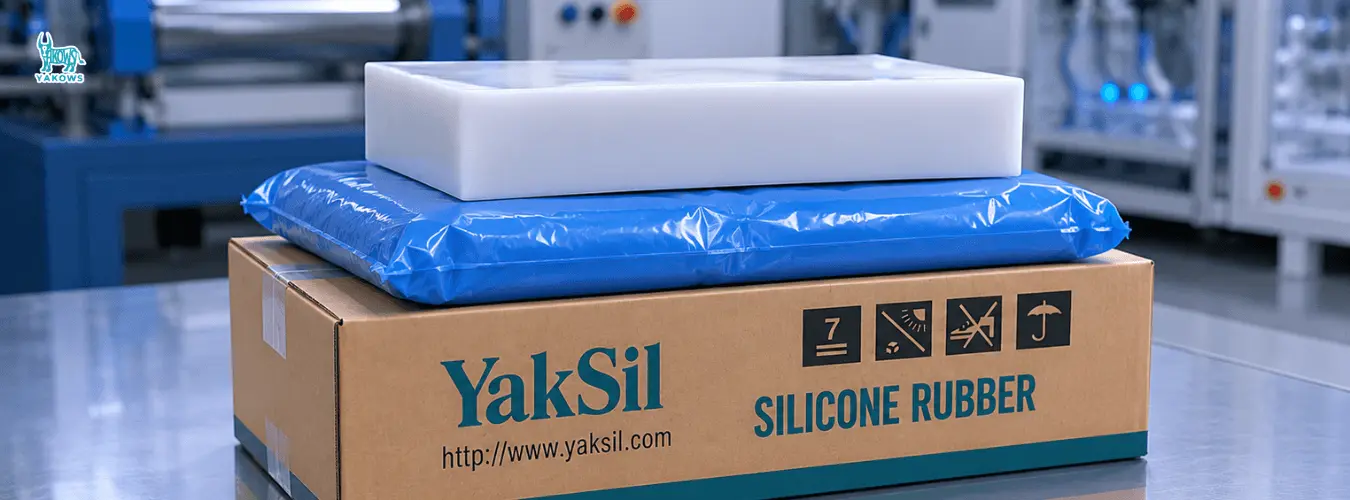
How Do You Choose the Right Silicone Rubber?
The best way to select silicone rubber is to begin with the requirements of the finished component rather than starting with a specific silicone grade.
Two silicone rubber compounds may have the same Shore A hardness but behave very differently in tear strength, compression set, electrical insulation, chemical resistance or processing. A material designed for medical tubing is not automatically suitable for a high-voltage composite insulator, and a thermally conductive silicone used in an EV battery system is very different from standard insulating silicone rubber.
Material selection should therefore consider the complete combination of silicone type, curing system, hardness, mechanical properties, temperature resistance, electrical performance, environment and manufacturing process.
Choose silicone rubber according to the finished application and processing requirements, not simply according to hardness, color or maximum temperature.
Start with the Application Requirements
Before comparing silicone rubber grades, define exactly what the component must do.
A seal must maintain compression and prevent leakage. A cable must remain flexible while providing electrical insulation. A medical component may require controlled formulation and sterilization compatibility. A composite insulator housing must resist electrical tracking, erosion, ultraviolet exposure and pollution.
| Requirement | Questions to Ask |
|---|---|
| Component function | Is the silicone used for sealing, insulation, vibration control, thermal transfer, tubing or structural protection? |
| Processing | Will the material be extruded, compression molded, injection molded, dispensed, cast or cured in place? |
| Hardness | How soft or firm must the final part be? |
| Temperature | What are the continuous, minimum and short-term peak temperatures? |
| Mechanical load | Will the part experience tension, compression, tearing, vibration or repeated movement? |
| Electrical performance | Should the silicone be insulating, semiconductive or electrically conductive? |
| Chemical exposure | Will it contact coolant, oil, fuel, cleaning agents, acids or other chemicals? |
| Environment | Will it be exposed to UV, ozone, moisture, pollution, weather or outdoor aging? |
| Regulatory needs | Does the application involve medical, food-contact, automotive or electrical qualification? |
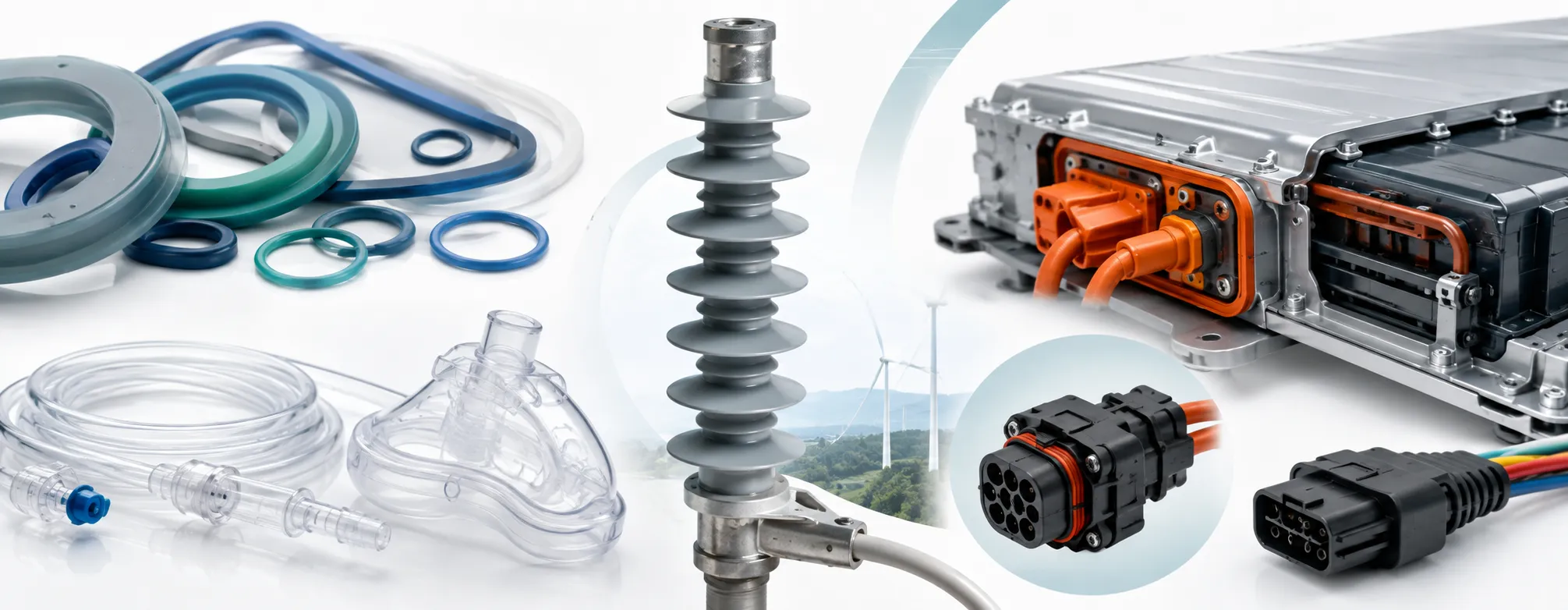
Understanding the Main Types of Silicone Rubber
Silicone rubber is available in several major processing families. HTV, HCR, LSR and RTV are often mentioned together, but they describe different material forms and curing approaches.
| Type | Uncured Form | Typical Processing | Typical Applications |
|---|---|---|---|
| HTV / HCR | Firm, gum-like compound | Extrusion, compression molding, transfer molding and HCR injection molding | Tubing, profiles, seals, cable insulation and composite insulator housings |
| LSR | Pumpable two-component liquid | Liquid injection molding | Precision seals, medical components, connectors and automated molded parts |
| RTV-1 | Paste or flowable one-part material | Dispensing and room-temperature curing | Sealing, bonding, electrical protection and formed-in-place gaskets |
| RTV-2 | Two-component liquid or paste | Mixing, casting, potting and room-temperature curing | Moldmaking, encapsulation, potting and flexible casting |
HTV Silicone Rubber
HTV silicone rubber means high-temperature vulcanizing silicone. It is normally cured using heat and is widely used in industrial manufacturing.
HTV silicone is commonly supplied as a high-consistency compound with a gum-like form. Because it does not flow like a liquid, it can be extruded, rolled, cut into preforms or mechanically fed into molding equipment.
HTV silicone is particularly useful when manufacturers need continuous profiles, tubing, wire insulation, molded gaskets or relatively large industrial components.
The material can be formulated for different hardness levels, colors, electrical properties, flame performance and resistance to outdoor environments.
When to Choose HTV Silicone
- Continuous extrusion is required
- The product is tubing or a long profile
- Mechanical strength and dimensional control are important
- Existing production equipment is designed for high-consistency rubber
- The application requires specialized electrical or high-voltage silicone compounds
HCR Silicone Rubber
HCR means high-consistency rubber. In practical silicone processing, HCR and HTV are often used to describe closely related high-consistency heat-cured silicone materials.
HCR describes the physical consistency of the uncured rubber, while HTV emphasizes the high-temperature vulcanizing process.
HCR compounds may be peroxide cured or use an addition-curing system depending on the formulation.
HCR silicone is suitable for extrusion, compression molding, transfer molding, calendering and specialized injection processes.
In many industrial applications the terms overlap, but HCR primarily describes high-consistency material form, while HTV describes heat-vulcanizing silicone technology.
Liquid Silicone Rubber
Liquid silicone rubber, or LSR, is a pumpable two-component silicone system normally processed through automated liquid injection molding.
Components A and B are accurately metered, mixed and injected into a heated mold. The silicone then cures into a flexible solid elastomer.
LSR's flow characteristics make it particularly suitable for complex geometry, thin sections and detailed precision components.
Advantages of LSR
- Excellent mold-filling behavior
- High production automation
- Accurate component metering
- Good dimensional consistency
- Suitable for small and complex molded parts
- Available in medical, electrical and automotive formulations
When to Choose LSR
LSR is often a strong choice for high-volume precision parts such as connector seals, membranes, medical components, grommets and intricate molded insulation parts.
RTV Silicone
RTV silicone means room-temperature vulcanizing silicone. Unlike HTV or LSR production systems, RTV silicone is normally applied directly to the final assembly and cured in place.
RTV silicone may be supplied as a one-part moisture-curing sealant or as a two-part system that begins curing after mixing.
Typical applications include bonding, sealing, electronic potting, protective coating, moldmaking and formed-in-place gaskets.
When RTV Is a Better Choice
- The silicone must cure directly on the component
- High-temperature molding equipment is not practical
- The application requires bonding or sealing
- Complex cavities need to be filled
- The silicone is used for electronic encapsulation or potting
HTV vs HCR vs LSR vs RTV
| Selection Factor | HTV / HCR | LSR | RTV |
|---|---|---|---|
| Uncured consistency | High-consistency gum | Pumpable liquid | Liquid or paste |
| Primary curing condition | Heat | Heat | Room temperature |
| Continuous extrusion | Excellent | Not typical | Not typical |
| Precision injection molding | Possible | Excellent | Not typical |
| Direct bonding | Requires specialized system | Special grades possible | Very common |
| Potting | Not typical | Not normally the first choice | Excellent |
| Production automation | Medium to high | Very high | Depends on dispensing system |
| Typical product | Tubing, profiles, seals and electrical housings | Precision molded parts | Sealants, adhesives and encapsulation |
How to Choose Silicone Rubber Hardness
Hardness is one of the first properties engineers compare when choosing silicone rubber.
Most flexible silicone rubber is specified using Shore A hardness. Softer materials deform easily and can conform to irregular surfaces, while harder grades provide more shape retention and resistance to deformation.
The correct hardness depends on component geometry, compression, assembly force and mechanical load.
| Approximate Hardness | General Behavior | Possible Application |
|---|---|---|
| 10–30 Shore A | Very soft and highly flexible | Soft interfaces, specialty seals and cushioning parts |
| 30–50 Shore A | Soft to medium flexibility | Medical components, connector seals and membranes |
| 50–70 Shore A | Balanced flexibility and shape retention | Industrial seals, tubing, automotive parts and electrical products |
| 70–80 Shore A | Firm silicone rubber | Structural seals, profiles and selected electrical housings |
These ranges are only general examples. Hardness alone does not determine tensile strength, tear strength, compression set or electrical performance.
Mechanical Properties to Compare
A silicone rubber selection should normally consider several mechanical properties together.
| Property | What It Tells You | Why It Matters |
|---|---|---|
| Shore hardness | Resistance to indentation | Influences flexibility and component feel |
| Tensile strength | Resistance to tensile failure | Important for stretched or loaded components |
| Elongation at break | How far the material can stretch before failure | Important for flexible components |
| Tear strength | Resistance to propagation of a cut or defect | Critical for thin sections and molded edges |
| Compression set | Permanent deformation after compression | Critical for long-life seals and gaskets |
| Modulus | Resistance to deformation under load | Important for structural response and assembly force |
Silicone Rubber Temperature Resistance
Temperature capability is one of silicone rubber's major advantages.
Many commercial silicone rubber compounds are designed for broad operating ranges, often extending from approximately -50°C to around 200°C. Specialty formulations can extend beyond these typical values.
These numbers should not be treated as universal ratings. Temperature performance varies according to polymer chemistry, fillers, curing system, exposure time and mechanical load.
Continuous Temperature
Continuous service temperature describes long-term operating conditions. This is normally more important than the highest temperature a material can survive briefly.
Peak Temperature
A silicone component may tolerate a higher temperature for a short time without immediate failure. A short-term peak rating should not automatically be used as the continuous operating limit.
Low-Temperature Performance
Silicone is also valued because it can remain flexible at temperatures where many conventional elastomers become significantly harder.
Always use the continuous and short-term temperature limits stated for the exact silicone compound instead of using a generic silicone temperature range.
Heat Aging Matters More Than Maximum Temperature
Silicone rubber does not have to melt or crack to lose performance.
Long-term thermal exposure can increase hardness, reduce elongation, change compression set and gradually affect mechanical properties.
For high-temperature products, compare properties before and after heat aging rather than looking only at the maximum temperature number.
Sealing applications should pay particular attention to compression-set performance after elevated-temperature exposure.
Electrical Properties of Silicone Rubber
Silicone rubber is widely used in electrical applications because suitable formulations provide high electrical resistance while remaining flexible.
Important electrical properties can include:
- Volume resistivity
- Surface resistivity
- Dielectric strength
- Dielectric constant
- Dissipation factor
- Tracking resistance
- Arc resistance
Not all silicone rubber is electrically insulating. Specialized formulations can also be conductive or semiconductive.
Electrical Insulating Silicone Rubber
Insulating silicone compounds are widely used around wires, cables, connectors, electrical equipment, batteries and high-voltage components.
A material may have excellent laboratory dielectric strength but still fail in a poorly designed component. Wall thickness, creepage distance, air gaps, contamination and electric-field concentration also affect electrical performance.
Conductive Silicone Rubber
Conductive fillers can be incorporated into silicone rubber to create electrically conductive compounds.
These materials may be used in EMI shielding, conductive gaskets, grounding contacts and specialized electronic components.
Conductive silicone and insulating silicone can look very similar, so electrical behavior should always be confirmed from technical data rather than appearance.
Thermally Conductive Silicone Rubber
Standard silicone rubber is not automatically a high-performance thermal conductor.
Thermally conductive silicone contains specially selected fillers that increase heat transfer through the material while the silicone provides flexibility and, in many formulations, electrical insulation.
Applications include thermal pads, gap fillers, electronic interfaces, battery systems, inverters and power electronics.
Increasing thermal filler content can change hardness, density, elongation, viscosity and processing behavior. Thermal conductivity should therefore be balanced against mechanical requirements.
Flame-Retardant Silicone Rubber
Silicone has useful thermal stability, but this does not mean every silicone rubber compound has the same flame behavior.
Electrical, transportation and battery applications may require specially formulated flame-retardant silicone.
When flame performance is required, select the material according to the required test method and classification rather than relying on the general description “heat-resistant silicone.”
Chemical Resistance
Silicone provides useful resistance to water, weathering and many environmental conditions, but it is not universally resistant to every chemical.
Certain oils, fuels, solvents and process chemicals can cause swelling or changes in mechanical properties.
Temperature can make chemical exposure more severe. A compound that performs acceptably in a fluid at room temperature may behave differently at 120°C.
Chemical compatibility should therefore be evaluated using the actual silicone compound, fluid concentration, exposure temperature and duration.
Medical Grade Silicone Selection
Silicone rubber is widely used in healthcare because it can combine flexibility, cleanliness, transparency, temperature stability and multiple manufacturing options.
Medical silicone can be supplied as LSR, HCR, tubing compounds, gels, adhesives and other specialized formulations.
Selection should begin with the finished medical device and its actual contact conditions rather than relying only on the term medical grade silicone.
Important Medical Selection Factors
- Body-contact type
- Contact duration
- Biological evaluation requirements
- Sterilization method
- Material traceability
- Manufacturing cleanliness
- Pigment and additive control
- Mechanical properties
- Change-control requirements
Medical suitability should be evaluated for the exact grade and finished component. General industrial silicone should not automatically be substituted for a healthcare-specific formulation.
LSR for Medical Applications
Medical LSR is widely used for precision molded components because automated injection molding can provide repeatable mixing and detailed part geometry.
Potential applications include valves, seals, membranes, respiratory components, wearable-device components and other precision molded healthcare parts.
LSR is particularly attractive when production volume is high and small dimensional variation is important.
HCR and HTV for Medical Applications
HCR and HTV silicone are particularly useful for medical tubing, profiles and molded components requiring high-consistency rubber processing.
Extrusion allows long lengths of flexible tubing to be produced efficiently, while molding can be used for seals and other components.
The exact curing system, post-curing requirements and biological documentation should be confirmed for the selected material.
Silicone Rubber for NEV Applications
New energy vehicles place unusual demands on elastomers because materials may experience high voltage, heat, coolant, vibration, moisture and repeated thermal cycling simultaneously.
Silicone rubber can be used throughout battery systems, charging systems, high-voltage connectors and power electronics.
| NEV Application | Silicone Function | Important Properties |
|---|---|---|
| Battery enclosure | Gasket and environmental seal | Compression set, temperature resistance and sealing |
| High-voltage connector | Connector and cable seal | Electrical insulation, flexibility and sealing |
| Battery thermal pad | Thermal interface | Thermal conductivity and electrical insulation |
| Power electronics | Potting, encapsulation and thermal interface | Electrical properties and heat resistance |
| Charging port | Weather seal | UV, ozone, water and low-temperature resistance |
| HV cable | Flexible insulation or protective component | Electrical insulation and temperature resistance |
Choosing Silicone Rubber for an EV Battery
Battery applications often require silicone to perform several functions simultaneously.
A battery gasket must maintain sealing force during repeated thermal cycling. A thermal pad must transfer heat while maintaining electrical isolation. A connector seal must resist moisture while remaining flexible around high-voltage interfaces.
For this reason, the phrase “EV silicone rubber” is not specific enough for material selection.
The silicone formulation should be matched to the exact component function.
Silicone Rubber for Composite Insulators
High-voltage composite insulators are another specialized application in which ordinary silicone rubber may not be sufficient.
A typical composite insulator contains a fiberglass-reinforced polymer core, silicone rubber housing and weather sheds, and metal end fittings.
The silicone housing protects the FRP core from moisture and weather exposure while providing the external electrical insulation surface.
Important Silicone Properties for Composite Insulators
- Hydrophobicity
- Hydrophobicity recovery
- Tracking resistance
- Erosion resistance
- Electrical insulation
- UV resistance
- Ozone resistance
- Tear strength
- Temperature flexibility
- Adhesion to the FRP core system
Why Hydrophobicity Matters in Composite Insulators
Hydrophobic silicone surfaces encourage water to form separate droplets rather than spreading easily into a continuous film.
This behavior can help reduce surface leakage current when an outdoor insulator becomes wet or contaminated.
Suitable silicone formulations can also recover hydrophobic behavior after temporary surface stress.
Hydrophobicity is important, but it does not replace appropriate creepage distance, shed geometry and electric-field design.
Tracking and Erosion Resistance
Outdoor high-voltage insulation can experience surface leakage current and dry-band arcing under wet and polluted conditions.
Repeated discharge can generate intense localized heat and gradually erode unsuitable polymer housing materials.
Composite insulator applications therefore require dedicated high-voltage silicone compounds with suitable tracking and erosion resistance.
HTV vs LSR for Composite Insulators
Both high-consistency silicone and specially formulated liquid silicone rubber can be used in high-voltage insulation applications.
| Factor | HTV / HCR | LSR |
|---|---|---|
| Uncured form | High-consistency gum | Pumpable liquid |
| Material feeding | Mechanical feeding or preforms | Metering pumps |
| Mold flow | Requires greater pressure | Excellent flow into complex geometry |
| Automation | Depends on molding system | Highly suitable |
| Important process control | Compound preparation and mold filling | Mixing ratio and cure inhibition |
Neither technology is universally better. The correct choice depends on insulator design, equipment, material formulation and production requirements.
FRP Core Adhesion in Composite Insulators
A high-quality silicone compound cannot compensate for poor bonding between the silicone housing and the fiberglass core.
Moisture entering the housing-to-core interface can create serious long-term reliability problems.
The silicone compound, primer, core resin, surface preparation and molding conditions should therefore be tested as a complete interface system.
Good silicone + poor FRP adhesion can still produce a poor composite insulator.
Outdoor Silicone Rubber Selection
Outdoor silicone components may experience sunlight, rain, ozone, humidity, pollution, freezing temperatures and large thermal cycles.
Silicone generally provides strong UV and ozone resistance, but formulation still matters.
Outdoor electrical applications may need additional tracking and erosion resistance, while mechanical outdoor seals may place more emphasis on tear strength and compression set.
Silicone Rubber Color and Pigments
Silicone can be supplied in many colors, but pigmentation should be considered part of the complete formulation.
Pigments can influence curing, electrical properties, UV stability and biological requirements.
Medical, electrical and high-voltage applications should use pigment systems approved for the selected base silicone rather than adding an uncontrolled color masterbatch.
Choosing the Correct Curing System
Silicone rubber can use different curing technologies.
Peroxide Cure
Peroxide systems are commonly used in HCR and HTV production, particularly for extrusion and general industrial molding.
Platinum Addition Cure
Platinum-catalyzed silicone is widely used in LSR and selected HCR systems. It can provide controlled curing and is commonly used in precision, healthcare and high-quality industrial components.
Platinum systems require good contamination control because certain chemicals can inhibit curing.
Condensation Cure
Condensation curing is frequently associated with RTV silicone systems used for sealing, casting and moldmaking.
Processing Method Should Influence Material Selection
| Manufacturing Process | Common Silicone Choice |
|---|---|
| Continuous extrusion | HCR / HTV |
| Compression molding | HCR / HTV |
| Precision automated injection molding | LSR |
| Direct sealant application | RTV-1 |
| Potting and encapsulation | RTV-2 or silicone gel |
| Continuous medical tubing | Medical HCR |
| Precision medical molded part | Medical LSR |
| Composite insulator housing | High-voltage HTV/HCR or specialized LSR |
Silicone Rubber Selection by Application
| Application | Recommended Starting Point | Key Properties |
|---|---|---|
| Industrial gasket | HCR / HTV | Compression set, hardness and temperature resistance |
| Extruded tubing | HCR / HTV | Extrusion stability, tear strength and flexibility |
| Precision connector seal | LSR | Dimensional accuracy, compression set and tear strength |
| Medical molded component | Medical LSR | Documentation, biocompatibility strategy and precision molding |
| Medical tubing | Medical HCR | Cleanliness, extrusion and sterilization compatibility |
| Electronic potting | RTV-2 or silicone gel | Dielectric properties, flow and thermal behavior |
| EV battery gasket | Automotive silicone elastomer | Compression set, heat aging and sealing |
| EV thermal pad | Thermally conductive silicone | Thermal conductivity, softness and electrical insulation |
| High-voltage connector | Electrical-grade LSR or HCR | Dielectric properties, sealing and thermal stability |
| Composite insulator | High-voltage silicone rubber | Hydrophobicity, tracking resistance, erosion resistance and FRP adhesion |
What to Check on a Silicone Rubber Data Sheet
A technical data sheet is useful for initial screening, but values should be interpreted together with test conditions.
| Data Item | Why It Matters |
|---|---|
| Silicone type | Identifies HCR, LSR, RTV or another processing family |
| Hardness | Indicates indentation resistance and flexibility |
| Density | Useful for formulation comparison and component weight calculations |
| Tensile strength | Helps evaluate mechanical durability |
| Elongation | Shows deformation capability before rupture |
| Tear strength | Important for thin or damage-sensitive parts |
| Compression set | Critical for sealing performance |
| Temperature range | Supports thermal design |
| Electrical properties | Required for insulation and electronic applications |
| Curing conditions | Required for stable production |
| Storage and shelf life | Important for material handling |
Questions to Ask a Silicone Rubber Supplier
- Is the material HCR, HTV, LSR or RTV?
- Which curing system is used?
- What processing method is recommended?
- What Shore hardness is available?
- What are the tensile, elongation and tear values?
- What is the compression set?
- What are the continuous and peak temperature limits?
- How does heat aging affect the mechanical properties?
- What electrical data are available?
- Is the material insulating, conductive or thermally conductive?
- What chemical compatibility data are available?
- Which pigments and additives are approved?
- Is post-curing required?
- What storage conditions apply?
- What certifications or application-specific documentation are available?
- How are formulation changes controlled?
Common Silicone Rubber Selection Mistakes
Choosing Only by Shore Hardness
Hardness does not describe tear resistance, heat aging, compression set or electrical properties.
Choosing Only by Maximum Temperature
Peak temperature and continuous operating temperature are not the same.
Assuming All Silicone Is Electrically Insulating
Conductive and semiconductive formulations also exist.
Assuming All Silicone Is Thermally Conductive
High thermal conductivity requires a specialized filled compound.
Ignoring Compression Set
A seal may look undamaged but fail because it permanently loses sealing force.
Using General-Purpose Silicone in Medical Applications
Healthcare products may require specialized material documentation, formulation control and device-specific evaluation.
Using Ordinary Silicone for Composite Insulators
High-voltage housings need specialized resistance to tracking, erosion and outdoor electrical stress.
Ignoring Manufacturing Process
A material may have excellent final properties but still be unsuitable for the available molding or extrusion equipment.
Ignoring Bonded Interfaces
Adhesion to metal, plastic, FRP or another substrate can be as important as the properties of the silicone itself.
A Practical Silicone Rubber Selection Checklist
- Define the application function. Determine exactly what the silicone component must do.
- Select the material family. Compare HTV/HCR, LSR and RTV.
- Choose the manufacturing process. Match the material to extrusion, molding or dispensing equipment.
- Specify hardness. Select an appropriate Shore A range rather than simply choosing the hardest material.
- Review tensile and tear properties. Include actual mechanical loading conditions.
- Check compression set. Give this high priority for seals and gaskets.
- Define the temperature range. Separate continuous temperature from short-term peaks.
- Check electrical performance. Determine whether insulation, conductivity or thermal conductivity is required.
- Review chemical exposure. Consider the actual fluid and temperature together.
- Evaluate UV and outdoor conditions. Include ozone, humidity, pollution and weathering.
- Define regulatory requirements. Medical and other controlled applications may require additional documentation.
- Check bonding requirements. Verify primer and substrate compatibility.
- Review curing conditions. Confirm cure temperature, time and possible post-cure requirements.
- Run production trials. Confirm that the compound processes consistently.
- Test the finished component. Material data alone cannot validate the final design.
Frequently Asked Questions
How do I choose silicone rubber?
Start with the component function and manufacturing process, then compare hardness, mechanical properties, temperature resistance, electrical requirements, chemical exposure and application-specific qualifications.
What is the difference between HTV and HCR silicone?
HCR describes high-consistency rubber, while HTV describes high-temperature vulcanizing silicone. The terms often overlap in industrial silicone processing.
What is the difference between HCR and LSR?
HCR is a firm, gum-like high-consistency material, while LSR is a pumpable two-component liquid designed primarily for automated injection molding.
What is the difference between HTV and RTV silicone?
HTV silicone is normally heat cured during molding or extrusion, while RTV silicone is applied as a liquid or paste and cures at or near room temperature.
What hardness silicone rubber should I choose?
The correct hardness depends on flexibility, sealing force, geometry and mechanical load. Hardness should be selected together with tear strength, compression set and tensile properties.
What temperature can silicone rubber withstand?
Many commercial silicone compounds operate across a broad range, often around -50°C to approximately 200°C, but the exact continuous and peak limits depend on the formulation.
Is silicone rubber electrically insulating?
Many silicone grades are excellent electrical insulators, but conductive and semiconductive formulations are also available.
Is silicone rubber thermally conductive?
Standard silicone has limited thermal conductivity. Specialized thermally conductive silicone uses fillers to provide significantly improved heat transfer.
Which silicone is best for medical products?
Medical LSR and HCR are widely used, but the correct material depends on device function, body contact, sterilization, manufacturing process and required documentation.
Which silicone is used in electric vehicles?
Different formulations are used for battery seals, high-voltage connectors, charging systems, thermal pads and power electronics. There is no single universal EV silicone grade.
Which silicone rubber is used for composite insulators?
Dedicated high-voltage silicone compounds are used because composite insulators require hydrophobicity, electrical insulation, tracking and erosion resistance, weather durability and reliable bonding to the FRP core system.
Is harder silicone always better?
No. Higher hardness can increase shape retention but may reduce flexibility or alter sealing behavior. The correct hardness depends on the product design.
Should I choose silicone based on a technical data sheet?
A technical data sheet is useful for initial screening, but the selected material should also be tested in the actual manufacturing process and finished component.