Silicone Rubber Technical FAQ
Home / FAQs
Silicone Rubber FAQ
Answers to common technical and purchasing questions about silicone rubber, including HTV/HCR, liquid silicone rubber (LSR), RTV silicone, material properties, processing, testing, electrical insulation, medical and food-contact applications, customization and technical documentation.
This guide is designed for engineers, purchasing teams and silicone-product manufacturers evaluating a material for molding, extrusion, sealing, electrical insulation or precision liquid injection molding. Exact values such as hardness, cure conditions, operating temperature and compliance status should always be confirmed against the technical data sheet and supporting documents for the selected grade.
HTV vs LSR vs RTV Silicone
These names describe different silicone material forms and processing routes. The right choice depends on the part design, manufacturing method, performance target and production volume.
| 特集 | HTV / HCR Silicone Rubber | Liquid Silicone Rubber (LSR) | RTVシリコーン |
|---|---|---|---|
| Material form | Solid, high-consistency compound | Two-component flowable liquid system | Liquid, paste, gel or flowable material |
| 代表的な処理 | Compression molding, extrusion, transfer molding | 液体射出成形 | Dispensing, casting, coating, sealing or potting |
| Cure approach | Heat cured; peroxide or platinum systems depending on grade | Typically platinum-catalyzed and cured in a heated mold | Cures at or near room temperature, depending on chemistry |
| Typical strengths | Broad hardness range, robust molding and extrusion options, industrial and electrical grades | Precision molding, complex geometry, automated high-volume production | Convenient sealing, bonding, coating, potting and mold-making applications |
| Common uses | Seals, profiles, molded parts, wire/cable, composite insulators | Medical parts, precision seals, electronics, automotive and technical components | Sealants, adhesives, gaskets, electronics protection, industrial maintenance |
Silicone Rubber Basics
Start here if you are comparing silicone with other elastomers or trying to understand the main silicone rubber families before selecting a grade.
01What is silicone rubber?
Silicone rubber is an elastomer based on a silicon-oxygen polymer backbone. After curing, it forms a flexible rubber-like material valued for thermal stability, weather and ozone resistance, electrical insulation, elasticity and long-term performance. Different formulations can be designed for molding, extrusion, liquid injection molding, sealing, food-contact, medical-related, flame-retardant and electrical-insulation applications. The term “silicone rubber” therefore describes a broad material family rather than one universal compound.
02What is the difference between silicon and silicone?
Silicon is a chemical element, while silicone is a family of synthetic polymers containing silicon, oxygen and organic groups. Silicone rubber is one form of silicone polymer that is crosslinked to create an elastic material. In industrial purchasing, “silicone rubber” is the more accurate term when discussing HTV/HCR compounds, LSR, molded silicone parts, seals, gaskets or electrical-insulation housings.
03What are the main types of silicone rubber?
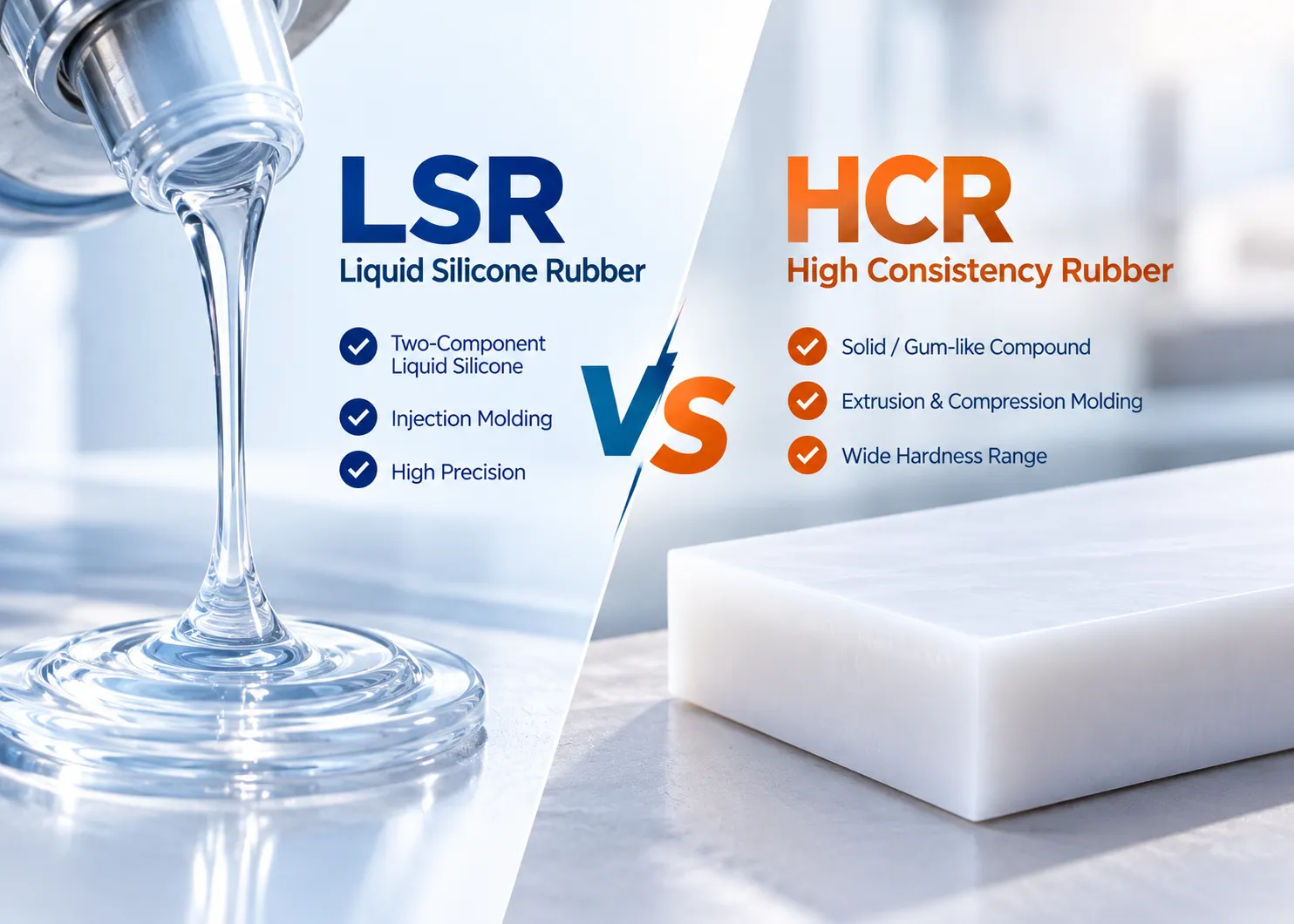
The most common industrial categories include HTV/HCR silicone rubber, liquid silicone rubber (LSR) and room-temperature-vulcanizing (RTV) silicone. HTV/HCR is a solid high-consistency material commonly processed by compression molding or extrusion. LSR is a two-component liquid system used for precision injection molding. RTV silicone cures at or near room temperature and is often used for sealing, bonding, coating, potting or mold making.
04Why is silicone rubber used instead of conventional organic rubber?
Silicone rubber is often selected when an application requires a combination of temperature stability, UV and ozone resistance, electrical properties, flexibility and long-term weathering performance. Conventional rubbers such as EPDM, NBR or natural rubber can be better choices in other conditions, especially where oil resistance, abrasion resistance, cost or specific mechanical characteristics dominate. Material selection should therefore be based on the actual environment rather than assuming silicone is automatically superior.
05Is silicone rubber naturally heat resistant?
Silicone elastomers are generally known for retaining flexibility over a wider temperature range than many conventional organic rubbers, but the usable continuous and peak temperatures depend on formulation, cure system, load, exposure time and surrounding chemicals. A generic temperature range should not be applied to every grade. For engineering approval, use the operating-temperature data stated in the selected product TDS and validate the material under realistic service conditions.
06Is silicone rubber waterproof and weather resistant?
Cured silicone rubber generally has strong resistance to moisture, ozone, UV exposure and outdoor weathering, which is why it is widely used for sealing and electrical applications. However, “water resistant” does not automatically mean a material is qualified for continuous immersion, high-pressure fluid service, drinking-water contact or every outdoor environment. Grade selection should consider the complete exposure conditions, mechanical stress and any required qualification.
HTV / HCR Silicone Rubber FAQ
Questions about solid, heat-cured silicone compounds for molding, extrusion, electrical insulation and demanding industrial products.
01What does HTV mean in silicone rubber?
HTV means High Temperature Vulcanized silicone rubber. It is a solid silicone elastomer that is cured with heat and is widely used for molded and extruded products. In many industrial contexts it overlaps with the term HCR, meaning High Consistency Rubber. Yakows HTV/HCR product families include general-purpose, high-tear, anti-yellowing, flame-retardant, selected food/medical-related and electrical-insulation formulations.
02Is HTV silicone rubber the same as HCR?
The terms are often used for the same general family of solid, high-consistency silicone elastomers, although naming conventions vary between suppliers and markets. “HTV” emphasizes heat vulcanization, while “HCR” emphasizes the high-consistency physical form. When comparing materials, the exact grade, cure chemistry, hardness, mechanical properties and intended process are more important than the abbreviation alone.
03What hardness is available for HTV silicone rubber?
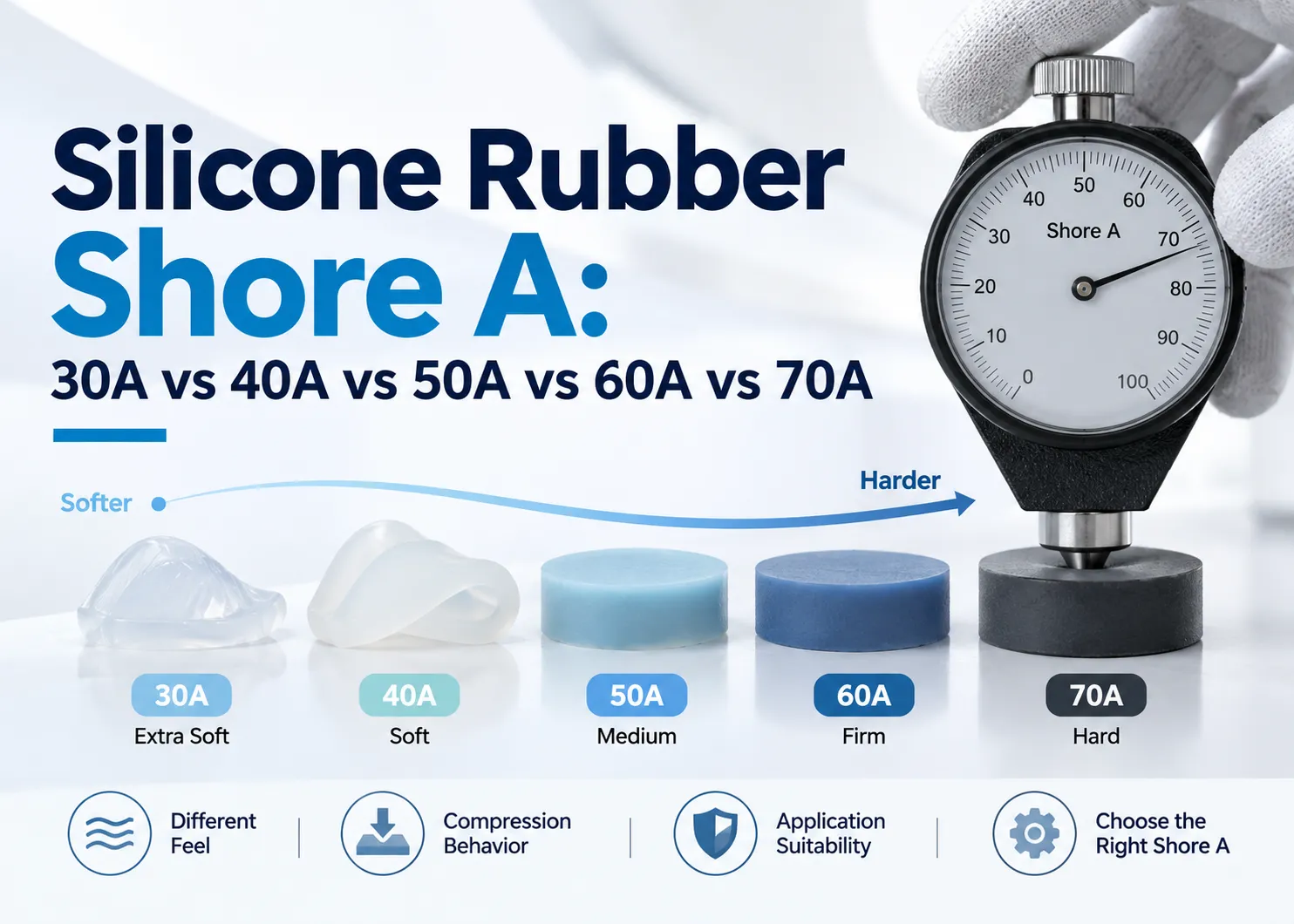
Current Yakows HTV product families include selected hardness options from approximately 30A to 90A Shore A. The appropriate hardness depends on the required flexibility, sealing force, dimensional stability, part geometry and processing method. High hardness alone does not mean higher overall quality; tensile strength, tear resistance, elongation, compression behavior and the application environment should be considered together.
04How is HTV silicone rubber cured?
Depending on the formulation, HTV silicone rubber may use peroxide curing or platinum-catalyzed curing. Cure temperature, cure time and any post-curing requirement must be taken from the specific product data rather than applying one generic schedule to all HTV compounds. Processing conditions also depend on part thickness, mold design, equipment, pigment, additives and the required final properties.
05Which manufacturing processes are used with HTV silicone rubber?
Common processes include compression molding, extrusion and transfer molding. Compression molding is widely used for gaskets, pads, keypads and custom parts. Extrusion is suited to profiles, cords, tubing, sleeves and continuous seals. Specialized electrical-insulation products, including composite-insulator housings, may require dedicated formulation and processing controls. The compound should be selected around the customer’s actual equipment and production route.
06When should I choose a high-tear HTV silicone rubber?
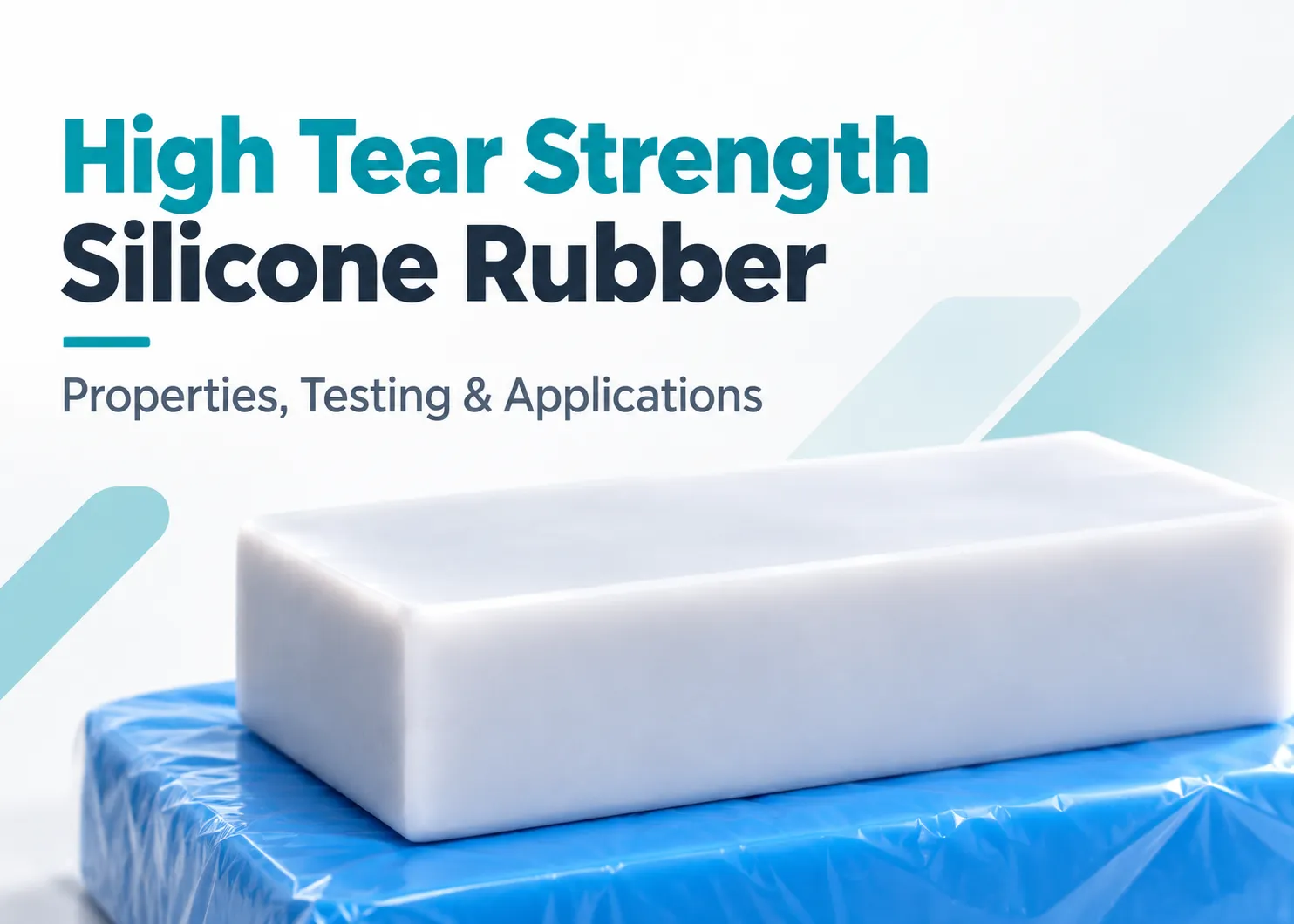
High-tear formulations are useful when a molded or extruded part is exposed to repeated deformation, thin sections, difficult demolding, notch sensitivity or mechanical handling that could initiate a crack. Tear resistance should be evaluated together with tensile strength, elongation and hardness. For parts with sharp geometry or high stress concentration, design changes may be as important as changing the compound.
07Can HTV silicone rubber be used for electrical insulation and composite insulators?
Yes. Yakows has dedicated HTV silicone rubber solutions for composite and hollow-core insulator applications. These formulations are selected around outdoor insulation requirements such as hydrophobicity, tracking and erosion resistance, weather aging, electrical performance and mechanical durability. Material approval should be based on the required electrical test program and the exact insulator design, voltage class and operating environment.
Liquid Silicone Rubber (LSR) FAQ
LSR is chosen for automated injection molding, precision parts and applications that benefit from a low-viscosity two-component silicone system.
01What is liquid silicone rubber?
Liquid Silicone Rubber (LSR) is a two-component, flowable silicone elastomer commonly processed using liquid injection molding. The components are metered, mixed and delivered into a heated mold where the material cures into an elastic part. LSR is commonly selected for precision components, complex geometries, automated high-volume production and applications where consistent molding and clean part detail are important.
02How does LSR differ from solid HTV/HCR silicone rubber?
The main differences are physical form and processing method. HTV/HCR is a solid high-consistency compound used in molding and extrusion, while LSR is a pumpable two-component liquid system designed primarily for injection molding. LSR supports automated metering and complex precision parts; HTV/HCR offers a broad range of solid-compound processing options. The better choice depends on equipment, annual volume, geometry, required properties and tooling strategy.
03Is LSR always mixed at a 1:1 ratio?
Many commercial LSR systems use a 1:1 A/B mixing ratio, including systems described on current Yakows product pages, but a mixing ratio should never be assumed without checking the exact grade documentation. Accurate metering and homogeneous mixing are important because incorrect ratios, poor mixing or contamination can affect cure behavior, surface quality and final mechanical properties.
04What are the main advantages of LSR injection molding?
LSR injection molding can support accurate dosing, automated production, complex part geometry, fine details and consistent repeatability. Its flow behavior can make it suitable for thin sections and intricate molds that are more difficult to fill with high-consistency materials. Final performance still depends on material grade, mold design, venting, dosing accuracy, injection conditions, cure temperature and process control.
05Can LSR be used for medical components?
Selected LSR grades are widely used in healthcare-related components because silicone can offer flexibility, thermal stability and compatibility with precision molding. However, “medical grade” should be tied to the exact formulation, intended body-contact category, sterilization method and applicable test documentation. A material suitable for one medical component should not automatically be described as suitable for implants or every type of patient contact.
06What can inhibit the cure of platinum-catalyzed LSR?
Platinum-catalyzed silicone systems can be sensitive to contamination from certain sulfur-containing materials, amines, tin compounds and other catalyst poisons. Contamination may cause incomplete cure, tacky surfaces or inconsistent properties. Production tools, pigments, release agents, cleaning chemicals and contact materials should therefore be checked for compatibility when moving a new LSR grade into production.
Silicone Rubber Properties & Testing FAQ
Mechanical, thermal and processing data should be evaluated as a system. One attractive property value rarely determines whether a compound will work in production.
01What does Shore A hardness mean for silicone rubber?
Shore A hardness describes the indentation hardness of an elastomer. Softer compounds can provide more conformability and lower sealing force, while harder compounds may offer greater shape stability. Hardness is useful for comparing materials, but it does not directly predict tensile strength, tear resistance, compression set or service life. The target value should be chosen around part geometry and functional requirements.
02What is tensile strength in silicone rubber?
Tensile strength is the maximum stress a cured specimen withstands while being stretched before rupture under the specified test method. It helps compare mechanical strength between formulations and production batches. For real components, tensile performance must be considered together with elongation, tear resistance, wall thickness, stress concentration, aging and the direction of applied loads.
03What is tear strength and why does it matter?
Tear strength evaluates resistance to the growth of a cut or crack in a cured elastomer specimen. It is particularly relevant for thin molded parts, flexible components, products with sharp edges, demolding operations and applications exposed to repeated mechanical deformation. A high-tear compound may improve durability, but geometry and molding quality also strongly affect crack initiation.
04What does elongation at break tell me?
Elongation at break indicates how far a cured silicone specimen can stretch before it fails under the specified tensile test. It is useful when evaluating flexibility and deformation capability, but a higher number is not automatically better for every product. Seals, insulator housings, membranes and structural molded components can require different balances of elongation, hardness, tensile strength and tear resistance.
05What is compression set in silicone rubber?
Compression set measures the permanent deformation remaining after a rubber specimen has been compressed for a defined time and temperature and then allowed to recover. It is important for gaskets, seals and components that must maintain sealing force during long-term compression. The result depends on test conditions, formulation, cure state and part design, so values should be compared only under equivalent conditions.
06Why is cure behavior tested?
Cure behavior helps engineers understand how a silicone compound develops its final network during processing. It can be used to compare formulations, set a practical processing window and identify changes between batches. Cure conditions should be optimized together with mold temperature, part thickness, cycle time and post-curing requirements rather than copied from another grade.
07How does heat aging affect silicone rubber?
Heat aging can change hardness, tensile strength, elongation, tear performance, color and surface condition over time. Accelerated aging tests are used to compare how a formulation changes after controlled temperature exposure. The best test program reproduces the expected service environment as closely as practical, including thermal cycling, mechanical stress and any chemicals or electrical conditions that may act together in the field.
Applications, Electrical Insulation & Compliance FAQ
Application claims and compliance documents should always be linked to the exact material grade. One certificate or test report should not be assumed to cover an entire silicone product family.
01Why is silicone rubber used for composite insulators?
Silicone rubber is widely used for outdoor composite-insulator housings because properly formulated grades can combine electrical insulation, surface hydrophobicity, UV and weather resistance, elasticity and resistance to tracking and erosion. For high-voltage applications, the formulation must be evaluated as an electrical-insulation material rather than as a generic silicone rubber. Pollution level, moisture, voltage class, creepage design and required test standards all influence material selection.
02Is silicone rubber suitable for automotive and new-energy-vehicle applications?
Silicone rubber is used in automotive systems for seals, thermal-management components, electrical protection, high-temperature parts and other applications where elasticity and environmental stability are needed. New-energy vehicles can add requirements related to high-voltage insulation, flame performance, thermal cycling and long-term reliability. The exact grade should be selected around the component and validation requirements rather than using a general automotive claim.
03What does “medical-grade silicone rubber” mean?
“Medical grade” is not one universal material specification. It should refer to a specific formulation supported by the documentation and testing required for its intended medical use. Selection depends on the component, duration and type of patient contact, sterilization method, manufacturing process and target market. Buyers should request grade-specific test reports rather than relying on a general medical claim applied to all silicone rubber.
04What does “food-grade silicone rubber” mean?
Food-contact silicone should be selected from a grade intended for the relevant food-contact application and supported by applicable documentation. Requirements can differ between markets and product categories. Color, cure chemistry, post-curing, extractables, odor and the final manufacturing process can all matter. A supplier’s general statement about food-grade capability should not replace documentation for the exact compound purchased.
05Can silicone rubber be flame retardant?
Yes. Flame-retardant silicone formulations can be developed for electrical, wire-and-cable, automotive and industrial applications. The required flame performance should be clearly specified because different ratings and test methods are not interchangeable. If a project requires a particular UL-related classification or another flammability standard, the buyer should confirm that the selected grade has documentation applicable to the exact requirement.
06Which compliance documents can be available with silicone rubber?
Depending on the product family and project, current Yakows product pages reference support for TDS, SDS, COA and selected compliance or test documentation such as RoHS, REACH, FDA, LFGB, PAHs and UL-related requirements. Availability should be checked by exact grade. It is better procurement practice to request the relevant document before sampling or mass production than to assume one certificate applies to every formulation.
Customization, Sampling & Purchasing FAQ
The fastest route to the right silicone rubber is to provide clear engineering requirements before requesting a sample or quotation.
01Can Yakows customize silicone rubber hardness and color?
Yes. Current Yakows product information includes hardness, color and formulation customization across selected HTV/HCR and LSR product families. The achievable range depends on the grade and performance target. A major color or hardness change can also affect cure behavior, appearance or mechanical properties, so the customized compound should be sampled and tested under the customer’s actual process before final approval.
02Can a silicone rubber formulation be adjusted for a specific application?
Application-oriented formulation support can be used when a standard grade does not meet the required combination of hardness, tear strength, appearance, electrical performance, flame resistance, processing behavior or compliance needs. The development target should be defined with measurable requirements. Yakows’ laboratory and technical team can then use sample preparation and material testing to compare candidate formulations before scale-up.
03What information should I provide when requesting a silicone rubber recommendation?
Provide the final application, target hardness, color, processing method, cure system if known, operating temperature, mechanical-property targets, electrical or flame requirements, chemical exposure, applicable compliance documents and expected order volume. For an existing part, information about current material problems—such as tearing, poor demolding, cure instability, yellowing or compression set—can make grade selection much more efficient.
04Can I request a sample before mass production?
Sampling is an important step when approving a new silicone formulation or changing suppliers. Sample quantity, availability and preparation depend on the grade and customization required. During evaluation, use the customer’s actual molding or extrusion process where possible and compare critical properties after the intended cure and post-cure cycle rather than judging only the uncured compound.
05What technical documents should I request from a silicone rubber supplier?
For material qualification, buyers commonly request the Technical Data Sheet (TDS), Safety Data Sheet (SDS), Certificate of Analysis (COA) where applicable, and any compliance or test reports required by the project. The document set should reference the exact grade being evaluated. For regulated or safety-critical applications, confirm the test method, revision date and scope of the supporting documentation.
06How does Yakows support silicone rubber quality control?
Yakows’ current laboratory page presents in-house capabilities for material testing, compound development, failure analysis and technical support. Quality verification can include tests such as hardness, tensile strength, tear strength, resilience, plasticity, compression behavior, cure characteristics and aging, depending on the product and project. Production quality should ultimately be controlled against agreed grade-specific specifications and batch documentation.
07How long does a silicone rubber order take?
Lead time depends on whether the material is a standard stocked grade or a customized formulation, as well as quantity, color, testing, documentation and production schedule. For an accurate delivery estimate, provide the target grade, quantity, packaging requirement and destination when requesting a quotation. Customized material should allow additional time for sample approval and production validation.
Silicone Rubber Selection Checklist
A complete requirement brief reduces repeated sampling and helps the technical team recommend a more appropriate HTV, LSR or custom silicone compound.
Final Application
Seal, gasket, molded component, extrusion, cable accessory, composite insulator, medical part or another product.
処理方法
Compression molding, extrusion, transfer molding, LSR injection molding or another process.
Material Targets
Hardness, color, tensile strength, tear resistance, elongation, compression set or appearance.
Service Environment
Temperature, UV, moisture, chemicals, electrical stress, flame exposure and mechanical loading.
Compliance
Specify the exact market, test report or documentation needed instead of using a generic “certified” requirement.
Commercial Requirements
Sample quantity, estimated annual volume, packaging, destination and target production schedule.
Still Have a Silicone Rubber Question?
Send your application, processing method, hardness target and required performance. Yakows can help narrow the material choice and provide grade-specific technical information for evaluation.