01
Hardness Is a Starting Point
Shore A gives a fast indication of indentation resistance and part feel, but it cannot predict tensile strength, tear resistance, compression recovery or long-term aging by itself.

High hardness silicone rubber combines the thermal stability and environmental resistance of silicone with greater rigidity, dimensional control and resistance to deformation. It is commonly considered when standard soft silicone is too compliant for load-bearing seals, precision molded parts, industrial rollers, rigid profiles or components that must maintain geometry under compression.
Silicone rubber is an elastomeric material valued for its broad service-temperature capability, electrical insulation, weatherability and long-term flexibility. High hardness silicone rubber shifts the formulation toward the firmer end of the Shore A scale so that the finished part deflects less under the same load.
In practical engineering terms, a higher Shore A number does not simply mean “better silicone.” It means a different balance of stiffness, compression behavior, resilience, processing characteristics and part feel. A 90 Shore A compound may be useful for a supporting pad or rigid molded feature, while a softer compound may still be the better choice for a gasket that needs to conform to uneven mating surfaces.
For this reason, high durometer silicone is usually selected as part of an application design process rather than by hardness alone. The correct grade should be evaluated together with tensile strength, elongation, tear resistance, compression set, operating temperature, geometry, loading mode and the intended manufacturing process.
Useful when a silicone component needs to keep its profile, wall shape or contact geometry instead of compressing too easily.
Higher hardness can support demanding molded parts, rollers, spacers and sealing elements where standard soft silicone feels insufficiently rigid.
Hardness is only one formulation target. Cure system, filler package, heat resistance, flame performance, electrical behavior and processability may also need to be engineered.
Shore A hardness is useful for comparing how resistant an elastomer surface is to indentation, but it should not be treated as a complete performance specification. Two silicone compounds with the same nominal hardness can behave differently because of polymer structure, filler system, cure chemistry and formulation design.
| 物件 | Engineering Meaning | 70 Shore A | 80 Shore A | 90 Shore A | Reference Method |
|---|---|---|---|---|---|
| 硬度 | Indentation resistance / material rigidity | 70 Shore A | 80 Shore A | 90 Shore A | ISO 48-4 / ASTM D2240 |
| Specific Gravity | Compound density and part-weight reference | 1.16 g/cm³ | 1.19 g/cm³ | 1.20 g/cm³ | ISO 1183-1A |
| 引張強度 | Resistance to tensile failure | 9.3 MPa | 7.8 MPa | 6.4 MPa | ISO 37 Type 1 |
| 破断伸び | Extension before rupture | 640% | 310% | 150% | ISO 37 Type 1 |
| 耐引裂性 | Resistance to tear propagation from an edge or cut | 58 N/mm | 21 N/mm | 17 N/mm | ASTM D624 B |
| 圧縮永久ひずみ | Permanent deformation after prolonged compression | 19% | 17% | 30% | 22 h / 175°C, DIN ISO 815-1 |
| Typical Thermal Positioning | General high-temperature silicone application window | Up to ~200°C class* | Up to ~200°C class* | Up to ~200°C class* | Grade / formulation dependent |
| Cure Platform | Representative premium-market formulation route | Platinum HCR | Platinum HCR | Platinum HCR | Supplier process specification |
| Best-Fit Performance Direction | Typical reason to select the hardness level | High tear + elastic strength | Hard profile + low compression set | Maximum hardness + shape retention | Application validation required |
Shore A gives a fast indication of indentation resistance and part feel, but it cannot predict tensile strength, tear resistance, compression recovery or long-term aging by itself.
A thin 80A lip can still flex easily, while a thick 70A block may feel extremely rigid. Wall thickness, span, contact area and load path must be considered with durometer.
Gaskets and sealing components should be reviewed for compression set at the actual time and temperature conditions, especially where long-term clamp force must be maintained.
A compound that performs well after curing still needs suitable flow, mixing, molding or extrusion behavior. The process route should therefore be defined before final formulation approval.
The best hardness is determined by the part function. Increasing hardness usually reduces easy deformation and increases the feeling of rigidity, but excessively high hardness can make sealing conformity, assembly or processing more difficult. The objective is not to choose the highest value; it is to choose the lowest or highest value that reliably meets the mechanical requirements of the component.
The technical table above uses premium-market HCR benchmarks rather than generic placeholder values, so the performance trend shown across 70A, 80A and 90A is closer to what engineers see in established international silicone product families.
70 Shore A silicone is often considered when the finished component needs a noticeably firm feel but still requires enough compliance to flex, seal or accommodate moderate assembly variation.
80 Shore A silicone is suitable when geometry retention and mechanical support become stronger priorities. It can be useful for rollers, rigid profiles, dense molded parts and sealing designs that cannot tolerate excessive compression.
90 Shore A silicone is at the very hard end of common elastomeric silicone applications. It is considered when minimum deflection and strong shape retention are more important than soft sealing conformity.
Higher durometer is often associated with stronger resistance to indentation and lower deformation, but material selection always involves trade-offs. The geometry of a seal, the thickness of a pad and the diameter of a roller can change the real-world stiffness of the finished part as much as the nominal Shore A rating.
Harder silicone may resist compression more strongly, which can help maintain shape but can also require higher clamping force to achieve the same sealing conformity.
As the part becomes firmer, snap-fit installation, bending around tight radii or assembly over irregular surfaces may become more difficult.
Do not assume that a higher durometer automatically means better tear resistance. Notches, sharp corners and thin sections should be assessed together with actual tear data.
Harder compounds may concentrate contact pressure differently. For rollers and sealing interfaces, this should be evaluated together with load and geometry.
High hardness silicone is often chosen for equipment exposed to heat, outdoor weathering or repeated mechanical loading. However, the actual allowable operating range is grade-specific. Commercial specifications should distinguish continuous service, short-term peak exposure and laboratory test conditions instead of presenting one universal temperature number.
Evaluate heat aging, hardness change, tensile retention and compression behavior after exposure. If the part remains clamped at elevated temperature, compression set becomes especially important.
Silicone is widely selected for environmental durability, but pigment, formulation and application geometry still influence long-term appearance and mechanical performance.
Standard silicone is not universally resistant to every fluid. Swell, hardness change and property loss should be checked against the actual chemical, concentration, temperature and exposure time.
High hardness silicone is most useful where silicone’s environmental advantages are needed but the component also requires firmer mechanical behavior. Instead of treating every use as a separate product category, the application should be evaluated by what the part must do: seal without over-compressing, retain a precise profile, transfer pressure through a roller surface or provide elastic mechanical support.
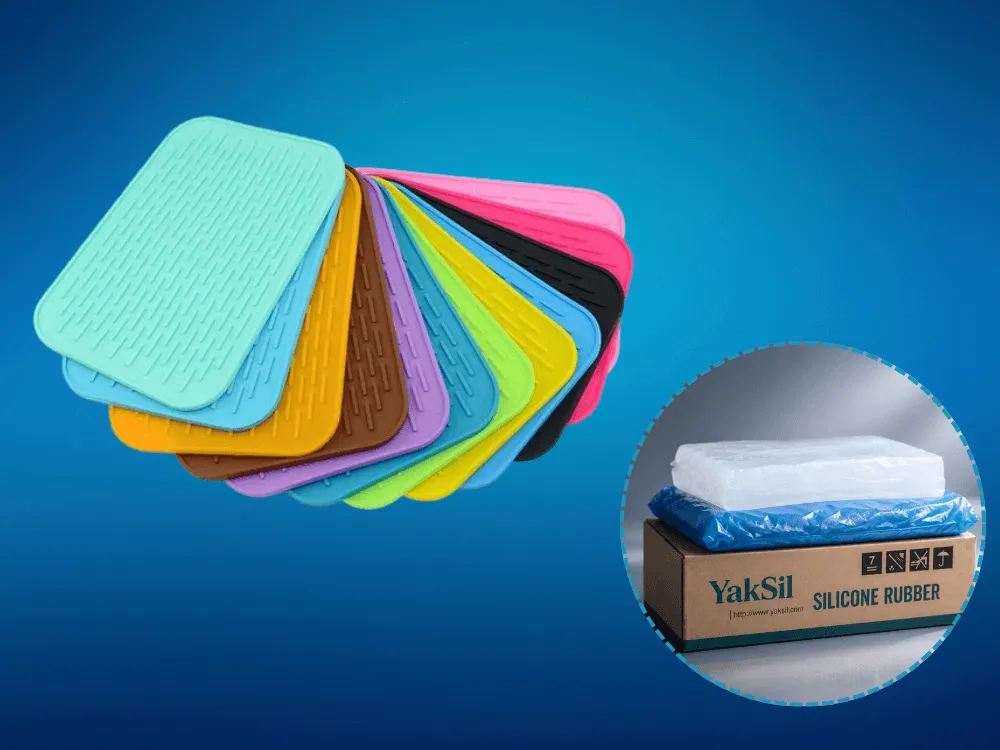
Firm silicone can be selected when a sealing or converted component needs to maintain a defined section under load instead of compressing too easily. This is useful in equipment doors, enclosure seals, flat gaskets and die-cut components where geometry and long-term compression behavior are important.
Evaluate clamp force, flange flatness, pressure, gasket thickness and compression set before moving to a higher hardness.
Higher-durometer sheet can provide more stable thickness and support for die-cut pads, insulating spacers and high-temperature interfaces.
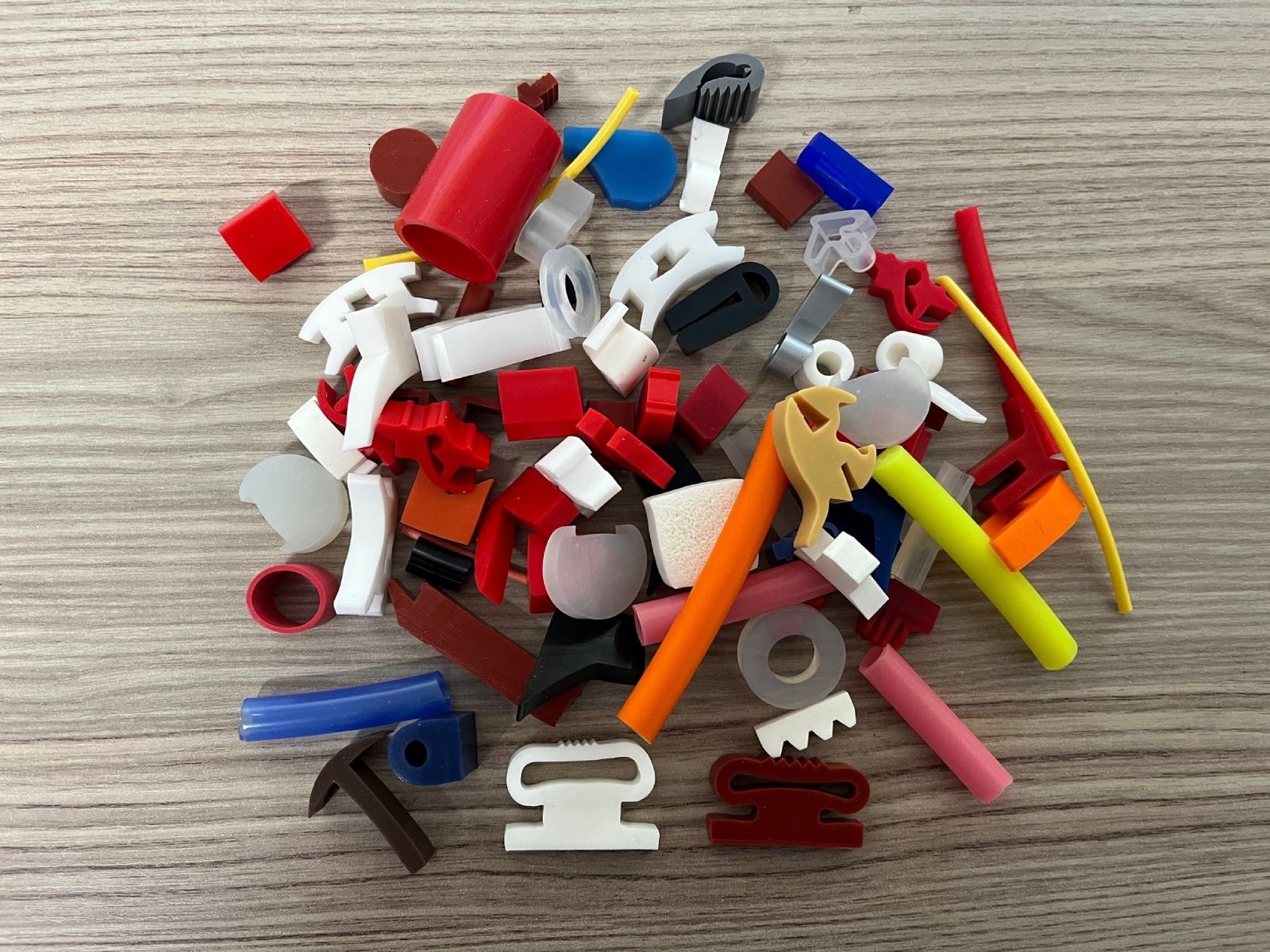
A harder silicone formulation can help continuous profiles and molded features retain shape where a softer compound would sag, twist or distort too easily. The benefit is strongest when hardness is considered together with die design, wall thickness, cure behavior and final assembly strain.
Typical targets include solid sealing profiles, retention features and continuous strips where profile stability and dimensional control are important.
Harder grades can support ribs, insulating features and structural elastomer geometries, but tool filling, draft and thin sections still require validation.
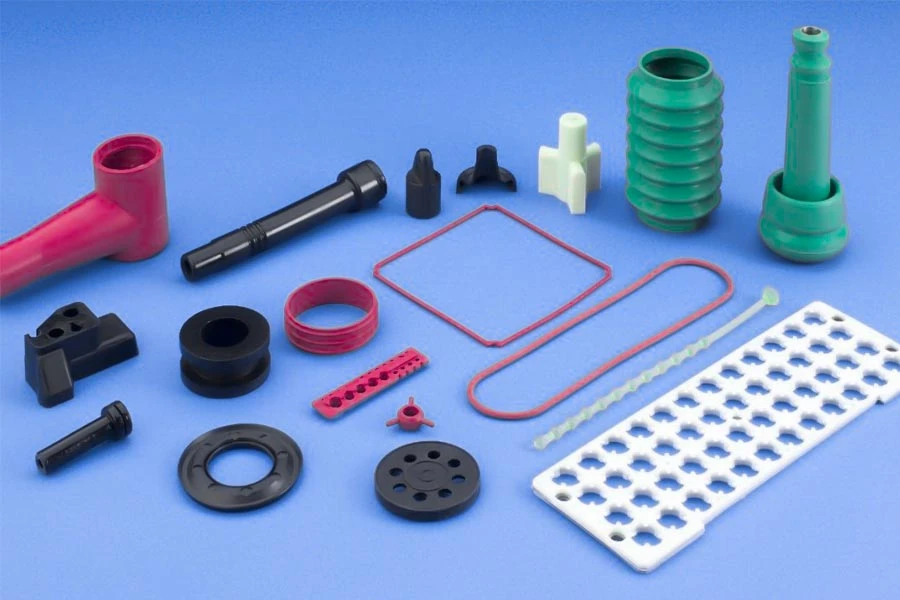
High-durometer silicone may be appropriate when an elastomer surface needs controlled deflection under pressure or when a ring, bushing or support part must recover elastically without collapsing like a softer rubber. Roller design should be based on nip pressure, diameter, cover thickness, temperature and surface requirements rather than durometer alone.
Used in selected printing, converting, laminating, guiding and pressure applications where consistent contact geometry is required.
Useful for selected buffers, insulating rings and mechanically supportive elastomer interfaces where limited deflection is a design target.
High-durometer compounds can require more attention to flow, preform preparation, tooling and cure conditions than softer grades. A formulation that is ideal for compression molding may not automatically provide the same processing behavior in extrusion or calendering.
The production method should therefore be identified early in development. This allows the compound to be optimized for material handling, cavity filling, profile stability, cure speed, surface finish and post-processing requirements rather than forcing one generic 80A or 90A formulation into every manufacturing route.
Common for solid silicone components, gaskets, pads and medium-to-complex geometries. With harder HCR compounds, preform shape, charge weight, cavity venting, mold temperature and flash design all influence whether the material fills the tool consistently.
Useful when the compound must travel through runners into enclosed cavities or around selected inserts. Higher hardness can increase resistance to flow, so runner layout, pressure, transfer-pot design and cure timing should be validated with the actual compound.
High-hardness extrusion grades can be engineered for solid profiles, strips and selected tubing. Die swell, green strength, line speed, hot-air or salt-bath cure conditions and profile distortion become important when a rigid cross-section must stay dimensionally stable.
Calendering is used for continuous silicone sheet where gauge consistency, surface quality and downstream conversion matter. Compound handling, roll temperature, thickness control and post-cure requirements should be matched to the final sheet specification.
For B2B buyers, the useful question is often not simply “Do you have 80 Shore A silicone?” but whether that 80A material can meet processing, heat, color, electrical, compliance and mechanical requirements at the same time.
A custom compound should be developed around the end-use specification. Hardness is one target inside the formulation, not the complete specification.
Nominal Shore A hardness and allowable tolerance can be selected according to the actual load, required deflection, geometry and production capability.
Cure chemistry can affect process behavior, post-cure requirements, odor, extractables and final performance. The correct system depends on the application and compliance needs.
Color can support identification, equipment coding or product appearance, but the finished colored compound should still be validated for the required mechanical properties.
For high-temperature service, evaluate property retention after heat aging rather than relying only on a broad silicone temperature claim.
Electrical applications may require defined dielectric strength, volume resistivity or other test targets together with hardness and mechanical performance.
Specialized grades may prioritize flame behavior, tear resistance, compression set or other application-critical requirements, subject to actual test capability and documentation.
A useful RFQ or material-development brief contains more than a Shore A target. Supplying the information below gives the compound supplier enough context to decide whether 70A, 80A, 90A or a custom intermediate grade is actually appropriate.
Many silicone part problems are caused by a mismatch between hardness, geometry, process and service conditions rather than by “bad material.” Looking at the symptom together with its likely design cause is more useful than simply moving up or down the Shore A scale.
The compound may be too hard for the available clamp force or surface irregularity, producing incomplete contact at the sealing interface.
レビュー: gasket thickness, flange flatness, clamp force and compression target.
The selected material may be too soft, but low wall thickness or an unsupported span can create the same symptom even when hardness is increased.
レビュー: load path, cross-section, wall thickness and allowable deflection.
The failure may involve tear strength, sharp geometry, installation strain or thin sections rather than durometer alone.
レビュー: radii, notch sensitivity, assembly stretch and actual tear data.
Extrusion or molding stability depends on compound rheology, tooling and cure conditions; simply increasing hardness does not guarantee better processing stability.
レビュー: compound flow, die or cavity design, cure rate and process temperature.

For high hardness silicone, a reliable technical evaluation should confirm more than the durometer reading. Mechanical properties are influenced by specimen preparation, cure conditions, test speed, temperature and aging state, so TDS values should always be read together with the test method and conditions.
When the application is safety-critical or performance-sensitive, prototype parts should be validated under representative compression, heat and environmental conditions rather than relying only on laboratory plaques.
A structured development process helps avoid choosing a material solely by hardness. Each step narrows the specification until the selected compound is tied to the actual part, manufacturing route and test requirements.
Define hardness, temperature, geometry, load, application, target test values and processing route.
Match an existing silicone compound or identify where a custom formulation is technically justified.
Prepare material or prototype samples using representative cure and production conditions.
Verify hardness together with the mechanical, thermal or application-specific properties that matter.
Establish the material specification, tolerances, inspection method and batch consistency requirements.
These questions cover the search and procurement intent engineers commonly have when comparing high-durometer silicone compounds.
“High hardness” is a relative commercial description rather than one universal threshold. In many industrial silicone applications, compounds around 70 Shore A and above are treated as relatively firm or high-durometer compared with common softer silicone grades. The correct classification should still be tied to the supplier’s actual product range.
Yes. An 80 Shore A silicone is noticeably firm and resists indentation and bending more strongly than softer silicone grades. The finished part can still be elastic, but its perceived stiffness also depends heavily on thickness, cross-section and geometry.
The difference is usually noticeable in hand feel and deformation resistance, but the practical effect depends on part design. For a thin lip seal, a 10-point hardness increase can strongly affect conformity; for a thick block, geometry may dominate the apparent stiffness.
Yes. It remains an elastomeric silicone material, but it is at a very firm end of the Shore A range. A 90A grade is generally chosen when low deflection and strong shape retention are important and softer sealing behavior is not the primary requirement.
Not necessarily. Hardness and tensile strength measure different material characteristics. A harder formulation can have higher, similar or lower tensile and tear values depending on the polymer, filler system and cure chemistry. Always check the actual TDS.
Not automatically. Compression set is formulation- and test-condition-dependent. Hardness influences compression behavior, but recovery after long-term compression must be measured for the actual grade at the relevant temperature and time.
Suitable formulations can be extruded, but higher-durometer extrusion requires proper compound rheology, die design, process temperature and cure control. A molding compound should not be assumed to be an extrusion grade without validation.
Yes. Compression molding is a common route for many solid silicone parts. Material flow, preform shape, cavity design, mold temperature, cure time and flash control should be optimized for the grade and geometry.
There is no single best value. A gasket needs enough compliance to conform and seal, but enough stiffness to resist over-compression or extrusion from the joint. Clamp force, flange flatness, gasket thickness, pressure and service temperature all influence the correct hardness.
Roller hardness depends on nip pressure, load, diameter, coating thickness, speed, temperature, surface finish and the material being processed. High-hardness silicone may help control deformation, but the correct durometer should be validated in the roller design.
Many silicone compounders can formulate intermediate target hardness values when the volume and application justify development. The achievable tolerance, mechanical-property balance and processing behavior should be confirmed during sampling.
Pigments and additives become part of the formulation, so color development should be treated as a controlled compound change rather than a purely cosmetic step. For demanding specifications, the final colored grade should be validated rather than assuming identical performance.
High-hardness silicone is most compelling when the application specifically needs silicone-related advantages such as heat stability, weather resistance or electrical performance together with firmer elastomer behavior. If chemical resistance, abrasion or cost is the dominant requirement, another elastomer may be more appropriate.
Provide the target hardness, application, process, operating temperature, dimensions or drawing, expected load or compression, color, compliance requirements, critical physical-property targets and any current material problems. This gives the material supplier a much stronger basis for grade selection.
A strong industrial silicone specification combines hardness with the mechanical, thermal, processing and compliance requirements of the actual part. Use 70A, 80A and 90A as practical selection points, then validate the final compound through technical data, laboratory testing and representative application trials.